Artwork
Madhavchandra Giri (the Mahant)
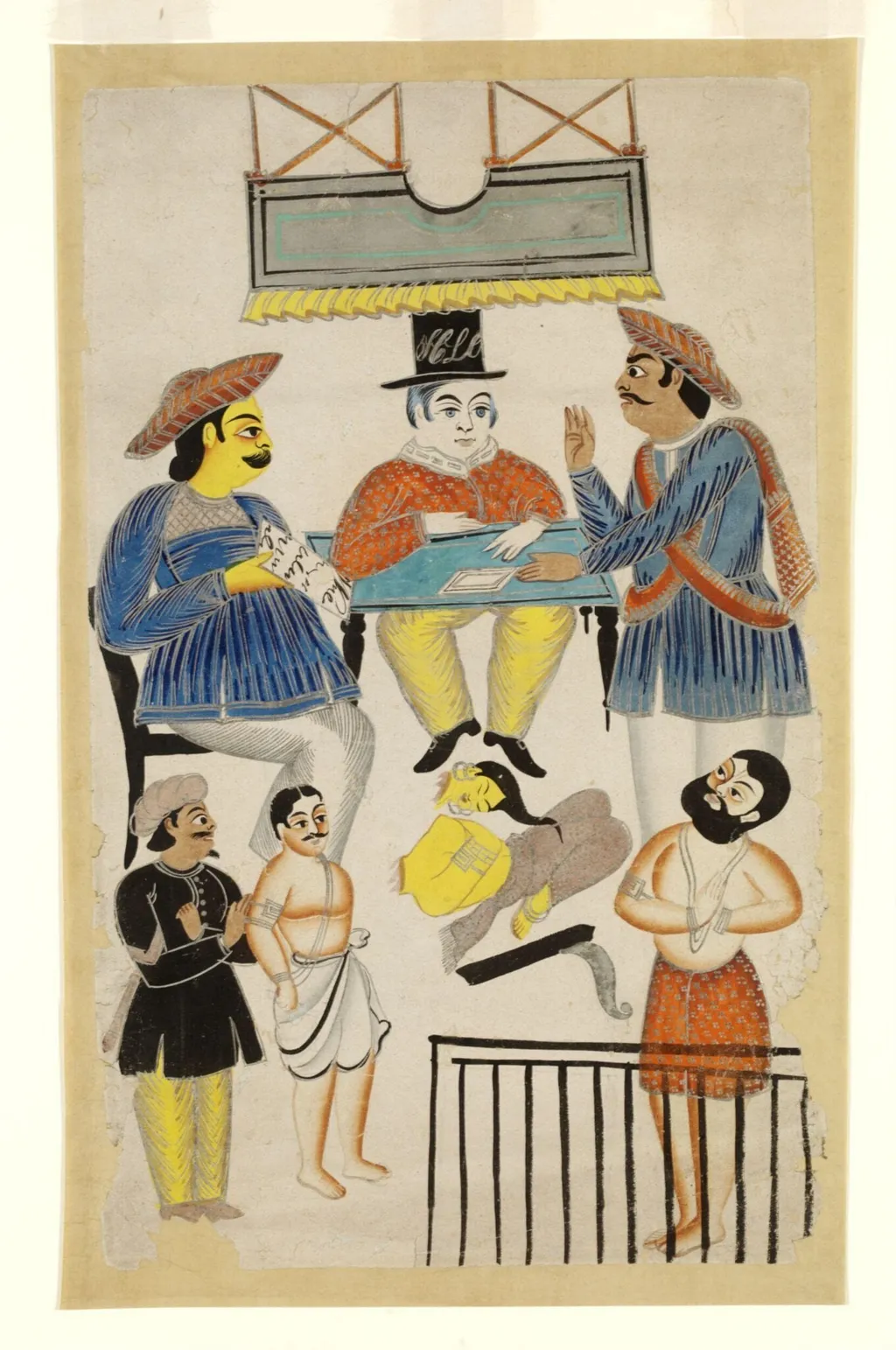
Madhavchandra Giri (the Mahant) is a paint painting by the Impressionist artist Unknown. It dates from 1875 and is held in the collection of the Victoria and Albert Museum.
About this work
Overview
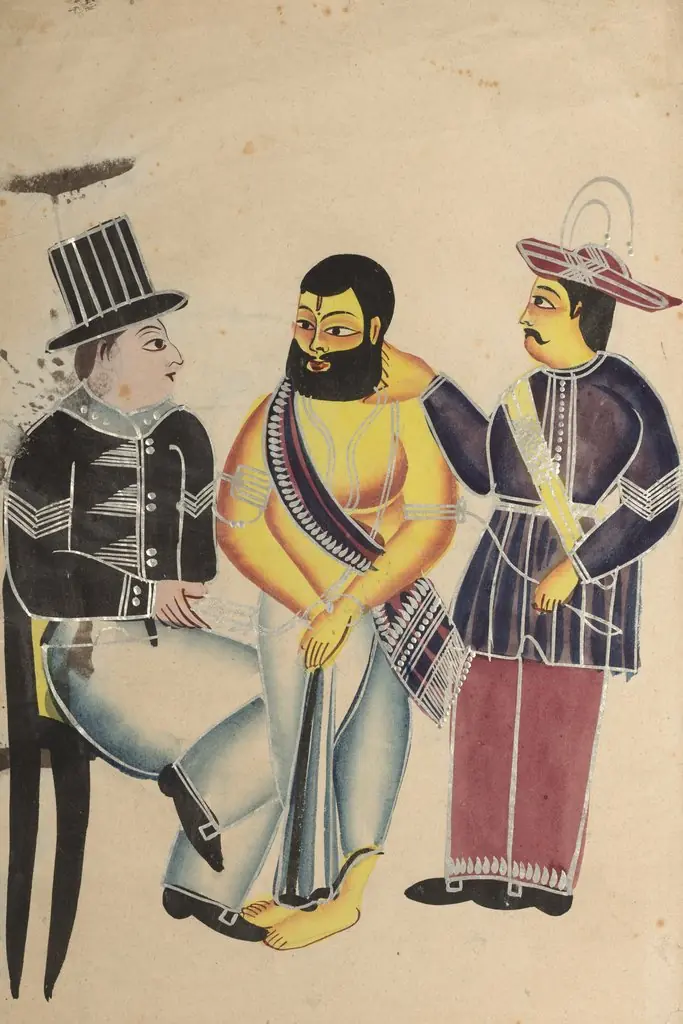
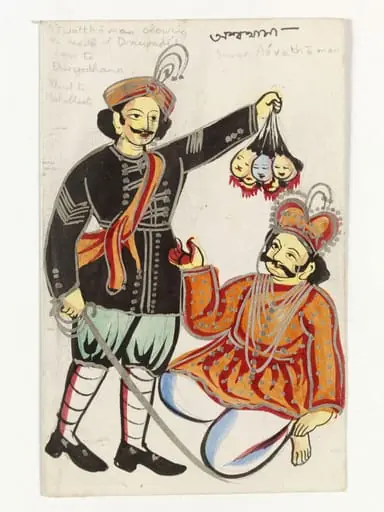
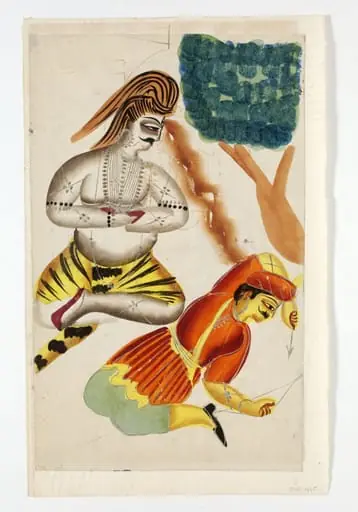
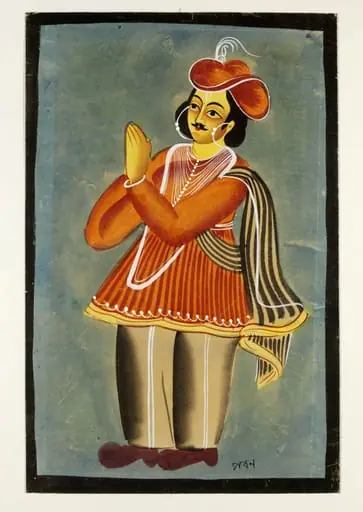
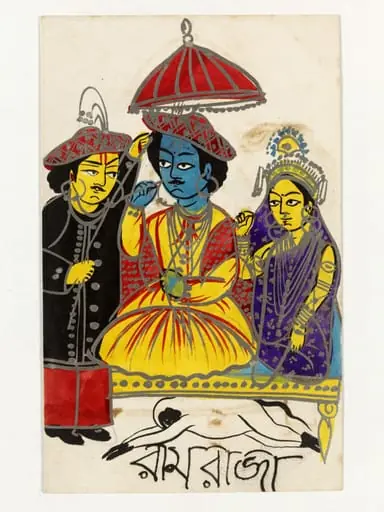
This watercolor and tin-alloy painting on paper illustrates a dramatized courtroom scene from the 1875 trial of Madhavchandra Giri, the Mahant of Tarakeshwar Temple, following the murder of Elokeshi. Though the trial occurred years after the crime, the painting reconstructs the event with symbolic and visceral detail, blending factual elements with narrative embellishment to convey moral and social tensions of the time.
Subject & Meaning
Elokeshi’s severed head and the murder weapon, an aish-boti, are prominently displayed, transforming the courtroom into a site of public reckoning.
The painting centers on the trial’s key figures: the Mahant, seated behind a railing in an orange and silver-dotted dhoti, and Nabin Chandra Banerjee, Elokeshi’s husband, restrained by a guard. Elokeshi’s severed head and the murder weapon, an aish-boti, are prominently displayed, transforming the courtroom into a site of public reckoning. The scene critiques power, gender, and justice, using graphic imagery to underscore the scandal’s cultural resonance.
Technique & Style
Executed in watercolor with tin-alloy accents, the work employs vivid, flat hues and precise linework typical of 19th-century Bengali court painting. Figures are rendered with clear delineation, not impressionistic brushwork, and spatial depth is suggested through layered composition rather than perspective. The inclusion of metallic pigments enhances ceremonial details, reflecting regional artistic conventions rather than Western realism or Impressionism.
History & Provenance
Created shortly after the 1875 trial, the painting likely originated in Calcutta’s commercial art market, catering to public fascination with the scandal. It was produced as a visual chronicle for a literate urban audience, possibly displayed in homes or public spaces. Its survival suggests enduring interest in the case, which became a touchstone for debates on morality, colonial law, and religious authority in British India.
Context
The trial ignited national outrage, exposing tensions between colonial legal systems and indigenous social norms. Elokeshi’s murder, linked to alleged sexual exploitation by the Mahant, became a symbol of clerical corruption. The painting’s inclusion of British officials, Indian clerks, and traditional attire reflects the hybrid legal culture of the period, where colonial institutions operated alongside local customs and public sentiment.
Legacy
The painting endures as a rare visual record of a landmark colonial-era trial, preserving the public’s emotional response to a case that challenged religious and gendered hierarchies. It informs contemporary scholarship on visual culture in 19th-century Bengal, illustrating how art functioned as both documentation and moral commentary, long before photography became widespread.
Artist & collection

 Domestic Scene
 Giacomo and Cardinal Marco, investing Andrea, Abbot of San Zeno, with his Benefice
 The Nymph of Fontainebleau
 Portrait of a Woman
 Madonna and Child with Saints in the Enclosed Garden
 Venus and Minerva
 Family Group of Four on Sofa
 Wall painting from Room H of the Villa of P. Fannius Synistor at Boscoreale