Artwork
Jatayu approaches Rama and Lakshmana who are wondering where Sita could be, folio 18 (verso) from a Chandana Malayagiri Varta (Story of King Chandana and Queen Malayagiri) of Karamachand
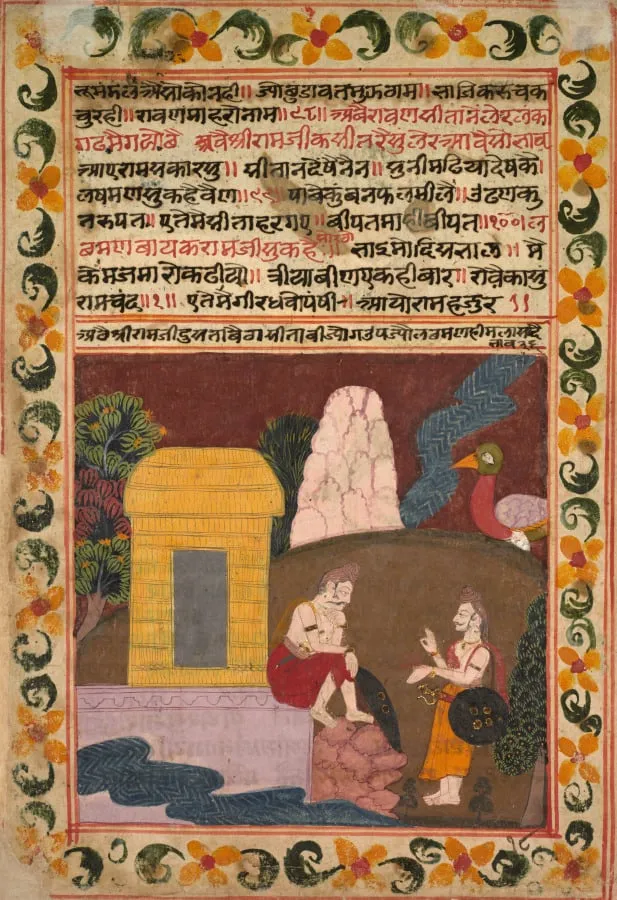
Jatayu approaches Rama and Lakshmana who are wondering where Sita could be, folio 18 (verso) from a Chandana Malayagiri Varta (Story of King Chandana and Queen Malayagiri) of Karamachand is an unspecified painting by the Baroque artist Unknown. It dates from 1744 and is held in the collection of the Cleveland Museum of Art.
About this work
Overview
This folio originates from a manuscript illustrating the Chandana Malayagiri Varta, a lesser-known narrative linked to the Ramayana tradition.
This folio originates from a manuscript illustrating the Chandana Malayagiri Varta, a lesser-known narrative linked to the Ramayana tradition. Executed in the Kishangarh style, it captures a pivotal moment when Jatayu, the wounded vulture, arrives to reveal Sita’s abduction. The scene is rendered with delicate brushwork and vivid mineral pigments, typical of Rajput court painting, emphasizing emotional tension within a compact, intimate frame.
Subject & Meaning
Rama and Lakshmana sit outside their abandoned hut, their postures conveying anxiety over Sita’s disappearance. Jatayu, grievously injured and still bearing stones from his failed struggle against Ravana, approaches from a distant ridge. His arrival signifies the first confirmation of Sita’s kidnapping, transforming their grief into purpose. The moment underscores duty, loyalty, and the inevitability of divine justice in the Ramayana’s moral framework.
Technique & Style
The painting employs opaque watercolor with rich, saturated hues—crimson, cobalt, and emerald—applied in flat, decorative planes. Figures are stylized with elongated limbs and expressive eyes, while the landscape is minimized to suggest rather than replicate space. Fine linework defines textures and gestures, and the composition uses diagonal movement to guide the viewer’s eye from the seated brothers to the approaching vulture.
History & Provenance
Created in the mid-18th century under the patronage of the Kishangarh court, this folio belongs to a series commissioned to illustrate regional adaptations of the Ramayana. The Chandana Malayagiri Varta was likely produced for a royal library, blending devotional themes with courtly aesthetics. Its survival reflects the enduring prestige of illustrated manuscripts in Rajput aristocratic culture.
Context
Kishangarh artists were known for their lyrical interpretations of Hindu epics, often emphasizing emotional nuance over narrative grandeur. This folio reflects a broader trend in 18th-century Rajput painting where mythological scenes were rendered with intimate realism, tailored to elite audiences who valued both spiritual symbolism and aesthetic refinement.
Legacy
Though not widely exhibited, such folios remain vital to understanding regional variations of the Ramayana in visual form. They preserve a distinct visual language that diverges from Mughal naturalism, favoring symbolic expression and emotional resonance. Today, they serve as key references for scholars studying the intersection of devotional literature and miniature painting in early modern India.
Artist & collection

 Domestic Scene
 Giacomo and Cardinal Marco, investing Andrea, Abbot of San Zeno, with his Benefice
 The Nymph of Fontainebleau
 Portrait of a Woman
 Madonna and Child with Saints in the Enclosed Garden
 Venus and Minerva
 Family Group of Four on Sofa
 Wall painting from Room H of the Villa of P. Fannius Synistor at Boscoreale
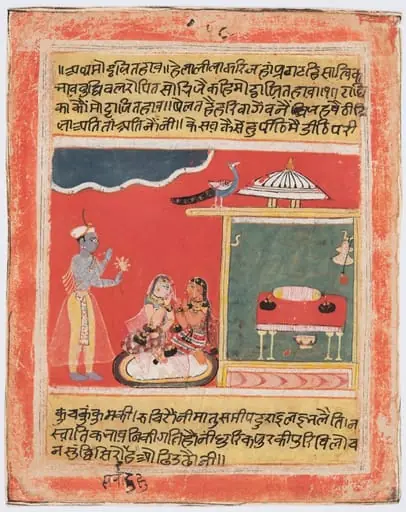 Krishna and Radha Avoid Embarrassment: Mottaita Bhava, from a Rasikapriya
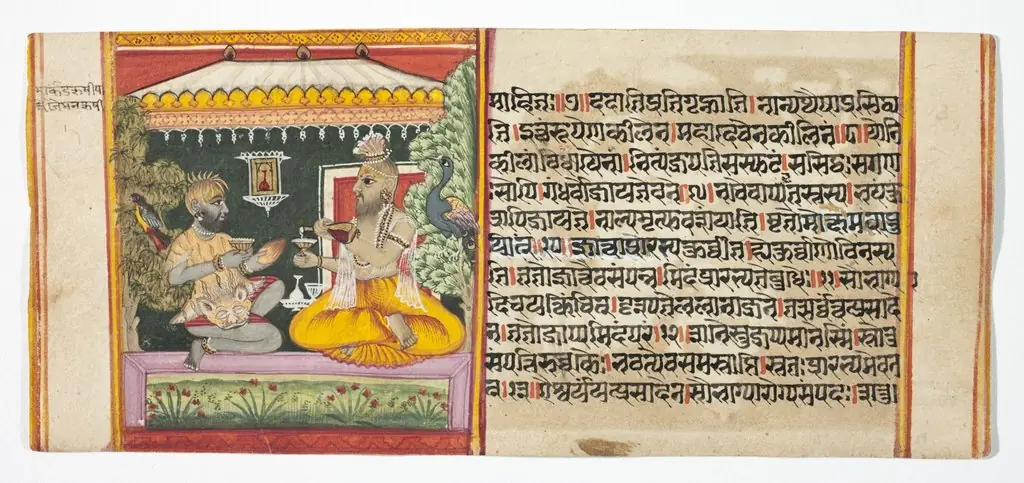 Legend of Durga
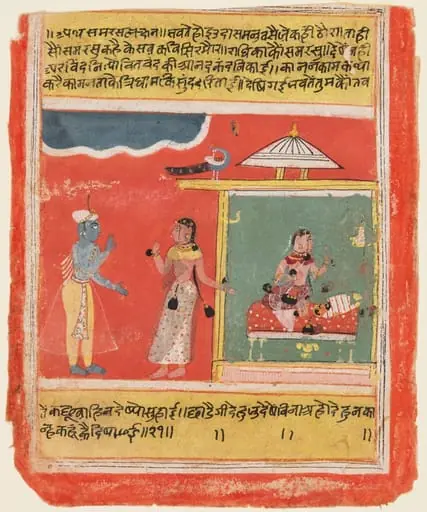 The Sentiment of Peace: Sama Rasa, from a Rasikapriya
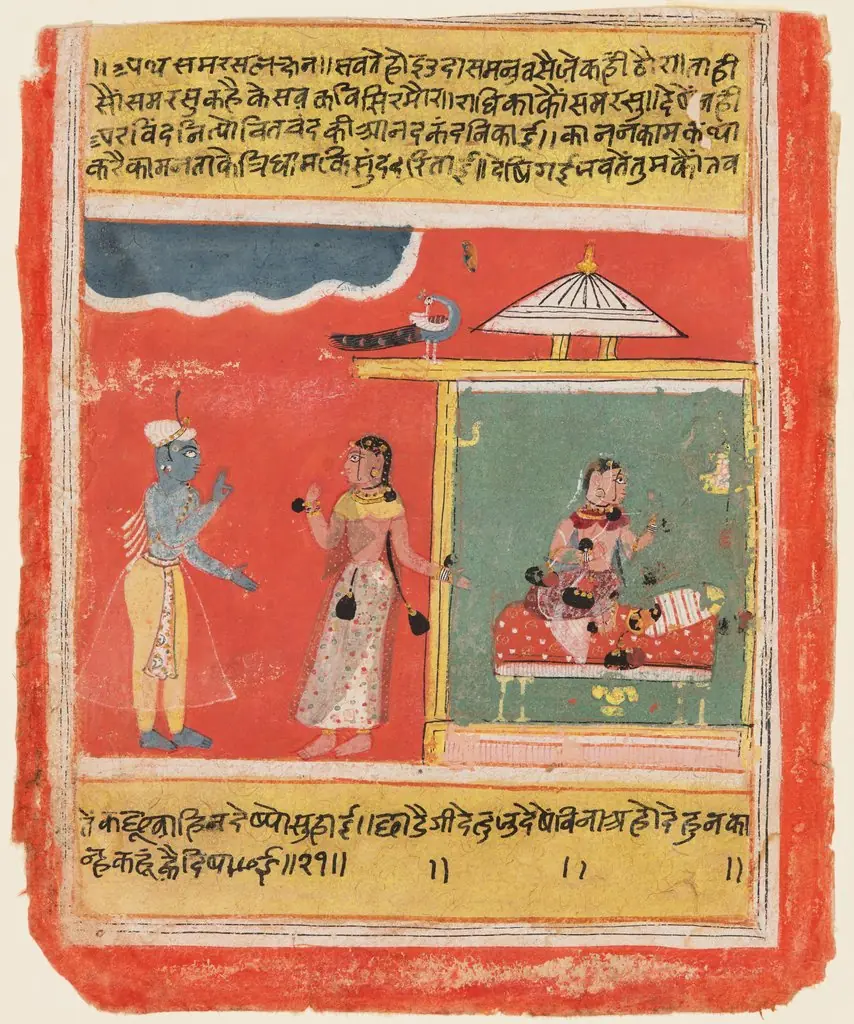 The Sentiment of Peace: Sama Rasa, from a Rasikapriya
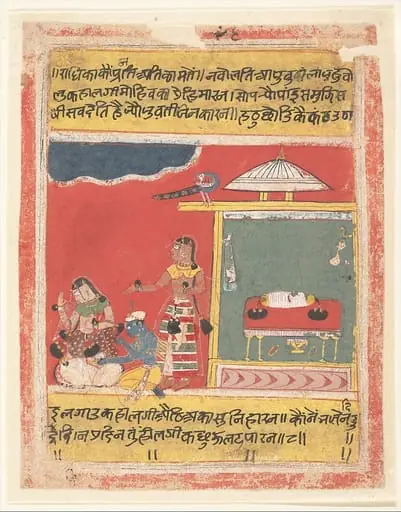 Untitled
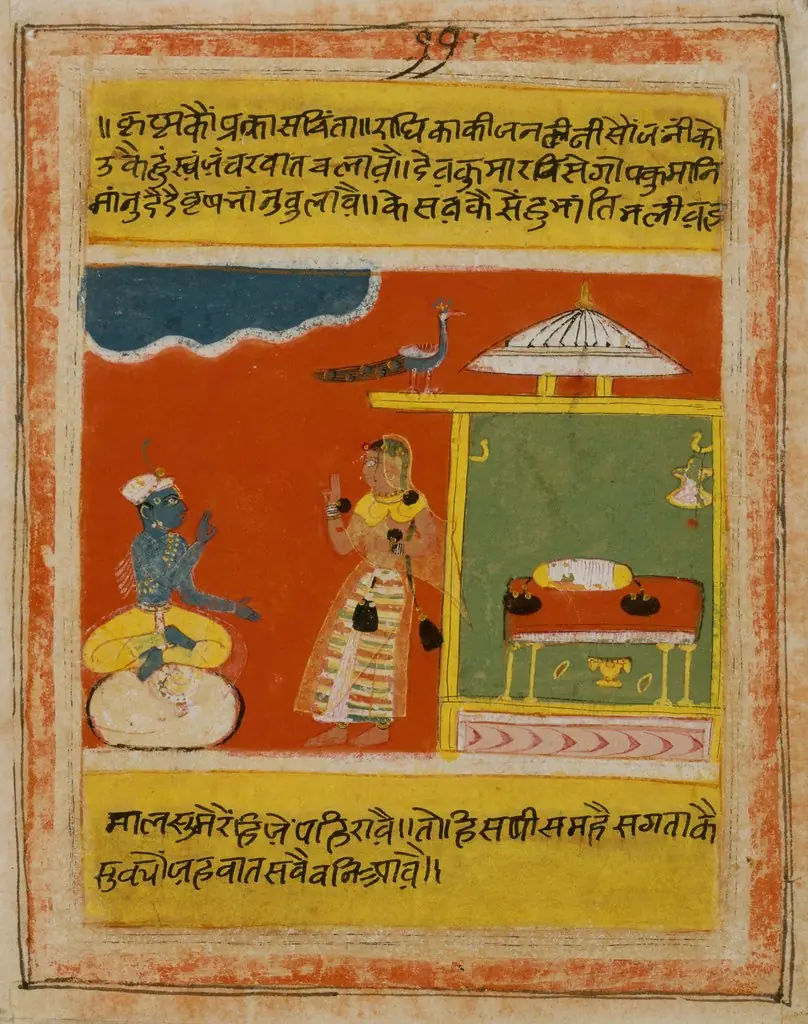 Krishna and Radha
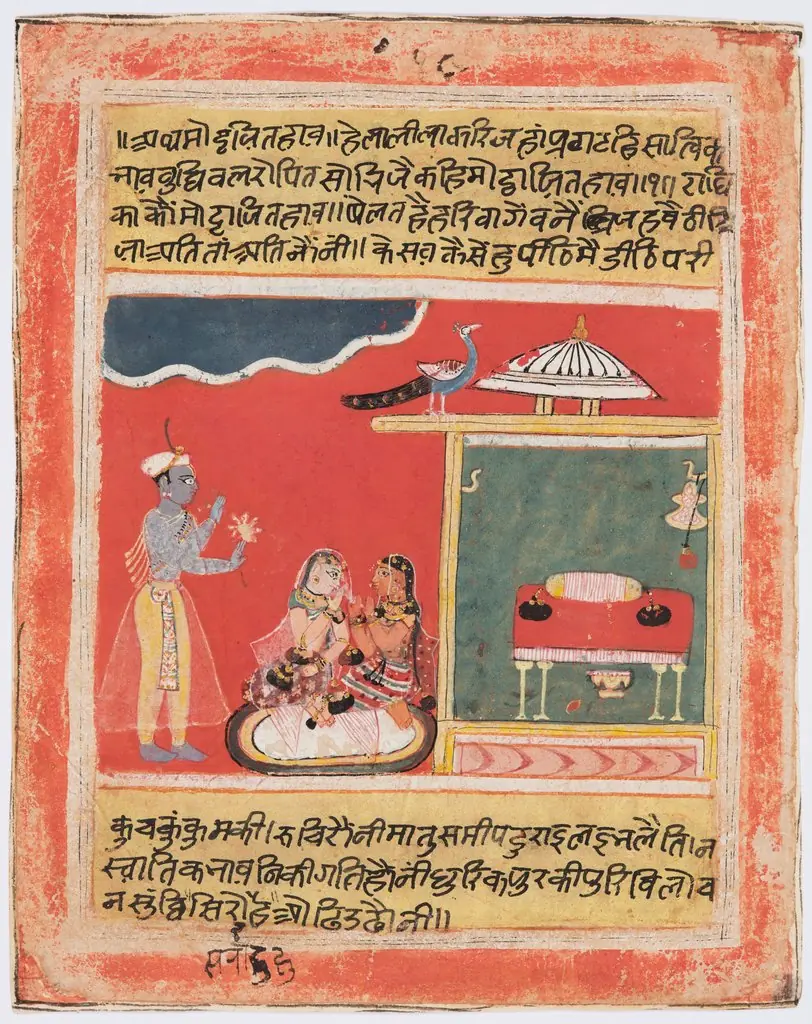 Krishna and Radha Avoid Embarrassment: Mottaita Bhava, from a Rasikapriya
 Radha and Krishna
 Krishna's Insomnia, Page from a Rasikapriya