Artwork
Oval portrait of a woman in a Chaghtai hat
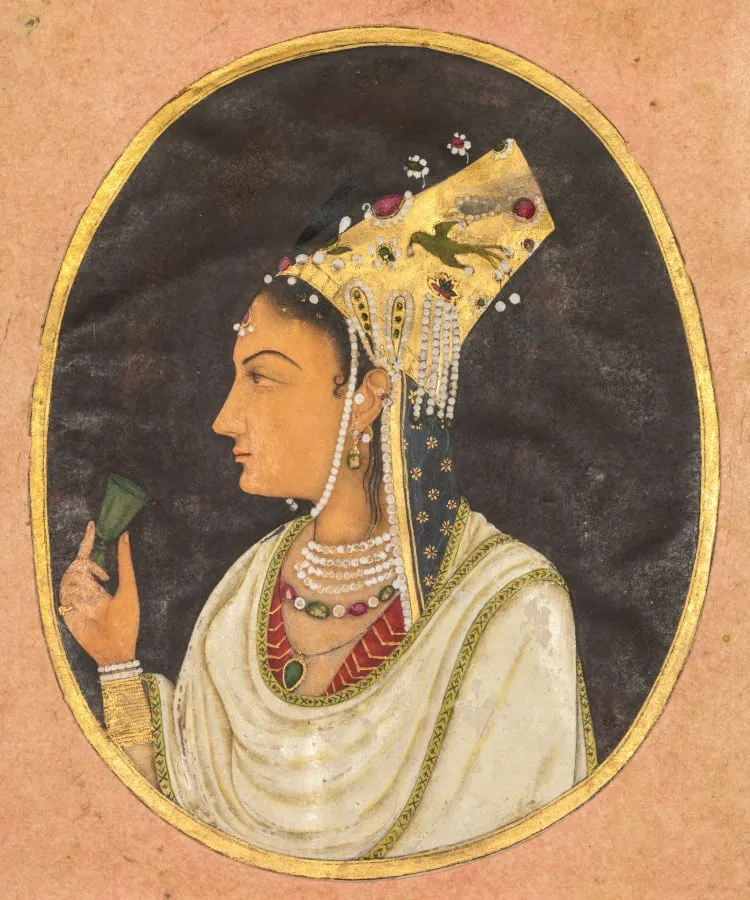
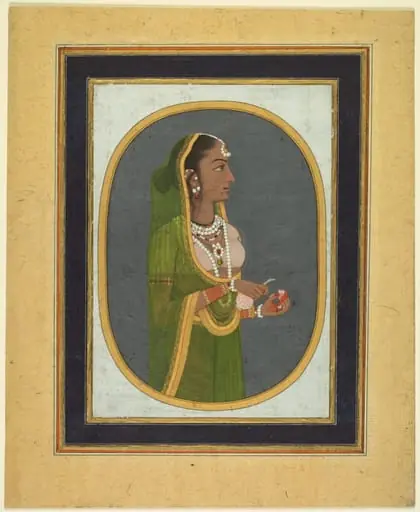
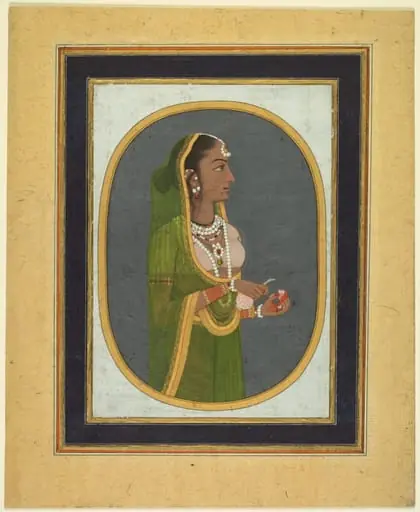
Oval portrait of a woman in a Chaghtai hat is an unspecified painting by the Baroque artist Unknown. It dates from 1745 and is held in the collection of the Cleveland Museum of Art. The oval miniature depicts a woman shown in profile, her head crowned by a tall, flat‑topped hat richly adorned with pearls and gemstones.
About this work
Overview
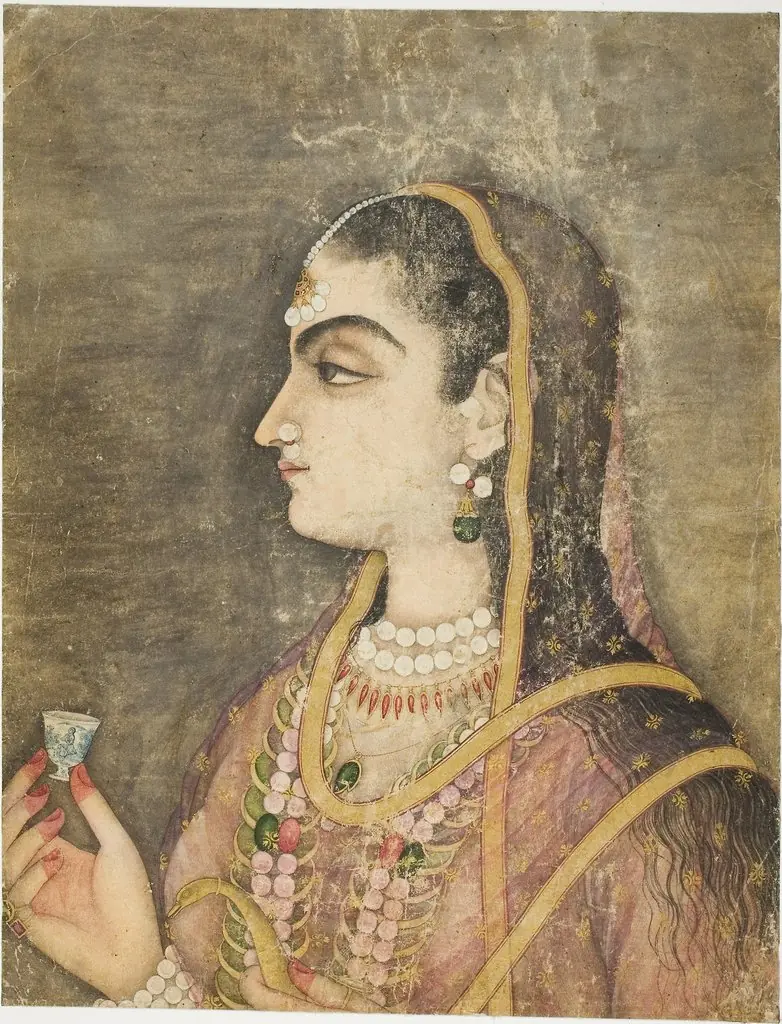
The oval miniature depicts a woman shown in profile, her head crowned by a tall, flat‑topped hat richly adorned with pearls and gemstones. She holds a small jade cup, and her attire consists of a draped upper garment trimmed with a woven or embroidered border. The work is executed on a small scale, intended to be handled as a portable object of luxury.
Subject & Meaning
The sitter is presented as a courtly figure, her calm expression and opulent accessories indicating high status within the Mughal milieu. The inclusion of a jade wine cup, a symbol of refined taste, and the elaborate headgear suggest a role in ceremonial or diplomatic contexts, extending the imperial portrait tradition to elite women of the court.
Technique & Style
Rendered in the miniature tradition, the painting employs fine brushwork and delicate coloration on a compact surface. The hat’s intricate detailing—pearls, jeweled studs, and precise linear patterns—demonstrates the high level of craftsmanship typical of Mughal court workshops, while the garment’s border reflects textile designs known from contemporary woven fragments.
History & Provenance
The work originates from the Mughal period, when rulers of Turkic‑Mongol descent, speaking Chagatai, governed a realm that stretched from Central Asia into the Indian subcontinent. The portrait’s format, once reserved for imperial portraiture, was broadened during this era to include prominent women, indicating a shift in visual representation within the court.
Context
The tall, flat‑topped hat is a distinctive element of the native dress of the Mughals, whose ancestors hailed from eastern Uzbekistan. Named after Chagatai, the son of Genghis Khan, the style reflects the cultural synthesis of Turkic and Mongol influences that the Mughal elite brought to their Indian courts, distinguishing their visual identity from indigenous Indian fashions.
Artist & collection

 Domestic Scene
 Giacomo and Cardinal Marco, investing Andrea, Abbot of San Zeno, with his Benefice
 The Nymph of Fontainebleau
 Portrait of a Woman
 Madonna and Child with Saints in the Enclosed Garden
 Venus and Minerva
 Family Group of Four on Sofa
 Wall painting from Room H of the Villa of P. Fannius Synistor at Boscoreale