Artwork
Kaikeyi, Rama and Lakshmana
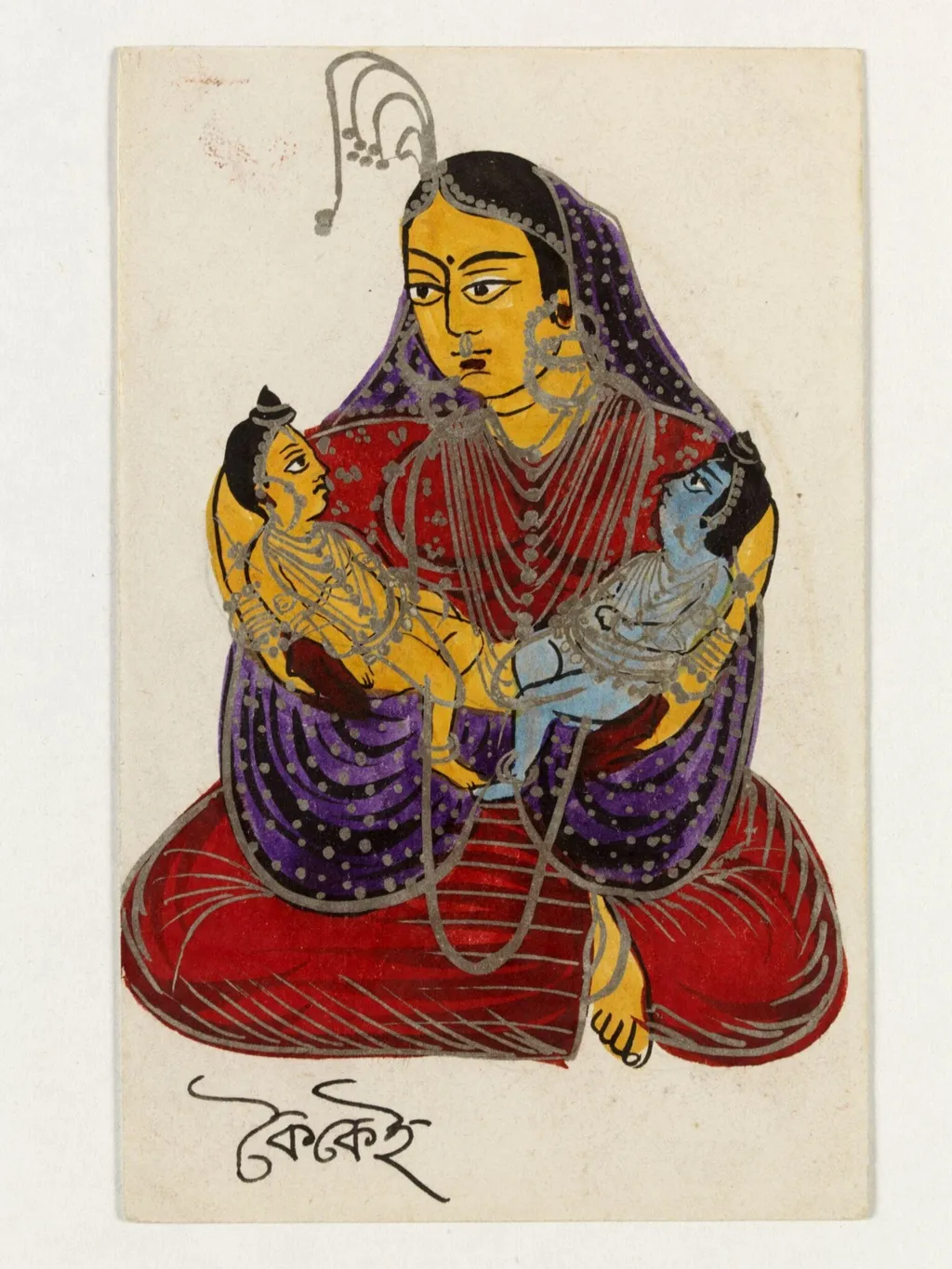
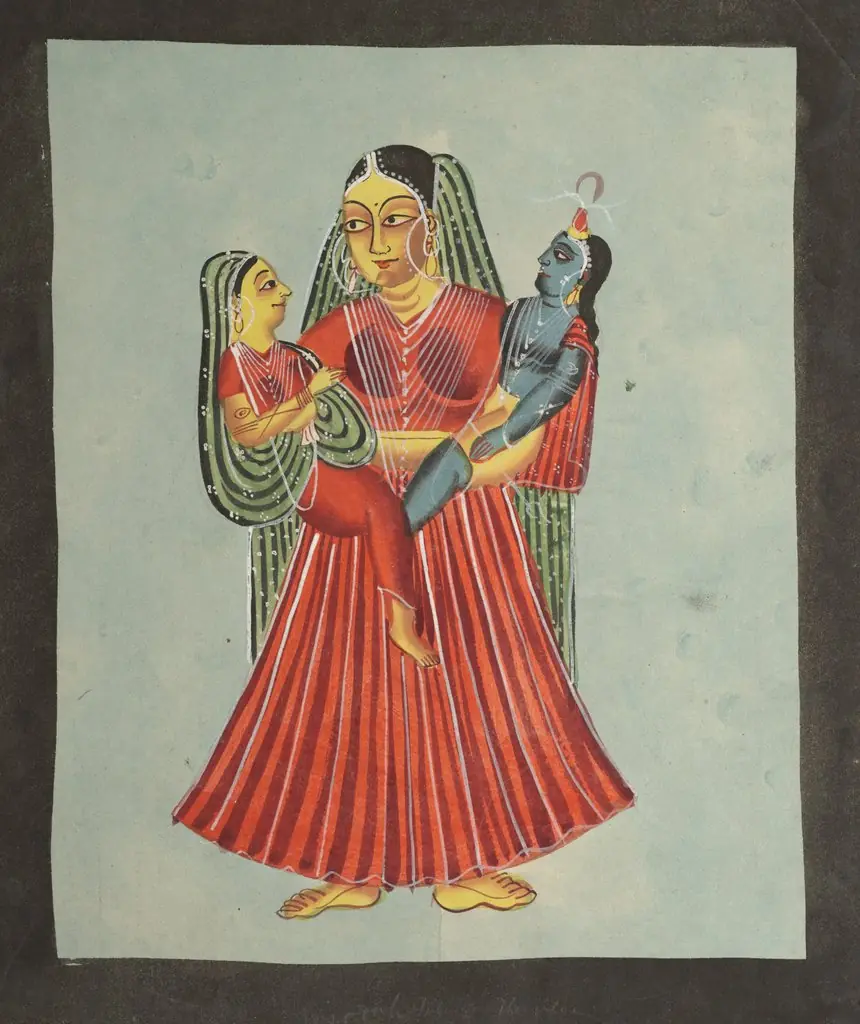
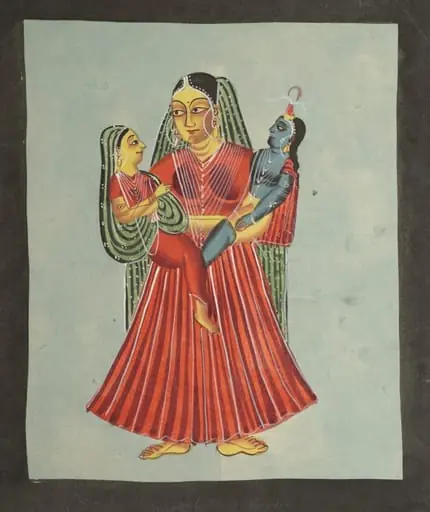
Kaikeyi, Rama and Lakshmana is a paint painting by the Impressionist artist Unknown. It dates from 1890 and is held in the collection of the Victoria and Albert Museum. This 1890 watercolour and tin alloy painting on paper depicts a pivotal scene from Hindu mythology, featuring Kaikeyi, Rama, and Lakshmana.
About this work
The style mixes two art movements: Impressionism’s loose brushwork and Realism’s focus on everyday scenes.
A woman in bright yellow and red sits cross-legged, holding two small boys. Her face is flat and bold, with heavy black outlines. The boys wear simple clothes—one in blue, the other in pale yellow. The woman’s headscarf is dark purple with tiny dots, and her dress has red and purple stripes. The background is plain, focusing all attention on the figures.
The painting looks like it was made around 1890, blending bright colors with clear outlines. The style mixes two art movements: Impressionism’s loose brushwork and Realism’s focus on everyday scenes.
Check out the Victoria and Albert Museum to see more works like this.
Overview
This 1890 watercolour and tin alloy painting on paper depicts a pivotal scene from Hindu mythology, featuring Kaikeyi, Rama, and Lakshmana. Characterized by vibrant hues and simplified forms, the work exemplifies the Kalighat style.
Subject & Meaning
The painting portrays Kaikeyi, Rama's stepmother, embracing Rama and Lakshmana. This narrative, rooted in local mythology, reflects the Kalighat tradition's focus on storytelling through accessible, figurative art during the colonial era in India.
Technique & Style
The artwork combines bold colours, flat forms, and expressive brushwork, hallmarks of the Kalighat style. Notably, its execution blends loose, expressive brushstrokes (reminiscent of Impressionism) with a realistic depiction of everyday scenes (echoing Realism).
Artist & collection

 Domestic Scene
 Giacomo and Cardinal Marco, investing Andrea, Abbot of San Zeno, with his Benefice
 The Nymph of Fontainebleau
 Portrait of a Woman
 Madonna and Child with Saints in the Enclosed Garden
 Venus and Minerva
 Family Group of Four on Sofa
 Wall painting from Room H of the Villa of P. Fannius Synistor at Boscoreale