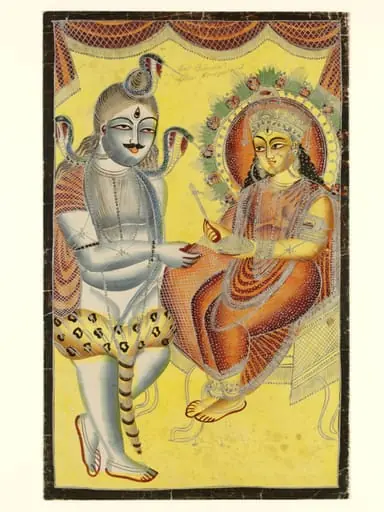
Artwork
Devi, Shiva and Ganesha
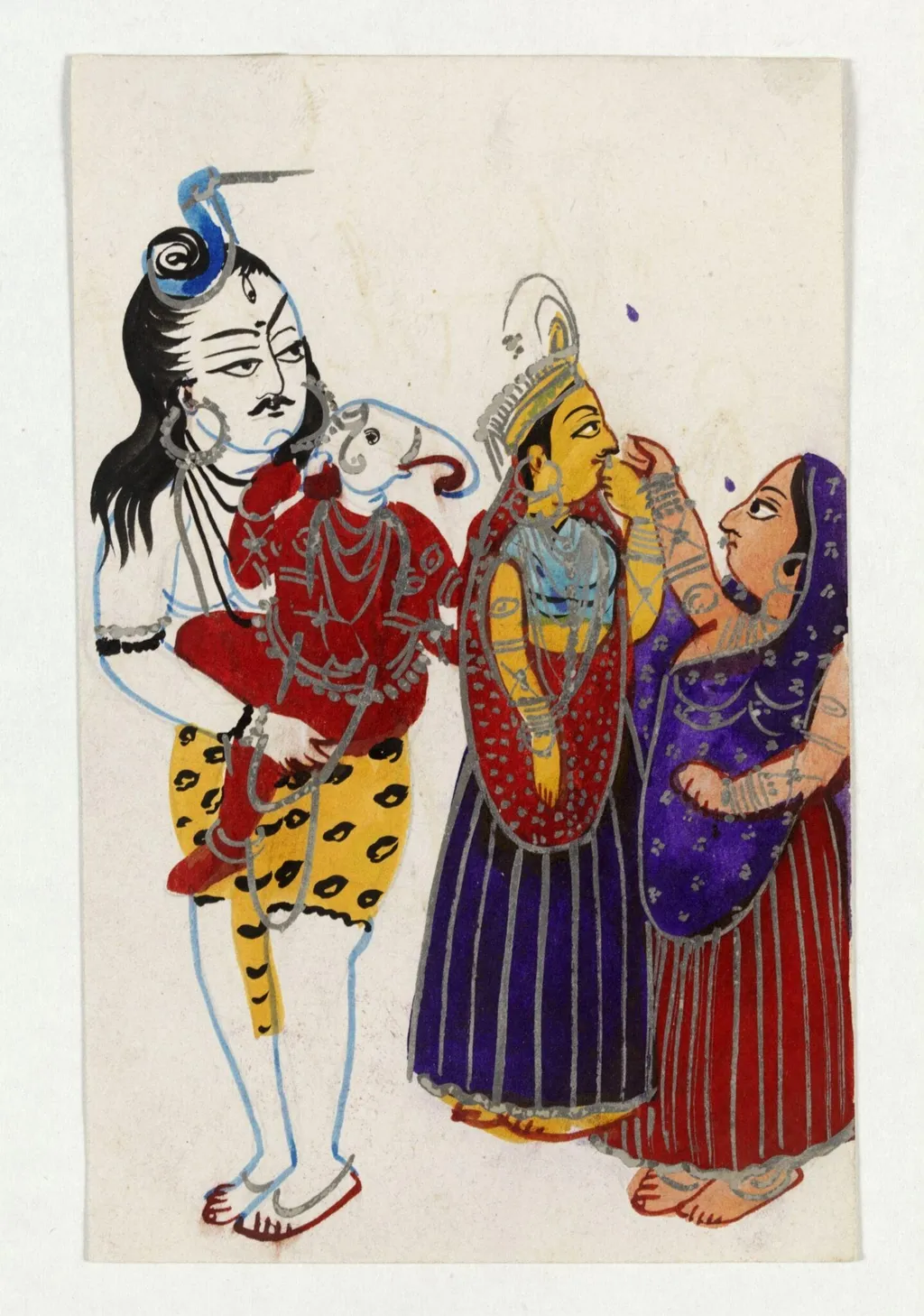
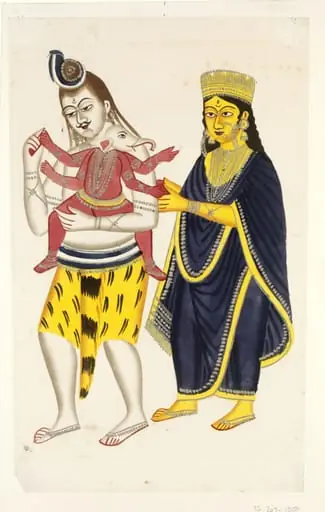
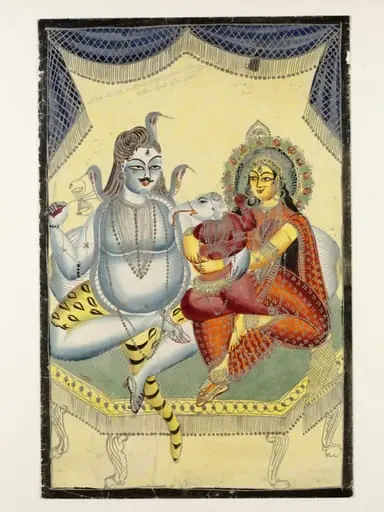
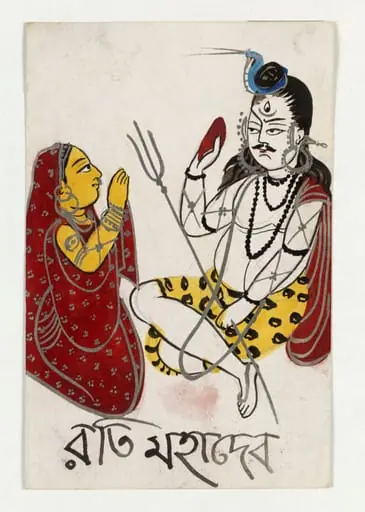
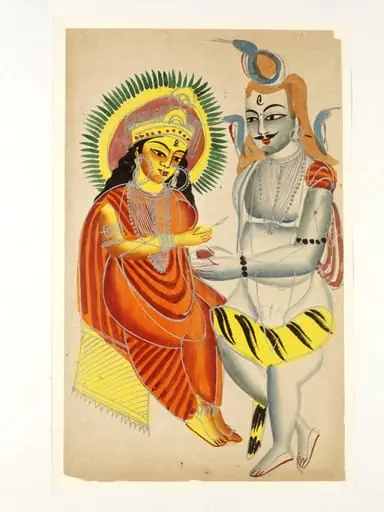
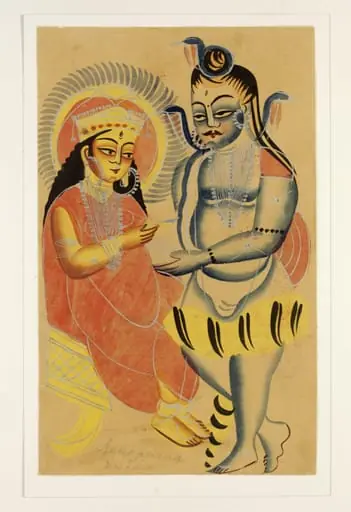
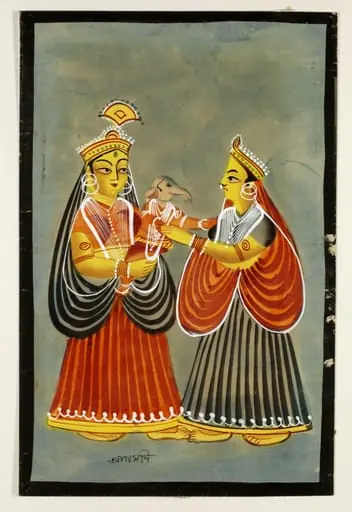
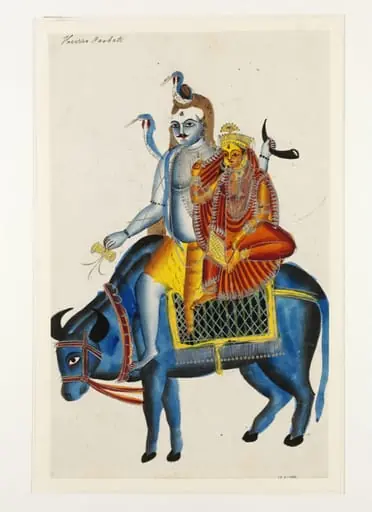
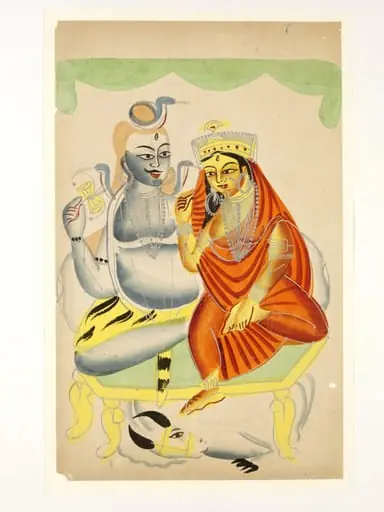
Devi, Shiva and Ganesha is a paint painting by the Impressionist artist Unknown. It dates from 1890 and is held in the collection of the Victoria and Albert Museum. Created in 1890, this work combines watercolour with tin alloy applied to cardboard.
About this work
Overview
Created in 1890, this work combines watercolour with tin alloy applied to cardboard. The composition presents three figures: a goddess identified as Durga engaged in a dispute with a woman, and the deity Shiva who is shown carrying the infant Ganesha. The scene is rendered with vivid hues and a clear sense of spatial depth.
Subject & Meaning
The central narrative draws on Hindu mythology, portraying Durga in a moment of confrontation, a theme that underscores her protective and fierce aspects. Shiva’s act of bearing Ganesha emphasizes paternal devotion and the continuity of divine lineage, while the presence of the woman adds a human element to the divine tableau.
Technique & Style
The artist employed a hybrid of Impressionistic colour handling and Realist attention to detail, using bright pigments to delineate clothing and skin tones. Chiaroscuro modelling creates a three‑dimensional effect, while subtle sfumato‑like transitions soften edges, giving the figures a gentle atmospheric presence despite the flat cardboard support.
History & Provenance
The painting originates from the late nineteenth‑century Indian art market, a period when hybrid media such as watercolour mixed with metal alloys were common for devotional works. Its exact ownership trail is undocumented, but it reflects the broader trend of integrating Western painting techniques with traditional Indian iconography during that era.
Artist & collection

 Domestic Scene
 Giacomo and Cardinal Marco, investing Andrea, Abbot of San Zeno, with his Benefice
 The Nymph of Fontainebleau
 Portrait of a Woman
 Madonna and Child with Saints in the Enclosed Garden
 Venus and Minerva
 Family Group of Four on Sofa
 Wall painting from Room H of the Villa of P. Fannius Synistor at Boscoreale