Artwork
Shashti
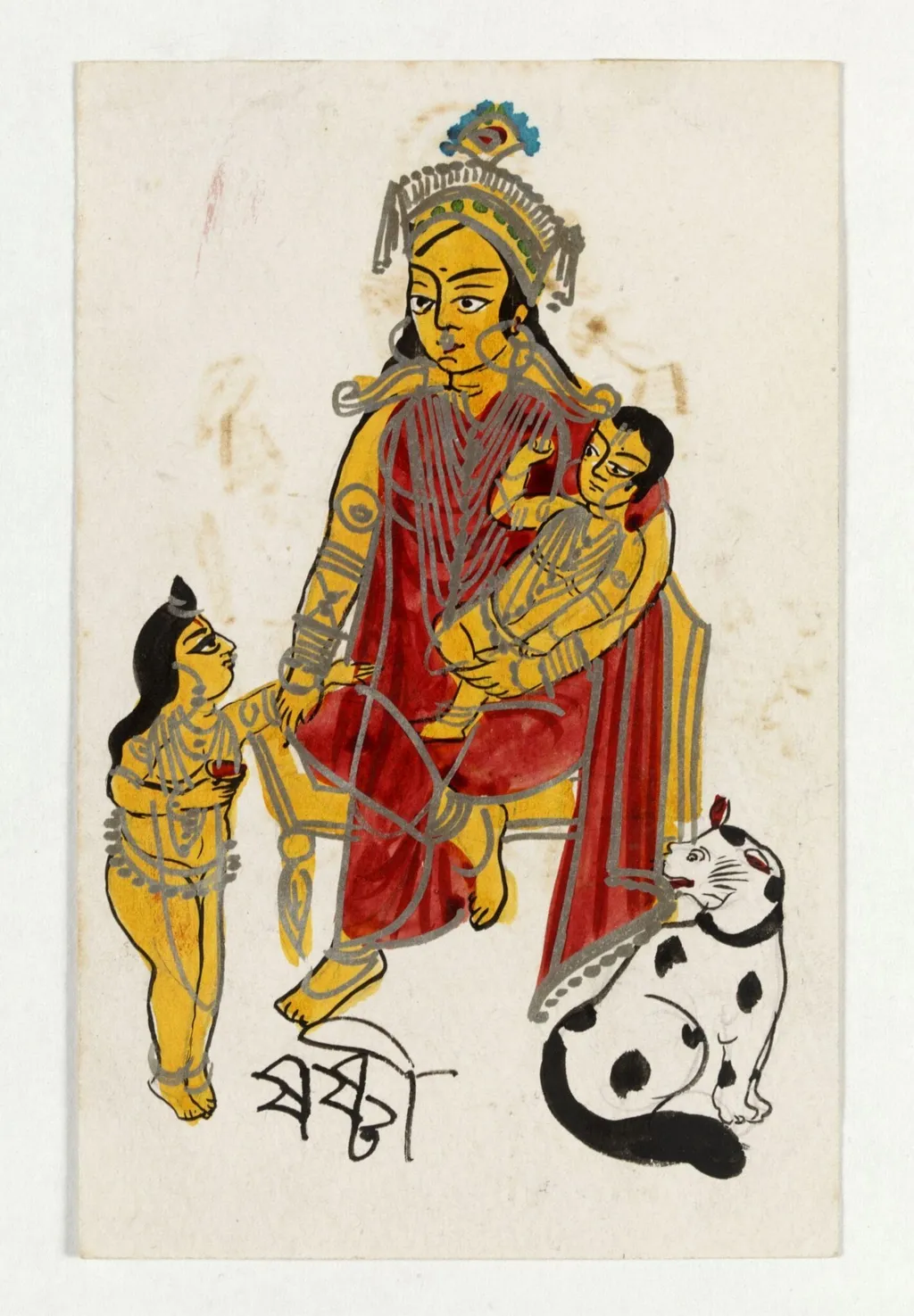
Shashti is a paint painting by the Impressionist artist Unknown. It dates from 1890 and is held in the collection of the Victoria and Albert Museum.
About this work
Overview
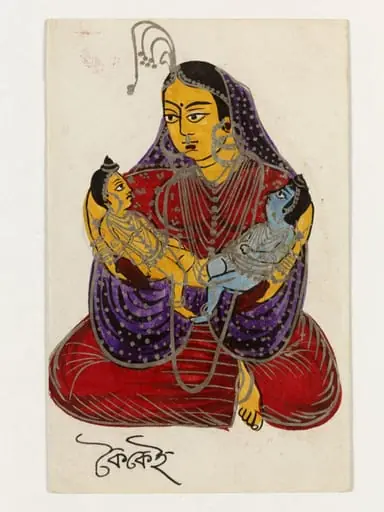
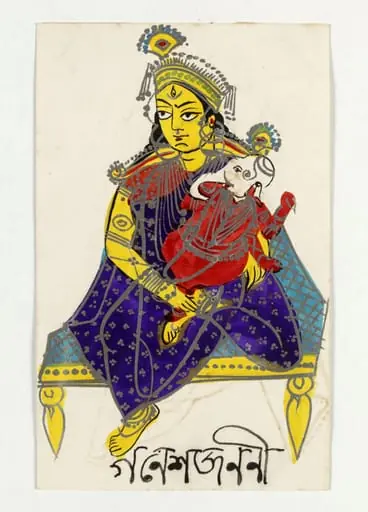
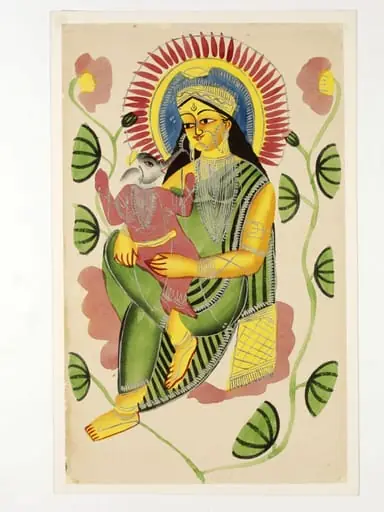
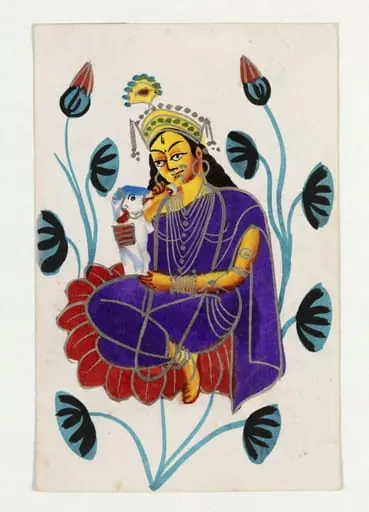
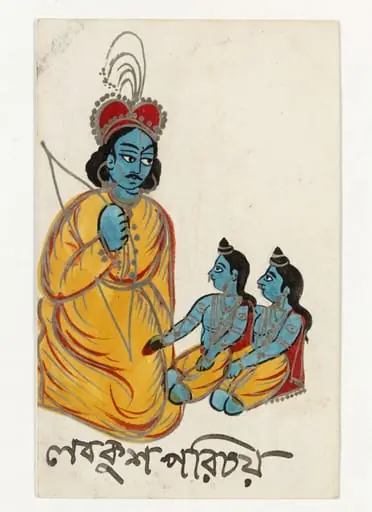
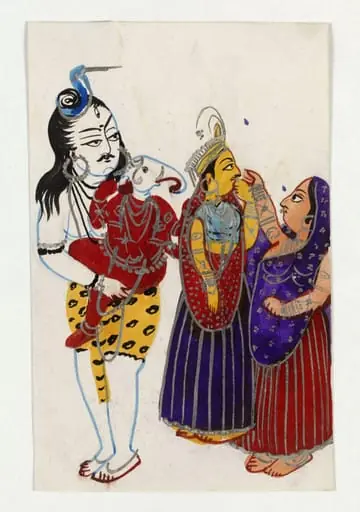
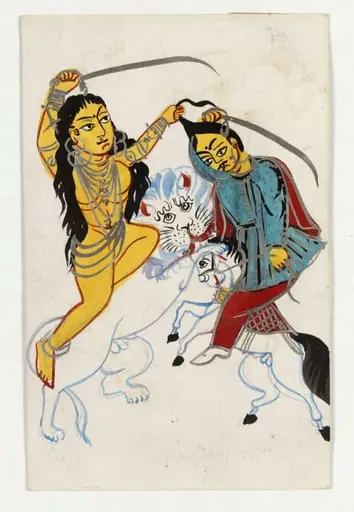
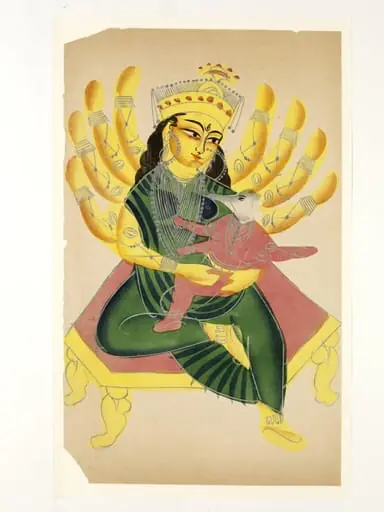
This watercolor and tin alloy painting on cardboard portrays the Hindu deity Shashti seated with two boys and a cat. The work is small in scale and executed with delicate, uneven brushwork. Its materials and surface suggest a devotional or domestic context, though its origin remains undocumented. The composition lacks a clear focal point, contributing to its quiet, unresolved atmosphere.
Subject & Meaning
The scene evokes familial harmony rather than ritual grandeur.
Shashti, a goddess associated with protection and the well-being of children, is depicted in a domestic setting with two boys and a cat—symbols of nurturing and companionship. The scene evokes familial harmony rather than ritual grandeur. The absence of traditional iconographic elements suggests a personal or regional interpretation, possibly reflecting local devotional practices outside formal temple traditions.
Technique & Style
The artist employed loose, fluid brushstrokes and muted tones, blending watercolor with metallic tin alloy for subtle highlights. Light falls unevenly across the surface, illuminating the background while leaving the foreground in relative shadow—an unusual spatial choice. Some areas appear deliberately incomplete, as if the work was paused or abandoned, adding an intimate, unpolished quality.
History & Provenance
The painting’s maker and place of origin are unknown. No documentation accompanies its early history, and it does not align with known school styles or signed works from the period. It entered the Victoria and Albert Museum’s collection without clear provenance, likely acquired as a folk or vernacular artifact. Its anonymity has preserved its quiet, unmediated character.
Context
Created likely in the late 19th or early 20th century, the work reflects regional devotional art traditions outside elite artistic centers. Its informal style and domestic subject matter suggest it was made for private worship or household veneration. The use of cardboard and tin alloy points to accessible, locally available materials, common in rural or artisanal production.
Legacy
Though unsigned and unattributed, the painting endures as an example of understated, personal religious expression. Its unresolved composition and tactile imperfections invite contemplation rather than admiration. It remains a quiet testament to the diversity of devotional art, valued not for its polish but for its authenticity and mystery.
Artist & collection

 Domestic Scene
 Giacomo and Cardinal Marco, investing Andrea, Abbot of San Zeno, with his Benefice
 The Nymph of Fontainebleau
 Portrait of a Woman
 Madonna and Child with Saints in the Enclosed Garden
 Venus and Minerva
 Family Group of Four on Sofa
 Wall painting from Room H of the Villa of P. Fannius Synistor at Boscoreale