Artwork
Durga and Ganesha
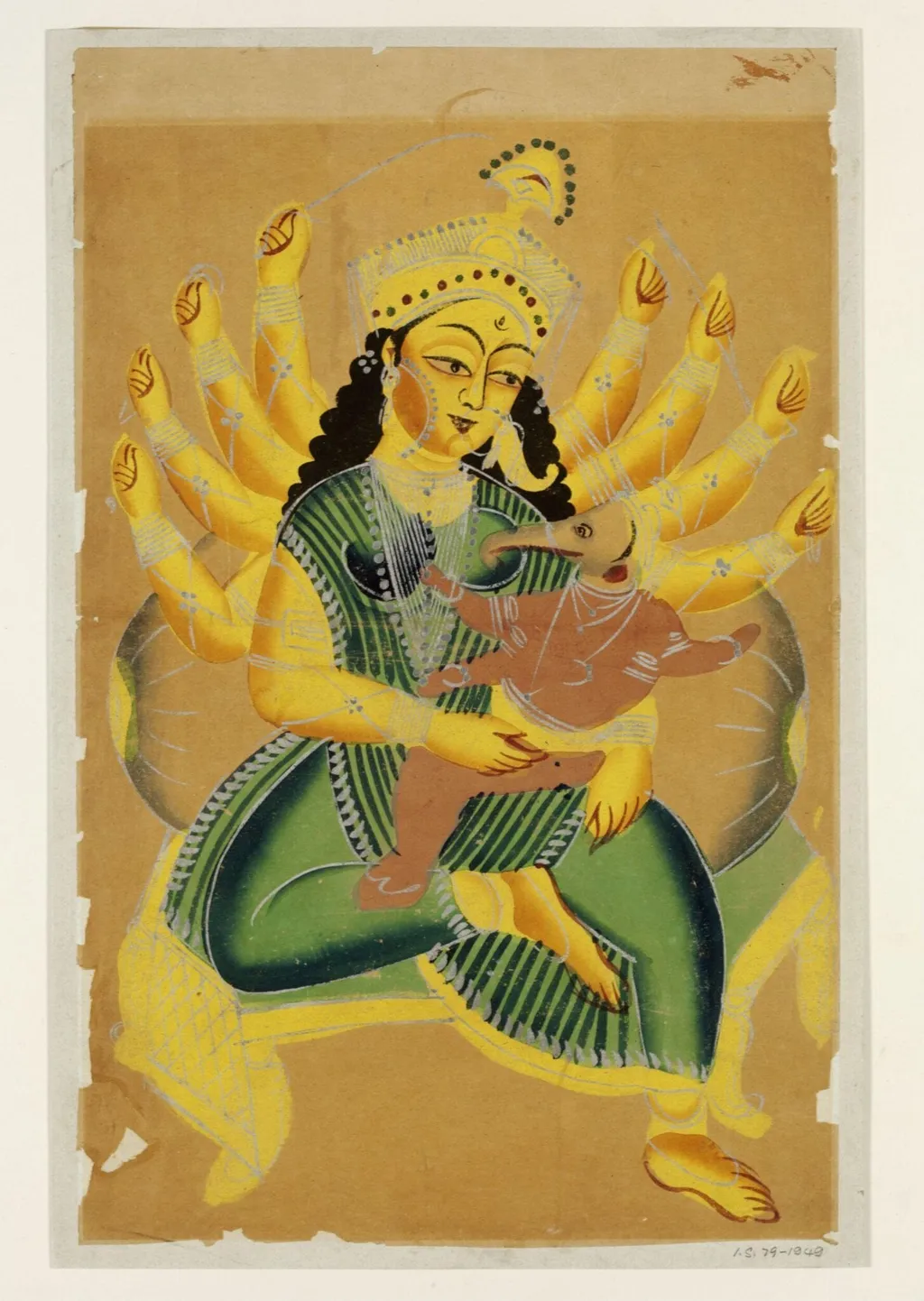
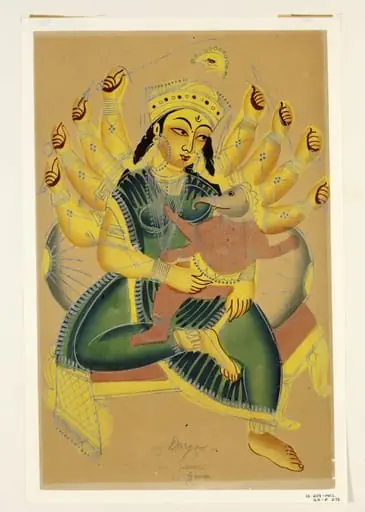
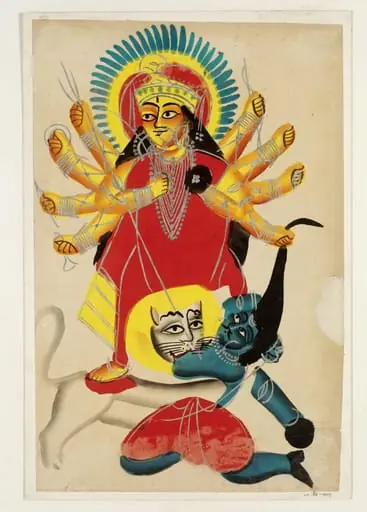
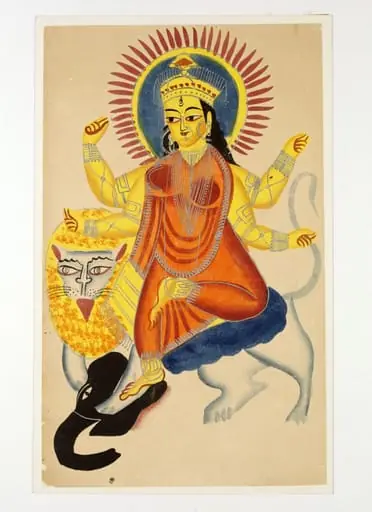
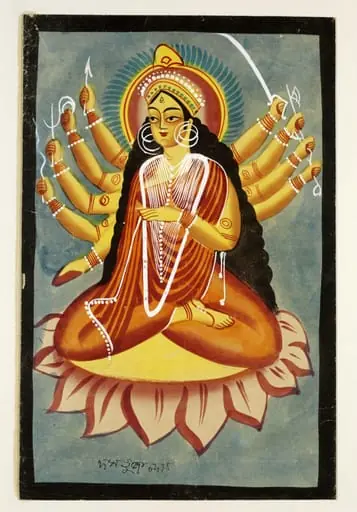
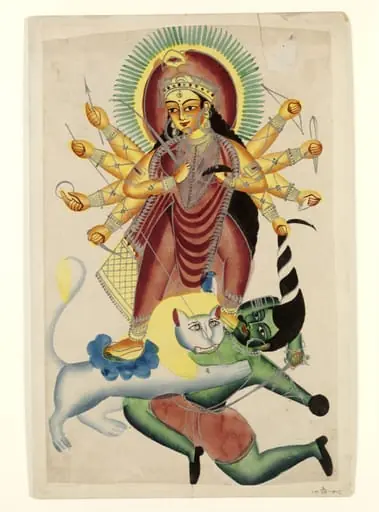
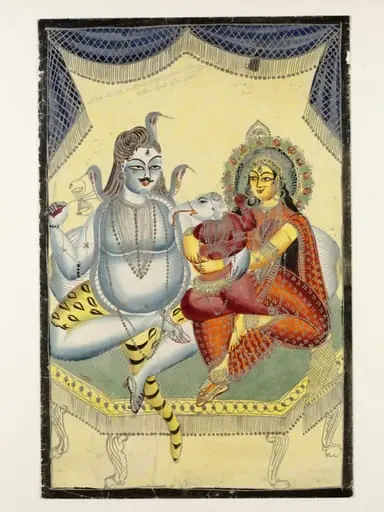
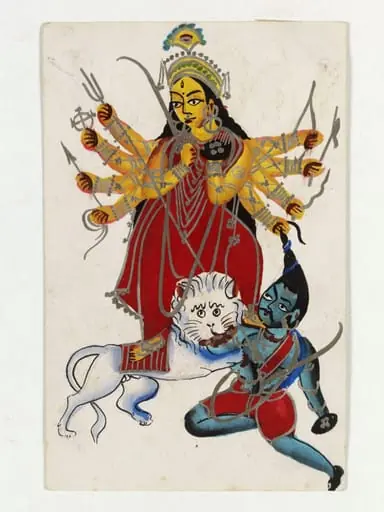
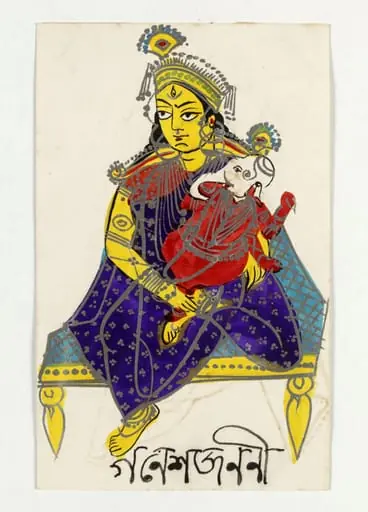
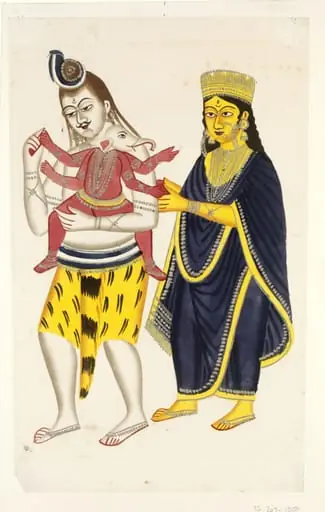
Durga and Ganesha is a paint painting by the Impressionist artist Unknown. It dates from 1885 and is held in the collection of the Victoria and Albert Museum. Created in 1885, this opaque watercolor on paper portrays the Hindu goddess Durga seated on a modest throne, supported by a large pillow.
About this work
Overview
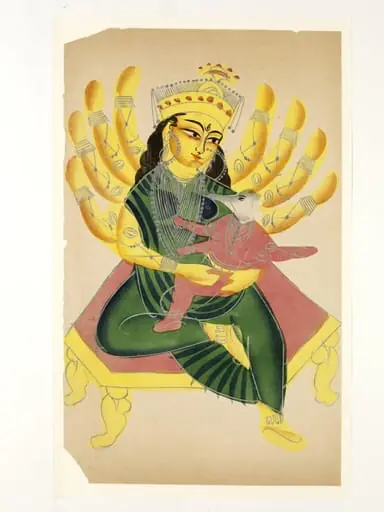
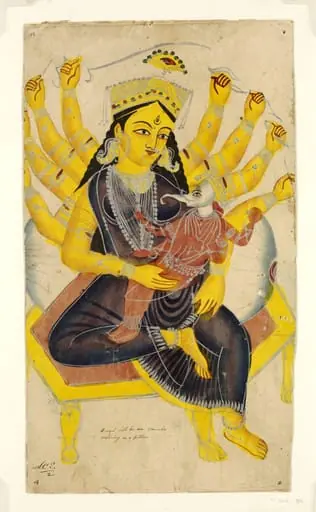
Created in 1885, this opaque watercolor on paper portrays the Hindu goddess Durga seated on a modest throne, supported by a large pillow. She holds the child deity Ganesha on her lap, presenting a calm, downward‑gazing expression. The composition is framed by a warm brown background that emphasizes the figures.
Subject & Meaning
Durga, shown with ten arms, a crown, and ornate jewelry, embodies protective power and maternal devotion. The child in her lap, identified as Ganesha, is depicted with an open mouth and tilted head, suggesting a moment of interaction between the divine mother and her offspring.
Technique & Style
The work employs opaque watercolor, allowing for vivid, saturated hues and solid forms. Bold outlines define the figures, while the palette—yellow skin, green dress, and brown tones—reflects conventions of traditional Indian painting rather than European Impressionism.
History & Provenance
The painting entered the museum’s collection in 1949 after being purchased from the Church Missionary Society in London. The acquisition was facilitated by Mrs. E. Mary Milford, whose involvement linked the artwork to the society’s historic interest in Indian religious art.
Artist & collection

 Domestic Scene
 Giacomo and Cardinal Marco, investing Andrea, Abbot of San Zeno, with his Benefice
 The Nymph of Fontainebleau
 Portrait of a Woman
 Madonna and Child with Saints in the Enclosed Garden
 Venus and Minerva
 Family Group of Four on Sofa
 Wall painting from Room H of the Villa of P. Fannius Synistor at Boscoreale