Artwork
Kali
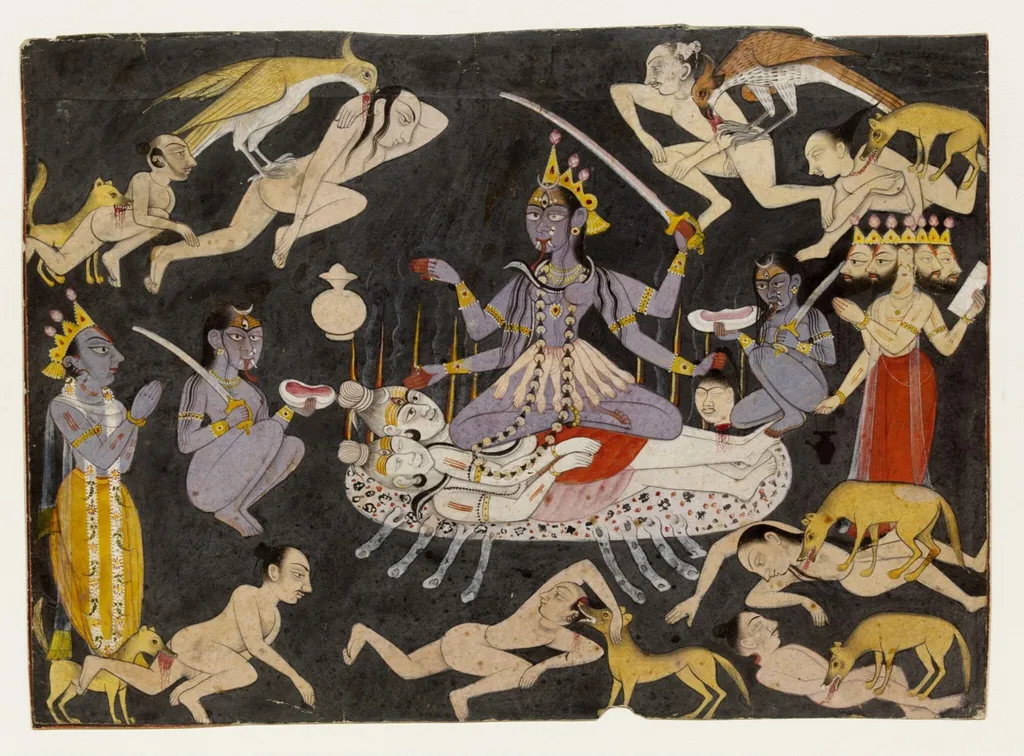
Kali is a paint painting by the Barbizon school artist Unknown. It dates from 1710 and is held in the collection of the Victoria and Albert Museum.
About this work
Overview
This 1710 opaque watercolour painting on paper depicts a dramatic scene of the Hindu goddess Kali in a dominant pose, surrounded by various deities, devotees, and chaotic elements.
Subject & Meaning
The painting illustrates Kali, the Great Goddess, seated on a tiger, embodying power and calm amidst turmoil. Her four arms and weaponry signify her role as a fierce protector and destroyer. The juxtaposition of her serene face with the chaotic surroundings highlights the balance between destruction and tranquility, core to her mythological significance.
Technique & Style
Executed in bold, vibrant colours (notably reds, yellows, and golds) against a dark, greyish-black background, the painting exhibits dramatic contrasts reminiscent of Baroque influences, characterized by intense emotional and visual drama.
History & Provenance
Created in 1710, the painting's origins and ownership history prior to its current location are not detailed in the provided information.
Context
This work reflects Hindu mythology's complex goddess worship, particularly the reverence for Kali's dual role in creation and destruction. The inclusion of major deities like Shiva, Brahma, and Vishnu underscores her paramount position within the Hindu pantheon.
Legacy
The painting's legacy is not explicitly outlined in the provided details, though its survival suggests significance in the preservation of 18th-century Indian artistic and religious heritage.
Artist & collection

 Domestic Scene
 Giacomo and Cardinal Marco, investing Andrea, Abbot of San Zeno, with his Benefice
 The Nymph of Fontainebleau
 Portrait of a Woman
 Madonna and Child with Saints in the Enclosed Garden
 Venus and Minerva
 Family Group of Four on Sofa
 Wall painting from Room H of the Villa of P. Fannius Synistor at Boscoreale
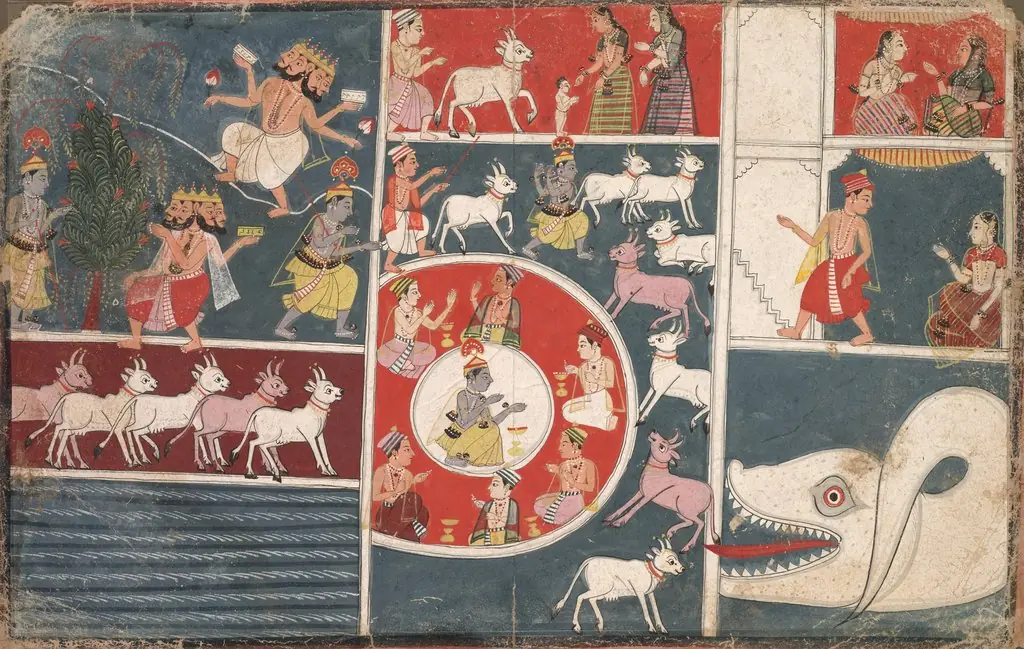 Krishna Playing the Flute and other Episodes from the Bhagavata Purana
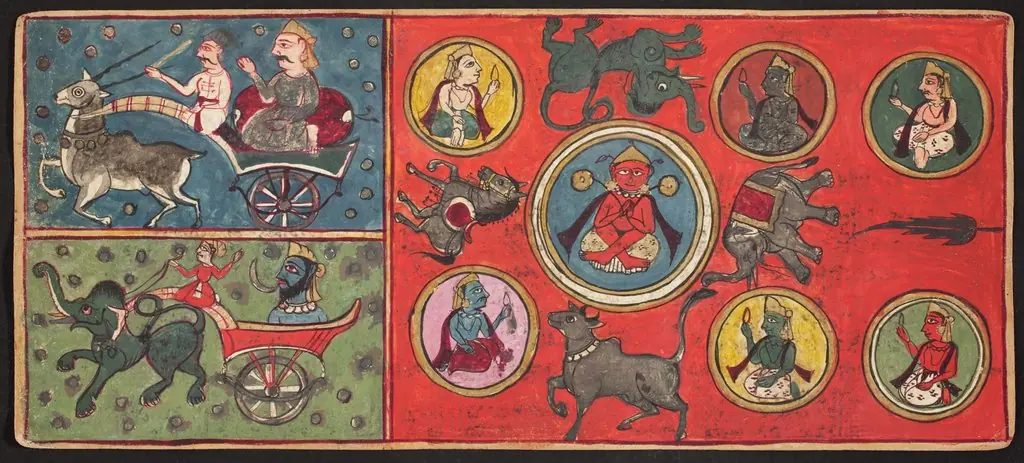 Tantric Manuscript, "Sangrahani Sutra"
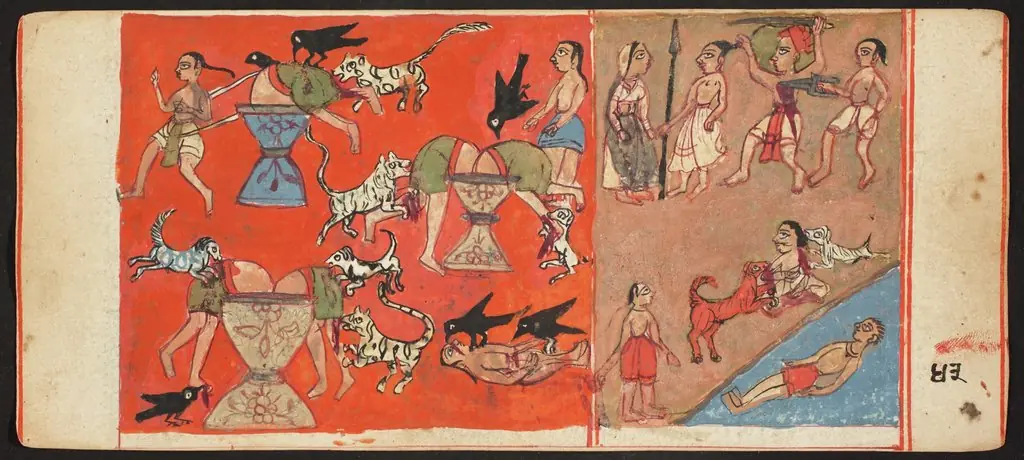 Tantric Manuscript, "Sangrahani Sutra"
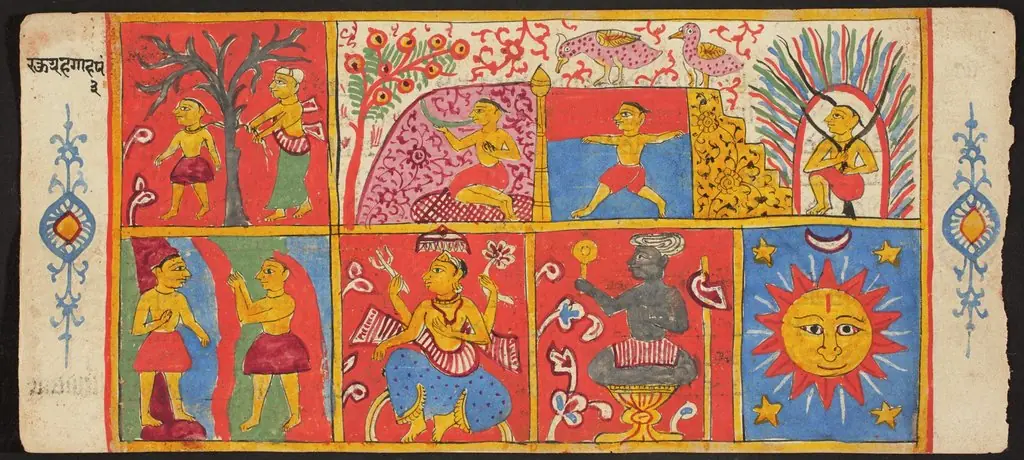 Tantric Manuscript "Sangrahani Sutra"
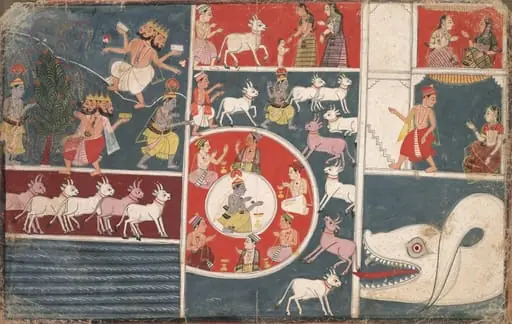 Krishna Playing the Flute and other Episodes from the Bhagavata Purana
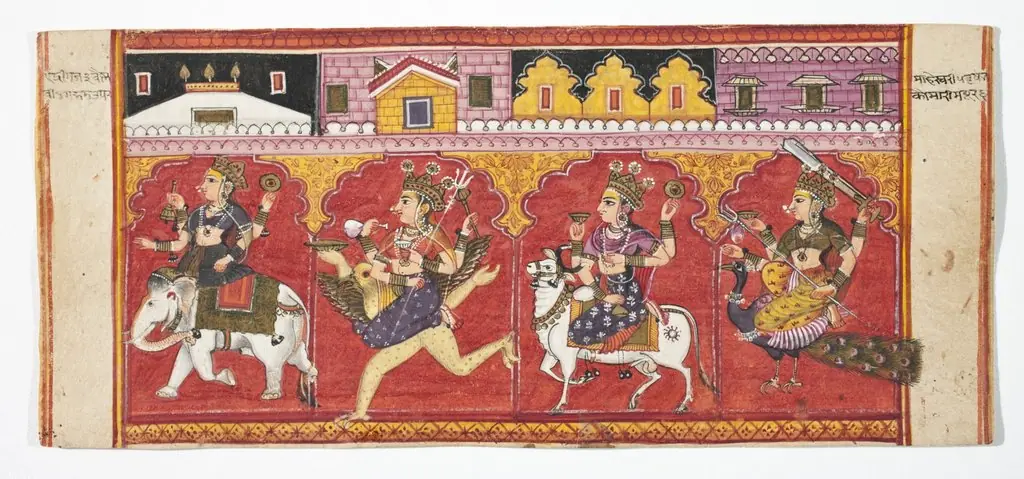 Legend of Durga
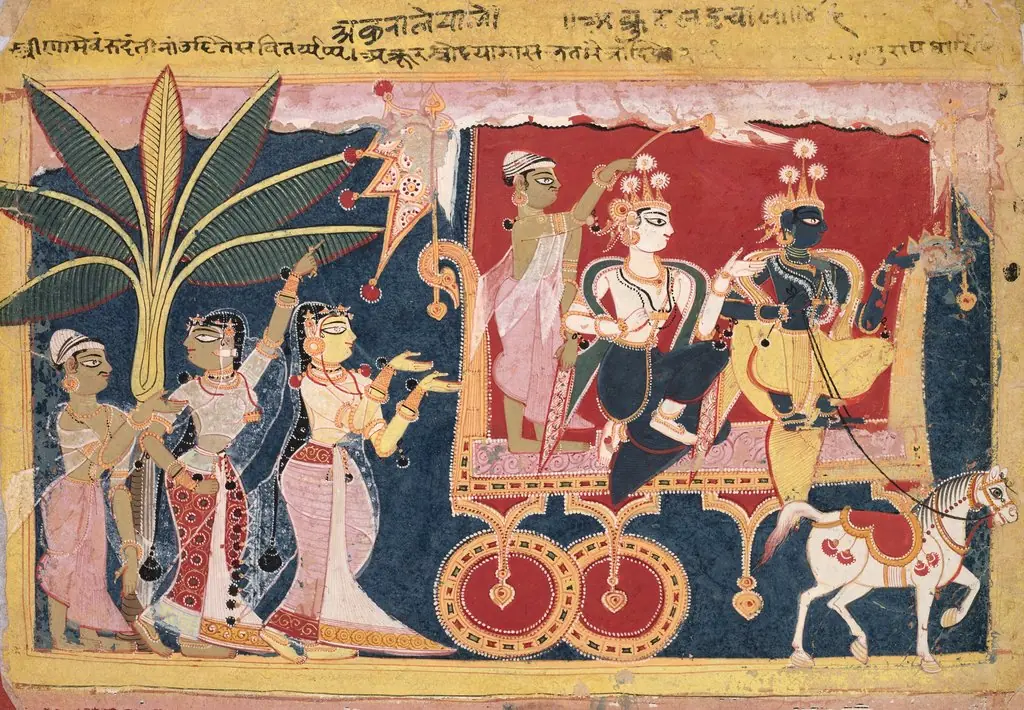 Akrura Drives Krishna and Balarama to Mathura, from the “Isarda Bhagavata Purana,”