Artwork
Krishna Playing the Flute and other Episodes from the Bhagavata Purana
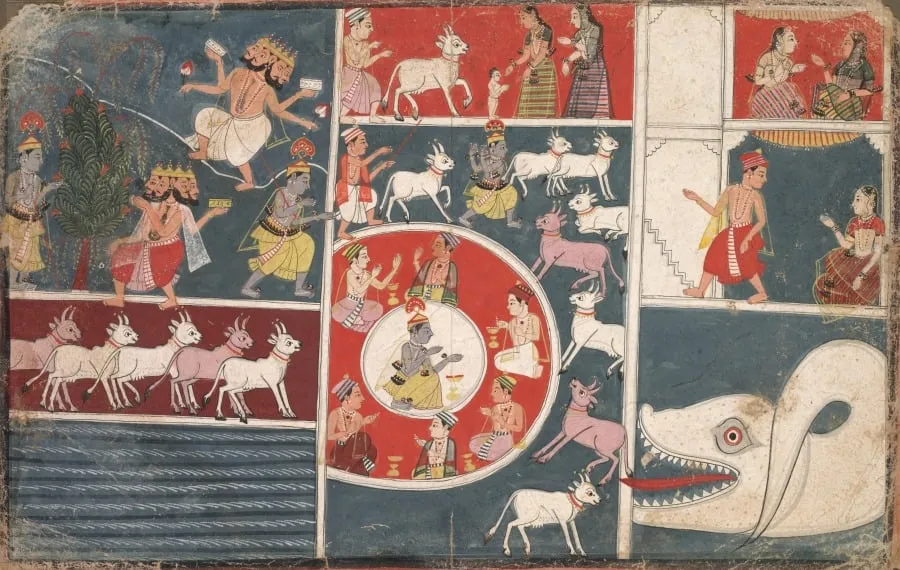
Krishna Playing the Flute and other Episodes from the Bhagavata Purana is an unspecified painting by the Baroque artist Unknown. It dates from 1650 and is held in the collection of the Cleveland Museum of Art.
About this work
Overview
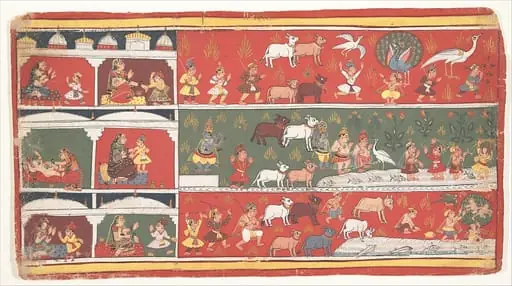
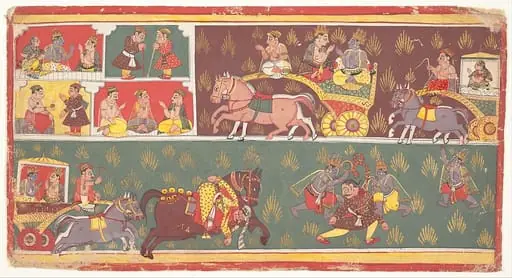
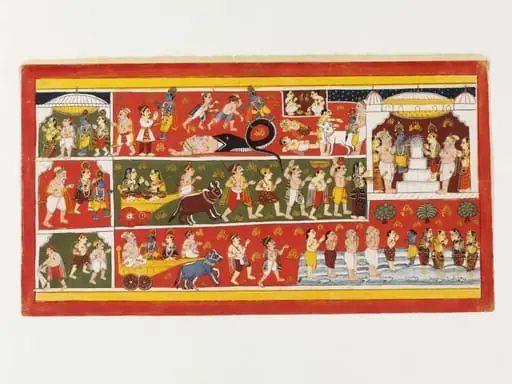
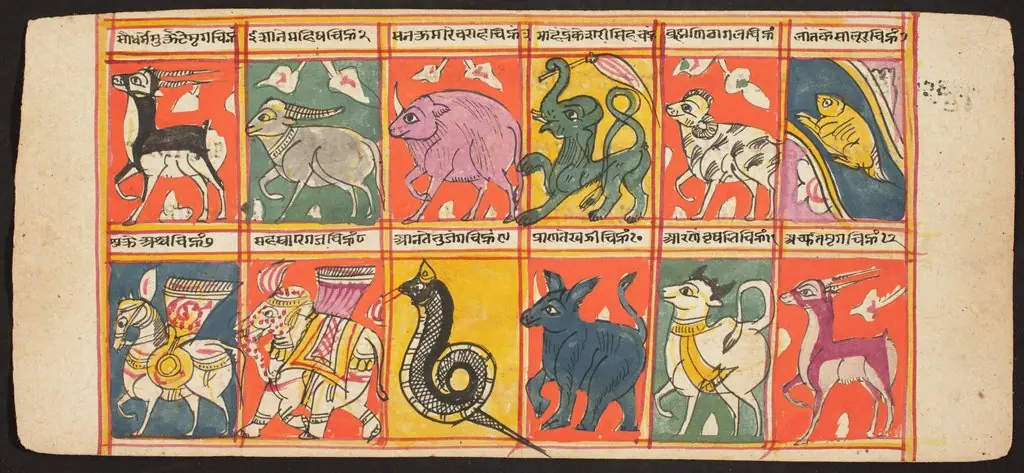
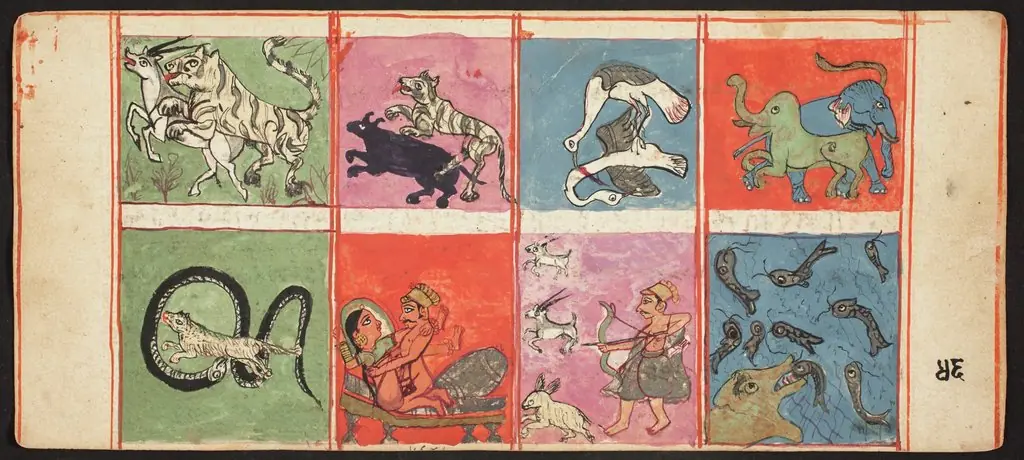
The work, titled “Krishna Playing the Flute and other Episodes from the Bhagavata Purana,” is a multi‑panel painting that arranges several narrative vignettes within a single surface. Each vignette is framed in a compact box, creating a collage‑like composition that guides the viewer across a sequence of mythic moments.
Subject & Meaning
Central to the composition is a red circular field showing a seated deity surrounded by goats and attendants, echoing pastoral scenes from the Bhagavata Purana.
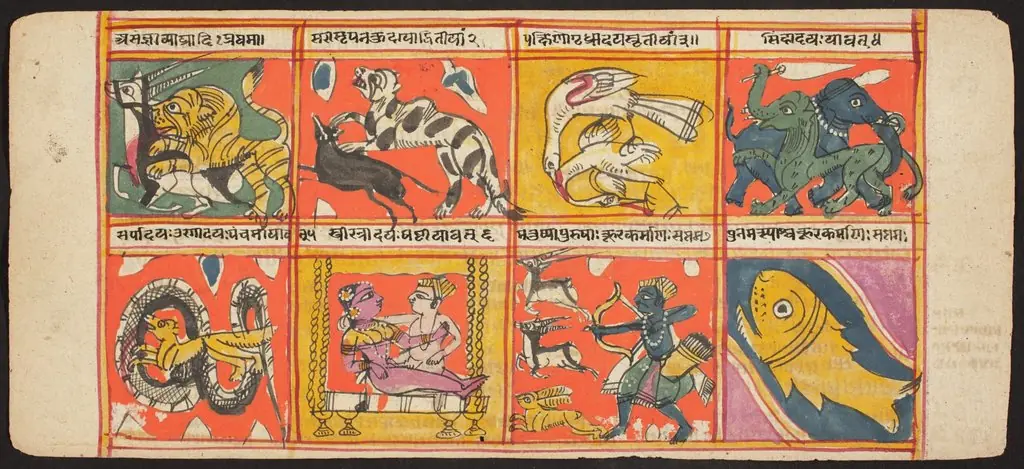
The left panel depicts a bare‑chested figure crowned in gold, identified as Krishna, whose flute draws dancers into a celebratory circle. Central to the composition is a red circular field showing a seated deity surrounded by goats and attendants, echoing pastoral scenes from the Bhagavata Purana. The rightmost scene features a menacing, toothed fish looming over a couple, suggesting the myth of Matsya, the fish incarnation of Vishnu.
Technique & Style
The painter employs a vivid palette of reds, blues, and golds, each hue outlined in stark black to emphasize form and movement. The crowded arrangement of figures and the rapid, gestural brushwork create a sense of kinetic energy, characteristic of the Malwa school’s decorative exuberance in 18th‑century Indian art.
Context
The painting belongs to a tradition of narrative religious art that visualizes episodes from Hindu scripture for devotional and didactic purposes. By juxtaposing multiple episodes within a single frame, the work invites contemplation of the deity’s various avatars and their moral teachings, a common practice in temple and court patronage.
History & Provenance
While the exact commission and ownership history are not recorded, the stylistic affinities with Malwa regional workshops suggest the piece originated in central India during the late pre‑colonial period, when such multi‑scene compositions were popular among both aristocratic and temple patrons.
Artist & collection

 Domestic Scene
 Giacomo and Cardinal Marco, investing Andrea, Abbot of San Zeno, with his Benefice
 The Nymph of Fontainebleau
 Portrait of a Woman
 Madonna and Child with Saints in the Enclosed Garden
 Venus and Minerva
 Family Group of Four on Sofa
 Wall painting from Room H of the Villa of P. Fannius Synistor at Boscoreale