Artwork
Kama
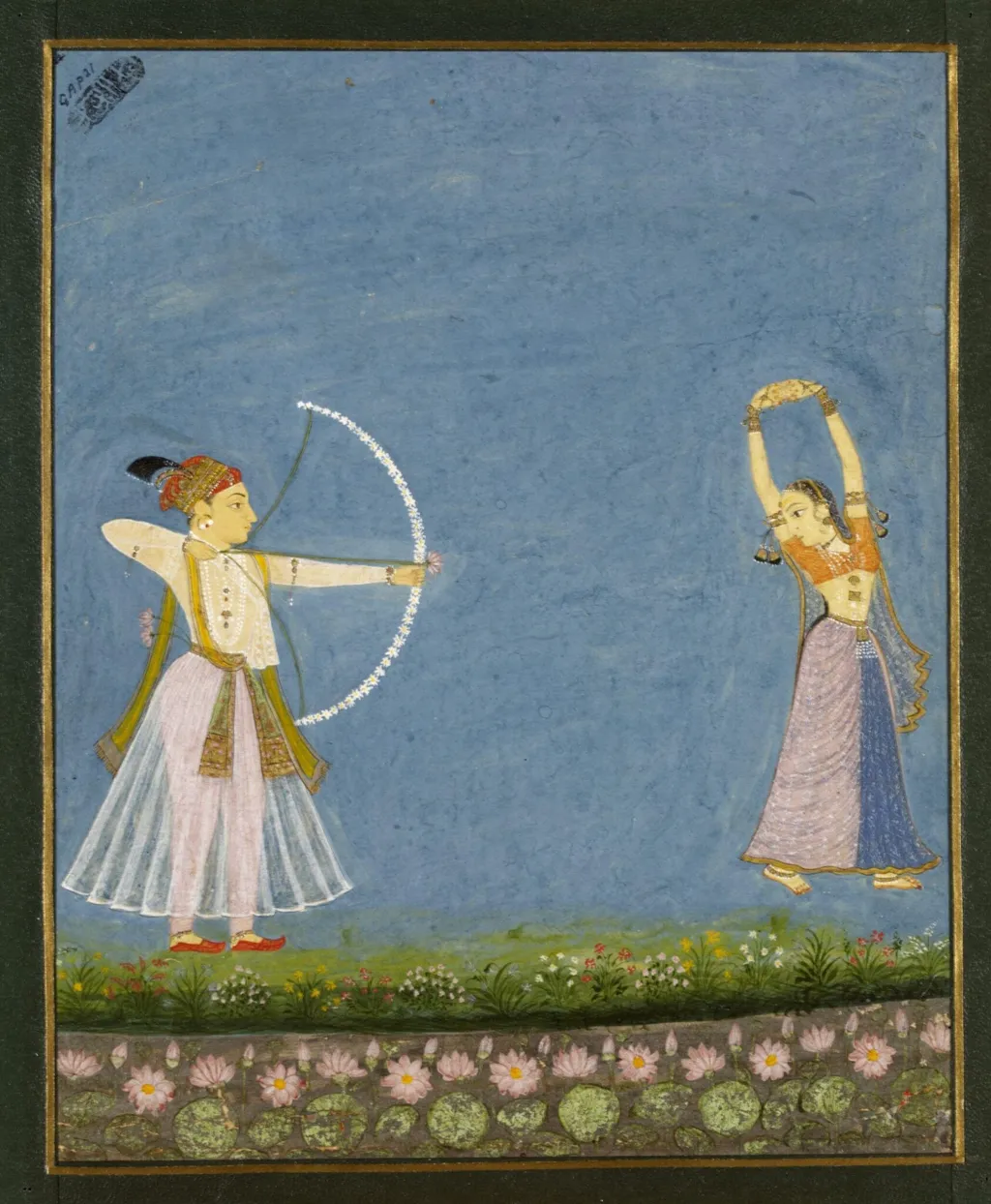
Kama is a paint painting by the Barbizon school artist Unknown. It dates from 1680 and is held in the collection of the Victoria and Albert Museum.
About this work
Overview
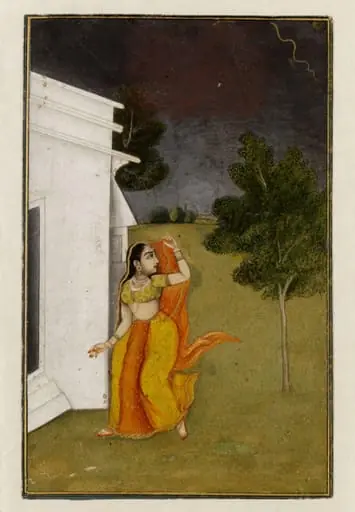
Created around 1680, this opaque watercolor on paper painting portrays a dynamic scene involving Kama, the Hindu deity of love, and a second figure, set against a vibrant blue sky backdrop.
Subject & Meaning
The painting depicts Kama, identifiable by the bow and arrow (with one arrow already in flight), targeting a young figure. The second figure, balanced on one leg with arms raised, suggests a dancer. The scene conveys the mythological role of Kama in inducing love or desire, potentially capturing the moment before the arrow's effect is realized.
Technique & Style
Executed in opaque watercolor on paper, the work features bright, flowing attire on the figures, a lush garden with lotus flowers, and a dominant blue sky. The bold colors, dramatic poses, and the implied movement (through the arrow's trajectory and the dancer's balance) align with expressive qualities reminiscent of Baroque influences.
History & Provenance
Date of creation is circa 1680. Further provenance details are not provided in the available information.
Context
While the painting's Indian subject matter reflects its origin, the stylistic elements (vibrancy, movement) show a convergence of traditional Indian art with broader, contemporaneous artistic trends, potentially hinting at cultural exchange or the adoption of global stylistic currents during this period.
Legacy
The painting's legacy is not explicitly detailed in the provided information, though its survival suggests it has maintained relevance as a representation of Hindu mythology and potentially as an example of late 17th-century Indian artistry.
Artist & collection

 Domestic Scene
 Giacomo and Cardinal Marco, investing Andrea, Abbot of San Zeno, with his Benefice
 The Nymph of Fontainebleau
 Portrait of a Woman
 Madonna and Child with Saints in the Enclosed Garden
 Venus and Minerva
 Family Group of Four on Sofa
 Wall painting from Room H of the Villa of P. Fannius Synistor at Boscoreale
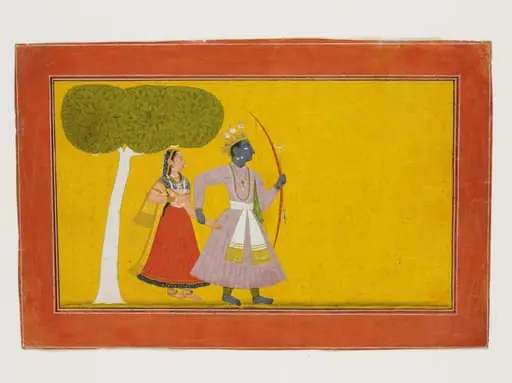 Rama and Sita
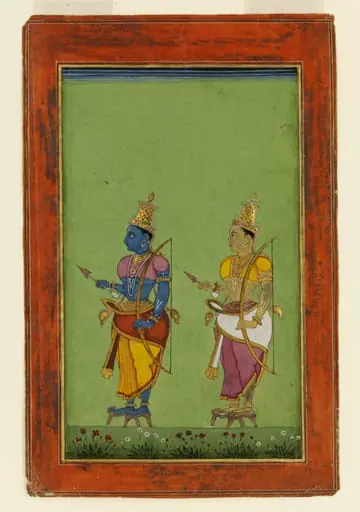 Rama and Lakshmana
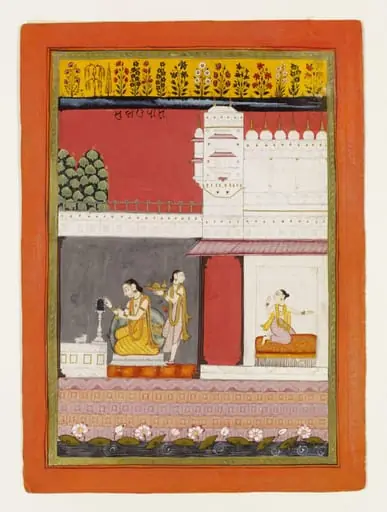 Kamodini Ragini
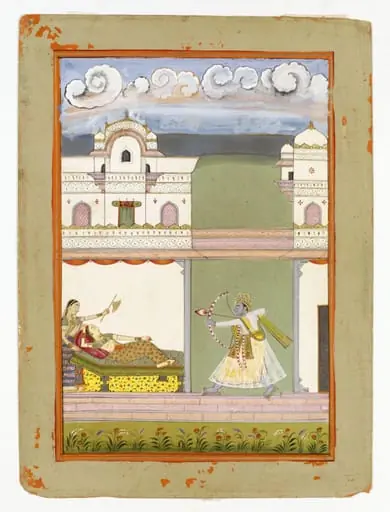 Vibhasa Ragini
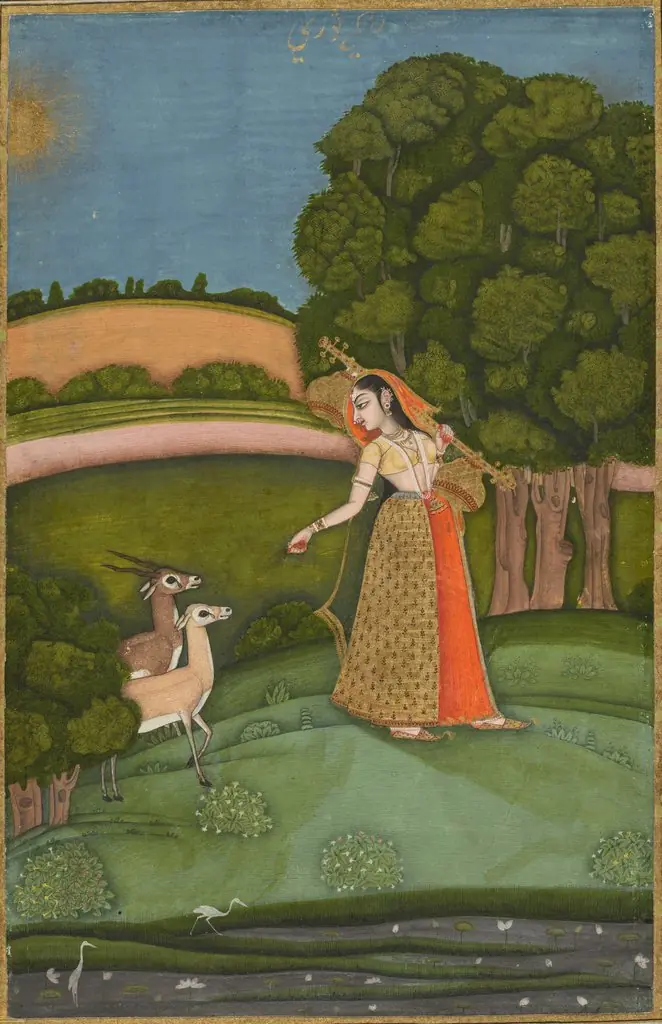 Todi Ragini, from a Ragamala Series
![Rama and Lakshmana Fighting Ravana, from a Dashavatara (Ten Incarnations [of Vishnu]) series, by Unknown](https://artifactworldgallery.com/img/unknown--rama-and-lakshmana-fighting-ravana-from-a-dashavatara-ten-in--5e1e27c9fffbe47d-w320.webp) Rama and Lakshmana Fighting Ravana, from a Dashavatara (Ten Incarnations [of Vishnu]) series
Rama and Lakshmana Fighting Ravana, from a Dashavatara (Ten Incarnations [of Vishnu]) series![Rama and Lakshmana Fighting Ravana, from a Dashavatara (Ten Incarnations [of Vishnu]) series, by Unknown](https://artifactworldgallery.com/img/unknown--rama-and-lakshmana-fighting-ravana-from-a-dashavatara-ten-in--44f1c99a2c65cc54-w320.webp) Rama and Lakshmana Fighting Ravana, from a Dashavatara (Ten Incarnations [of Vishnu]) series
Rama and Lakshmana Fighting Ravana, from a Dashavatara (Ten Incarnations [of Vishnu]) series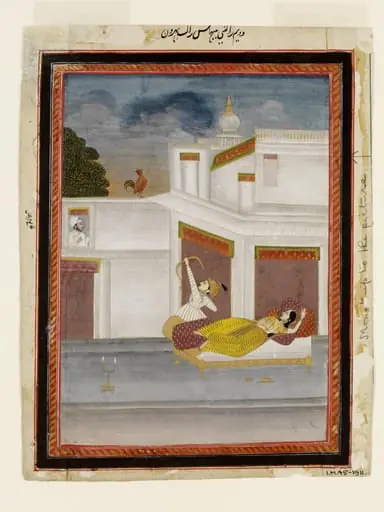 Vibhasa ragini
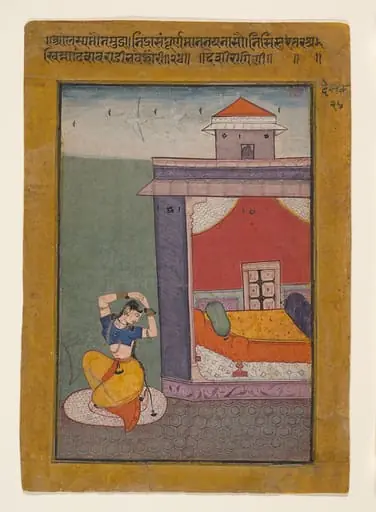 Untitled
 Madhu-madhavi ragini