Artwork
Varari Ragini
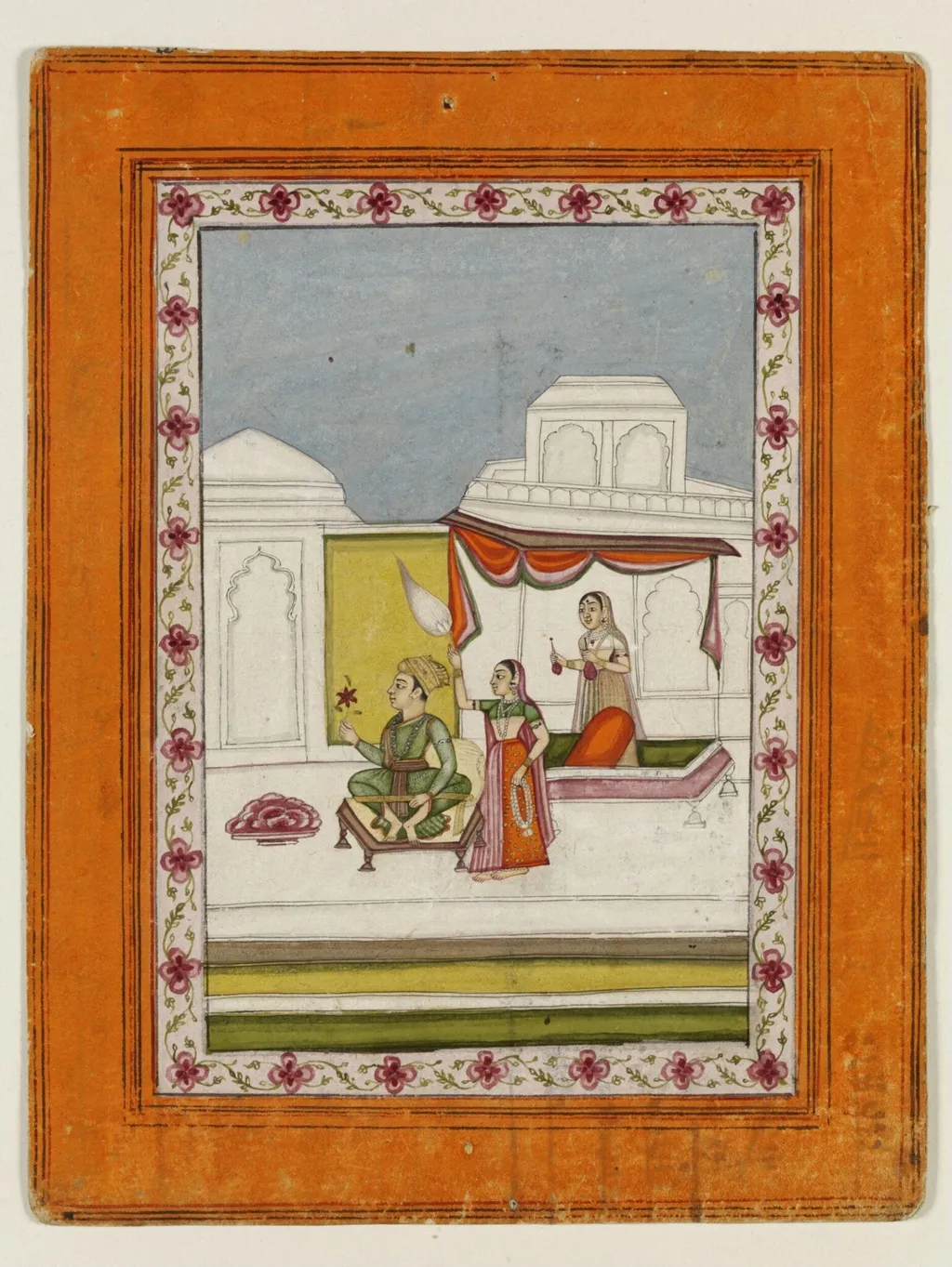
Varari Ragini is a paint painting by the Mughal Painting artist Unknown. It dates from 1850 and is held in the collection of the Victoria and Albert Museum. This opaque watercolor on paper belongs to the Ragamala series, a visual interpretation of Indian musical modes.
About this work
Overview
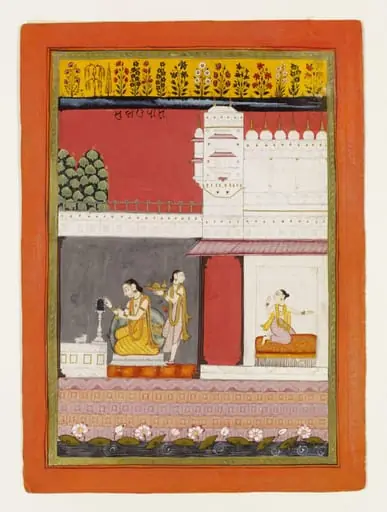
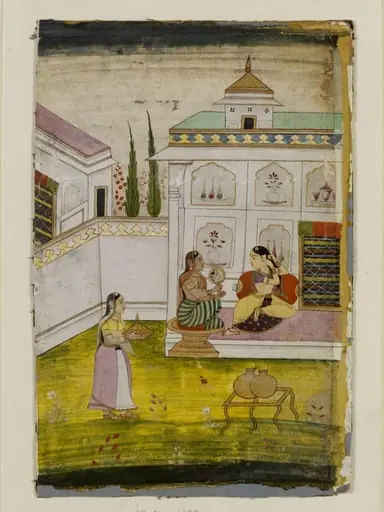
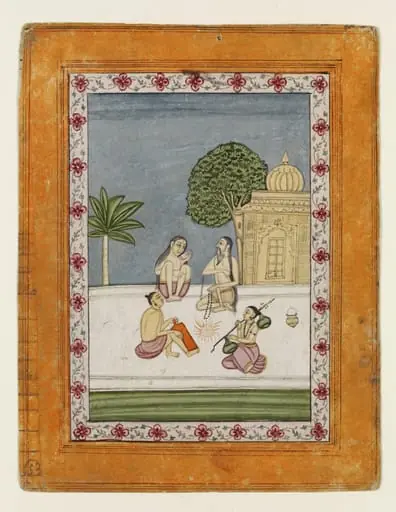
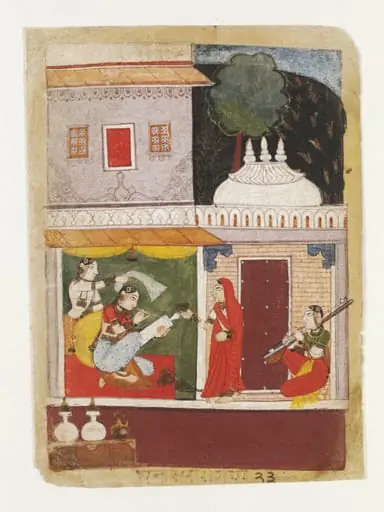
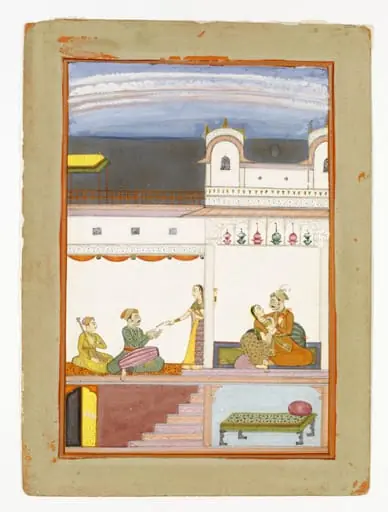
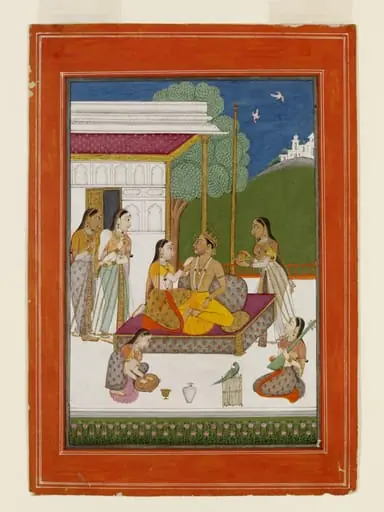
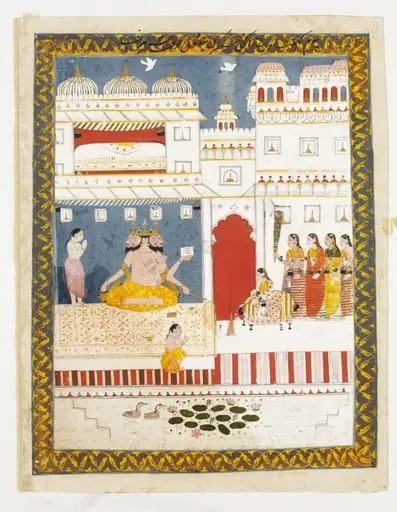
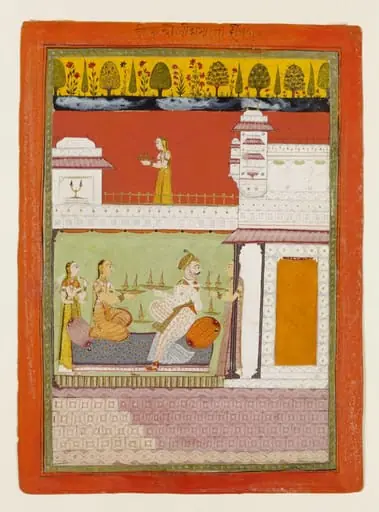
This opaque watercolor on paper belongs to the Ragamala series, a visual interpretation of Indian musical modes. It illustrates Varari Ragini, associated with longing and twilight. The composition centers on a prince on a terrace, surrounded by attendants, rendered in vivid pigments against a pale sky. Delicate floral borders enclose the scene, reinforcing its lyrical tone.
Subject & Meaning
The prince, seated in repose with a flower in hand, embodies the introspective mood of Varari Ragini. His two attendants, one fanning him, suggest quiet service and intimacy. The setting—a palace terrace at day’s end—evokes solitude and contemplation, aligning with the raga’s emotional character. The flower may symbolize transient beauty, a common motif in devotional and musical iconography.
Technique & Style
The painting employs mineral pigments in rich, saturated hues, applied with fine brushwork. Architectural details like arched windows and a red canopy are rendered with precision, while the floral border features intricate, repeating patterns. The flat perspective and decorative framing reflect regional Rajput aesthetics, emphasizing pattern and color over spatial depth.
History & Provenance
Created in the late 17th or early 18th century, likely in a Rajput court studio, this work was part of a larger set illustrating musical ragas. Such albums were commissioned by nobility for personal devotion or aesthetic pleasure. Its survival suggests careful preservation, possibly within royal collections before entering institutional holdings.
Context
Ragamala paintings emerged as a fusion of poetry, music, and visual art in North Indian courts. Each raga was personified through a scene, linking time of day, emotion, and imagery. Varari Ragini, often depicted at dusk, was associated with separation and quiet yearning, themes mirrored in the prince’s stillness and the fading light of the sky.
Legacy
This painting exemplifies how Indian musical traditions were visually codified in miniature art. Though lesser known than other ragas, Varari Ragini’s representation contributed to a broader cultural practice of synesthetic expression. Surviving examples like this one remain vital for understanding the interplay between sound, emotion, and image in pre-modern South Asia.
Artist & collection

 Domestic Scene
 Giacomo and Cardinal Marco, investing Andrea, Abbot of San Zeno, with his Benefice
 The Nymph of Fontainebleau
 Portrait of a Woman
 Madonna and Child with Saints in the Enclosed Garden
 Venus and Minerva
 Family Group of Four on Sofa
 Wall painting from Room H of the Villa of P. Fannius Synistor at Boscoreale