Artwork
Kasim Pasa, the former Ottoman Naval Arsenal, showing a crane and a ship under construction
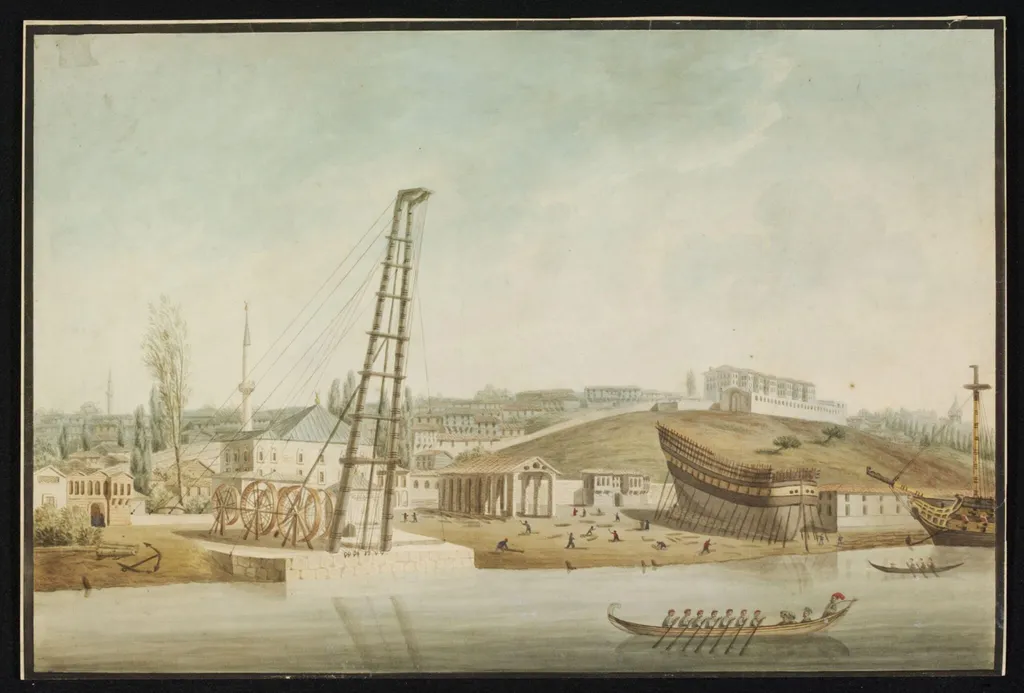
Kasim Pasa, the former Ottoman Naval Arsenal, showing a crane and a ship under construction is a watercolor work on paper by the Romanticist artist Unknown. It dates from 1820 and is held in the collection of the Victoria and Albert Museum. This 1820 watercolour depicts the Kasim Pasa Naval Arsenal in Constantinople, capturing a moment of active shipbuilding.
About this work
Overview
The composition emphasizes functional architecture and manual labor, reflecting the operational rhythm of an imperial dockyard during the early 19th century.
This 1820 watercolour depicts the Kasim Pasa Naval Arsenal in Constantinople, capturing a moment of active shipbuilding. A crane hoists materials beside a vessel in early construction, while laborers move about the yard. The scene is rendered in muted tones, with soft atmospheric light suggesting a calm day. The composition emphasizes functional architecture and manual labor, reflecting the operational rhythm of an imperial dockyard during the early 19th century.
Subject & Meaning
The image documents the Ottoman Empire’s naval infrastructure at a time of modernization efforts. The crane and partially built ship signify technological continuity amid traditional methods. The presence of workers and small boats underscores the site’s role as a working harbor, not merely a symbolic space. The scene conveys neither grandeur nor decay, but the steady, unremarkable labor sustaining imperial maritime power.
Technique & Style
Executed in watercolour, the work employs delicate washes and restrained color to suggest depth and atmosphere without dramatic contrast. Details are rendered with precision but without embellishment, favoring clarity over ornament. The brushwork is controlled, with soft edges defining architectural forms and figures, aligning with the observational style common among European travelers documenting Ottoman sites during this period.
History & Provenance
The drawing is likely connected to the circle of British travelers who visited Constantinople around 1810, possibly influenced by sketches made by a Greek artist accompanying John Cam Hobhouse and Lord Byron. Its style matches other works attributed to an anonymous English visitor active in the region. The image may have originated as a record for private use, later circulating among collectors interested in Ottoman industry.
Context
In the early 1800s, the Ottoman navy was undergoing gradual reform, with dockyards like Kasim Pasa serving as centers for both maintenance and new construction. Hobhouse’s 1813 writings describe the arsenal as a bustling, if outdated, facility. This watercolour aligns with those accounts, capturing a moment when traditional wooden shipbuilding coexisted with emerging mechanical aids, before full-scale industrialization transformed the empire’s naval capabilities.
Legacy
The work contributes to a visual archive of Ottoman industrial life, offering a quiet counterpoint to more sensationalized depictions of the empire. Its modest scale and unembellished realism make it a valuable record of daily activity in a key imperial facility. Though not widely exhibited, it remains a reference point for scholars studying the material culture and technological practices of early 19th-century Constantinople.
Artist & collection

 Domestic Scene
 Giacomo and Cardinal Marco, investing Andrea, Abbot of San Zeno, with his Benefice
 The Nymph of Fontainebleau
 Portrait of a Woman
 Madonna and Child with Saints in the Enclosed Garden
 Venus and Minerva
 Family Group of Four on Sofa
 Wall painting from Room H of the Villa of P. Fannius Synistor at Boscoreale
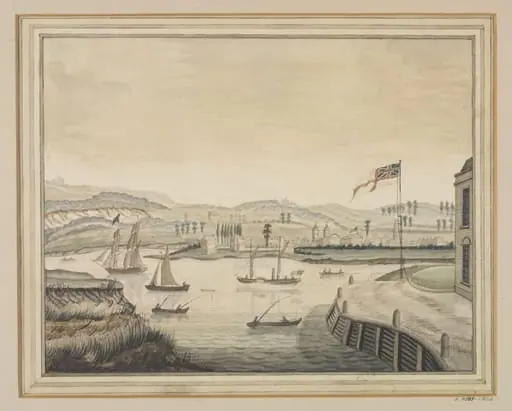 Mouth of the River Lea facing Greenwich
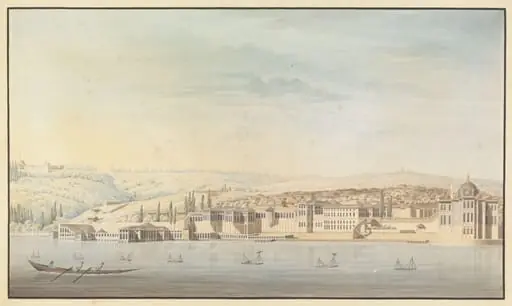 Former Dolmabahçe Palace and Mosque
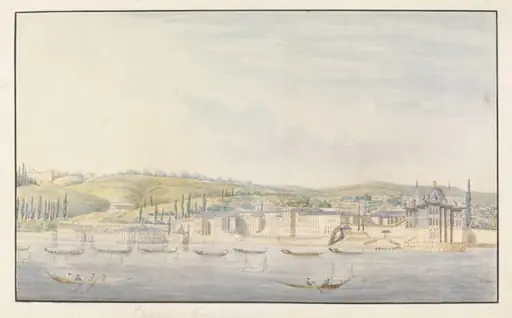 Former Dolmabahçe Palace and Mosque
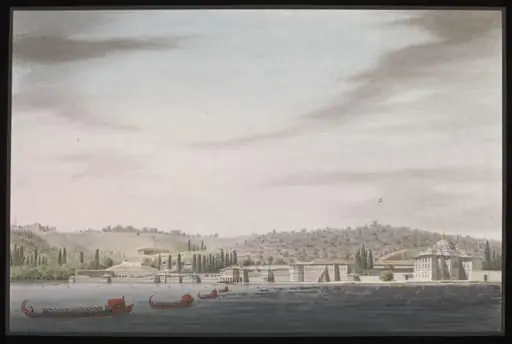 Besiktas on the Bosphorus
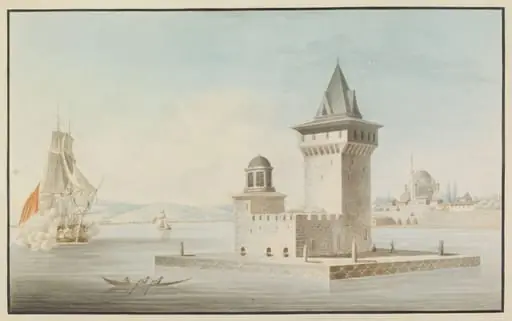 Kiz Kulesi (Leander's or Maiden's Tower) in the Bosphorus with Ayazma Camii near the shore at Üsküdar (Scutari)
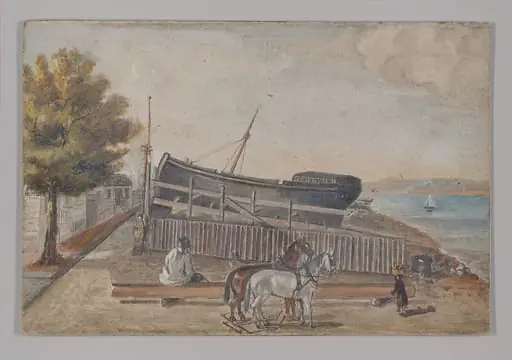 Berg's Ship Yard
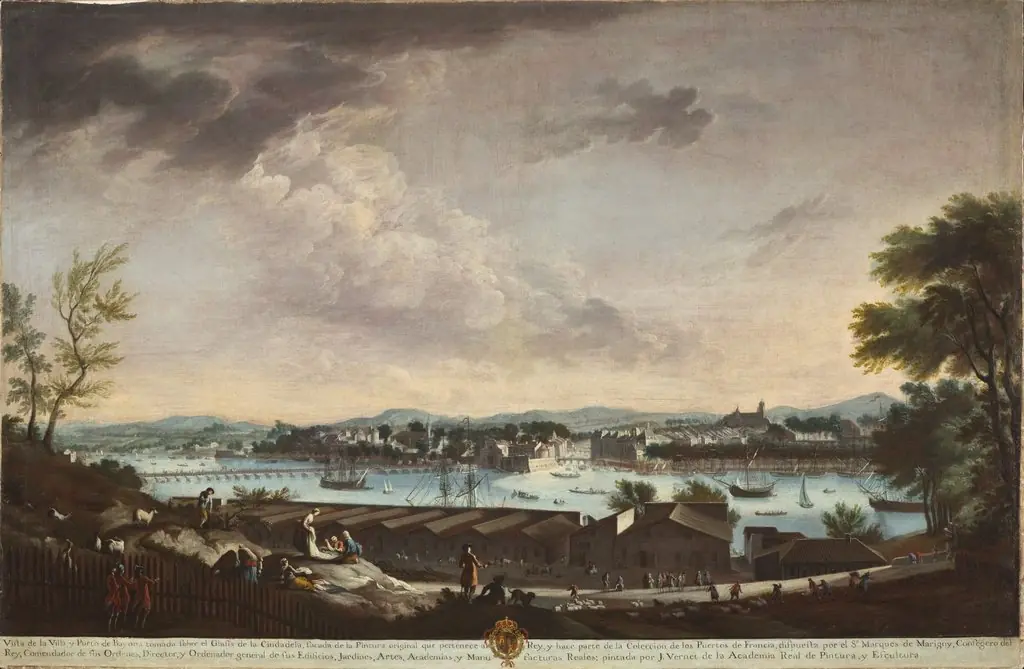 View of the Town and Port of Bayonne (La villa y puerto de Bayona)
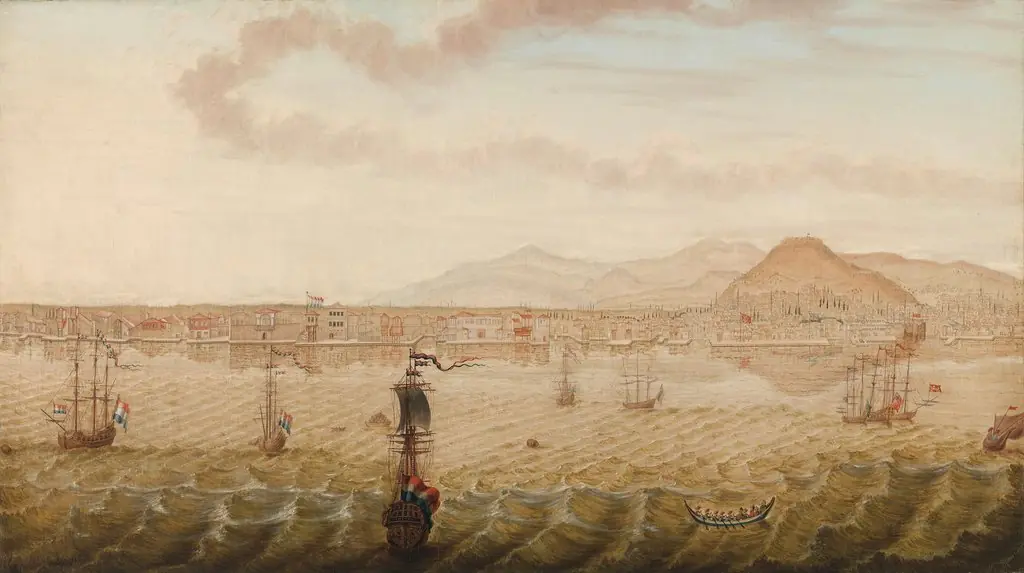 View of Smyrna (Izmir)
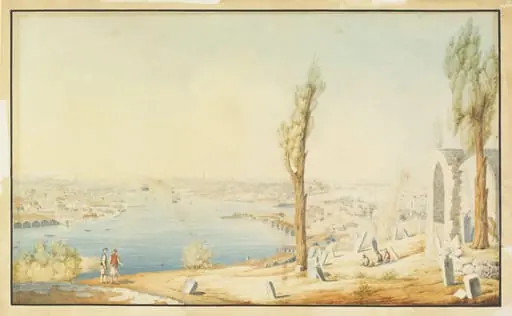 Constantinople and the Golden Horn from the cemetery above Eyüp
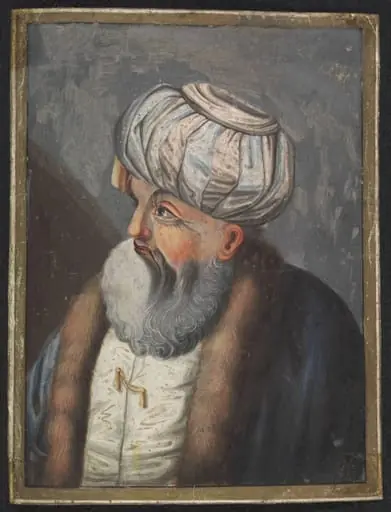 Portrait, head and shoulders, facing left, possibly of an Ottoman Pasha