Artwork
Constantinople and the Golden Horn from the cemetery above Eyüp
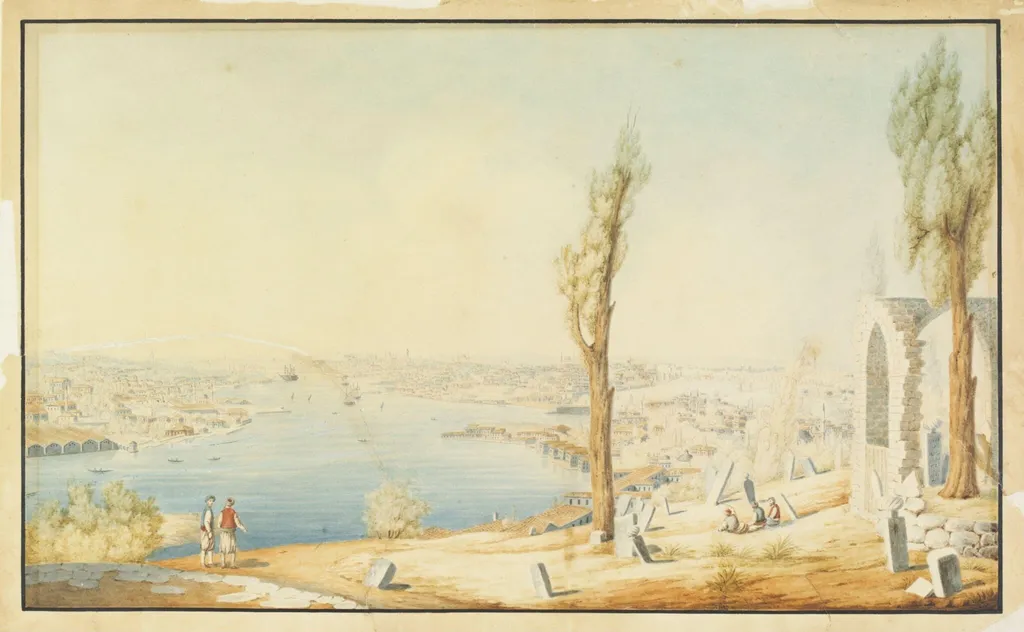
Constantinople and the Golden Horn from the cemetery above Eyüp is a watercolor work on paper by the Romanticist artist Giuseppe Schranz. It dates from 1837 and is held in the collection of the Victoria and Albert Museum.
About this work
Overview
Executed in 1837, this watercolour by Giuseppe Schranz captures a panoramic view of Constantinople and the Golden Horn as seen from the Eyüp cemetery.
Executed in 1837, this watercolour by Giuseppe Schranz captures a panoramic view of Constantinople and the Golden Horn as seen from the Eyüp cemetery. Part of a seven-piece series on paper bearing the J WHATMAN TURKEY MILL 1834 watermark, each sheet measures 25.5 by 45 centimetres. The group was offered at Sotheby’s in 1981, with scholarly attention drawn to the possibility that Schranz’s sisters, who traveled to the city around the same time, may have contributed to the series.
Subject & Meaning
The scene presents a quiet, contemplative landscape: two figures stand near the shore amid rocky terrain dotted with tombstones and sparse vegetation. Beyond them, the city rises in dense clusters of buildings, their forms softened by atmospheric light. The Golden Horn, calm and reflective, anchors the composition. The placement of the figures among graves suggests a meditation on memory, place, and transience, common in 19th-century travel art.
Technique & Style
Schranz employed delicate washes of watercolour to render subtle shifts in light across architecture and water. The palette remains restrained, with muted blues, ochres, and greys conveying a hushed, early morning atmosphere. Soft edges and minimal detail in the distant skyline emphasize mood over topographical precision, aligning with Romantic-era tendencies to prioritize emotional resonance over documentary accuracy.
History & Provenance
The watercolour series was created during Schranz’s time in Constantinople and remained in private hands until its 1981 auction at Sotheby’s. Attribution to Schranz is based on stylistic consistency and contemporary records, though the involvement of his sisters—also artists who traveled to the region—has been proposed as a plausible alternative. No definitive documentation confirms authorship of each sheet, leaving room for ongoing scholarly discussion.
Context
Created during a period of heightened European interest in the Ottoman Empire, the work reflects the Romantic fascination with the East as a site of historical depth and lyrical beauty. Travelers and artists often depicted Constantinople’s skyline and waterfronts as symbols of a fading empire, blending observation with sentiment. Schranz’s focus on light and stillness aligns with broader trends in topographical watercolour, where natural and urban elements were rendered to evoke quiet awe.
Legacy
Though not widely exhibited, the series contributes to the corpus of 19th-century European Orientalist watercolours that shaped Western visual perceptions of Constantinople. Its modest scale and intimate tone distinguish it from grander, more theatrical depictions of the city. The unresolved question of authorship underscores the often-overlooked role of women artists in travel documentation during this era.
Artist & collection
Artist
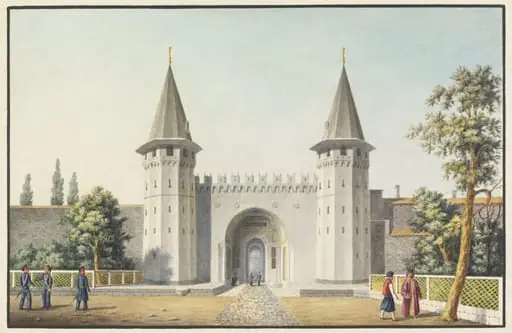
Giuseppe Schranz painted watercolours of 19th-century Istanbul. These soft, detailed views show city gates, mosques, and the waterway between Europe and Asia. He captured places like the Middle Gate of Topkapi Palace…

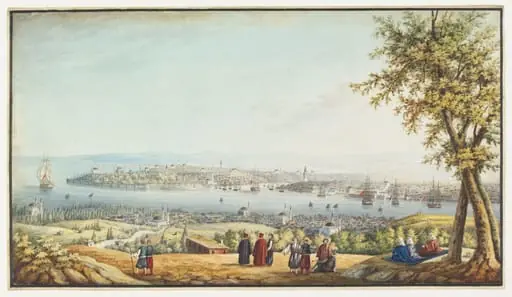
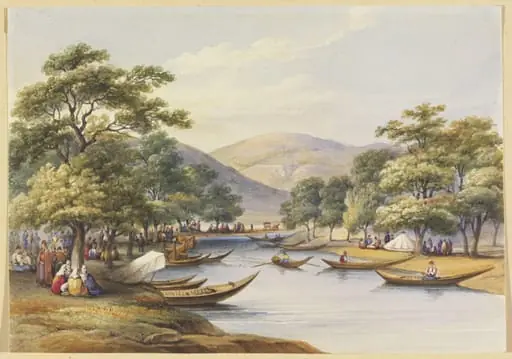
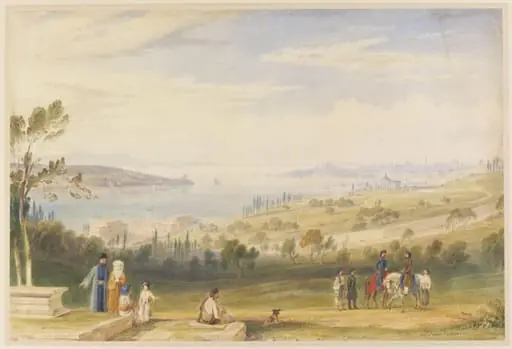 View of the Bosphorus from above Dolmabahçe, looking towards the Sea of Marmara
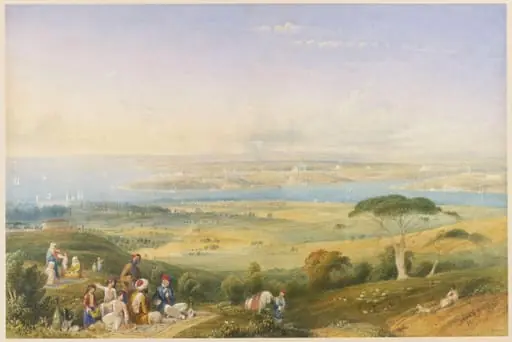 Turks picnicing in fields outside Scutari with a view of Constantinople in the distance
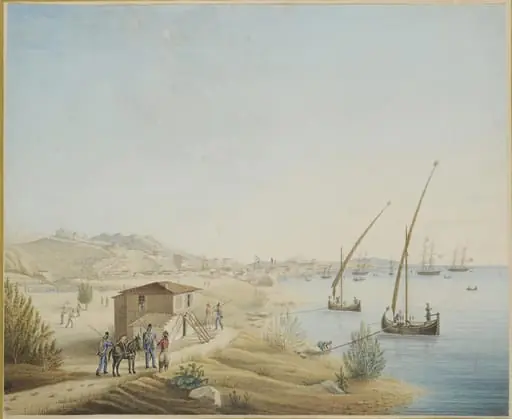 Το λιμάνι της Πάτρας
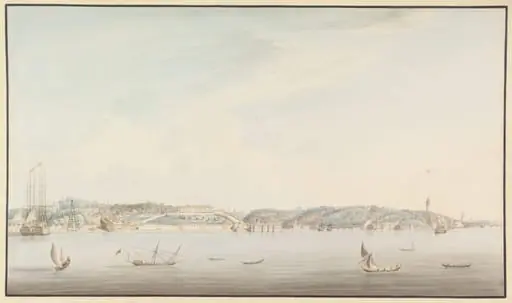 Kasim Pasa, the former Ottoman Naval Arsenal, from the Golden Horn
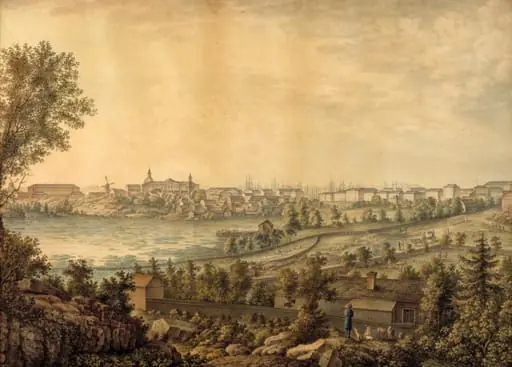 Helsinki nähtynä Kluuvinlahden yli
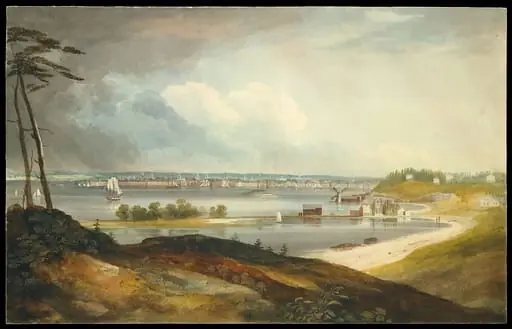 New York from the Heights near Brooklyn
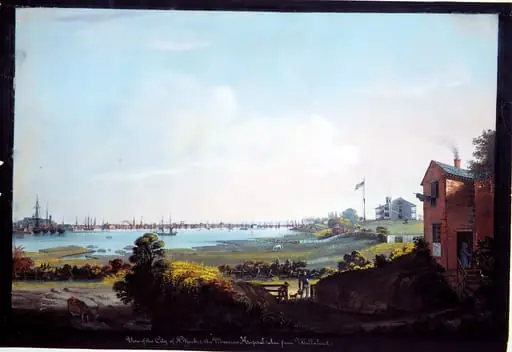 View of the City of New York and the Marine Hospital Taken from Wallabout