Artwork
Krishna as Srinathji
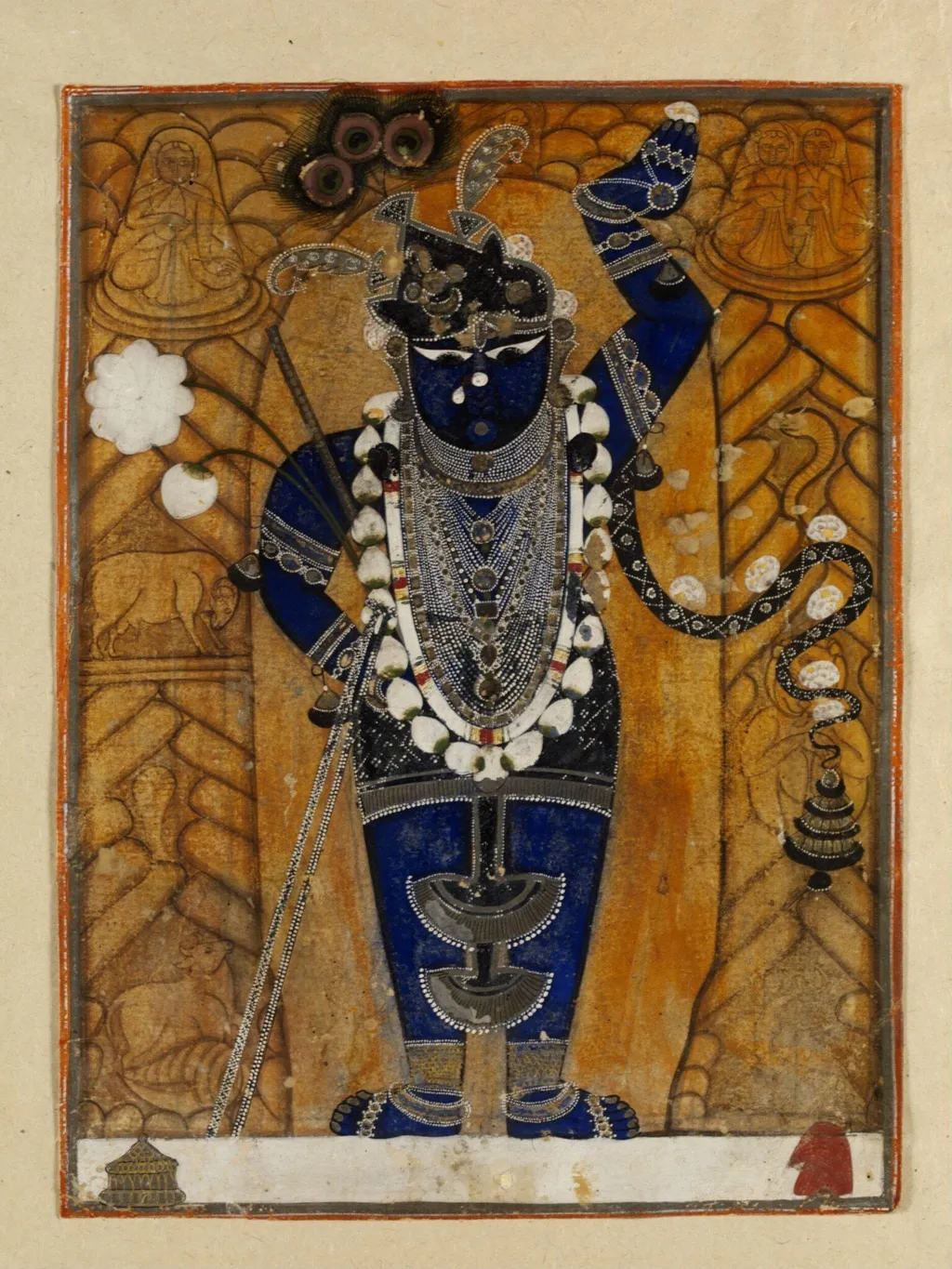
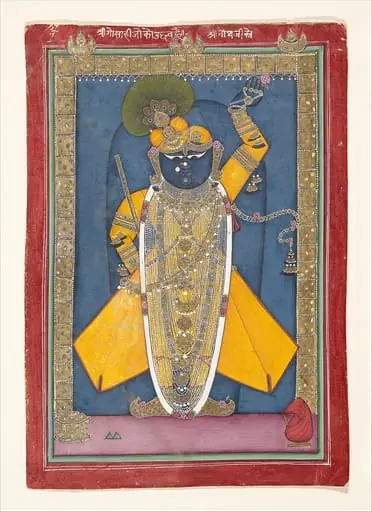
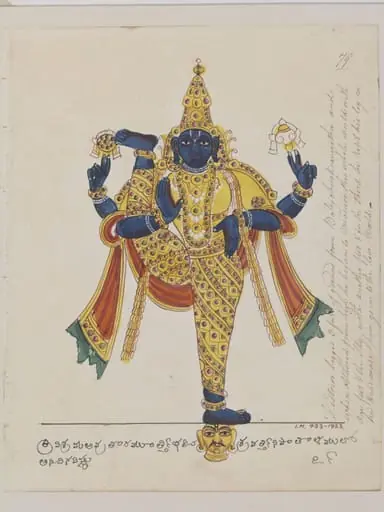
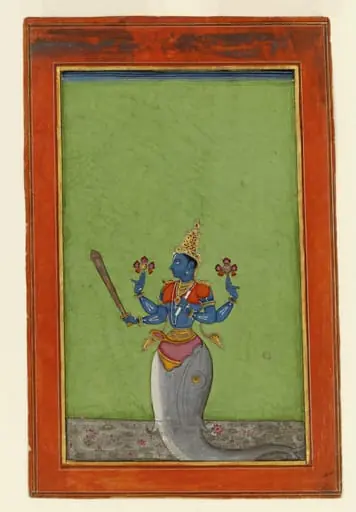
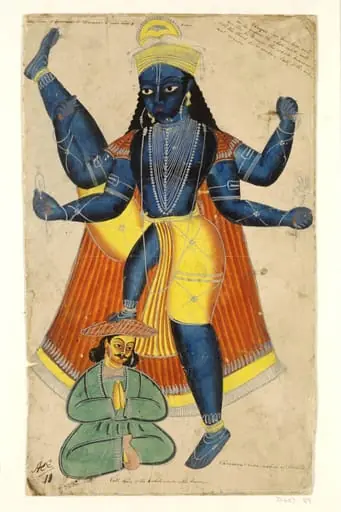
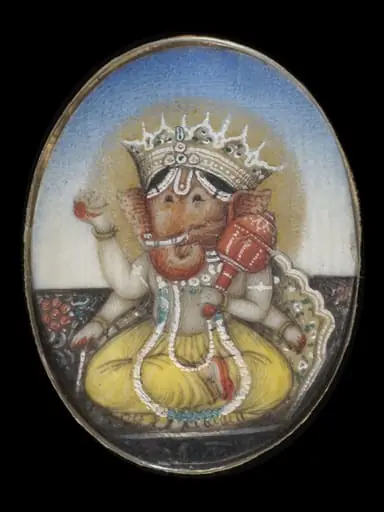
Krishna as Srinathji is a paint painting by the Mughal Painting artist Unknown. It dates from 1850 and is held in the collection of the Victoria and Albert Museum. This painting portrays the deity Srinathji, a revered form of Krishna worshipped at the Nathadwara temple in Rajasthan.
About this work
Overview
Unlike typical devotional images, it represents a sculpted idol housed in the temple, rendered in paint to serve as a visual counterpart for worship.
This painting portrays the deity Srinathji, a revered form of Krishna worshipped at the Nathadwara temple in Rajasthan. Unlike typical devotional images, it represents a sculpted idol housed in the temple, rendered in paint to serve as a visual counterpart for worship. The composition captures Krishna in the moment he lifts Mount Govardhan, with the mountain itself forming the backdrop, blurring the line between object and scene.
Subject & Meaning
The scene illustrates a key episode from Krishna’s life in which he lifts Mount Govardhan to shelter villagers from torrential rains sent by the god Indra. This act symbolizes divine protection and the rejection of ritualistic worship in favor of devotion. The depiction of Srinathji emphasizes Krishna’s role as a compassionate guardian, reinforcing his intimate connection with devotees through tangible, embodied presence.
Technique & Style
The painting employs fine brushwork and rich pigments to render intricate details of Krishna’s attire and the mountain’s contours. The background is stylized to suggest the mountain’s form without naturalistic depth, focusing instead on symbolic representation. Decorative elements like jewelry and fabric folds are rendered with precision, reflecting the ritual adornments worn by the idol in the temple.
History & Provenance
The image originates from the Pushtimarg tradition, established by Vallabhacharya in the 16th century, which emphasizes personal devotion to Krishna as Srinathji. Paintings like this were created to accompany the idol’s daily rituals and seasonal festivals. Many such works were produced in Nathadwara and surrounding regions, often commissioned by devotees or temple administrators to mark specific liturgical occasions.
Context
In the Pushtimarg tradition, the idol of Srinathji is treated as a living sovereign, adorned with clothing and ornaments that change daily and seasonally. Paintings of the deity functioned as portable devotional aids, allowing worship beyond the temple walls. This practice reflects a broader South Asian tradition where sacred images are dynamically re-clothed to align with ritual calendars and celestial events.
Legacy
This painting tradition continues today, with devotional images of Srinathji still produced for private and temple use. The visual language established in these works—elaborate adornment, symbolic landscape, and intimate scale—has influenced regional painting styles across Rajasthan and Gujarat. The persistence of this imagery underscores the enduring role of material culture in sustaining devotional practice.
Artist & collection

 Domestic Scene
 Giacomo and Cardinal Marco, investing Andrea, Abbot of San Zeno, with his Benefice
 The Nymph of Fontainebleau
 Portrait of a Woman
 Madonna and Child with Saints in the Enclosed Garden
 Venus and Minerva
 Family Group of Four on Sofa
 Wall painting from Room H of the Villa of P. Fannius Synistor at Boscoreale