Artwork
Krishna playing his flute
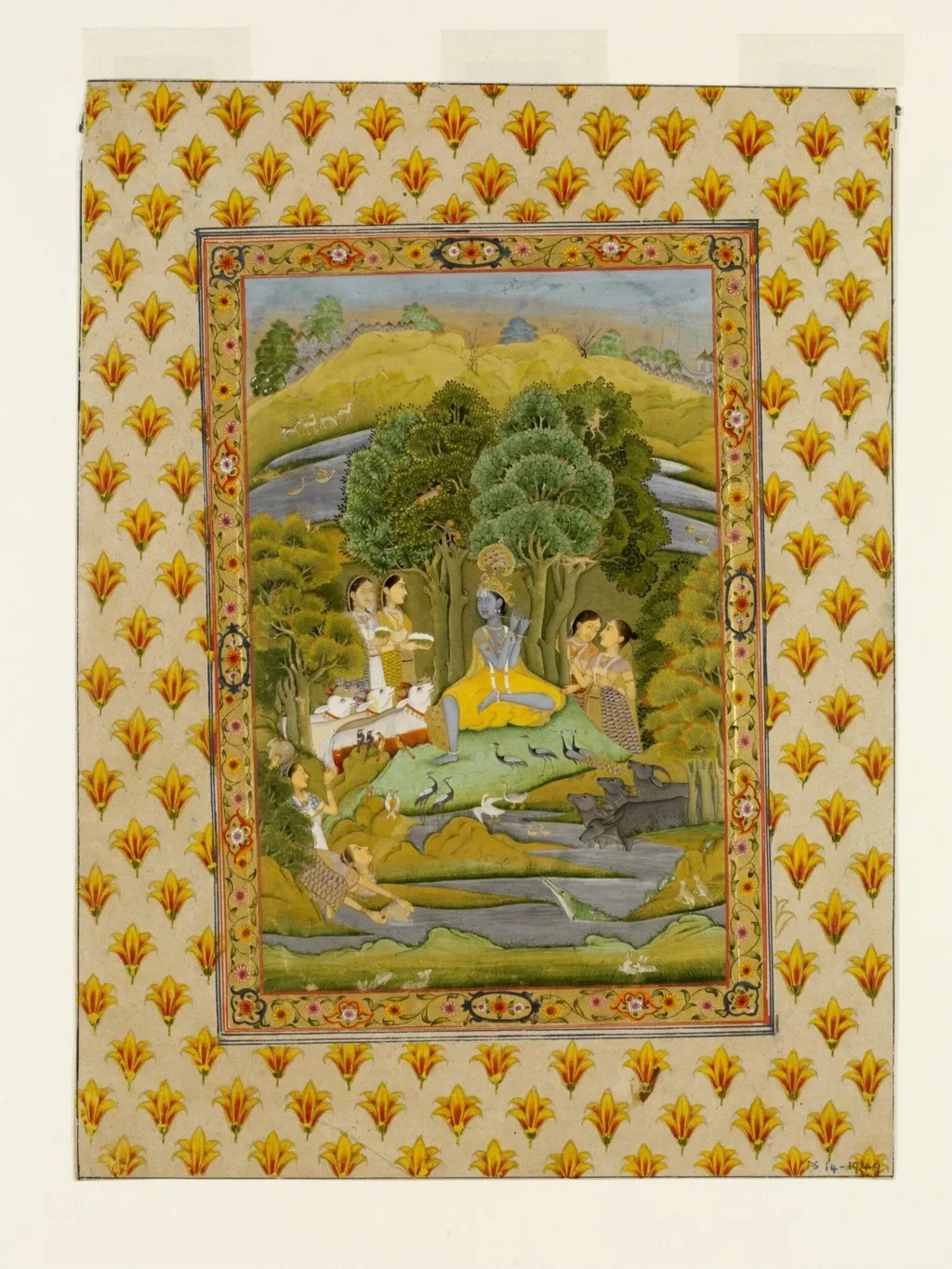
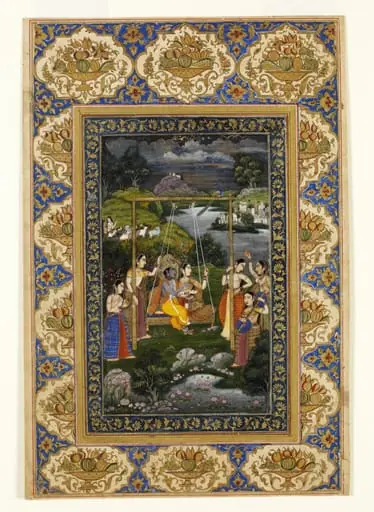
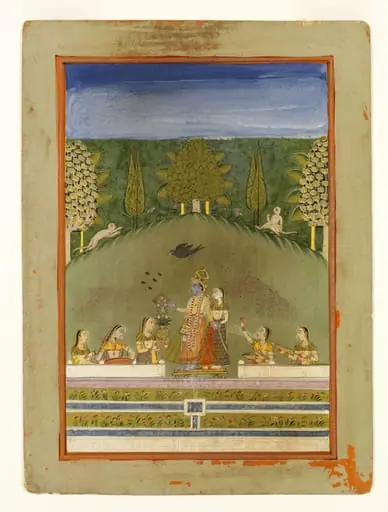
Krishna playing his flute is a paint painting by the Rococo painting artist Unknown. It dates from 1770 and is held in the collection of the Victoria and Albert Museum. The work portrays the Hindu deity Krishna seated cross‑legged on a verdant rise, playing a flute amid a forested landscape.
About this work
Overview
The work portrays the Hindu deity Krishna seated cross‑legged on a verdant rise, playing a flute amid a forested landscape. Flanking him are two gopis, while two additional figures draw water from a river in the foreground. Buffaloes bathe in the water and a small herd of cows approaches from the left, completing the tranquil pastoral scene.
Subject & Meaning
Krishna’s flute symbolizes divine love and the call of the soul, a recurring theme in Vaishnavite iconography. The presence of the gopis reflects devotion and the intimate bond between the deity and his followers. The surrounding animals and natural elements underscore the harmony between the divine and the earthly realm, inviting contemplation of spiritual unity with nature.
Technique & Style
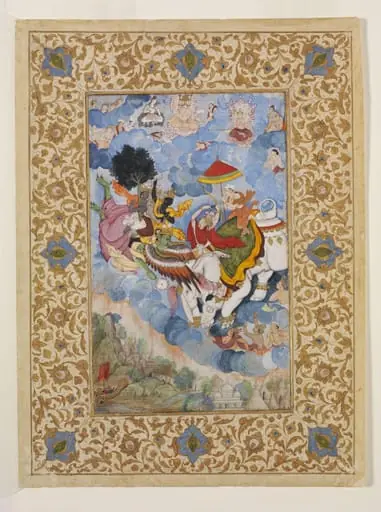
Executed in opaque watercolor on paper, the painting employs a luminous wash that renders foliage, water, and figures with soft edges. A decorative floral border, added by a second hand, frames the central image and reflects a collaborative workshop practice. The overall composition balances detailed figuration with a gentle, atmospheric palette characteristic of Indian miniature traditions.
Context
The scene aligns with devotional art that flourished in North Indian courts, where narratives of Krishna’s youthful exploits were popular subjects. The inclusion of everyday rural activities—water collection, animal husbandry—situates the divine within a familiar agrarian setting, resonating with patrons who sought both religious inspiration and visual identification with pastoral life.
Legacy
Works depicting Krishna’s flute playing have informed successive generations of Indian painters, reinforcing iconographic conventions that persist in contemporary religious art. The collaborative border technique illustrates the workshop dynamics of the period, offering insight into how artists combined individual specialties to produce cohesive devotional images.
Artist & collection

 Domestic Scene
 Giacomo and Cardinal Marco, investing Andrea, Abbot of San Zeno, with his Benefice
 The Nymph of Fontainebleau
 Portrait of a Woman
 Madonna and Child with Saints in the Enclosed Garden
 Venus and Minerva
 Family Group of Four on Sofa
 Wall painting from Room H of the Villa of P. Fannius Synistor at Boscoreale