Artwork
Krishna and Nikumba
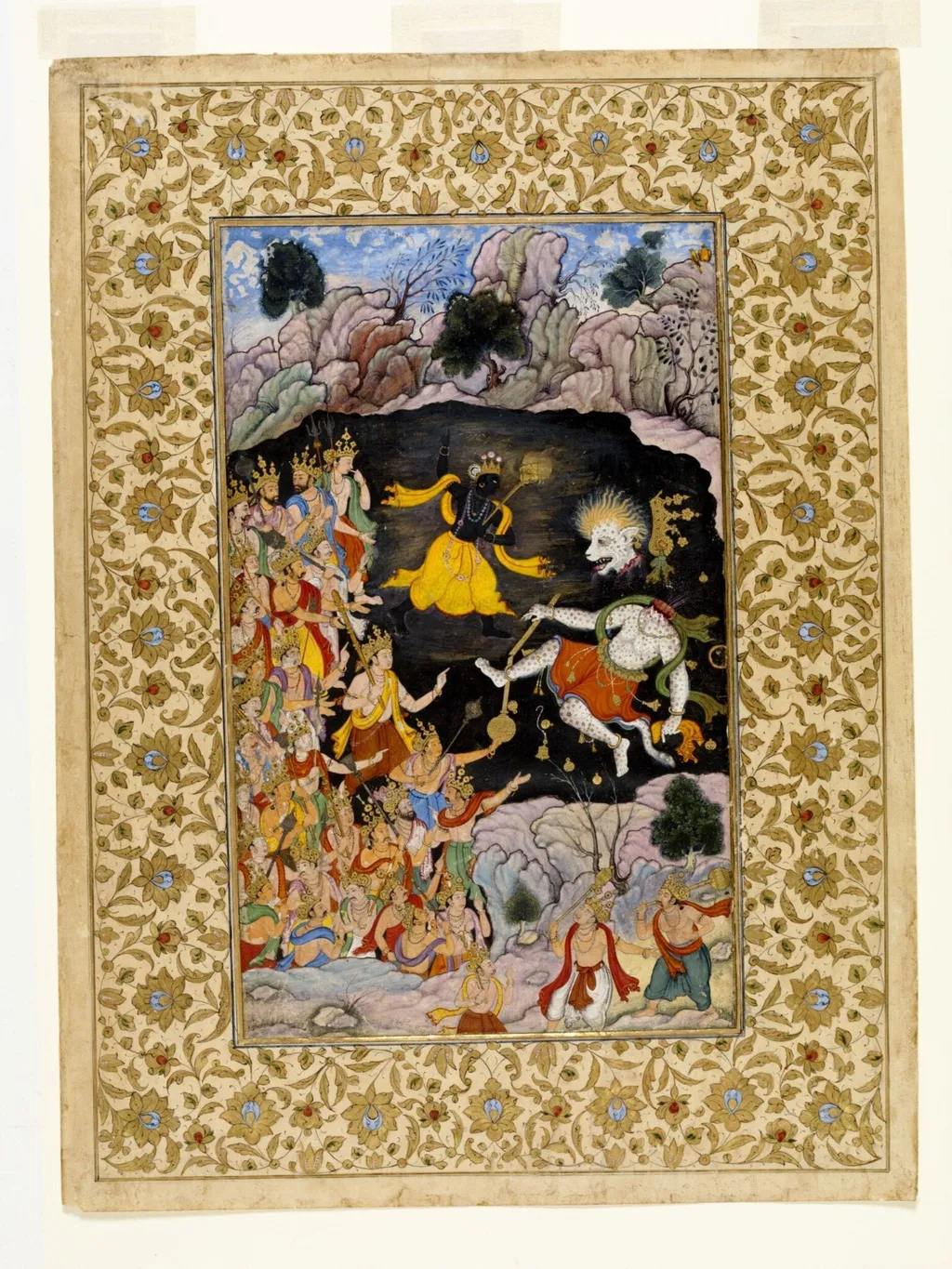
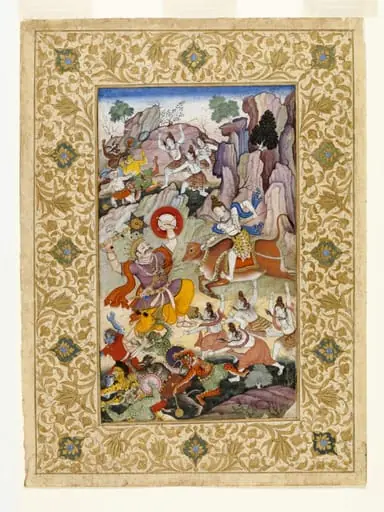
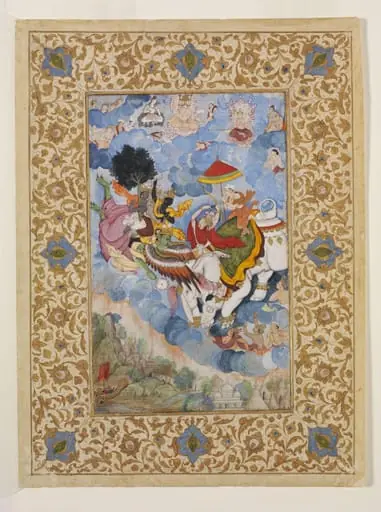
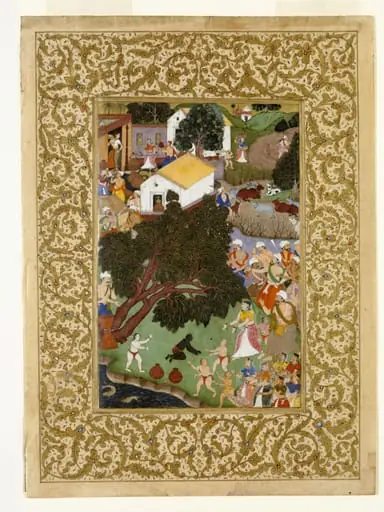
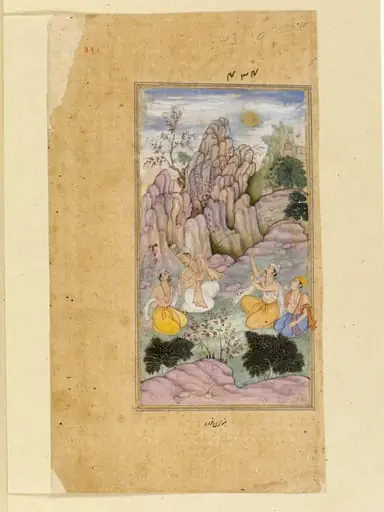
Krishna and Nikumba is a paint painting by the Mughal Painting artist Unknown. It dates from 1590 and is held in the collection of the Victoria and Albert Museum. This painting originates from a Persian-language illustrated manuscript of the Harivamsa, commissioned during Akbar’s reign around 1590.
About this work
Overview
This painting originates from a Persian-language illustrated manuscript of the Harivamsa, commissioned during Akbar’s reign around 1590.
This painting originates from a Persian-language illustrated manuscript of the Harivamsa, commissioned during Akbar’s reign around 1590. Though rooted in Hindu scripture, it was produced by Mughal court artists using Persian artistic conventions. Later, in the 18th century, it was remounted into an album with ornate borders, likely in Lucknow, reflecting evolving tastes for collecting and preserving illustrated folios.
Subject & Meaning
The scene depicts Krishna defeating Nikumbha, a demon king who had imprisoned heroes in a cavern. Krishna’s act symbolizes the restoration of cosmic order, a recurring theme in Hindu narratives. The composition emphasizes divine authority: Krishna stands triumphant, his foot upon the fallen demon, whose crown lies discarded. The calm atmosphere suggests not violence, but inevitable justice.
Technique & Style
Mughal artists employed fine brushwork and delicate color gradations to render Krishna’s ethereal presence. His figure appears light and fluid, as if suspended in motion, contrasting with the heavy, crushed form of Nikumbha. A subtle blue aureole encircles Krishna’s head, signaling divinity without overt religious iconography. The cave’s dim glow, rendered in muted tones, creates a quiet, otherworldly tension.
History & Provenance
Created for Akbar’s imperial workshop, the painting was part of a larger illustrated translation of the Harivamsa. After its initial production, it was detached from the manuscript and later integrated into an 18th-century album, possibly in Lucknow, where Mughal artistic traditions continued under regional courts. The addition of elaborate borders reflects the period’s preference for curated collections of miniature art.
Context
Akbar’s policy of religious synthesis encouraged the translation of Sanskrit texts into Persian, fostering cross-cultural dialogue. This painting exemplifies how Mughal artists adapted Hindu narratives into a courtly visual language blending Indian themes with Persian aesthetics. Such works were not merely illustrations but instruments of imperial cultural diplomacy, bridging diverse traditions within the empire.
Legacy
The painting survives as a testament to the fluid exchange between religious and artistic traditions in early modern India. Its integration into later albums highlights the enduring appeal of Mughal miniatures beyond their original context. Today, it remains a key example of how imperial patronage shaped the visual representation of sacred stories across cultural boundaries.
Artist & collection

 Domestic Scene
 Giacomo and Cardinal Marco, investing Andrea, Abbot of San Zeno, with his Benefice
 The Nymph of Fontainebleau
 Portrait of a Woman
 Madonna and Child with Saints in the Enclosed Garden
 Venus and Minerva
 Family Group of Four on Sofa
 Wall painting from Room H of the Villa of P. Fannius Synistor at Boscoreale