Artwork
Krishna sporting with the gopis in the Jumna River, from a Bhagavata Purana
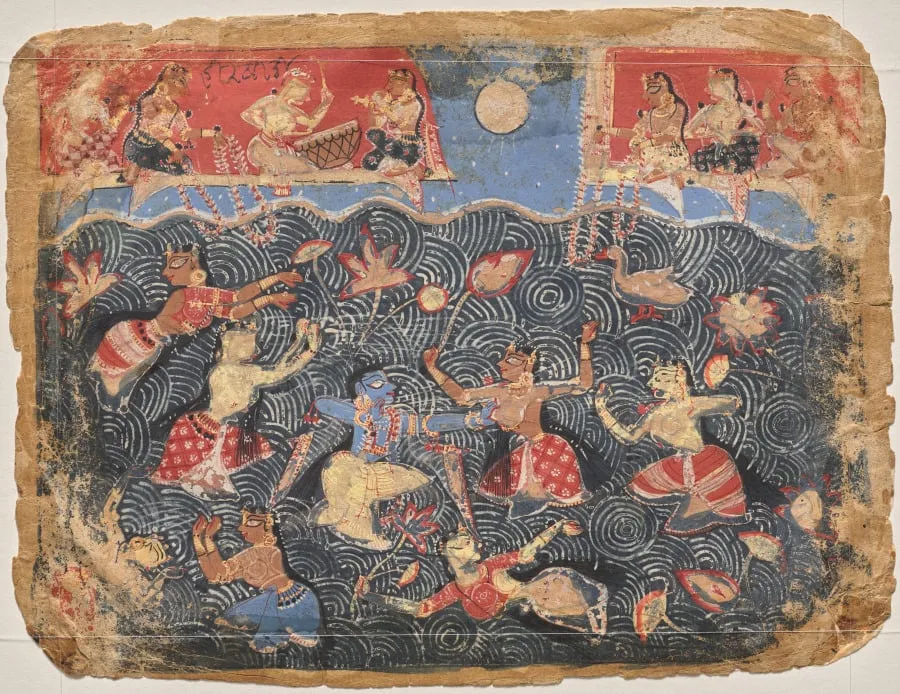
Krishna sporting with the gopis in the Jumna River, from a Bhagavata Purana is an unspecified painting by the Mughal Painting artist Unknown. It dates from 1532 and is held in the collection of the Cleveland Museum of Art.
About this work
Overview
The painting portrays a lively river scene in which Krishna, depicted with blue skin, engages in playful interaction with a group of gopis—cowherd women—who are swimming and frolicking. The water is rendered as swirling concentric circles, suggesting vigorous movement, while celestial figures hover above, offering garlands and beating a drum in celebration of the divine pastime.
Subject & Meaning
The composition illustrates a celebrated episode from the Bhagavata Purana, where Krishna’s affectionate gestures toward the gopis symbolize the spiritual union between the divine and the devotee. The gopis’ exuberant splashing conveys both earthly joy and a deeper devotional longing, while the heavenly attendants underscore the cosmic approval of this intimate, mythic encounter.
Technique & Style
Executed in the early sixteenth‑century northern Indian tradition, the work employs profile views for every figure, a stylistic convention that distinguishes it from contemporary Persian influences. Bright pigments delineate the swirling water and the vibrant attire of the participants, while the concentric circles create a visual rhythm that emphasizes motion and communal energy.
Context
During this period, Indian painters emphasized indigenous iconography and compositional rules, such as the strict profile orientation, to assert a distinct aesthetic identity. The scene reflects the broader devotional currents of the time, when visual narratives from Hindu scriptures were increasingly rendered for temple patrons and courtly audiences.
Legacy
The painting serves as a reference point for later northern Indian artworks that depict Krishna’s lila, or divine play, with similar emphasis on collective joy and stylized human forms. Its compositional choices continue to inform scholarly understandings of how regional artistic conventions negotiated cultural exchange while preserving local visual vocabularies.
Artist & collection

 Domestic Scene
 Giacomo and Cardinal Marco, investing Andrea, Abbot of San Zeno, with his Benefice
 The Nymph of Fontainebleau
 Portrait of a Woman
 Madonna and Child with Saints in the Enclosed Garden
 Venus and Minerva
 Family Group of Four on Sofa
 Wall painting from Room H of the Villa of P. Fannius Synistor at Boscoreale
 Untitled
 Untitled
 Untitled
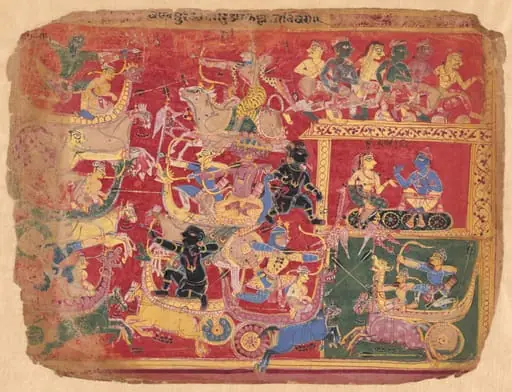 Battle of the Forces of Krishna and Bana, from a copy of the Dispersed Bhagavat Purana
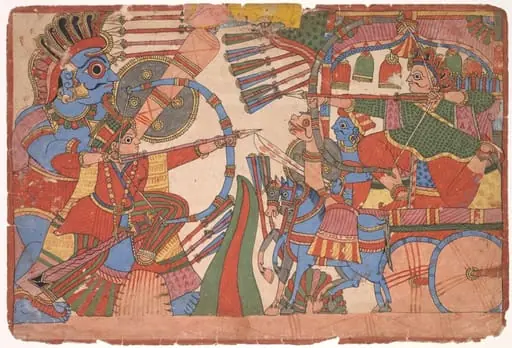 Illustration to the Mahabharata
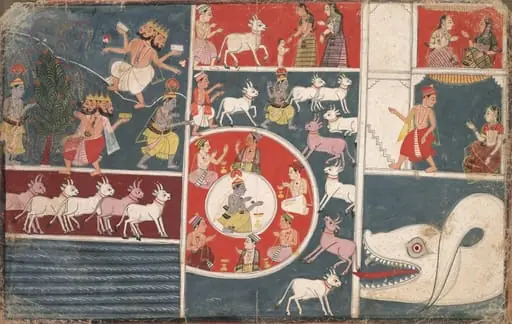 Krishna Playing the Flute and other Episodes from the Bhagavata Purana
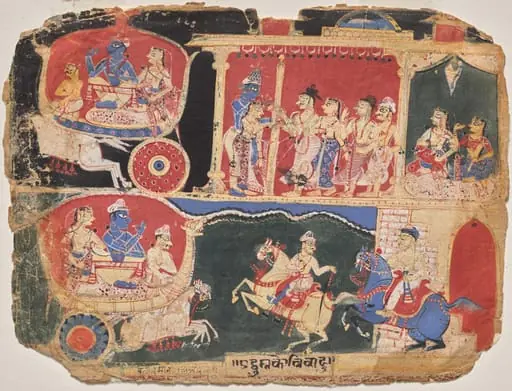 The Marriage of Pradyumna and Rukmavati, page from a Bhagavata Purana
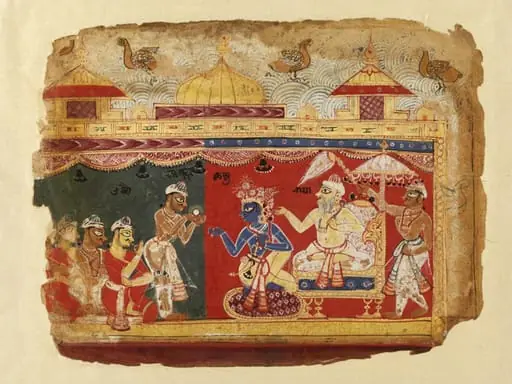 Akrura and Krishna
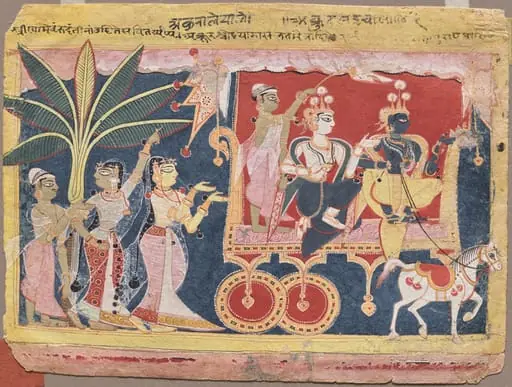 Akrura Drives Krishna and Balarama to Mathura, from the “Isarda Bhagavata Purana”
 Untitled