Artwork
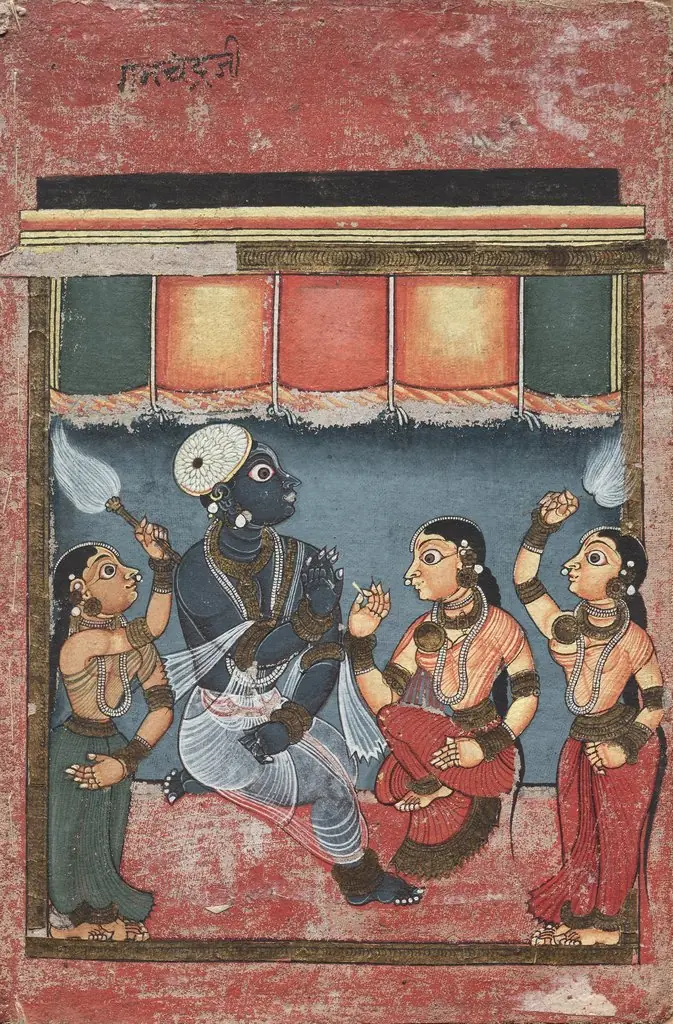
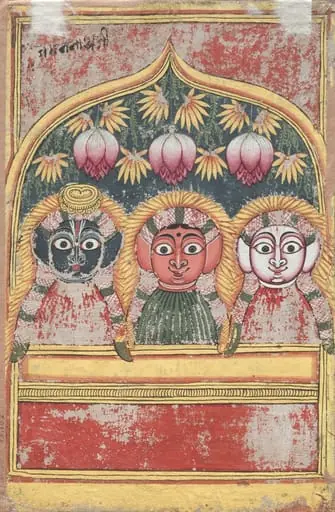
Krishna with Radha and Two Attendants (recto); Jagannath, Subhadra and Balarama in an Arch (verso)
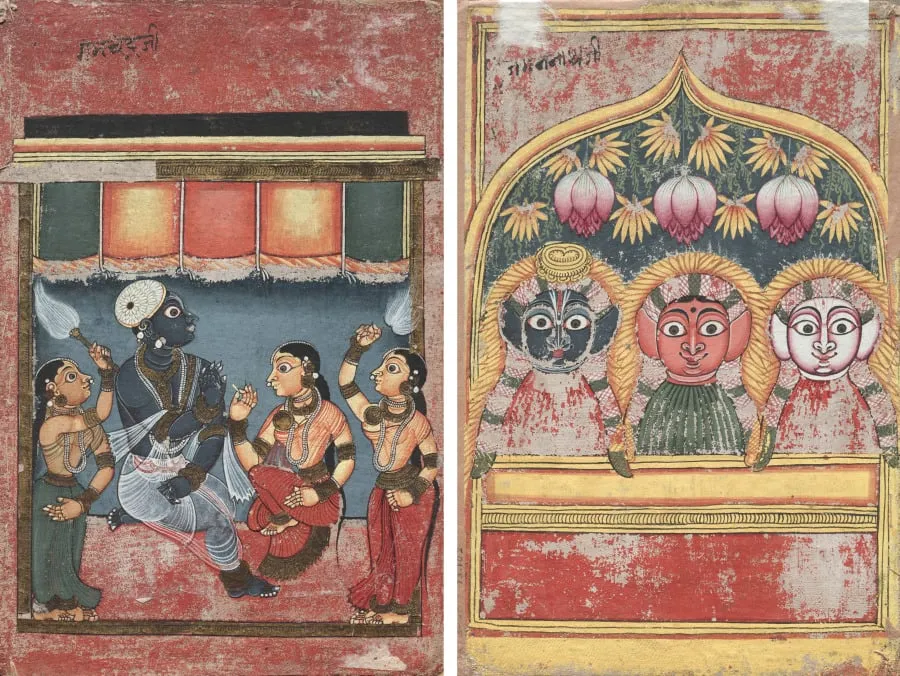
Krishna with Radha and Two Attendants (recto); Jagannath, Subhadra and Balarama in an Arch (verso) is an unspecified painting by the Baroque artist Unknown. It dates from 1704 and is held in the collection of the Cleveland Museum of Art. This double-sided painting presents two distinct devotional scenes, each framed within ornate borders and rendered in vivid pigments.
About this work
Overview
This double-sided painting presents two distinct devotional scenes, each framed within ornate borders and rendered in vivid pigments.
This double-sided painting presents two distinct devotional scenes, each framed within ornate borders and rendered in vivid pigments. One side depicts Krishna accompanied by Radha and attendants, while the reverse shows the Jagannath triad within an arched niche. The work exemplifies a regional Indian painting tradition, not the European Baroque, as suggested by its stylized figures, flat planes, and symbolic color use rather than naturalistic perspective or chiaroscuro.
Subject & Meaning
The recto illustrates Krishna, identified by his blue skin and white attire, surrounded by female devotees, likely representing Radha and companions in a moment of divine intimacy. The verso portrays the Jagannath triad—Jagannath, Subhadra, and Balarama—within a sacred arch, a common iconography in Puri temple worship. Both scenes emphasize divine presence through gaze and gesture, inviting contemplation rather than narrative action.
Technique & Style
The painting employs mineral pigments on paper, with bold outlines and flat areas of color. Figures are elongated, with large eyes and elaborate jewelry, typical of Pahari or Odisha styles. Backgrounds are minimal but framed by decorative borders, enhancing focus on the central figures. Patterns on garments and halos are finely detailed, reflecting meticulous brushwork and a preference for symbolic richness over spatial depth.
History & Provenance
The painting likely originated in a royal or temple workshop in eastern India, possibly Odisha or nearby regions, during the late 17th or early 18th century. Its double-sided format suggests use in personal devotion or ritual display. No documented provenance is available, but similar works are associated with pilgrim souvenirs or temple offerings linked to the Jagannath cult.
Context
This work emerges from a tradition of devotional painting in eastern India, where images of Krishna and Jagannath served as focal points for bhakti worship. Unlike Mughal or Rajput court styles, these paintings prioritized spiritual symbolism over realism. The dual imagery reflects the interconnectedness of Krishna’s earthly and cosmic forms, a theological theme central to Vaishnavism in the region.
Legacy
Though not widely known outside regional collections, such paintings preserve the visual language of pre-colonial Odisha and Pahari devotional art. They continue to inform contemporary religious iconography and scholarly studies of Indian miniature traditions. Their endurance lies in their function as objects of veneration, not merely aesthetic objects, sustaining a lineage of spiritual representation.
Artist & collection

 Domestic Scene
 Giacomo and Cardinal Marco, investing Andrea, Abbot of San Zeno, with his Benefice
 The Nymph of Fontainebleau
 Portrait of a Woman
 Madonna and Child with Saints in the Enclosed Garden
 Venus and Minerva
 Family Group of Four on Sofa
 Wall painting from Room H of the Villa of P. Fannius Synistor at Boscoreale