Artwork
Kuixing: God of Scholars
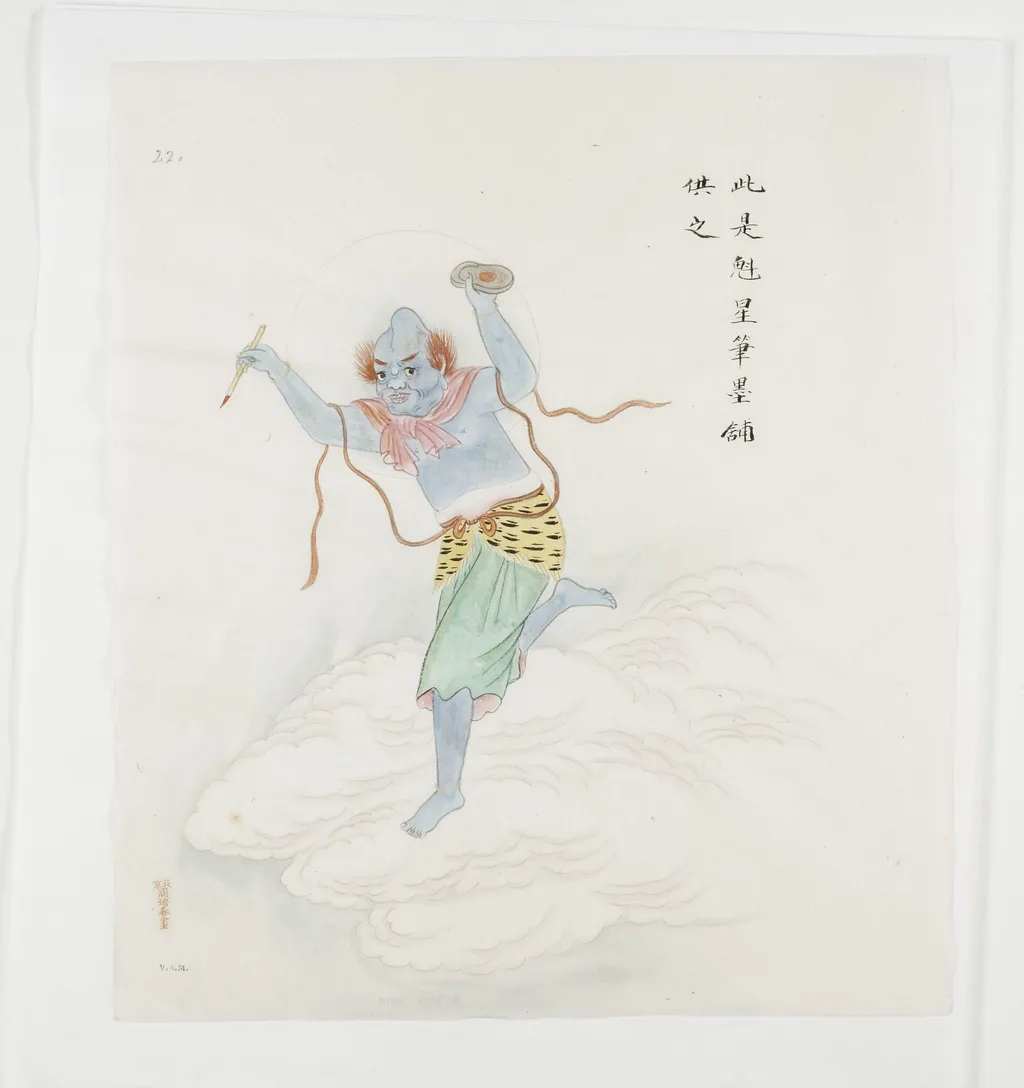
Kuixing: God of Scholars is a paint painting by Unknown. It dates from 1900 and is held in the collection of the Victoria and Albert Museum. This vertical scroll portrays Kuixing, a deity associated with literary success in Chinese tradition.
About this work
Overview
This vertical scroll portrays Kuixing, a deity associated with literary success in Chinese tradition. The figure is rendered in vibrant pigments, standing atop swirling clouds, with attributes that signify scholarly achievement. A vertical inscription runs along the right margin, while a seal mark occupies the lower left corner, identifying the work’s origin and maker.
Subject & Meaning
Kuixing embodies the patron of examinations and intellectual attainment. The deity’s raised brush and inkwell symbolize the tools of literary accomplishment, while the cloud base evokes divine presence. His intense expression and dynamic posture suggest both authority and the transformative power of knowledge, reinforcing his role in fostering scholarly aspirations.
Technique & Style
Executed in mineral-based pigments, the painting employs bold, flat color fields and flowing outlines to define form. The figure’s garments and accessories exhibit patterned details, contrasting with the soft, undulating clouds beneath. The composition’s verticality and balanced placement of text reflect conventions of traditional Chinese deity portraiture.
History & Provenance
The work entered the collection in 1910 as part of a series of household deity paintings acquired from Mrs. Amherst-Law. It is catalogued among related pieces under accession numbers E.3177-1910 to E.3226-1910. Its preservation suggests it was likely produced for domestic or ritual use, possibly during the Qing dynasty.
Context
Such depictions of Kuixing were commonly displayed in homes or study spaces to invoke favor during imperial examinations. The deity’s iconography—brush, ink, and fierce demeanor—mirrors the pressures and aspirations tied to scholarly pursuits. Works like this reflect broader cultural practices linking art, religion, and education in pre-modern China.
Artist & collection

 Domestic Scene
 Giacomo and Cardinal Marco, investing Andrea, Abbot of San Zeno, with his Benefice
 The Nymph of Fontainebleau
 Portrait of a Woman
 Madonna and Child with Saints in the Enclosed Garden
 Venus and Minerva
 Family Group of Four on Sofa
 Wall painting from Room H of the Villa of P. Fannius Synistor at Boscoreale
 God of Plague
 Mawang: Protector of Travellers
 Untitled
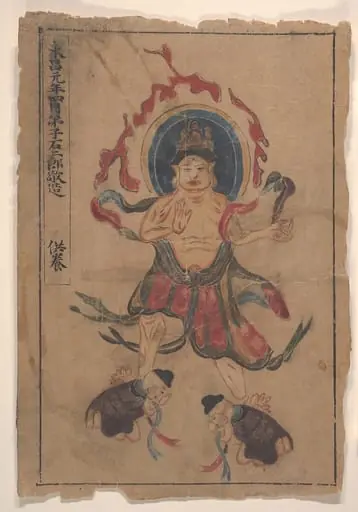 唐(?) 佚名 佛畫八幅 散頁|Eight Buddhist Paintings
 Album of Landscape Paintings Illustrating Old Poems: Children Playing Blindman's Buff in a Garden
 Li Tieguai
 葛飾北斎筆 鶏と木材鶏図|Album of Sketches by Katsushika Hokusai and His Disciples
 Ebisu
Ebisu Shiva and Parvati
 Beggar (Kojiki)