Artwork
La Petite Provence, Théatre du Vaudeville,
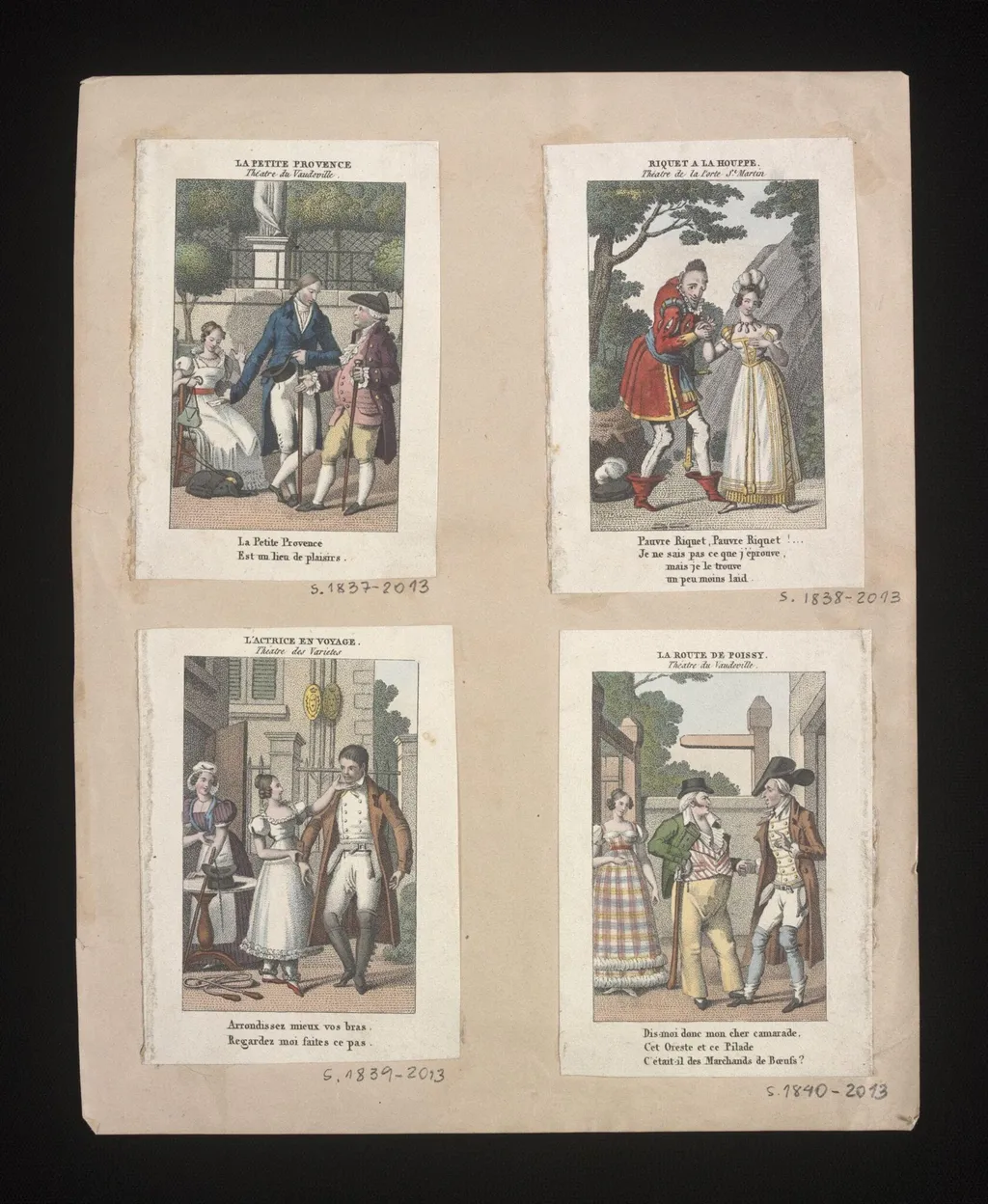
La Petite Provence, Théatre du Vaudeville, is a print by Unknown. It dates from 1850 and is held in the collection of the Victoria and Albert Museum. This 19th‑century print captures a performance of the play *La Petite Provence* staged at Paris’s Théâtre du Vaudeville.
About this work
Overview
This 19th‑century print captures a performance of the play *La Petite Provence* staged at Paris’s Théâtre du Vaudeville. Rendered in a single sheet, the image presents a richly appointed stage illuminated against darkened wings, while an audience of elegantly dressed spectators watches from the gallery. The work is part of the Harry Beard Collection, a repository of historic theatrical ephemera.
Subject & Meaning
The scene portrays a typical Parisian theatre experience: women in elaborate hats and men in tall headgear and formal coats fill the auditorium, suggesting the social ritual of attending drama. The title of the play appears on the set, indicating the print’s function as a visual record of the specific production rather than a generic stage view.
Technique & Style
Executed as a commercial print, the image relies on line work and selective shading to convey depth and lighting effects on the stage. The contrast between the bright footlights and the surrounding darkness is achieved through hatching, a common method in 19th‑century lithographic advertising, allowing rapid reproduction for a wide audience.
History & Provenance
The print was produced in the mid‑1800s, a period when theatrical posters and souvenir prints circulated among patrons. It entered the Harry Beard Collection, a private assemblage of theatrical memorabilia, where it has been preserved as an example of period promotional material.
Context
During the 19th century, prints served as both advertisement and keepsake for theatre-goers, who often purchased them to commemorate a night out. The Théâtre du Vaudeville, a prominent venue for popular drama and operetta, frequently commissioned such images to attract and remind audiences of current productions.
Artist & collection

 Domestic Scene
 Giacomo and Cardinal Marco, investing Andrea, Abbot of San Zeno, with his Benefice
 The Nymph of Fontainebleau
 Portrait of a Woman
 Madonna and Child with Saints in the Enclosed Garden
 Venus and Minerva
 Family Group of Four on Sofa
 Wall painting from Room H of the Villa of P. Fannius Synistor at Boscoreale
 H Beard Print Collection
 H Beard Print Collection
 H Beard Print Collection
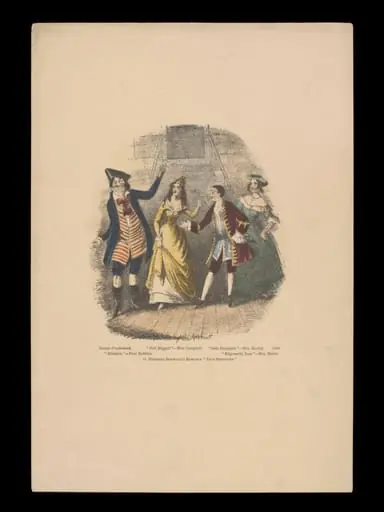 H Beard Print Collection
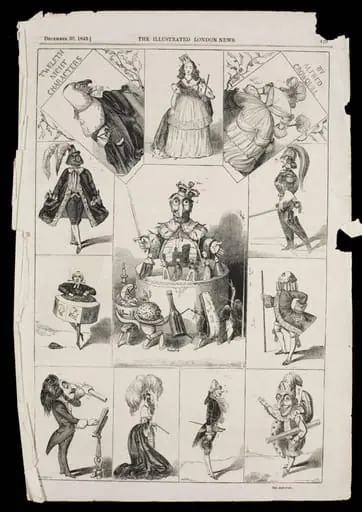 George Speaight Punch & Judy Collection
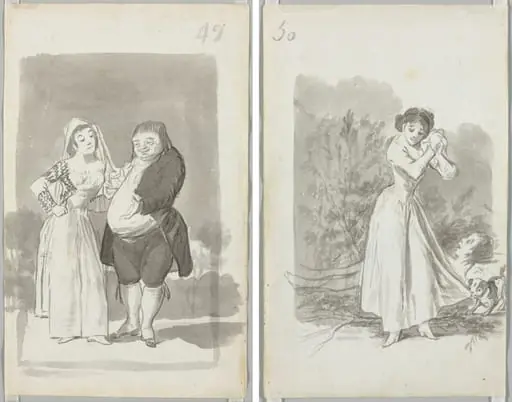 Young Woman (possibly a Sex Worker) with a Man (recto); Young Woman Wringing Her Hands over a Man's Naked Body (verso)
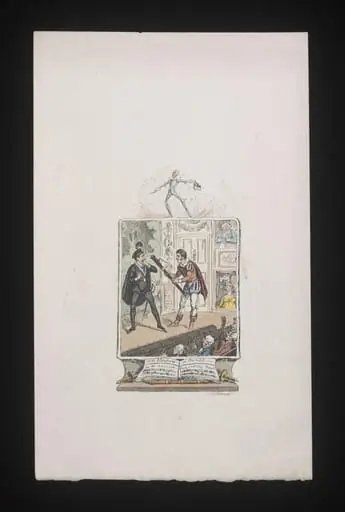 Tom Blanchard in Hamlet. For the Bassoon. Lady Coventry's Minuet
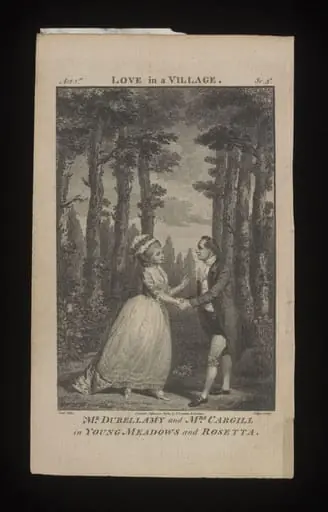 Love in a Village
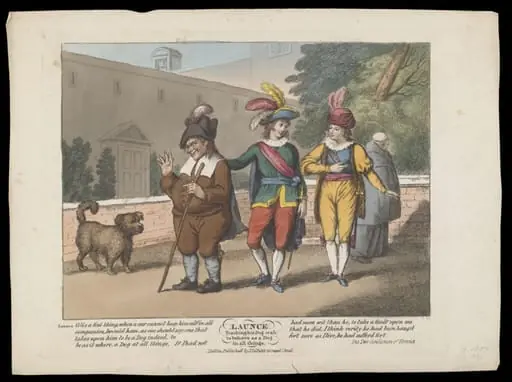 H Beard Print Collection
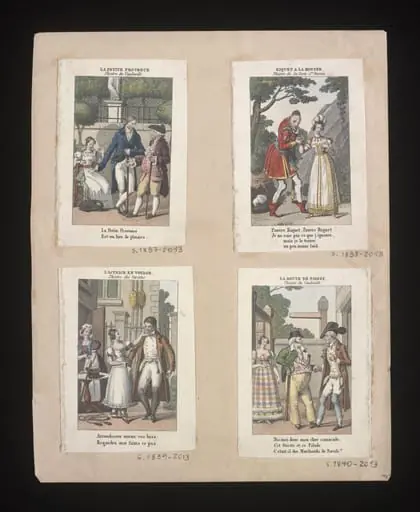 La Route de Poissy at Théatre du Vaudeville