Artwork
Lady after a Bath
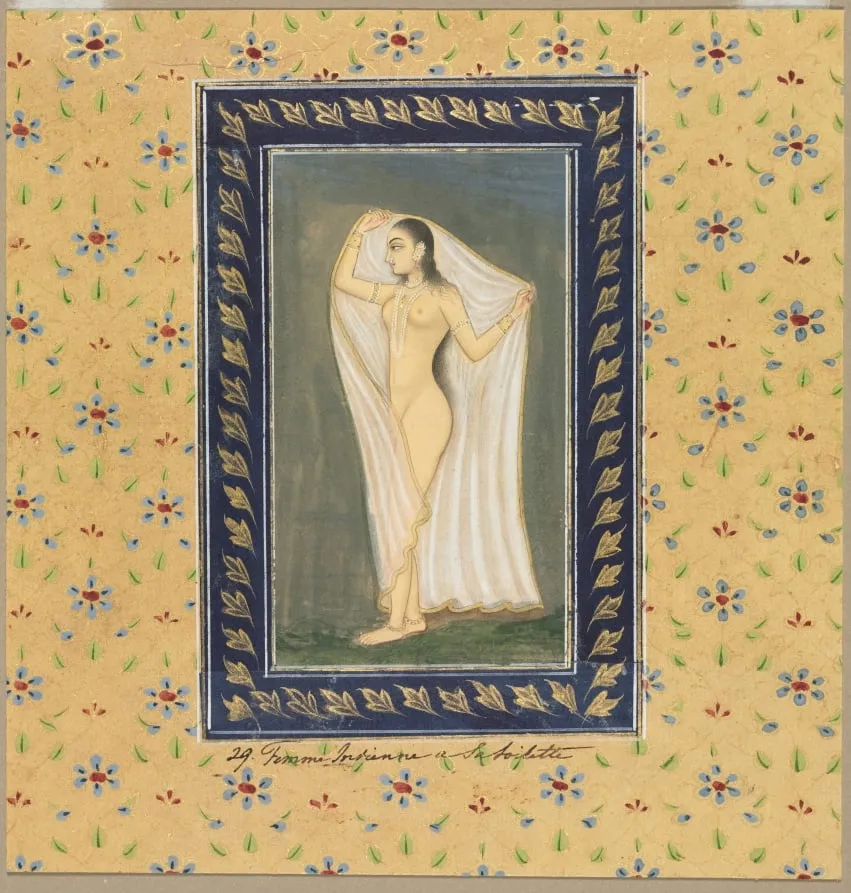
Lady after a Bath is an unspecified painting by the Baroque artist Unknown. It dates from 1704 and is held in the collection of the Cleveland Museum of Art. This painting depicts a woman in a quiet, intimate moment after bathing.
About this work
Overview
She stands in a modest setting, draped with a white cloth over her shoulder, her posture relaxed and composed.
This painting depicts a woman in a quiet, intimate moment after bathing. She stands in a modest setting, draped with a white cloth over her shoulder, her posture relaxed and composed. The background is a muted green, unobtrusive and uniform, drawing focus to her form. Delicate floral motifs border the frame, suggesting a refined, almost decorative intent. The overall tone is subdued and natural, avoiding theatricality.
Subject & Meaning
The subject is a private, unguarded moment of personal care, rendered without narrative or symbolism. Her hand resting on her head conveys stillness rather than action, emphasizing introspection over performance. The absence of elaborate surroundings or symbolic objects directs attention to the human figure alone, suggesting an appreciation for quiet dignity in everyday life.
Technique & Style
The brushwork is soft and fluid, creating a gentle transition between light and shadow without harsh contours. Skin tones are rendered with subtle gradations, enhancing realism without idealization. The plain background and restrained palette reinforce a sense of calm. The ornamental frame, adorned with tiny botanical details, contrasts with the simplicity of the figure, hinting at a blend of domestic elegance and naturalism.
History & Provenance
The painting’s origins are not well documented, but its style aligns with late 17th-century Dutch or Flemish domestic scenes. It lacks signatures or clear archival records, making attribution difficult. The decorative frame suggests it may have been commissioned for private collection rather than public display, consistent with the era’s taste for intimate, personal imagery.
Context
Created during a period when Dutch and Flemish artists increasingly turned to domestic subjects, the work reflects a broader cultural shift toward valuing private, unidealized moments. Unlike grand historical or religious scenes, this image embraces stillness and modesty, resonating with contemporary ideals of quiet virtue and the beauty of ordinary life.
Legacy
Though not widely exhibited or studied, the painting contributes to a quieter strand of Baroque art that prioritizes intimacy over spectacle. Its restrained composition and focus on the human form without embellishment anticipate later developments in genre painting, particularly in the 18th-century emphasis on naturalism and personal observation.
Artist & collection

 Domestic Scene
 Giacomo and Cardinal Marco, investing Andrea, Abbot of San Zeno, with his Benefice
 The Nymph of Fontainebleau
 Portrait of a Woman
 Madonna and Child with Saints in the Enclosed Garden
 Venus and Minerva
 Family Group of Four on Sofa
 Wall painting from Room H of the Villa of P. Fannius Synistor at Boscoreale
 Female Dancer
 Untitled
 Kakubha Ragini
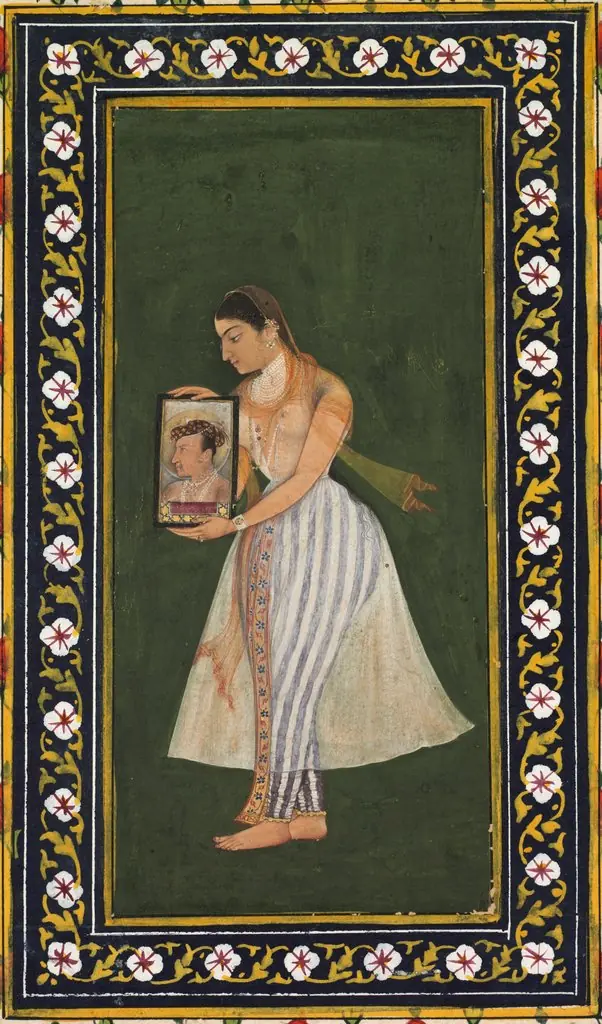 Nur Jahan holding a portrait of Emperor Jahangir
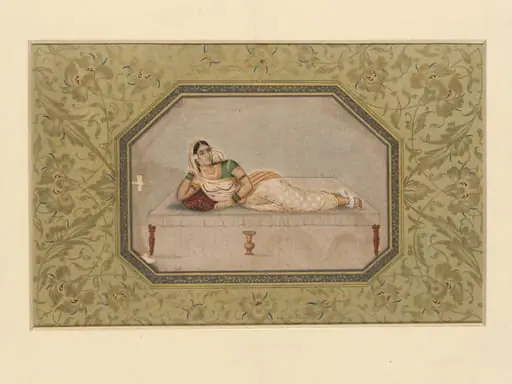 A lady reclining
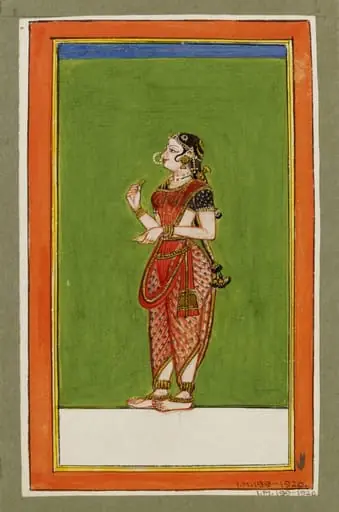 Tamil dancing girl
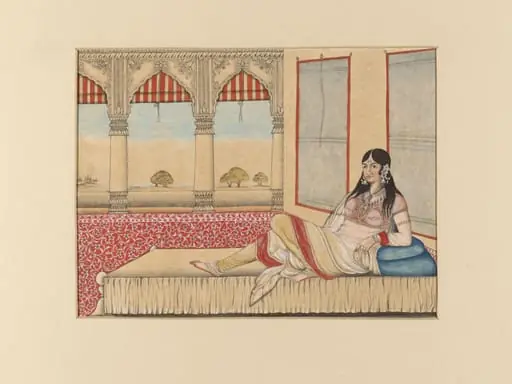 An Indian lady reclining on a couch in the open verandah of a palace.
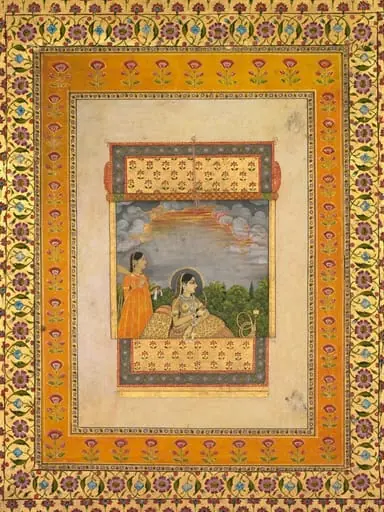 Princess and attendant in trompe l’oeil window
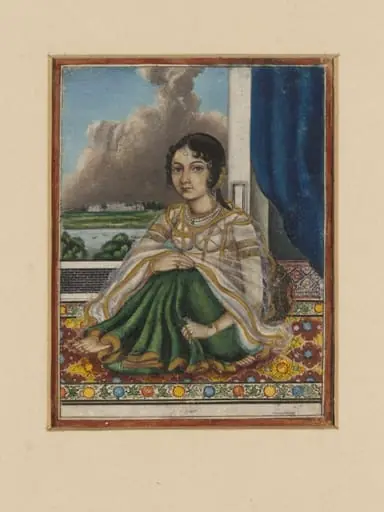 An Indian lady seated on a carpet by an open door overlooking a river with a European-style house on the opposite bank.
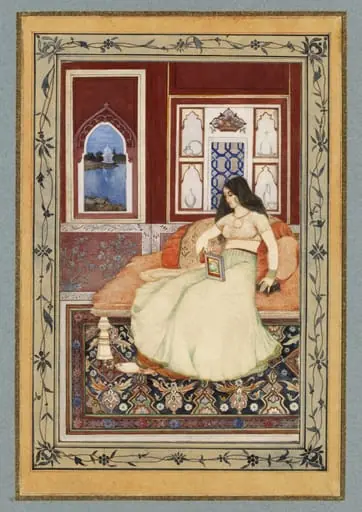 Reflections
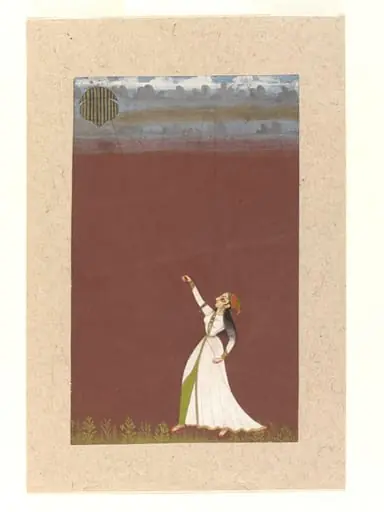 Untitled
 Ladvai Sketch