Artwork
Mântuitorul Iisus Hristos, fiind răstignit pe Cruce, are în dreapta și în stânga câte o floare mare roșie vermillon, cu frunze gri-antracit, înlocuind stilizat și semantic pe ucenicul cel iubit, care a stat lipit de pieptul Învățătorului, la Cina cea de Taină, mai precis, pe Sfântul Apostol și Evanghelist Ioan Teologul, Evanghelistul Iubirii și pe Maica Domnului Îndurerată, Jalnică și Plângătoare. Mântuitorul Iisus Hristos are o țesătură gri, înspre negru-gri-antracit în jurul mijlocului și a coapselor. În registrul inferior, paralel cu Crucea sunt și lujere foarte înalte cu flori mari, elemente geometrizante și fitomorfe, care înlocuiesc prezența ucenicilor și martorilor la suferință. Fondul icoanei este cerul albastru bleu-ciel ceruleum senin, împodobit cu elemente stilizate florale. În registrul inferior este un câmp luminos de galben-chihlimbar. Întreaga compoziție iconografică este încadrată de un chenar fitomorf, format dintr-o ghirlandă bogată de ruje roșii vermillon, cu miezul galben - 7 ruje, cu frunze gri-albăstrii. Astfel imaginea iconografică este o preînchipuire a Grădinii Raiului. Cromatica este armonioasă: roșu vermillon, albastru bleu-ciel ceruleum, verde-brad forest și smarald, galben chihlimbar, ocru-muștar, alb, negru. Inscripția din româno-chirilică de pe Cruce se traduce INRI Iisus Nazarineanul Regele iudeilor. Icoana este din Nordul Transilvaniei, Nicula.
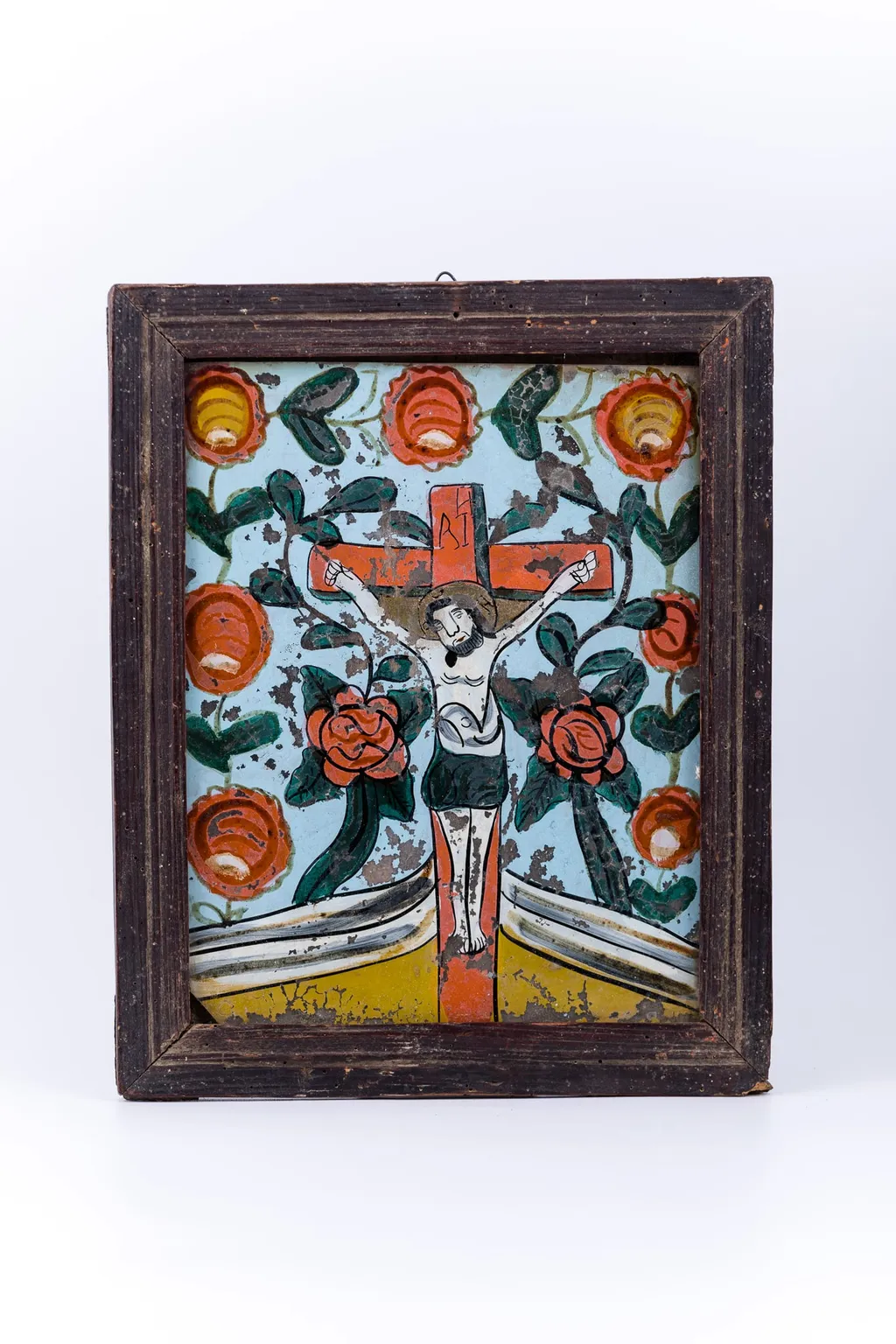
Mântuitorul Iisus Hristos, fiind răstignit pe Cruce, are în dreapta și în stânga câte o floare mare roșie vermillon, cu frunze gri-antracit, înlocuind stilizat și semantic pe ucenicul cel iubit, care a stat lipit de pieptul Învățătorului, la Cina cea de Taină, mai precis, pe Sfântul Apostol și Evanghelist Ioan Teologul, Evanghelistul Iubirii și pe Maica Domnului Îndurerată, Jalnică și Plângătoare. Mântuitorul Iisus Hristos are o țesătură gri, înspre negru-gri-antracit în jurul mijlocului și a coapselor. În registrul inferior, paralel cu Crucea sunt și lujere foarte înalte cu flori mari, elemente geometrizante și fitomorfe, care înlocuiesc prezența ucenicilor și martorilor la suferință. Fondul icoanei este cerul albastru bleu-ciel ceruleum senin, împodobit cu elemente stilizate florale. În registrul inferior este un câmp luminos de galben-chihlimbar. Întreaga compoziție iconografică este încadrată de un chenar fitomorf, format dintr-o ghirlandă bogată de ruje roșii vermillon, cu miezul galben - 7 ruje, cu frunze gri-albăstrii. Astfel imaginea iconografică este o preînchipuire a Grădinii Raiului. Cromatica este armonioasă: roșu vermillon, albastru bleu-ciel ceruleum, verde-brad forest și smarald, galben chihlimbar, ocru-muștar, alb, negru. Inscripția din româno-chirilică de pe Cruce se traduce INRI Iisus Nazarineanul Regele iudeilor. Icoana este din Nordul Transilvaniei, Nicula. is a drawing by Unknown. It dates from 1850 and is held in the collection of the ASTRA National Museum Complex. This icon depicts Christ on the cross, rendered in a symbolic rather than naturalistic style.
About this work
Overview
Instead of human figures, large red flowers with dark gray leaves replace the traditional attendants—John the Evangelist and the Virgin Mary.
This icon depicts Christ on the cross, rendered in a symbolic rather than naturalistic style. Instead of human figures, large red flowers with dark gray leaves replace the traditional attendants—John the Evangelist and the Virgin Mary. The composition is enclosed by a floral border, and the background suggests a celestial garden. The scene avoids earthly realism, emphasizing spiritual symbolism over historical detail.
Subject & Meaning
The substitution of human figures with stylized red flowers signifies the presence of John and the Virgin Mary as witnesses to the crucifixion, transforming their roles into floral emblems of devotion and sorrow. The floral motif extends to the lower register, where tall blossoms replace the crowd of mourners. Together, these elements reframe the crucifixion as an event occurring within a sacred, paradisiacal garden, evoking the Garden of Eden and the promise of redemption.
Technique & Style
The icon employs flat, geometric forms and a restrained palette of vermilion, cerulean blue, forest green, amber yellow, and charcoal gray. Figures are rigid and non-anatomical, with no modeling or perspective. The flowers and foliage are highly stylized, their shapes echoing ecclesiastical ornamentation. The inscription INRI appears in Romanian Cyrillic, anchoring the image in its regional liturgical tradition while maintaining Byzantine compositional norms.
History & Provenance
Originating in Nicula, northern Transylvania, this icon reflects local devotional practices of the 19th or early 20th century. Its unique iconography diverges from mainstream Orthodox models, suggesting a regional adaptation influenced by folk art and possibly Habsburg-era artistic exchanges. The work was likely created for private or parish use, preserving a distinct visual language that prioritized symbolic meaning over doctrinal conformity.
Context
In Transylvanian religious art, floral symbolism often conveyed theological concepts through nature. The use of red flowers as substitutes for human figures aligns with broader Eastern Christian traditions that associate blossoms with divine presence and resurrection. The blue sky and golden ground evoke heavenly realms, while the enclosing floral frame reinforces the idea of the crucifixion as a sacred, enclosed space—akin to the enclosed garden of Mary, a common Marian symbol.
Legacy
This icon represents a localized variant of Orthodox iconography, where folk sensibilities and symbolic substitution reshaped traditional narratives. Its preservation offers insight into how rural communities interpreted sacred events through familiar natural forms. Though not widely replicated, it stands as a testament to the adaptability of religious imagery in Transylvanian Orthodox communities, blending Byzantine structure with regional floral motifs.
Artist & collection

 Domestic Scene
 Giacomo and Cardinal Marco, investing Andrea, Abbot of San Zeno, with his Benefice
 The Nymph of Fontainebleau
 Portrait of a Woman
 Madonna and Child with Saints in the Enclosed Garden
 Venus and Minerva
 Family Group of Four on Sofa
 Wall painting from Room H of the Villa of P. Fannius Synistor at Boscoreale
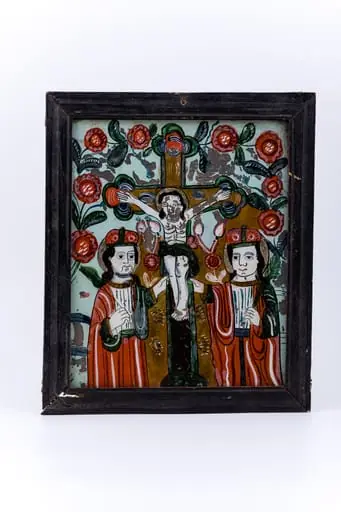 Mântuitorul Iisus Hristos, fiind răstignit pe Cruce, are în dreapta pe Sfântul Împărat Constantin cel Mare, în locul uceniculuil cel iubit, care a stat lipit de pieptul Învățătorului, la Cina cea de Taină, mai precis, în locul Sfântului Apostol și Evanghelist Ioan Teologul, Evanghelistul Iubirii și în stânga pe Sfânta Împărăteasă Elena, mama Sfântului Constantin, în locul Maicii Domnului Îndurerate, Jalnică și Plângătoare. Veșmintele Sfinților Împărați sunt sacosuri albe, cu dungi albastre-verzi și mantii roșii vermillon, cu mânecile largi și verzi. Mântuitorul Iisus Hristos Răstignit pe Cruce are o țesătură verde-forest în jurul mijlocului și a coapselor. Fondul icoanei este cerul albastru bleu-ciel înspre alburiu senin și deschis, în registrul superior și galben-chihlimbar, în spatele Crucii, un spațiu galben-solar, prefigurând Lumina Învierii Domnului Iisus Hristos. Întreaga tematică iconografică este încadrată de un chenar decorativ fitomorf, format dintr-o ghirlandă de bujori și trandafiri, 10 ruje. Cromatica este armonioasă: roșu vermillon, albastru bleu-ciel, albastru cobalt, gri antracit, galben-chihlimbar, verde forest, alb zinc, negru. Icoana este mai rară, datorită abordării tematicii iconografice. Icoana este din Nordul Transilvaniei, Nicula.
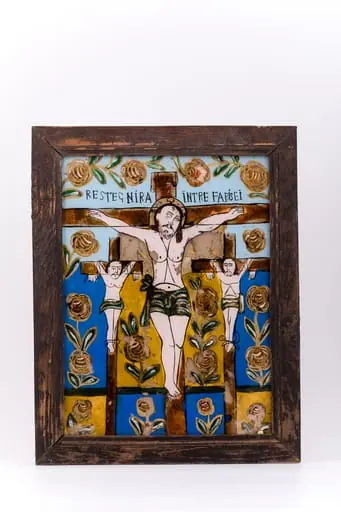 Mântuitorul Iisus Hristos, fiind răstignit pe Cruce, în prim plan, are în dreapta și în stânga pe cei doi tâlhari, numiți în icoană farisei. Mântuitorul Iisus Hristos are o țesătură verde-brad cu dungulițe crem-bej în jurul mijlocului și a coapselor. Are aureolă aurie. Cei doi tâlhari, răstigniți pe crucile lor, sunt redați în registrul inferior, plan îndepărtat. Fondul icoanei este format 9 casete geometric și simetric segmentate de brațele celor trei cruci. Fondul icoanei este format așadar din o casetă superioară din albastru bleu-ciel senin-alburiu, patru casete albastre regal și patru casete galbene-chihlimbar. Întreaga compoziție iconografică este încadrată de un chenar decorativ fitomorf, format din 17 ruje roșii, dispuse pretutindeni în imaginea icoanei. Cromatica este armonioasă: roșu vermillon, albastru ceruleum, regal, bleu-ciel, verde-brad, galben-chihlimbar, brun, crem, bej, alb, negru. Inscripția din româno-chirilică se traduce Restignirea între farisei. Icoana este din Nordul Transilvaniei, Nicula, având o tematică iconografică mai rar structurată compozițional astfel.
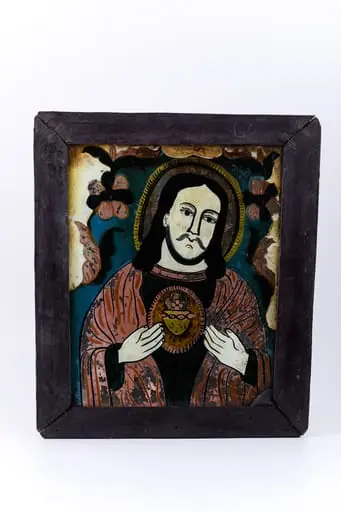 Mântuitorul Iisus Hristos este înveșmântat într-o tunică-sacos gri-antracit înspre negru și mantie roșie vermillon, având deschisă inima cu raze luminoase-aurii. Cu amândouă mâinile Își dăruiește inima aurită cu har. Are părul negru lung, lăsat pe umeri și aureolă galbenă. Fondul icoanei este cerul albastru ceruleum-regal, înconjurat de un chenar decorativ ivoriu-crem și întreaga compoziție iconografică este încadrată de un chenar decorativ fitomorf, format dintr-o ghirlandă de ruje - 2 ruje mari cu șase petale roșii-negre, cu formă de margarete. Cromatica este armonioasă și discret de luminoasă: roșu vermillon-roz, verde kaki, albastru ceruleum și regal, cobalt, brun cafeniu, galben-ocru-muștar, alb, negru. Icoana este rară din punctul de vedere al tematicii abordate - Iisus Hristos cu Inima, tematică cu influențe catolice și pictural-apusene. Icoana este din Nordul Transilvaniei, Nicula.
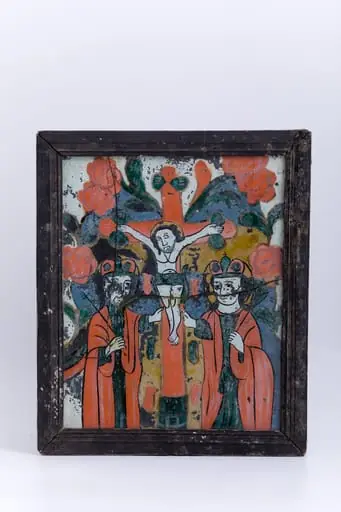 În centrul icoanei este Crucea roșie vermillon, pe care este răstignit Mântuitorul Iisus Hristos. În stânga crucii este Sfânta Împărăteasă Elena, și în dreapta este Împăratul Constantin. Veșmintele sfinților împărați sunt pictate cu roșu vermillon și verde-smarald-gri. Poartă coroane împărătești și aureole de sfinți, mantiiile de împărați le au prinse la gât cu fibulă. Crucea are capetele brațelor cu elemente decorative trilobate roșii vermillon-verzi. Fondul este cerul albastru ceruleum-regal. Întreaga compoziție iconografică este încadrată de un chenar decorativ fitomorf, format dintr-o bogată ghirlandă de trandafiri-bujori, formată din 6 ruje roșii mari. În interiorul icoanei este un spațiu galben luminos cu umbre roșii paralele. Cromatica este armonioasă: roșu vermillon-cărămiziu, albastru ceruleum-regal, verde smarald, gri, bej, crem, bronziu, brun, ocru, alb, negru. Inscripția în româno-chirilică se traduce Constantin și Elena. Icoana este din Nordul Transilvaniei, Nicula.
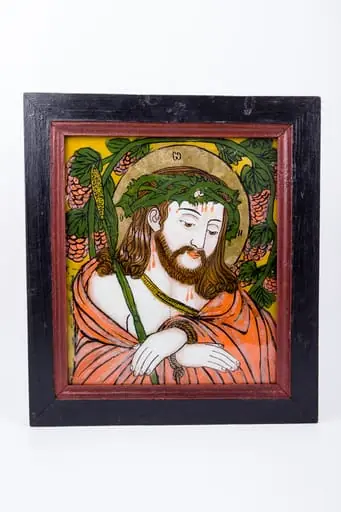 Mântuitorul Iisus Hristos are trupul rănit de lovituri de bice cu țepi de fier - flagellum - și acoperit, în batjocura everilor, cu hlamidă roșie, semnul distinctiv al consulilor romani, fiind numit regele iudeilor. Pe cap, poartă cununa de spini, și pe față curg stropi de sânge. Cu Chipul smerit, aplecat, Domnul Iisus Hristos are mâinile încrucișate pe piept, legate cu funii. Tot în mâini are mănunchi de palmier sau finic, cu frunze și fructe de smochin. În Duminica Florrilor, la Intrarea în Ierusalim a Mântuitorului, Domnul Iisus Hristos a fost primit de copii cu frunze de finic, reprezentând simbolul de credință. În această icoană sunt enumerate mai multe din Patimile Mântuitorului: prinderea, legarea la stâlpul infamiei, biciuirea cu 36-56 lovituri de flagellum, punerea cununii de spini, îmbrăcarea cu hlamida roșie, legarea mâinilor cu funie, lacrimile de sânge pe tâmple. Cuvintele lui Pilat din Pont: Iată Omul! Ecce Homo! Reprezintă tematica iconografică a icoanei. Fondul icoanei ste galben, culoarea care semnifică lumina Învierii. Icoana este de Mărginimea Sibiului. Cromatica este armonioasă: roșu vermillon, verde brad, verde spanac-avocado, galben, maro, brun, auriu.
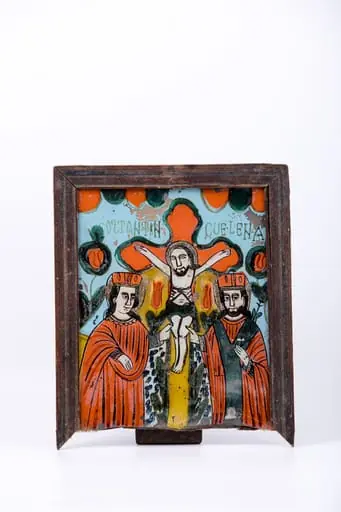 În centrul icoanei este Crucea roșie-galbenă, pe care este Răstignit Mântuitorul Iisus Hristos, iar în stânga crucii este Sfântul Împărat Constantin, și în dreapta este Împărăteasa Elena, mama sa. Deasupra fiecăruia este inscripționat numele, inversat. În spatele Crucii este un spațiu galben izvorâtor de lumină și două elemente florale, asemenea unor martori - îngeri păzitori. Crucea găsită este susținută cu bucurie de cei doi sfinți. Veșmintele Sfinților Constantin și Elena sunt într-o combinație de roșu vermillon și gri antracit. Spațiul galben de lumină duce gândul la Crucea de lumină apărută pe cer In hoc signo vinces - prin acest semn vei învinge. Icoana este bogat ornamentată de culoare, lumină și detalii semnificative, elemente decorative geometrizante. Fondul icoanei este cerul senin, albastru bleu-ciel deschis. Întreaga compoziție este încadrată armonios de un chenar decorativ geometrizant roșu stacojiu și fitomorf, format din rujele de Nicula. Cromatica este armonioasă și senină: roșu vermillon, galben-chihlimbar, albastru bleu-ciel, gri antracit, alb, negru. Icoana este de Nicula. Inscripția din româno-chirilică se traduce Constantin Elena. De menționat este că în icoană apare Mântuitorul Iisus Hristos Răstignit pe Crucea, susținută de Sfinții Constantin și Elena. Icoana este deteriorată, lipsindu-i partea inferioară a ramei.
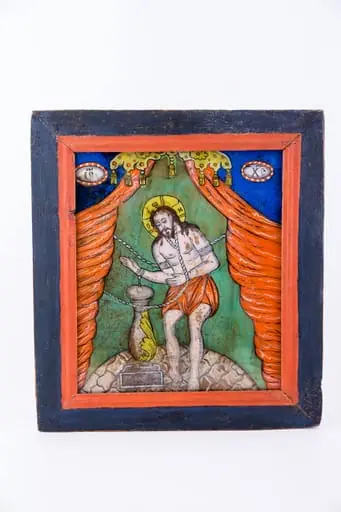 Icoana reprezintă una dintre Patimile Mântuitorului Iisus Hristos. Locul este din curtea casei lui Pilat din Pont, unde a fost chinuit, biciuit și judecat Domnul Iisus Hristos, legat fiind de stâlpul infamiei, pe locul numit pe vremuri Gavata, adică pardosit cu pietre. Iisus Hristos are mijlocul și coapsele înfășurate într-o pânză-țesătură roșie -roșu culoarea muceniciei și a jertfei. Are trupul plin de răni și urme roșii de biciuire. Este legat cu lanțuri și funii. Este într-o poziție mai aplecată, din durere și smerenie. Întreaga narațiune iconografică este dezvăluită și arătată prin gestul ridicării unor draperii albastre cu interiorul roșu, reprezentând și cerurile deschizându-se printr-o înțelegere concret de umană. Deasupra este un candelabru galben de lumină, sugerând Soarele dreptății. Icoana este din Mărginimea Sibiului. Cromatica este vie și directă: roșu, albastru, galben, verde olive. Inscripția din registrul superior în româno-chirilică se traduce IC XC Iisus Hristos.
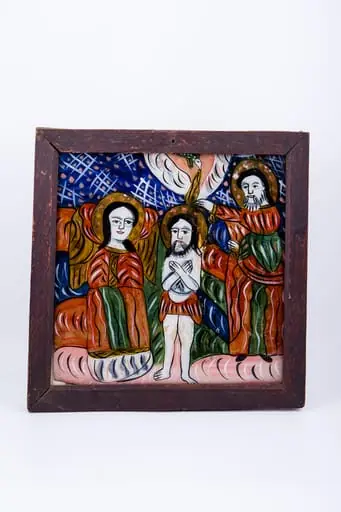 Domnul Iisus Hristos primește Botezul, în râul Iordanului, din partea Sfântului Mare Prooroc și Înaintemergător Ioan Botezătorul, care se află în stânga Mântuitorului. Mântuitorul este înfășurat cu o pânză de culoare roșie-brună împrejurul șoldurilor și a coapselor. În dreapta Lui, este un înger evlavios, care Îl așteaptă cu ștergar gata să înveșmânteze Trupul Domnului. Sfântul Ioan Botezătorul este îmbrăcat cu o mantie brună-acajou și un himation verde închis sau o haină din păr de cămilă. Cerurile albastre - ceruleum sunt deschise și izvorăște o rază de lumină, pe care se pogoară porumbelul, simbolul Sfântului Duh, pe creștetul Mântuitorului. Mandorla de nouri rotunzi, care permite deschiderea Cerurilor au o alternanță cromatică de roz-alb și albastru ceruleum. Cromatica este specifică Țării Făgărașului: auriu-bronziu, roz pal-roșu vermillon, verde kaki, bej, gri, ocru, brun-nisipiu, alb, negru. Icoana aparține Anei Deji, din Făgăraș. De remarcat este este caroiajul alb, fin, de pe albastrul cerului din registrul superior, cu buline mici roz. Aceste pete rotunde de roz pal sunt sugestii de elemente florale și astrale, flori, petale, stele, raze de apus de soare.
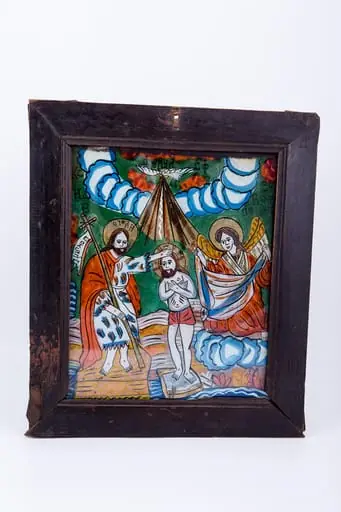 Domnul Iisus Hristos primește Botezul, în râul Iordanului, din partea Sfântului Mare Prooroc și Înaintemergător Ioan Botezătorul, care se află în dreapta Mântuitorului. Mântuitorul este înfășurat cu o pânză de culoare roșie împrejurul șoldurilor și a coapselor. În stânga Lui, este un înger evlavios, care Îl așteaptă cu un ștergar alb-roșu-albastru gata să înveșmânteze Trupul Domnului. Sfântul Ioan Botezătorul este îmbrăcat cu o mantie roșie și un himation alb-brun sau o haină din păr de cămilă. Cerurile de culoare verde, asemenea Duhului Sfânt, sunt deschise și izvorăște o rază de lumină, pe care se pogoară porumbelul, simbolul Sfântului Duh, pe creștetul Mântuitorului. Mandorla de nouri rotunzi, care permite deschiderea Cerurilor au o alternanță cromatică de alb și albastru bleu-ciel. Cromatica este specifică Țării Oltului: auriu, roșu vermillon, verde spanac-avocado, albastru bleu-ciel, bej, gri, ocru, brun-nisipiu, alb, negru. Inscripția din româno-chirilică se traduce Botezul Lui IC XC Iisus Hristos Sfântul Duh Ioan.
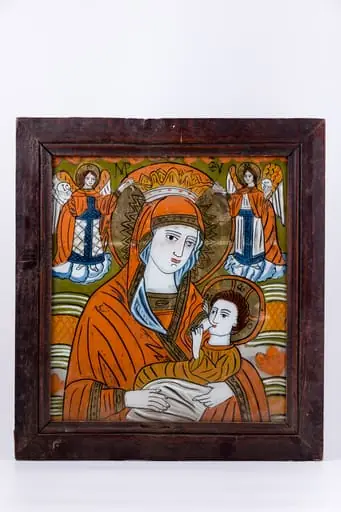 Maica Domnului ține în brațe Pruncul Iisus Hristos, pe care Îl alăptează, din sânul stâng, din dreptul inimii. Pruncul Iisus Hristos ține duios sânul cu ambele mânuțe. Maica Domnului este înveșmântată în mantie cu maforion roșu vermillon și sacos albastru dungat, asemenea unei ii cu gulerașul dantelat, poartă maforion, coroniță de împărăteasă și aureolă. Pruncul Iisus Hristos este înveșmântat în ocru-orange și gri-ivoriu, cu aureolă. În registrul superior, sunt Sfinții Arhangheli Mihail și Gavriil, ținând aureola Maicii Domnului cu mâinile. Sfinții Îngeri Arhangheli au picioarele pe mandorle de nouri alb-albaștri. Fondul icoanei este văzduhul de culoare verde văratic, împodobit cu elemente stilizat-florale, pete de roșu, ruje, în registrul superior. În registrul inferior, este un câmp luminos de verde-orange și galben-ocru. Cromatica este vie, senină și luminoasă: roșu vermillon, alb, albastru cobalt și bleu ciel, verde văratic, mușchi de pădure, verde brad, galben-ocru, alb, negru. Inscripția din româno-chirilică se traduce MP IC XC Maica Domnului Iisus Hristos. Este o icoană de Țara Oltului.