Artwork
Maica Domnului ține în brațe Pruncul Iisus Hristos, pe care Îl alăptează, din sânul stâng, din dreptul inimii. Pruncul Iisus Hristos ține duios sânul cu ambele mânuțe. Maica Domnului este înveșmântată în mantie cu maforion roșu vermillon și sacos albastru dungat, asemenea unei ii cu gulerașul dantelat, poartă maforion, coroniță de împărăteasă și aureolă. Pruncul Iisus Hristos este înveșmântat în ocru-orange și gri-ivoriu, cu aureolă. În registrul superior, sunt Sfinții Arhangheli Mihail și Gavriil, ținând aureola Maicii Domnului cu mâinile. Sfinții Îngeri Arhangheli au picioarele pe mandorle de nouri alb-albaștri. Fondul icoanei este văzduhul de culoare verde văratic, împodobit cu elemente stilizat-florale, pete de roșu, ruje, în registrul superior. În registrul inferior, este un câmp luminos de verde-orange și galben-ocru. Cromatica este vie, senină și luminoasă: roșu vermillon, alb, albastru cobalt și bleu ciel, verde văratic, mușchi de pădure, verde brad, galben-ocru, alb, negru. Inscripția din româno-chirilică se traduce MP IC XC Maica Domnului Iisus Hristos. Este o icoană de Țara Oltului.
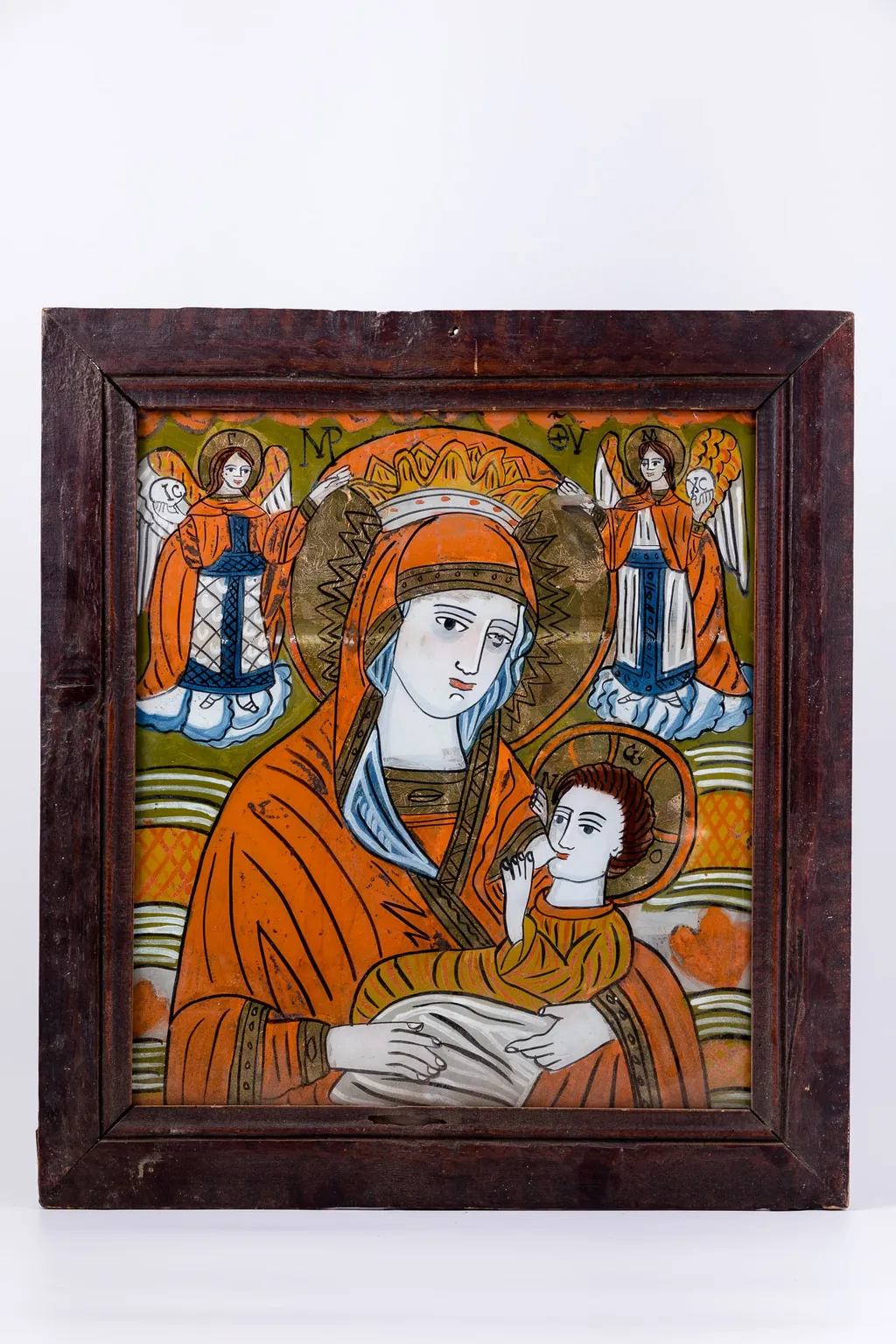
Maica Domnului ține în brațe Pruncul Iisus Hristos, pe care Îl alăptează, din sânul stâng, din dreptul inimii. Pruncul Iisus Hristos ține duios sânul cu ambele mânuțe. Maica Domnului este înveșmântată în mantie cu maforion roșu vermillon și sacos albastru dungat, asemenea unei ii cu gulerașul dantelat, poartă maforion, coroniță de împărăteasă și aureolă. Pruncul Iisus Hristos este înveșmântat în ocru-orange și gri-ivoriu, cu aureolă. În registrul superior, sunt Sfinții Arhangheli Mihail și Gavriil, ținând aureola Maicii Domnului cu mâinile. Sfinții Îngeri Arhangheli au picioarele pe mandorle de nouri alb-albaștri. Fondul icoanei este văzduhul de culoare verde văratic, împodobit cu elemente stilizat-florale, pete de roșu, ruje, în registrul superior. În registrul inferior, este un câmp luminos de verde-orange și galben-ocru. Cromatica este vie, senină și luminoasă: roșu vermillon, alb, albastru cobalt și bleu ciel, verde văratic, mușchi de pădure, verde brad, galben-ocru, alb, negru. Inscripția din româno-chirilică se traduce MP IC XC Maica Domnului Iisus Hristos. Este o icoană de Țara Oltului. is a drawing by Unknown. It dates from 1850 and is held in the collection of the ASTRA National Museum Complex. This icon depicts the Virgin Mary nursing the infant Christ, a common devotional subject in Eastern Orthodox tradition.
About this work
Overview
The composition is divided into two registers: the central holy figures above and celestial beings above them, with a luminous earthly landscape below.
This icon depicts the Virgin Mary nursing the infant Christ, a common devotional subject in Eastern Orthodox tradition. Rendered in the style of 17th-century Wallachian iconography, it features vivid, flat pigments and symbolic color contrasts. The composition is divided into two registers: the central holy figures above and celestial beings above them, with a luminous earthly landscape below. The use of Romanian Cyrillic script identifies its regional origin and liturgical context.
Subject & Meaning
The image emphasizes Mary’s role as Theotokos—God-bearer—through the intimate act of nursing, underscoring Christ’s humanity and divine origin. The child’s gentle grasp of the breast signifies both nourishment and sacred intimacy. Above, the Archangels Michael and Gabriel hold the Virgin’s halo, affirming her celestial status. The arrangement reinforces theological themes of incarnation, divine protection, and heavenly intercession.
Technique & Style
Painted with mineral pigments on wood, the icon employs a flat, non-perspectival space typical of Byzantine-derived traditions. Colors are applied in bold, unmodulated planes: vermilion, cobalt blue, and ochre create visual harmony without shading. Stylized floral motifs and cloud mandorlas frame the figures, while gold halos denote sanctity. The script is rendered in early Romanian Cyrillic, reflecting local liturgical practices and literacy.
History & Provenance
Originating in the historical region of Țara Oltului, this icon reflects the devotional culture of Wallachian monasteries during the late 1600s. Its materials and iconographic program align with regional workshops that produced icons for parish churches and private chapels. The preservation of the original script and palette suggests minimal later intervention, offering insight into pre-modern Romanian religious artistry.
Context
In Orthodox worship, such icons served as focal points for prayer and theological instruction. The depiction of nursing Mary was especially resonant in communities where maternal devotion was spiritually symbolic. The inclusion of archangels and celestial fields reflects a cosmology in which heaven and earth are interconnected, and the natural world is imbued with sacred meaning through color and form.
Legacy
This icon exemplifies the continuity of Byzantine iconography within Romanian vernacular traditions. Its retention of local script, color preferences, and compositional structure distinguishes it from more Hellenized variants. It remains a key reference for understanding how regional identities shaped religious imagery in Eastern Europe before the influence of Western artistic norms.
Artist & collection

 Domestic Scene
 Giacomo and Cardinal Marco, investing Andrea, Abbot of San Zeno, with his Benefice
 The Nymph of Fontainebleau
 Portrait of a Woman
 Madonna and Child with Saints in the Enclosed Garden
 Venus and Minerva
 Family Group of Four on Sofa
 Wall painting from Room H of the Villa of P. Fannius Synistor at Boscoreale
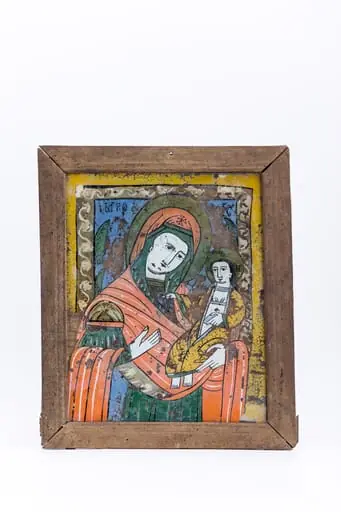 Maica Domnului îl ține în brațe pe Pruncul Iisus Hristos care are în mâna stângă un hrisov înfășurat și Binecuvăntează cu mâna dreaptă. Maica Domnului arată calea cu mâna dreaptă, deci este Hodighitria. Maica Domnului este înveșmântată în mantie cu maforion roșu vermillon și sacos albastru-vernil, are peste maforiom aureolă. Pruncul Iisus Hristos este înveșmântat în alb și auriu ocru-brun-bronziu, și are aureolă. Fondul icoanei este cerul de culoarea albastru cobalt deschis. Întreaga compoziție iconografică este încadrată de un chenar decorativ geometrizant galben-ocru, cu linia albă șerpuitoare, semnificând ideea de veșnicie, de mărturisire. Cromatica este armonioasă, tomnatică, specifică Niculei: roșu vermillon, alb, albastru cobalt, verde, kaki, auriu, ocru-brun-bronziu. Inscripția din româno-chirilică se traduce MP IC XC Maica Domnului Iisus Hristos.
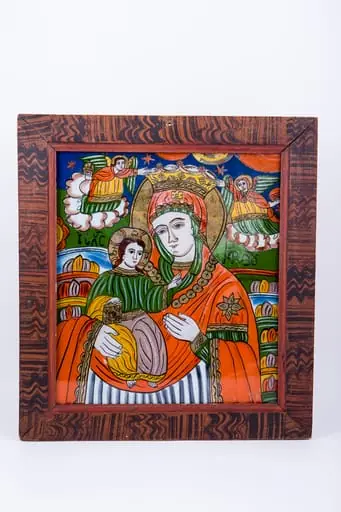 Maica Domnului Împărăteasă a Cerurilor, ține Pruncul Iisus Hristos, în brațe. Maica Domnului este îmbrăcată cu mantie cu maforion roșu vermillon, cu interiorul căptușit cu verde închis și albastru dungat cu alb. Poartă aureolă, coroniță de împărăteasă și salbă aurie din bănuți. Pruncul Iisus Hristos este îmbrăcat cu brun și verde și are aureolă și Sfânta Evanghelie închisă în mâna dreaptă și binecuvântează cu mâna stângă. În registrul superior sunt ocrotitori și păzitori Sfinții Arhangheli Mihail și Gavriil, cu mâinile atingând coronița Maicii Domnului Împărătese. Cromatica este armonioasă, caldă și luminoasă: roșu vermillon, verde spanac-avocado, galben-chihlimbar-ocru, albastru ceruleum bleu-ciel, brun, gri, alb, negru. Inscripția din româno-chirilică se traduce Maica Domnului MP Iisus Hristos IC XC. Icoana este de Șcheii Brașovului, Țara Oltului.
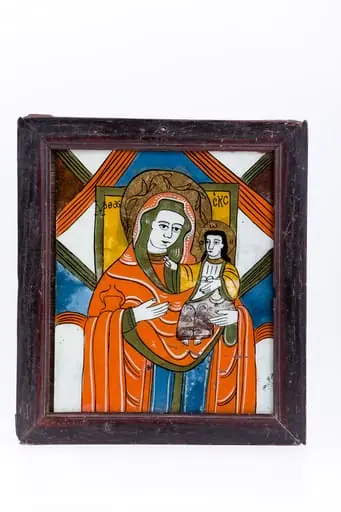 Maica Domnului îl ține în brațe pe Pruncul Iisus Hristos care Binecuvântează cu mâna dreaptă și arată înspre Maica Domnului. Maica Domnului arată calea cu mâna dreaptă, deci este Hodighitria. Maica Domnului este înveșmântată în mantie cu maforion roșu vermillon și sacos albastru, cu interiorul verde, are peste maforiom aureolă. Maforiomul este împodobit cu puncte mici albe. Pruncul Iisus Hristos este înveșmântat în gri și auriu ocru-brun-bronziu, cu interiorul căptușit cu verde și are aureolă. Fondul icoanei este format dintr-un caroiaj alb-albastru, cu marginile verzi și acajou-cărămizii. Compoziția geometrică, formată din romburi suprapuse, ne trimite gândul la nimbul de Slavă de Lumină de la Schimbarea la Față a Mântuitorului Iisus Hristos pe Muntele Tabor. Cromatica este armonioasă, tomnatică, specifică Niculei: roșu vermillon, alb, albastru cobalt, verde, kaki, auriu, ocru-brun-bronziu, brun, alb, negru. Inscripția din româno-chirilică se traduce MP IC XC Maica Domnului Iisus Hristos.
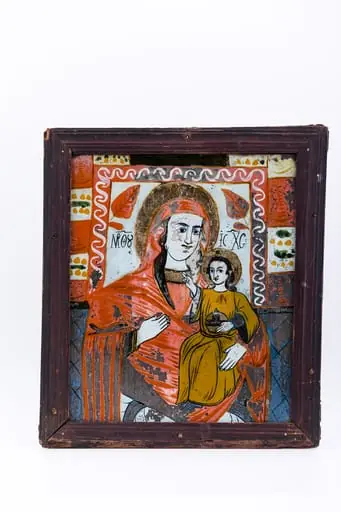 Maica Domnului este reprezentată ținând în brațe Pruncul Iisus Hristos care are în mâna stângă o sferă-globul pământesc și Binecuvântează cu mâna dreaptă. Maica Domnului arată calea cu mâna dreaptă, deci este Hodighitria. Maica Domnului este înveșmântată în mantie cu maforion roșu vermillon și sacos gri-negru, are aureolă. Pruncul Iisus Hristos este înveșmântat în verde kaki și auriu ocru-brun-bronziu, cu aureolă. Fondul icoanei este cerul de culoarea albastru bleu-ciel alburiu, senin, ca într-o fereastră adâncă. Cromatica este armonioasă și caldă: roșu vermillon, alb, albastru bleu-ciel, verde kaki, auriu, ocru-brun-bronziu. Inscripția din româno-chirilică se traduce MP IC XC Maica Domnului Iisus Hristos. Icoana este încadrată de un chenar decorativ geometrizant, format din segmente cromatice, alternativ expuse, cu elemente decorative punctiforme și linia albă șerpuită, specifică picturii de Nicula. Icoana este de Nicula, Crișana - Nordul Transilvaniei.
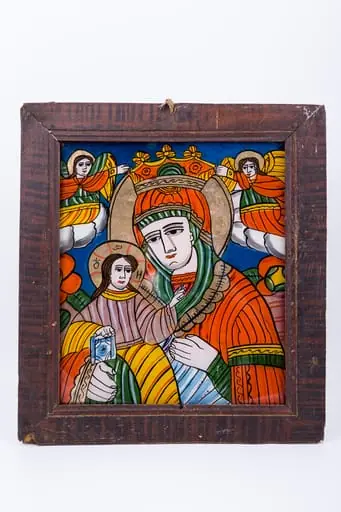 Maica Domnului Împărăteasă a Cerurilor îl ține în brațe pe Pruncul Iisus Hristos. Maica Domnului este îmbrăcată cu mantie cu maforion roșu vermillon, cu interiorul căptușit cu verde-brad și cu marginile manșetelor bej-bronzii. Poartă aureolă și coroniță de împărăteasă. Pruncul Iisus Hristos este îmbrăcat cu ocru și gri, are aureolă și ține în mâna dreaptă pe genunchi Sfânta Evanghelie și arată cu mâna stângă către Maica Domnului. În registrul superior îndepărtat sunt ocrotitori și păzitori Sfinții Arhangheli Mihail și Gavriil, așezați cu picioarele pe nori rotunzi, albi. Sfinții Arhangheli așează coronița de împărăteasă pe capul Maicii Domnului. Fondul icoanei este cerul albastru ultramarin. Tematica este deosebită și frecvent întâlnită în Țara Oltului. Cromatica este armonioasă, caldă și luminoasă: roșu vermillon, verde spanac-avocado, verde brad, galben-ocru, albastru bleu-ciel, cobalt, alb, negru.
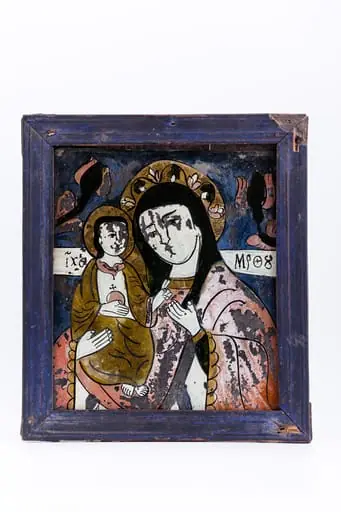 Maica Domnului Îl ține în brațe pe Pruncul Iisus Hristos care are în mâna dreaptă globul pământesc cu crucea deasupra, asemenea unui chivot de biserică, și cu mâna stângă arată înspre Maica Domnului. Maica Domnului arată calea cu mâna stângă deci este Hodighitria. Maica Domnului este înveșmântată în mantie cu maforion roșu vermillon și sacos negru-crem-ocru, cu dungi albe, cu interiorul cenușiu, are peste maforiom coroniță și aureolă. Veșmântul are broderie aurie. Pruncul Iisus Hristos este înveșmântat în ocru-alb, cu gulerașul roșu-roz și are aureolă. Fondul icoanei este cerul albastru ultramarin bleumarin închis. Icoana este încadrată în registrul superior de o ghirlandă de boboci de ruje - 2 trandafiri mari roșii. Cromatica este armonioasă, tomnatică-sobră, specifică Niculei: roșu vermillon, roz, alb, albastru ultramarin bleumarin, kaki, auriu, ocru-brun-bronziu, brun, alb, negru. Inscripția din româno-chirilică se traduce IC XC MP Iisus Hristos Maica Domnului. Icoana este de Nicula, fiind deosebită prin desenul minuțios, detalile delicate ale veșmintelor și expresivitatea chipurilor, remarcându-se tristețea și profunzimea privirilor.
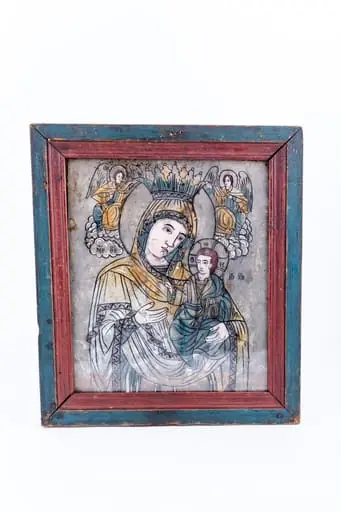 Maica Domnului este Împărăteasă, ținând în brațe Pruncul Iisus Hristos care ține cu mâna stângă pe genunchi, Sfânta Evanghelie închisă și Binecuvântează cu mâna dreaptă. Maica Domnului arată calea cu mâna dreaptă, deci este Hodighitria. Maica Domnului este înveșmântată în mantie cu maforion gri și galben-ocru-auriu cu broderie și falduri și drapaje bine conturate, poartă coroniță de împărăteasă și aureolă. Pruncul Iisus Hristos este înveșmântat în gri-albăstrui un turcoaz pal, cu coroană și aureolă. În registrul superior îndepărtat, stânga și dreapta, sunt cei doi îngeri arhangheli Mihail și Gavriil, ținând cu mâinile coroana Maicii Domnului. Arhanghelii stau pe mandorle rotunde de norișori albi, bine conturați. Fondul icoanei este gri. Cromatică: gri, alb, galben-ocru-auriu, albastru-turcoaz. Rama este pictată cu brun roșcat-acajou. Întreaga icoană este deosebită prin desenul sigur, elegant și sobrietatea luminoasă a cromaticii. Alăturarea gri-ului cu galbenul și albastru și urmele albe de desen sunt specifice Lazului și dau o eleganță aparte Văii Sebeșului, o prețiozitate prin simplitate. Inscripția din româno-chirilică se traduce IC XC MP Iisus Hristos Maica Domnului.
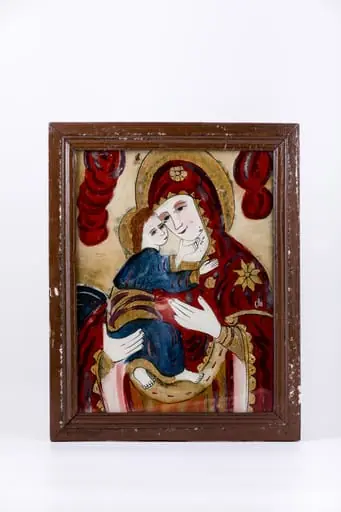 Maica Domnului ține în brațe Pruncul Iisus Hristos, îmbrățișându-L și lipindu-L în dreptul inimii. Pruncul Iisus Hristos ține duios bărbia și obrazul Maicii Domnului cu ambele mânuțe. Maica Domnului este înveșmântată în mantie cu maforiomul roșu sângeriu cu interiorul și sacosul roz-gri-bej. Pruncul Iisus Hristos este înveșmântat în brun-bronziu și albastru cobalt, cu aureolă. Fondul icoanei este cerul luminos-pal, împodobit cu elemente decorative, drapaje roșii, încadrând armonios tematica iconografică. Cromatica este vie, senină și luminoasă: roșu sângeriu, roz vermillon, alb, albastru cobalt, brun-bej, alb-ivoriu-crem, galben-ocru, alb, negru. Este o icoană din Mărginimea Sibiului.
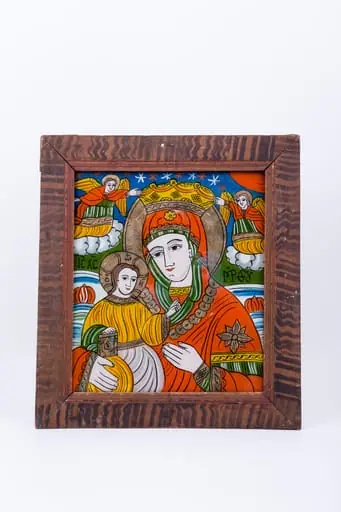 Maica Domnului Împărăteasă a Cerurilor, pe tron așezată, îl ține în brațe pe Pruncul Iisus Hristos. Maica Domnului este îmbrăcată cu mantie cu maforion roșie vermillon, cu interiorul căptușit cu verde și cu marginile manșetelor galben-aurii. Poartă aureolă și coroniță de împărăteasă, salbă aurie la gât. Pruncul Iisus Hristos este îmbrăcat cu ocru, verde și gri, are aureolă și ține pe genunchi Sfânta Evanghelie închisă și arată către Maica Domnului. În registrul superior îndepărtat sunt ocrotitori și păzitori Sfinții Arhangheli Mihail și Gavriil, așezați cu picioarele pe nori rotunzi, albi. Tematica este deosebită și frecvent întâlnită în Țara Oltului. Cromatica este armonioasă, caldă și luminoasă: roșu vermillon, verde spanac-avocado, galben-ocru, albastru bleu-ciel, alb, negru. Inscripția din româno-chirilică se traduce Maica Domnului MP Iisus Hristos IC XC
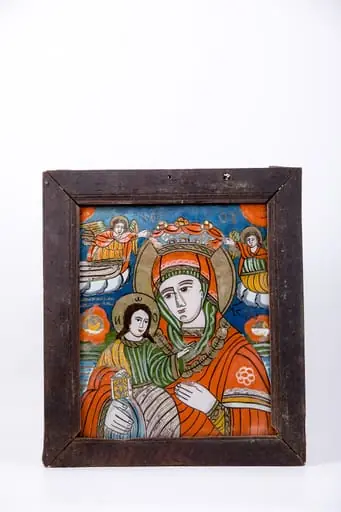 Maica Domnului Împărăteasă ține în brațe lipit pe umărul drept, pe Pruncul Iisus Hristos, care are în mâna dreaptă Sfânta Evanghelie închisă și cu mâna stângă arată înspre Maica Domnului. Maica Domnului arată calea cu mâna dreaptă, deci este Hodighitria. Maica Domnului este înveșmântată în mantie cu maforion roșu vermillon, cu interiorul verde și sacos cu mânecile galbene, poartă coroniță de împărăteasă și aureolă. Pruncul Iisus Hristos este înveșmântat în verde kaki și auriu ocru-brun-bronziu, cu coroană și aureolă. Maica Domnului poartă la gât o salbă din bănuți de aur. În registrul superior, de-a dreapta și de-a stânga Maicii Domnului, sunt Sfinții Arhangheli Mihail și Gavriil, pe câte o mandorlă de nouri rotunzi albi-crem, susținând dimpreună cu mâinile coroana de Împărăteasă a Maicii Domnului. Fondul icoanei este cerul de culoarea albastru regal. Cromatica este luminoasă, vie și armonioasă: roșu vermillon, alb, albastru regal și bleu-ciel, verde-văratic și spanac-avocado, kaki, auriu, ocru-brun-bronziu, galben-chihlimbar, negru. Inscripția din româno-chirilică se traduce MP IC XC Maica Domnului Iisus Hristos. Icoana este de Șcheii Brașovului, Țara Oltului.
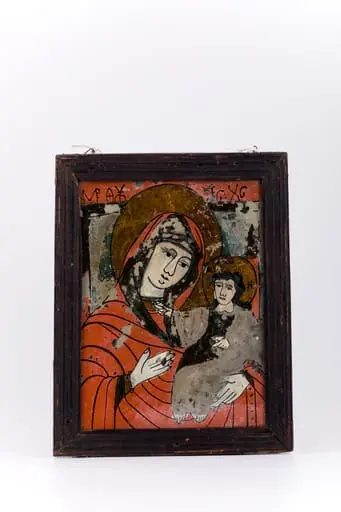 Maica Domnului este înveșmântată în maforiom roșu vermillon-corai, cu interiorul albastru ultramarin-gri, cu gulerașul și mânecuțele cu broderie bronzie, cu aureolă aurie. Maica Domnului arată calea care este Mântuitorul Iisus Hristos - Calea, Adevărul și Viața. Pruncul Iisus Hristos este înveșmântat în albastru ultramarin bleu-marin și gri și are, de asemenea, aureolă aurie. Pruncul Iisus ține în mâna stângă un hrisov înfășurat și cu mâna dreaptă arată înspre Maica Domnului. Fondul icoanei este cerul albastru ceruleum. Întreaga tematică iconografică este încadrată de un chenar decorativ geometrizant, asemenea unei rame încadratoare bronzii. Inscripția din româno-chirilică se traduce MP IC XC Maica Domnului Iisus Hristos. Cromatica este armonioasă: roșu vermillon-corai, albastru bleu-marin, ultramarin, gri, bronziu, alb, negru. Icoana este din Nordul Transilvaniei, Nicula.