Artwork
Madhava faces a man holding a scale, folio 1 from a Madhavanala-Kamakandala
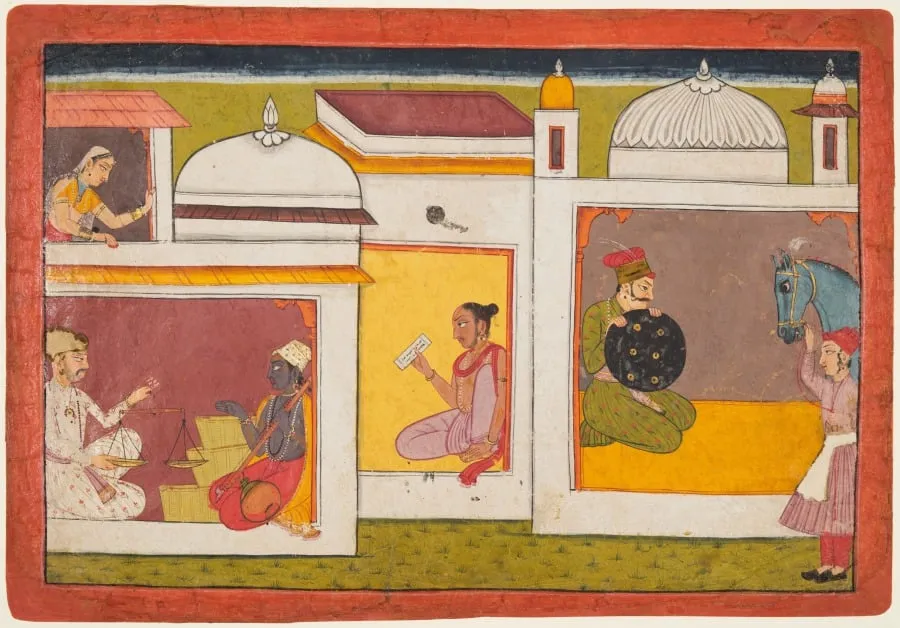
Madhava faces a man holding a scale, folio 1 from a Madhavanala-Kamakandala is an unspecified painting by the Baroque artist Unknown. It dates from 1720 and is held in the collection of the Cleveland Museum of Art. This folio opens a illustrated narrative cycle centered on Madhava, a gifted musician from the city of Pushpavati.
About this work
Overview
The scene is set in an urban court, where Madhava is depicted with his vina, while a figure beside him measures the wealth accumulating in his honor.
This folio opens a illustrated narrative cycle centered on Madhava, a gifted musician from the city of Pushpavati. It captures a pivotal moment when his musical success draws both admiration and envy. The scene is set in an urban court, where Madhava is depicted with his vina, while a figure beside him measures the wealth accumulating in his honor. The composition signals the onset of social tension, foreshadowing the conflict to come.
Subject & Meaning
Madhava’s mastery of the vina has earned him material rewards, symbolized by the coins being weighed. His beauty and artistry have captivated women, elevating his status, but this attention provokes resentment among the elite. The presence of Brahmin priests and nobles in the scene suggests a community divided between awe and jealousy. The moment depicted is not one of triumph, but of impending discord, as prosperity becomes a catalyst for rivalry.
Technique & Style
The painting employs delicate brushwork and restrained color, typical of Pahari miniature traditions. Figures are rendered with refined contours and expressive gestures, while architectural elements suggest a courtly setting without excessive detail. The use of soft pinks and muted tones grounds the scene in quiet elegance, contrasting with the underlying tension. Spatial depth is implied through layered figures and subtle perspective, enhancing narrative clarity.
History & Provenance
This folio originates from a manuscript series produced in the Pahari region of northern India, likely in the late 17th or early 18th century. It belongs to a cycle illustrating the romantic tale of Madhavanala and Kamakandala, a literary tradition popular among Rajput and hill-state courts. The work reflects the patronage of local rulers who commissioned illustrated manuscripts to celebrate poetic and musical themes.
Context
The Pahari kingdoms fostered a vibrant tradition of miniature painting, often drawing from Sanskrit and regional literature. Stories of gifted musicians and lovers were favored for their emotional depth and moral ambiguity. This folio aligns with broader cultural values that celebrated artistic excellence while cautioning against the dangers of envy and social disruption, mirroring courtly anxieties about status and reputation.
Legacy
The Madhavanala-Kamakandala series remains a significant example of Pahari narrative painting, preserving both literary heritage and artistic conventions of its time. Its focus on psychological nuance and social dynamics influenced later regional styles. Though lesser known than Mughal or Deccan traditions, these works offer insight into the interplay of art, literature, and social hierarchy in early modern northern India.
Artist & collection

 Domestic Scene
 Giacomo and Cardinal Marco, investing Andrea, Abbot of San Zeno, with his Benefice
 The Nymph of Fontainebleau
 Portrait of a Woman
 Madonna and Child with Saints in the Enclosed Garden
 Venus and Minerva
 Family Group of Four on Sofa
 Wall painting from Room H of the Villa of P. Fannius Synistor at Boscoreale
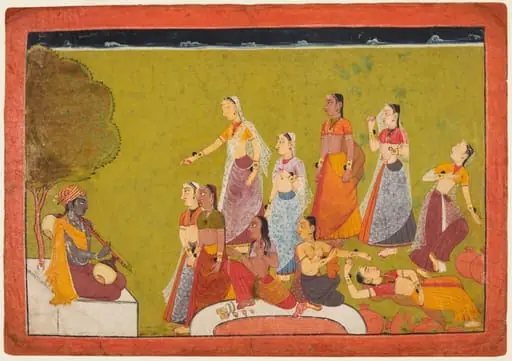 A group of women in ecstasy before Madhava, folio 4 from a Madhavanala-Kamakandala
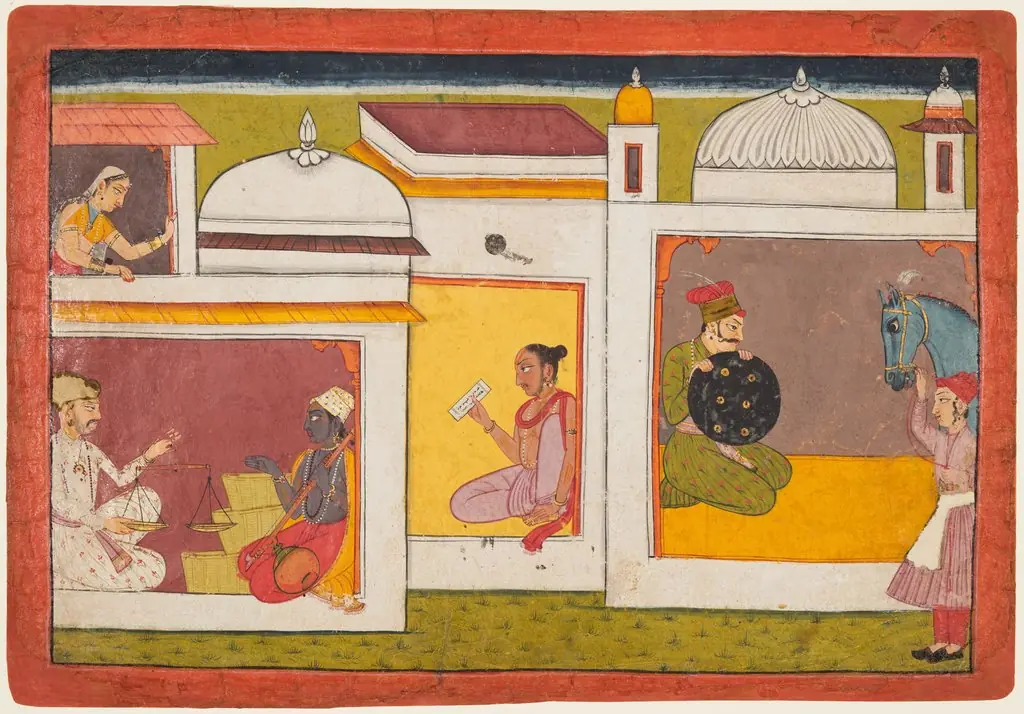 Madhava Faces a Man Holding a Scale, from a Madhavanala Kamakandala
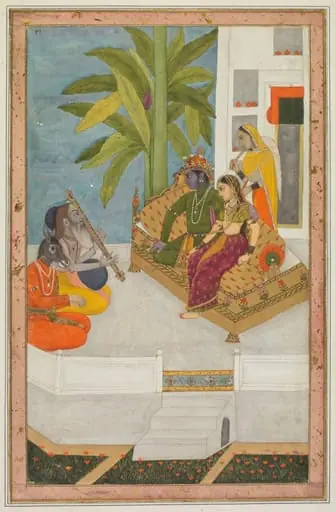 Shri Raga: An Illustration from a Ragamala Series
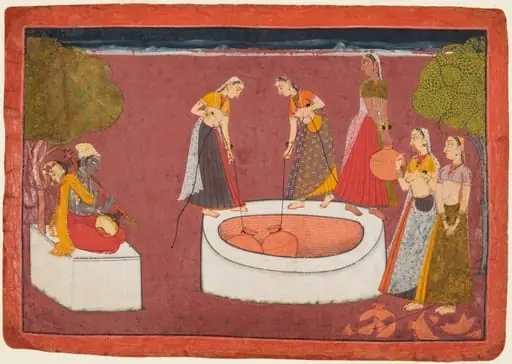 Madhava plays his vina before five women drawing water from a well, folio 3 from a Madhavanala-Kamakandala
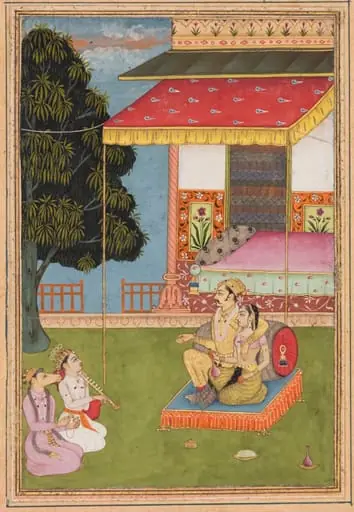 Shri Raga, from a Ragamala (Garland of Melodies)