Artwork
Maharaja Gulab Singh
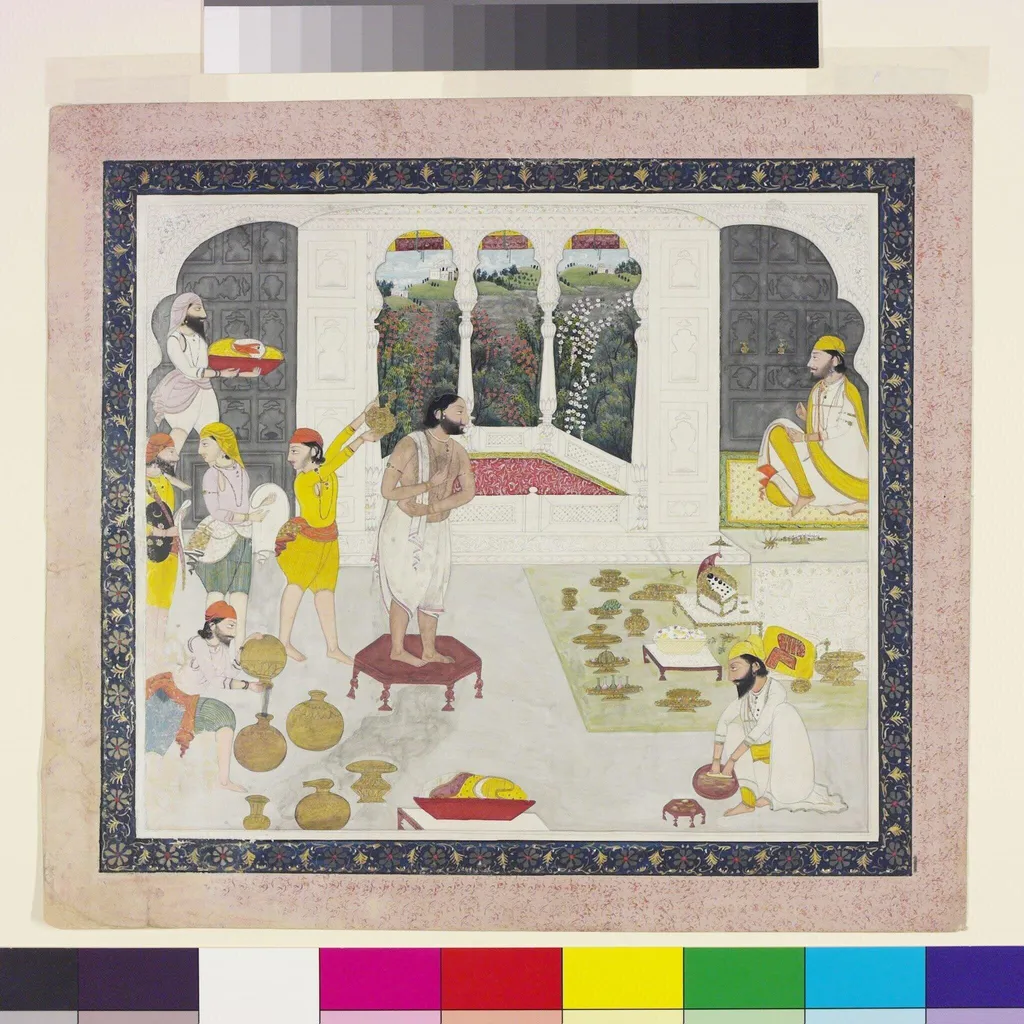
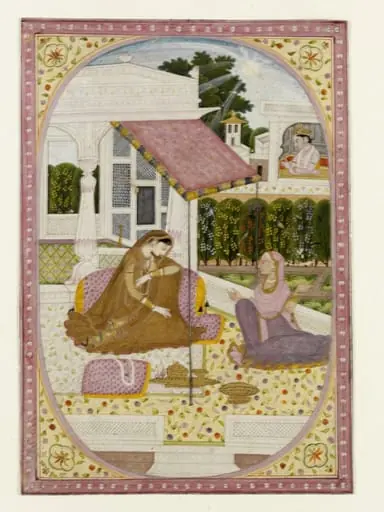
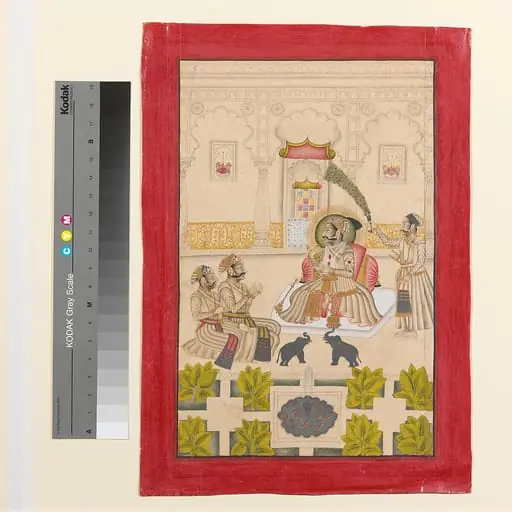
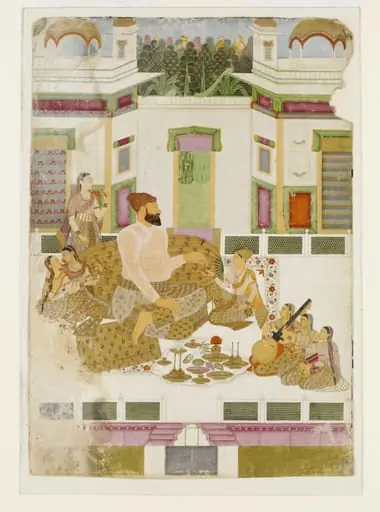
Maharaja Gulab Singh is a paint painting by the Patna School of Painting artist Unknown. It dates from 1835 and is held in the collection of the Victoria and Albert Museum.
About this work
The painting is interesting because it was made in the Panjab Plains, near the court of a Sikh ruler.
This painting shows a man performing ritual ablutions.
He is getting ready for worship.
The painting is interesting because it was made in the Panjab Plains, near the court of a Sikh ruler.
The ruler, Maharaja Ranjit Singh, had many Hindus in his army.
One of them was Gulab Singh, who joined in 1809 and later became a chief.
This painting is a glimpse into their world.
You can learn more about this style by looking at the work at the museum: Victoria and Albert Museum.
Overview
This painting, likely created around 1835 in the Punjab Plains, portrays Maharaja Gulab Singh of Jammu engaged in ritual purification before worship. It reflects the artistic conventions of the Sikh court under Ranjit Singh, despite its subject being a Hindu ruler. The work captures a moment of personal devotion within a politically complex environment where religious and military alliances intersected.
Subject & Meaning
Gulab Singh, depicted in the act of ablution, is shown as a devout Hindu nobleman within a predominantly Sikh political sphere. The scene emphasizes ritual cleanliness as a prelude to worship, underscoring his personal faith. Though serving under Ranjit Singh, his identity as a Hindu ruler in a multi-confessional court highlights the pluralistic nature of early 19th-century Punjab’s elite circles.
Technique & Style
Executed in a style aligned with the Punjab court tradition, the painting employs fine brushwork, muted pigments, and detailed textile patterns. Figures are rendered with restrained naturalism, and the composition centers the subject against a plain background, focusing attention on gesture and attire. These features reflect the regional synthesis of Mughal precision and local aesthetic sensibilities.
History & Provenance
The painting was once in the collection of P. C. Manuk, an Indian lawyer, and his companion Miss G. M. Coles. Its survival through private hands into institutional care suggests its recognition as a culturally significant artifact. While its exact origin within the court workshop remains uncertain, its subject and style firmly tie it to the Punjab region during the twilight of Ranjit Singh’s reign.
Context
Gulab Singh rose to power as ruler of Jammu in 1822, serving as a loyal commander under Ranjit Singh until the latter’s death in 1839. His later alignment with the British during the First Anglo-Sikh War marked a strategic shift, leading to his acquisition of Kashmir as a separate principality. This portrait, made shortly before that turn, captures him at the height of his influence within the Sikh confederacy.
Legacy
The painting endures as a visual record of a transitional figure in Punjab’s history—a Hindu ruler embedded in a Sikh polity, whose loyalties evolved with shifting power dynamics. It contributes to understanding the cultural and political fluidity of the region, where religious identity and state allegiance were not always aligned, and art served as a quiet witness to these complexities.
Artist & collection

 Domestic Scene
 Giacomo and Cardinal Marco, investing Andrea, Abbot of San Zeno, with his Benefice
 The Nymph of Fontainebleau
 Portrait of a Woman
 Madonna and Child with Saints in the Enclosed Garden
 Venus and Minerva
 Family Group of Four on Sofa
 Wall painting from Room H of the Villa of P. Fannius Synistor at Boscoreale