Artwork
Vishnu as Buddha Avatar
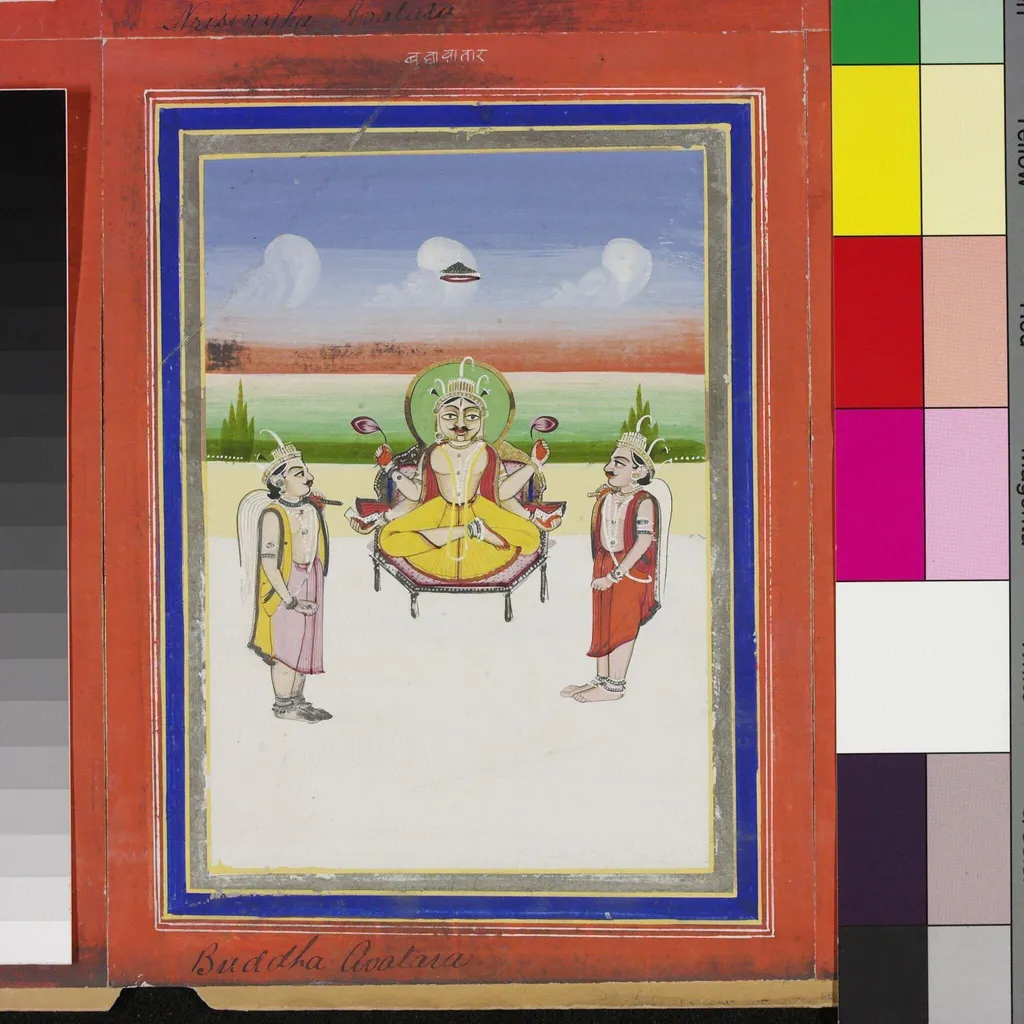
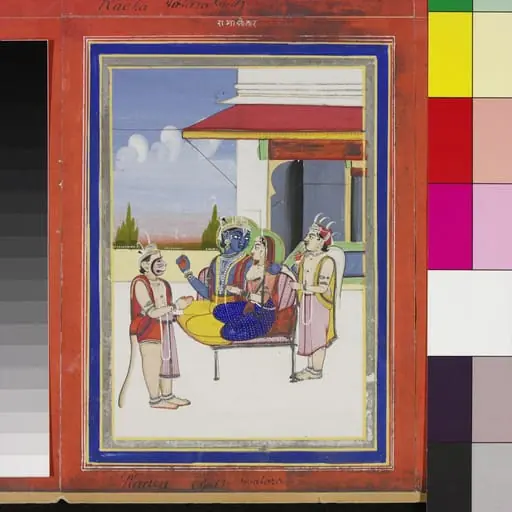
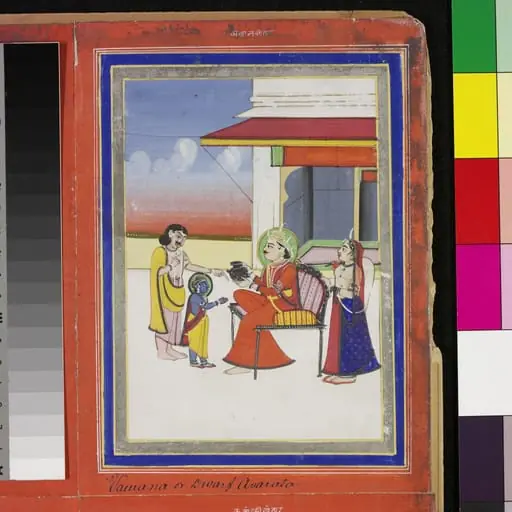
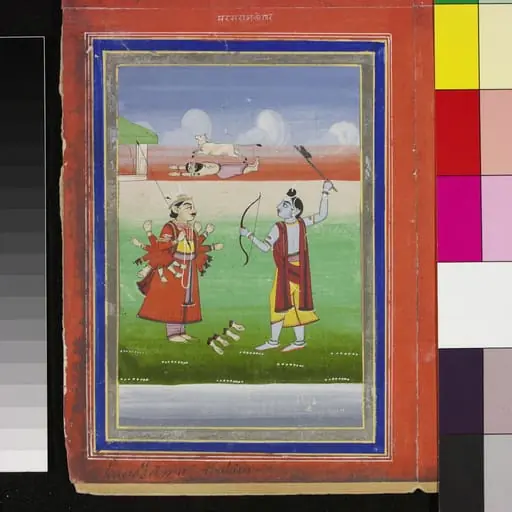
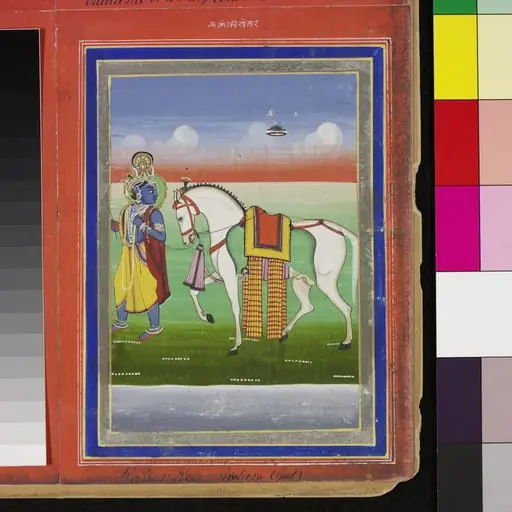
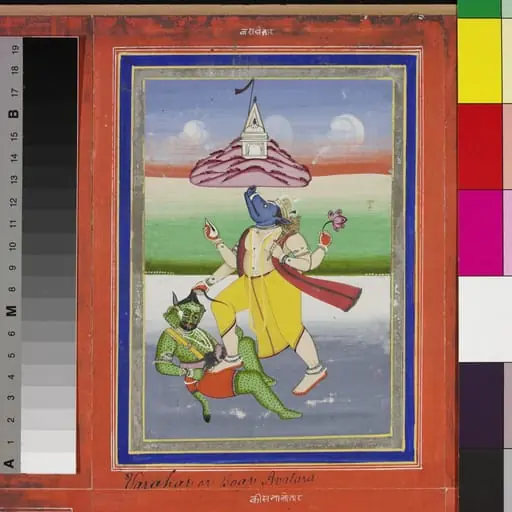
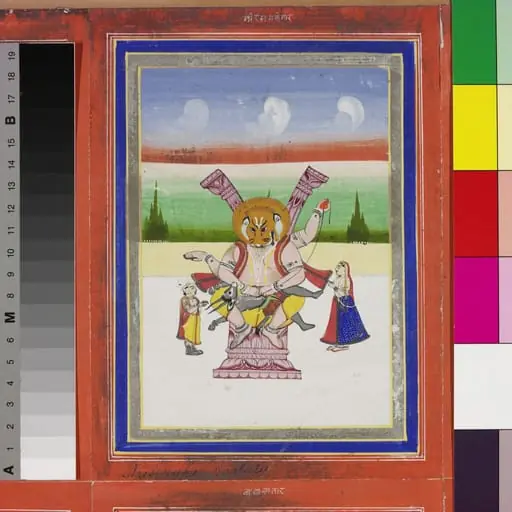
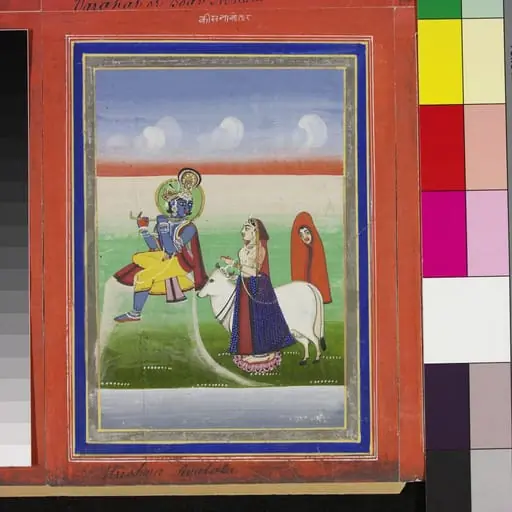
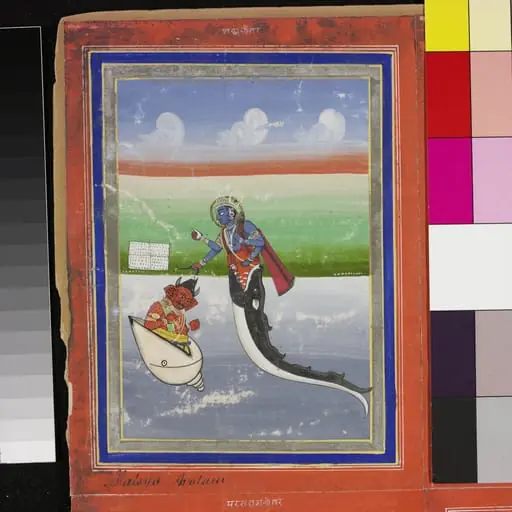
Vishnu as Buddha Avatar is a paint painting by Unknown. It dates from 1850 and is held in the collection of the Victoria and Albert Museum. The work is an opaque watercolor on paper portraying the Hindu deity Vishnu in his ninth avatar, the Buddha.
About this work
Overview
The work is an opaque watercolor on paper portraying the Hindu deity Vishnu in his ninth avatar, the Buddha. The central figure sits cross‑legged on a low throne, surrounded by a radiant halo, and is attended by two standing figures holding fly‑whisks. The composition is rendered in vivid reds, yellows, blues and greens, set against a sky with clouds and a green field.
Subject & Meaning
The image represents the syncretic identification of Vishnu with the historical Buddha, a theological link that underscores the continuity of divine manifestation across traditions. The four‑armed deity, holding red objects in each hand, conveys the attributes of both Vishnu and the Buddha, while the attendant figures emphasize reverence and ritual service.
Technique & Style
Executed in opaque watercolor, the painting employs flat areas of saturated color and defined outlines typical of South Asian courtly art. The use of a halo, stylized garments, and the precise rendering of accessories such as yak‑tail fly‑whisks reflect conventional iconographic conventions.
History & Provenance
The piece is part of the collection of the Victoria and Albert Museum in London. Its acquisition details are recorded by the museum, though the precise date of creation and original patron remain undocumented in the available sources.
Context
Depictions of Vishnu’s Buddha avatar appear in Indian art from the medieval period, illustrating theological dialogues between Hinduism and Buddhism. Such works often served devotional or didactic purposes, reinforcing the idea of a single supreme deity manifesting in multiple forms.
Artist & collection

 Domestic Scene
 Giacomo and Cardinal Marco, investing Andrea, Abbot of San Zeno, with his Benefice
 The Nymph of Fontainebleau
 Portrait of a Woman
 Madonna and Child with Saints in the Enclosed Garden
 Venus and Minerva
 Family Group of Four on Sofa
 Wall painting from Room H of the Villa of P. Fannius Synistor at Boscoreale