Artwork
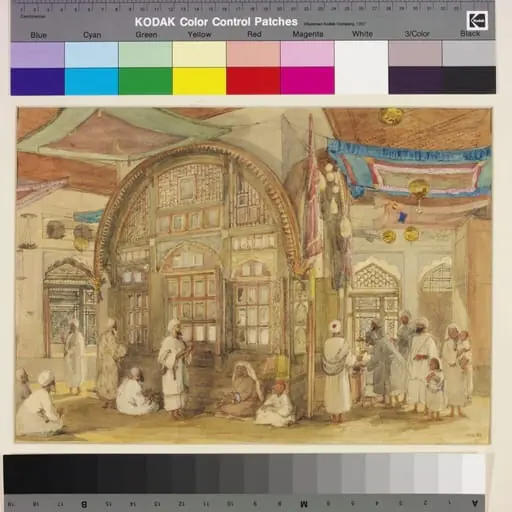
Interior of Shah Hamadan's Masjid during a religious ceremony
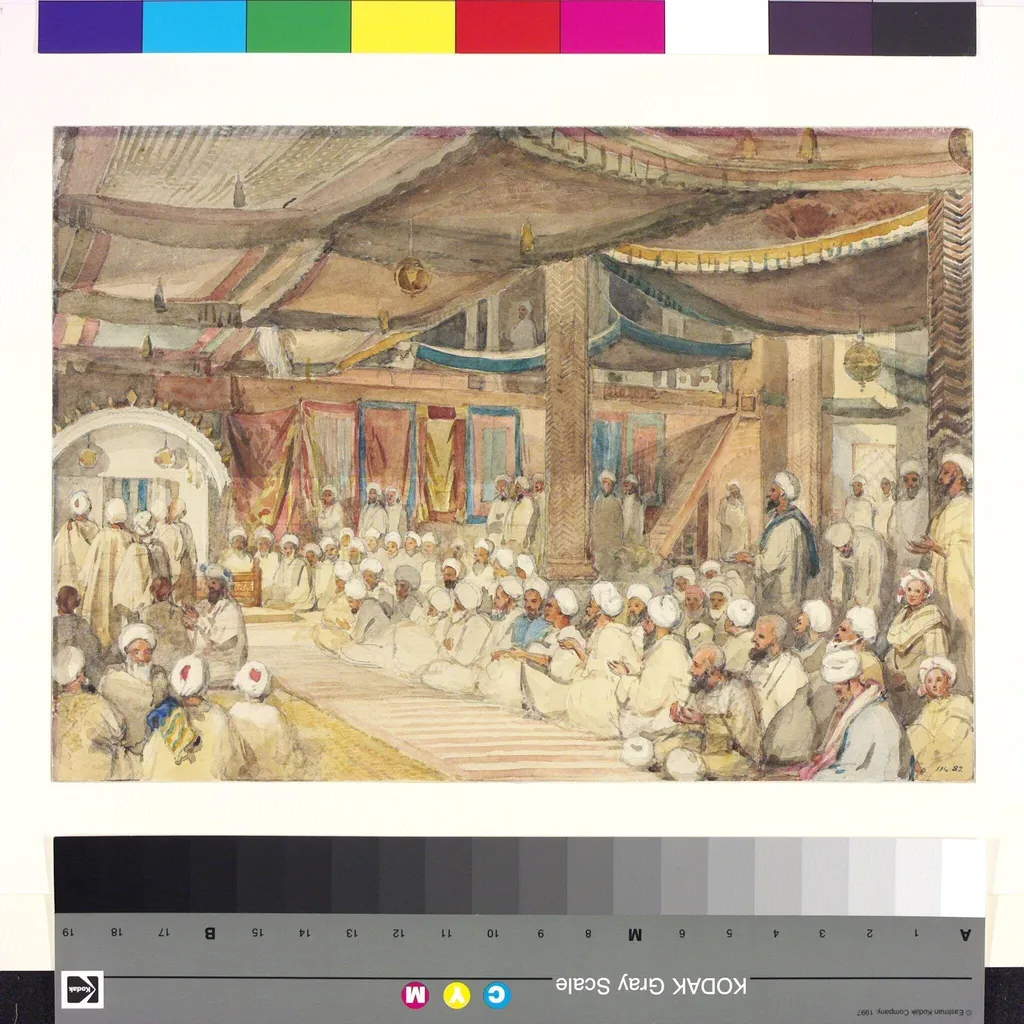
Interior of Shah Hamadan's Masjid during a religious ceremony is a paint painting by the Impressionist artist William Carpenter. It dates from 1855 and is held in the collection of the Victoria and Albert Museum.
About this work
Overview
The work belongs to a series of observational sketches Carpenter produced while traveling across India, emphasizing daily rituals over ceremonial grandeur.
This painting captures an interior moment inside Shah Hamadan's Mosque in Kashmir, recorded by British artist William Carpenter during his stay in the region between 1854 and 1855. It portrays a religious gathering with worshippers seated on the floor, facing a central shrine. The work belongs to a series of observational sketches Carpenter produced while traveling across India, emphasizing daily rituals over ceremonial grandeur.
Subject & Meaning
The scene centers on a silver shrine housing a religious relic, positioned at the far end of the prayer space. Worshippers, dressed in light robes and white caps, are arranged in quiet rows, their posture suggesting devotion. Flags and draped textiles frame the space, signaling sacredness without overt symbolism. The composition avoids theatricality, instead conveying the intimacy and quiet rhythm of communal worship in a Kashmiri Sufi context.
Technique & Style
Carpenter employed loose, fluid brushwork to convey the movement and density of the crowd, with muted earth tones dominating the palette—browns, ochres, and soft blues. The high wooden ceiling and architectural details are rendered with observational precision, yet the overall handling feels spontaneous. This approach, closer to emerging Realist and proto-Impressionist sensibilities, prioritized immediacy over polished finish, distinguishing it from academic conventions of the time.
History & Provenance
Painted during Carpenter’s extended stay in Kashmir, the work was part of a personal record of Indian life rather than a commissioned piece. It entered a public collection in 1888, likely through donation or acquisition from the artist’s estate. Its preservation reflects growing institutional interest in ethnographic art from British colonial observers, though Carpenter’s focus remained on personal documentation rather than imperial narrative.
Context
Carpenter’s practice diverged from typical colonial art by immersing himself in local customs—he adopted Indian dress and lived among communities he depicted. His Kashmir period coincided with a broader shift in European art toward direct observation of everyday life. This painting aligns with emerging trends in Realism, contrasting with idealized Orientalist imagery by emphasizing authenticity over exoticism.
Legacy
The painting stands as an early example of Western artist documentation of South Asian religious practice that prioritizes quiet observation over spectacle. While not widely known in mainstream art history, it contributes to a quieter lineage of cross-cultural visual record-keeping. Its unembellished style and attention to ordinary ritual offer a counterpoint to more sensationalized colonial imagery of the era.
Artist & collection
Artist
William Carpenter (1818–1899) was an English watercolour artist. He travelled for six or seven years in the 1850s painting scenes of India, its people and its life. The Victoria and Albert Museum bought over 280 of his…

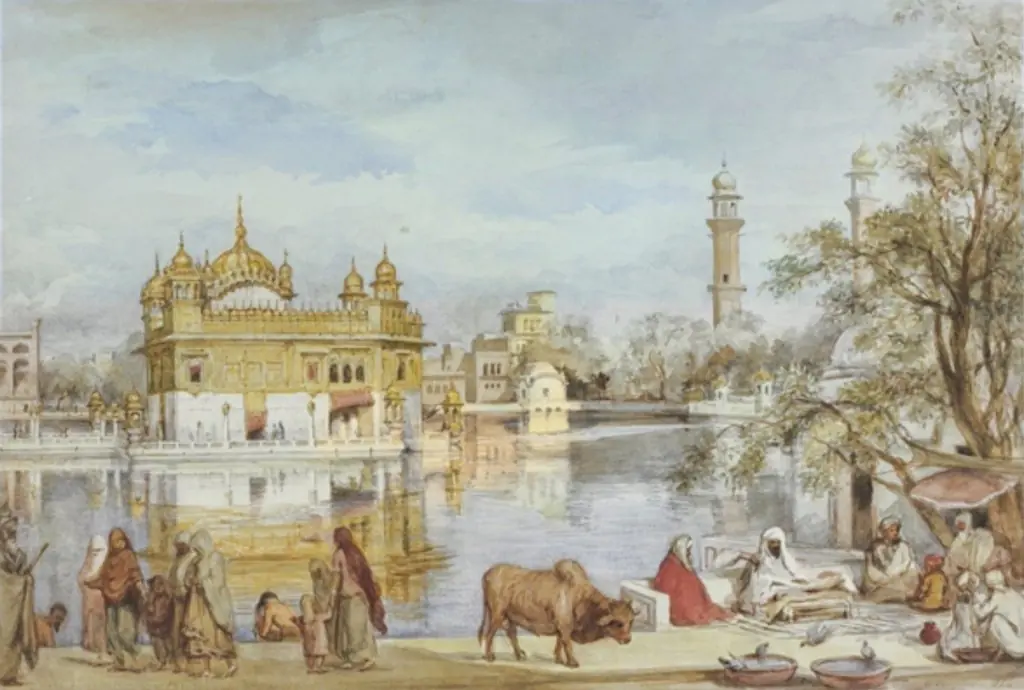 The Golden Temple, Amritsar
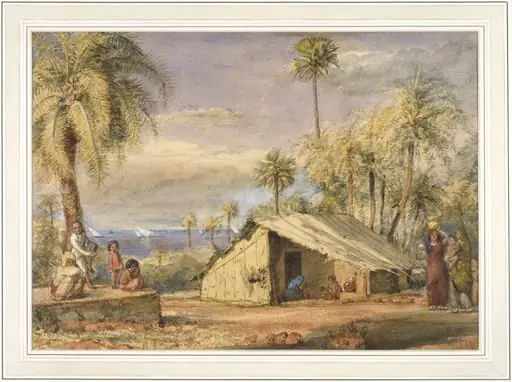 Toddywallah's hut in a grove of date palms near Breach Candy, Bombay
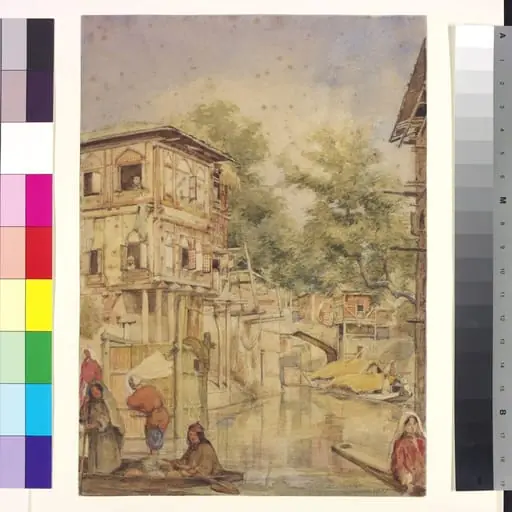 On the Mar Canal at Srinagar, Kashmir
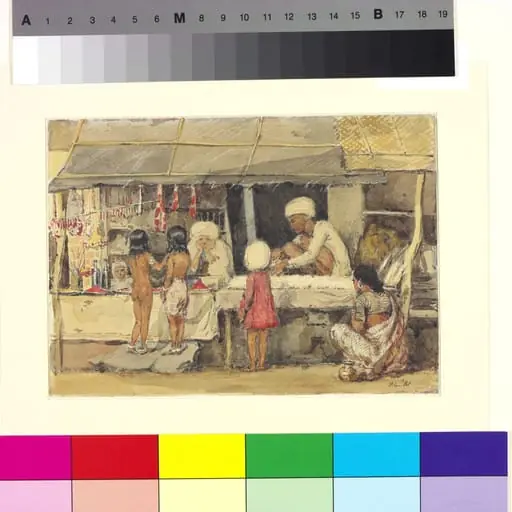 Shops for colours and flowers used at festivals, Sadr bazaar, Pune
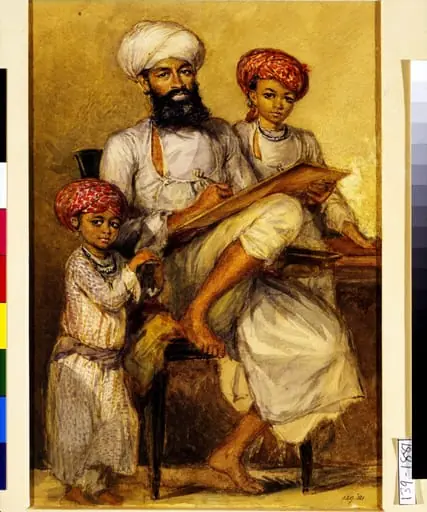 Portrait of Tara Chand, the court painter
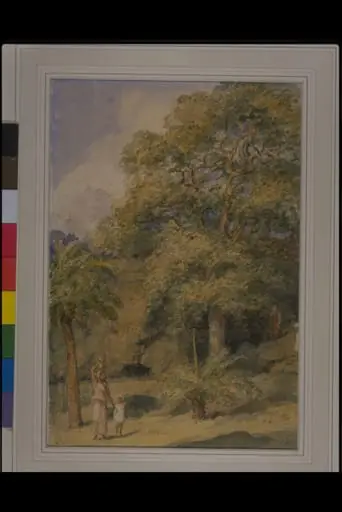 Study of a tamarind tree and date palms near Sir William Yardley's house at Breach Candy, Bombay
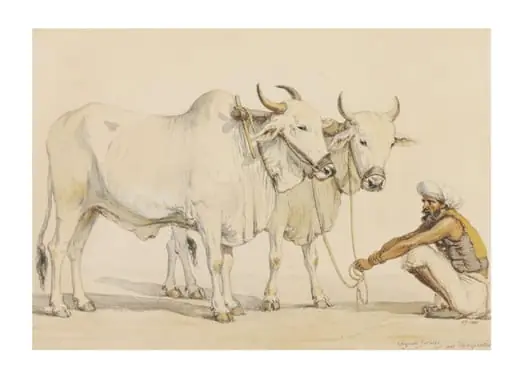 Two harnessed bullocks from Gujarat with their keeper
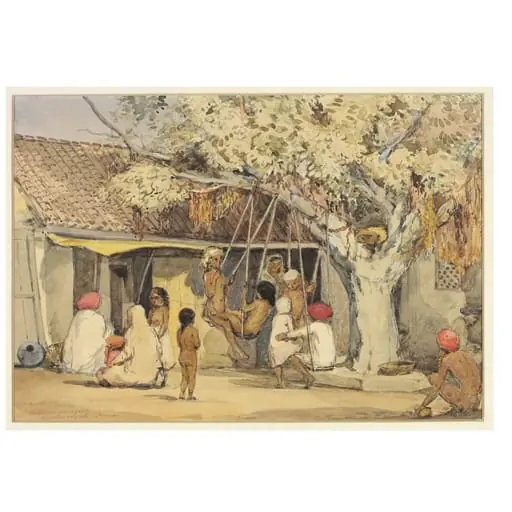 Children swinging Sudder bazaar. Poona
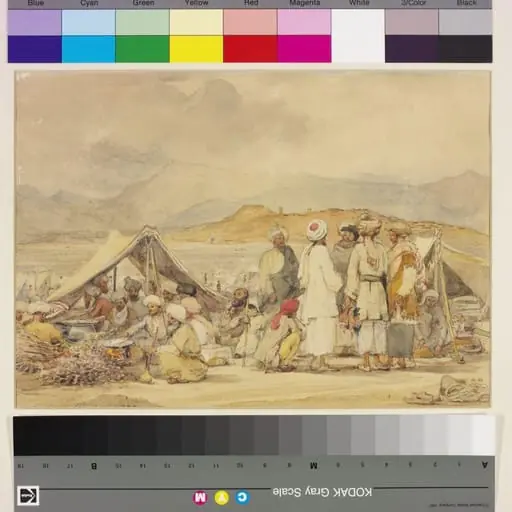 Camp bazaar near Kaie, Miranzai
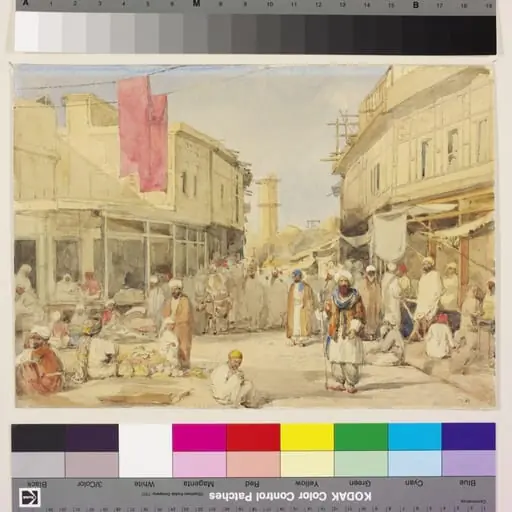 Street scene in Peshawar
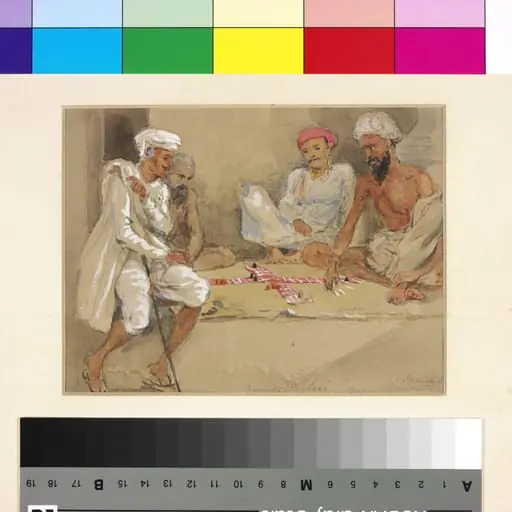 Untitled
 The tomb of Mucdoom Sahib
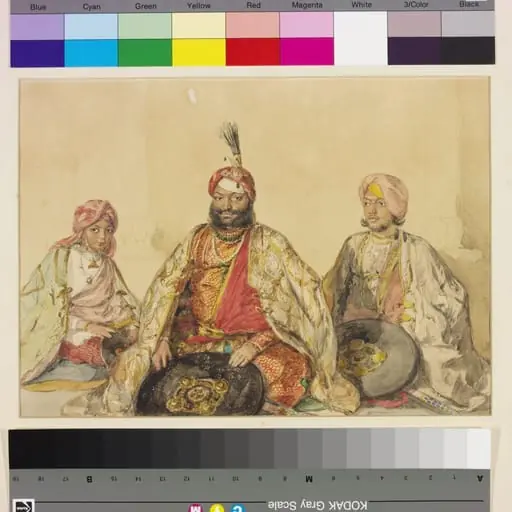 Nawab Sheik Imam-u-din, late Governor of Kashmir
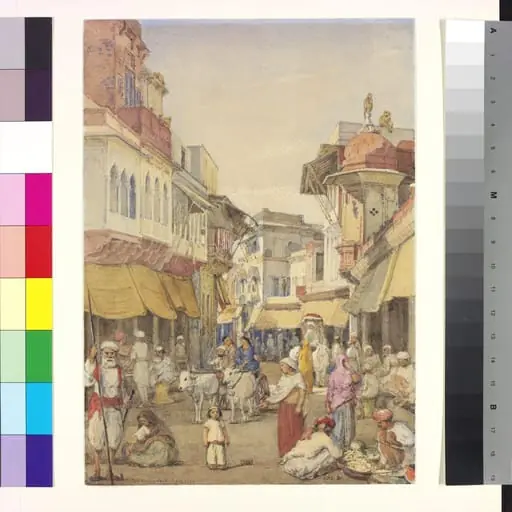 Untitled
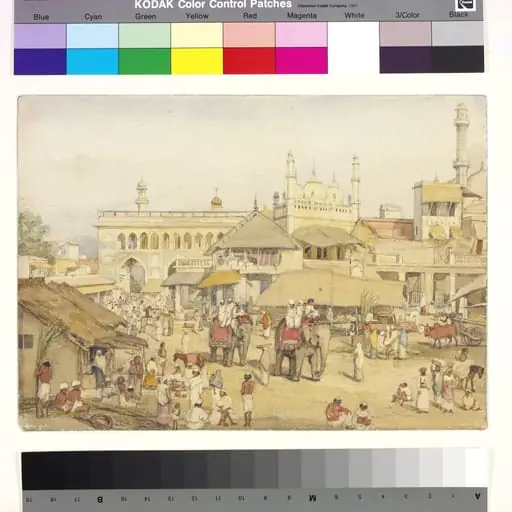 Street scene with gateway and a mosque, Lucknow
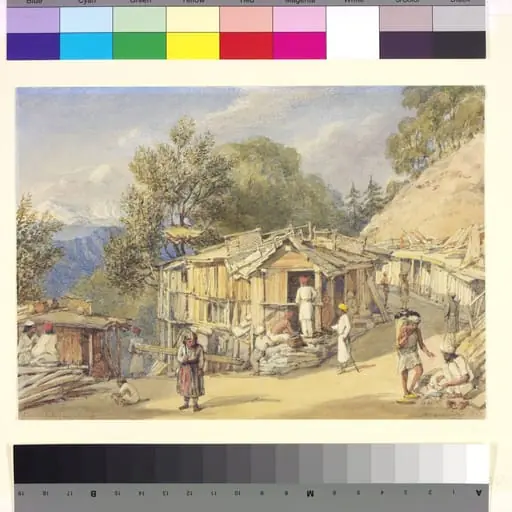 View of the wood bazaar, Simla
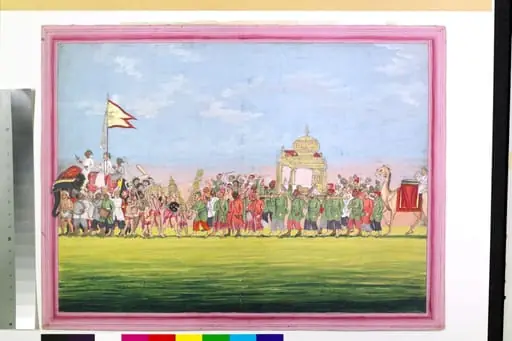 Muslim festival scene
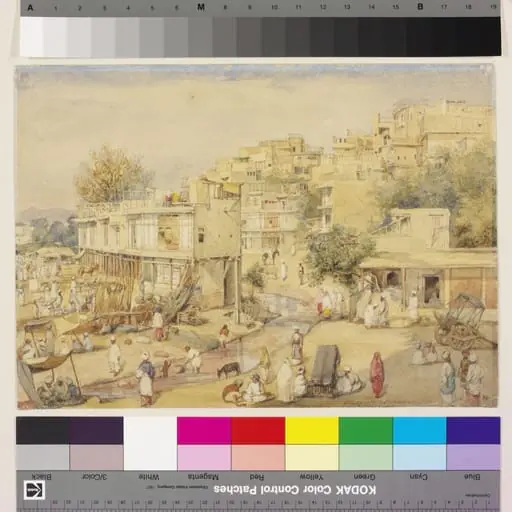 View of houses adjoining a stream, Peshawar
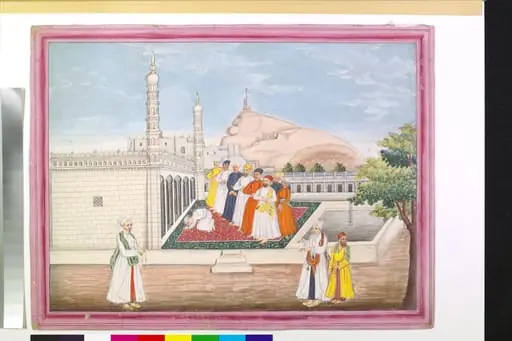 Prayers at the mosque