Artwork
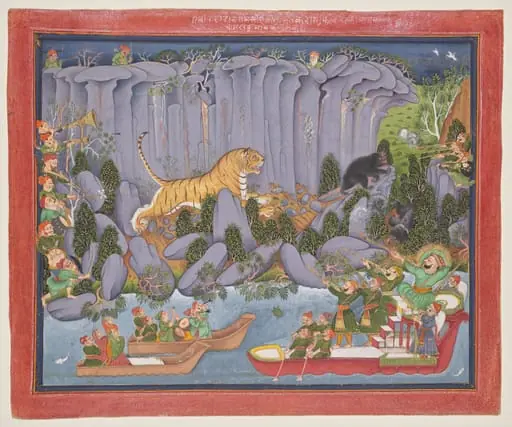
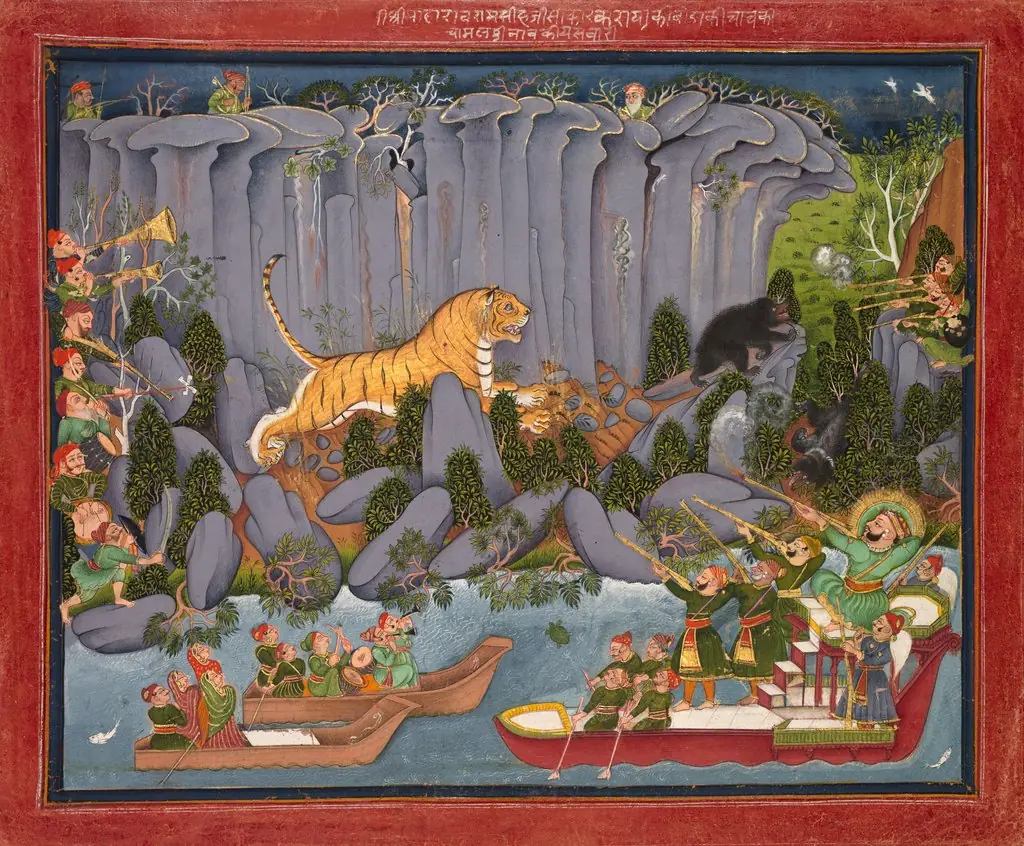
Maharao Umed Singh of Kota hunting at night
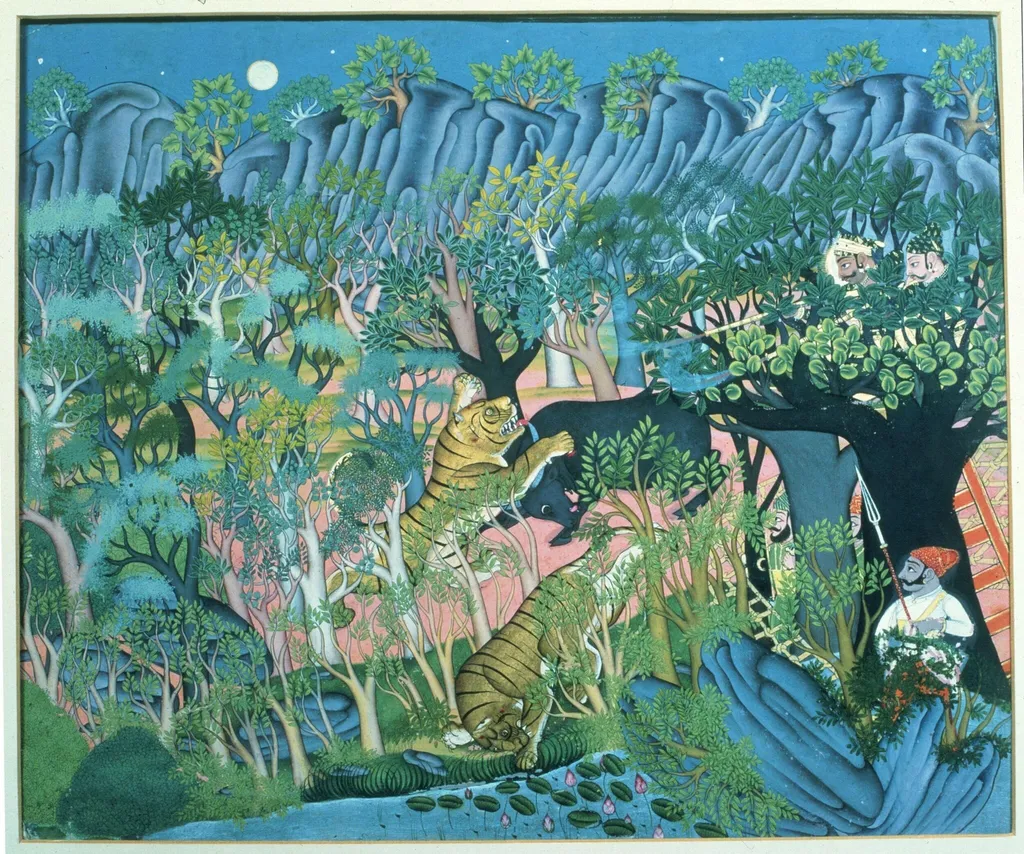
Maharao Umed Singh of Kota hunting at night is a paint painting by the Patna School of Painting artist Unknown. It dates from 1790 and is held in the collection of the Victoria and Albert Museum. This gouache painting from 1790 portrays Maharao Umed Singh of Kota during a nocturnal tiger hunt.
About this work
Overview
This gouache painting from 1790 portrays Maharao Umed Singh of Kota during a nocturnal tiger hunt. Executed on paper, it reflects the courtly tradition of Rajput royal portraiture, blending naturalistic detail with stylized composition. The scene unfolds under moonlight, emphasizing drama through contrast and movement, characteristic of late 18th-century Rajasthani painting practices.
Subject & Meaning
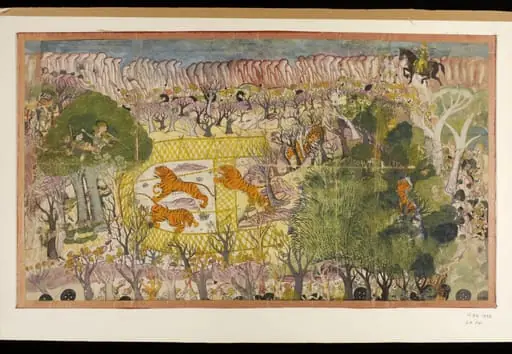
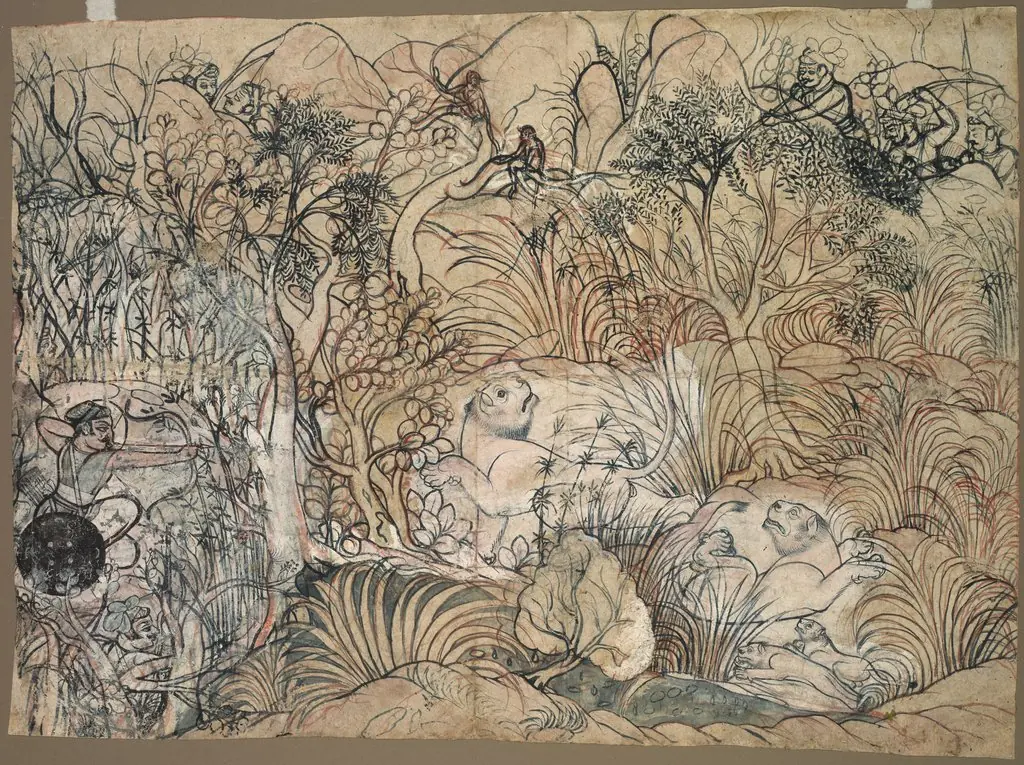
The ruler is shown armed with a spear, positioned behind a tree, observing a violent encounter between two tigers and a black panther. The hunt symbolizes royal courage and control over nature, reinforcing the ruler’s authority. The inclusion of multiple predators suggests a perilous, untamed wilderness, underscoring the monarch’s role as protector and master of his domain.
Technique & Style
Strong chiaroscuro defines forms and depth, while the dense foliage and layered brushwork create a textured, immersive atmosphere.
Gouache on paper allows for rich, opaque color and fine detail. The artist employs cool blues and greens for the night forest, with warm yellows highlighting the figures and animals. Strong chiaroscuro defines forms and depth, while the dense foliage and layered brushwork create a textured, immersive atmosphere. Figures are rendered with precision, contrasting with the more fluid treatment of the animals.
History & Provenance
The painting was part of the collection of Col. T.G. Gayer-Anderson and Major R.G. Gayer-Anderson, Pasha, who acquired it during their time in India. It was later donated to a public institution, ensuring its preservation and accessibility. Its journey from royal court to Western collection reflects broader patterns of art migration in the colonial era.
Context
Night hunts were elite pastimes among Rajput rulers, combining sport, ritual, and political display. This painting aligns with a broader tradition of hunting scenes in Rajasthani art, where nature was both a challenge and a stage for royal virtue. The emphasis on nocturnal action distinguishes it from daylight court scenes, highlighting a more visceral, personal dimension of kingship.
Legacy
The work remains a significant example of late 18th-century Rajput painting, valued for its atmospheric depth and narrative complexity. It contributes to scholarly understanding of how Indian courts visualized power through dynamic, emotionally charged scenes. Its survival and institutional care affirm its place in the regional artistic canon.
Artist & collection

 Domestic Scene
 Giacomo and Cardinal Marco, investing Andrea, Abbot of San Zeno, with his Benefice
 The Nymph of Fontainebleau
 Portrait of a Woman
 Madonna and Child with Saints in the Enclosed Garden
 Venus and Minerva
 Family Group of Four on Sofa
 Wall painting from Room H of the Villa of P. Fannius Synistor at Boscoreale