Artwork
Maica Domnului "călăuzitoare" (Hodighitria)
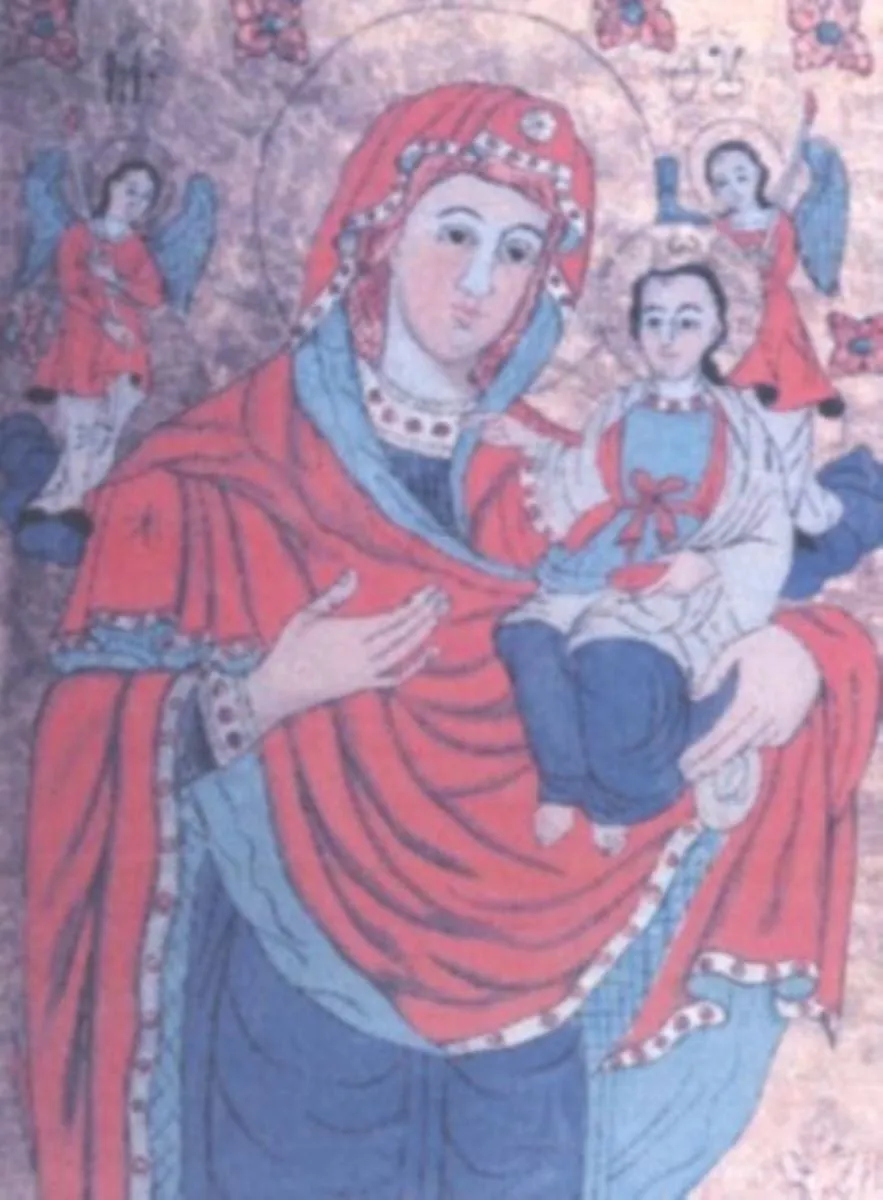
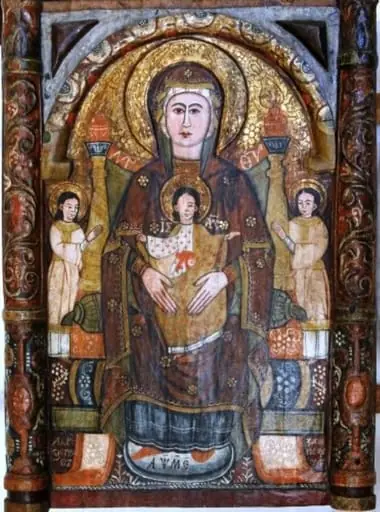
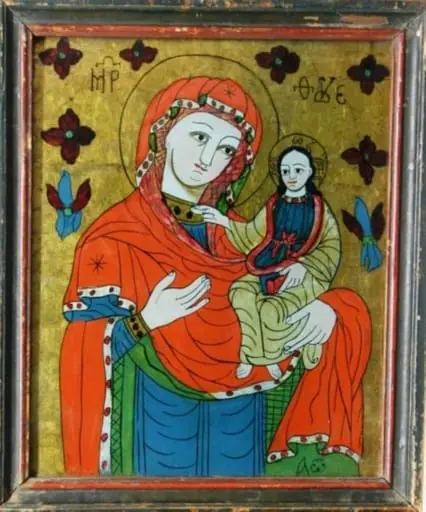
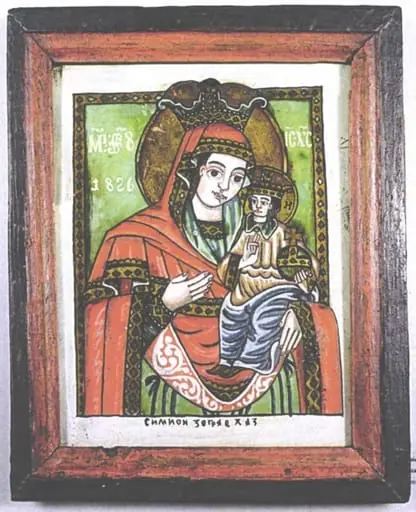
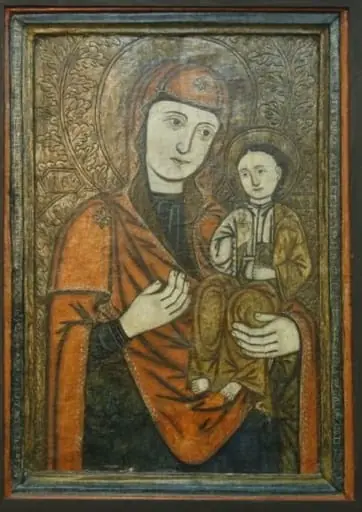
Maica Domnului "călăuzitoare" (Hodighitria) is a drawing by Unknown. It dates from 1850 and is held in the collection of the Romanian Orthodox Bishopric of Oradea. This Byzantine-style icon depicts the Virgin Mary as Hodighitria, meaning 'She who shows the way.
About this work
Overview
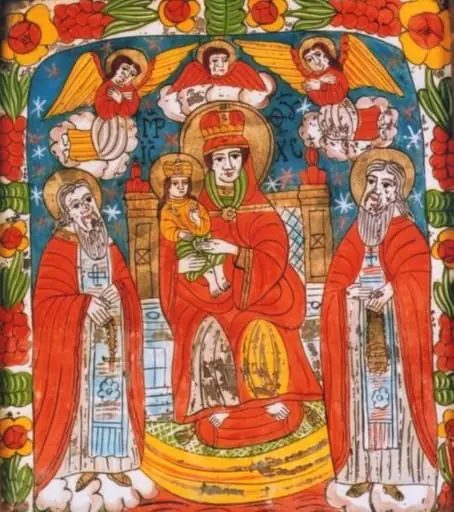
Two smaller saintly figures flank her in the background, their presence emphasizing her role as intercessor.
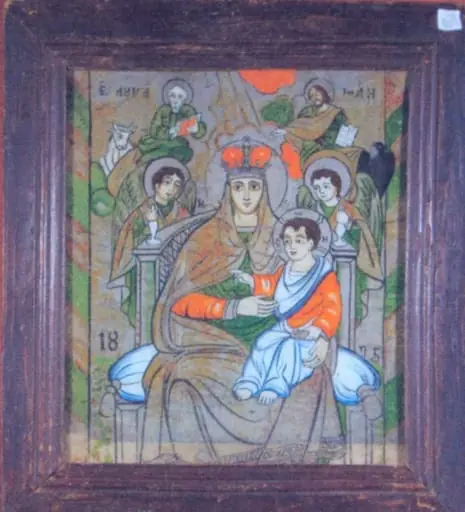
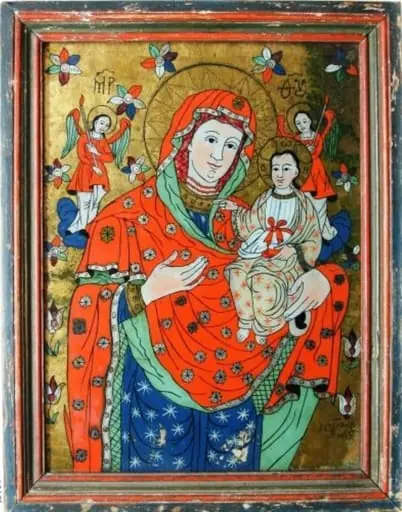
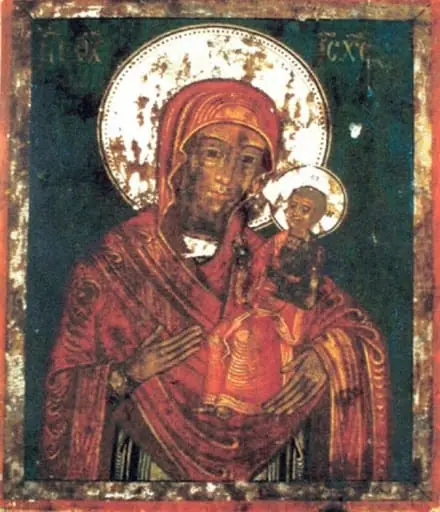
This Byzantine-style icon depicts the Virgin Mary as Hodighitria, meaning 'She who shows the way.' She is shown frontally, holding the Christ Child, with a golden halo bearing a cross above her head. Two smaller saintly figures flank her in the background, their presence emphasizing her role as intercessor. The composition is rigidly symmetrical, adhering to traditional ecclesiastical conventions of the period.
Subject & Meaning
The Virgin Mary is portrayed not as a maternal figure in private devotion, but as a divine guide and protector. The Christ Child, depicted with adult-like features, blesses the viewer, signaling his role as savior. The flanking saints likely represent theological witnesses, reinforcing Mary’s position as the bridge between humanity and the divine. The image functions as a focus for prayer and veneration.
Technique & Style
Painted with flat, unmodulated colors and sharp, angular folds in the robes, the work rejects naturalistic shading in favor of symbolic clarity. The lack of perspective and the stiff, frontal posture reflect the liturgical purpose of the image: to convey spiritual truth over physical realism. Gold halos and bold red and blue pigments signify holiness and royal dignity, common in Eastern Christian iconography.
History & Provenance
This icon originates from the Byzantine tradition, likely created in the late medieval period in a region under Orthodox influence, such as the Balkans or Anatolia. Its preservation suggests it was venerated in a church or private chapel. The style aligns with icons produced in monastic workshops, where artistic conventions were maintained across generations with minimal variation.
Context
During the Byzantine era, icons like this were central to worship, serving as windows to the divine rather than decorative objects. The Hodighitria type was especially popular in Eastern Christianity, often displayed above the sanctuary door. Its formal rigidity was intentional, reinforcing doctrinal stability and continuity amid theological and political upheavals.
Legacy
This icon exemplifies the enduring influence of Byzantine models on Orthodox religious art. Its visual language persisted for centuries, shaping devotional practices across Eastern Europe and the Near East. Even after the fall of Constantinople, such images continued to be replicated, preserving theological concepts through standardized imagery rather than innovation.
Artist & collection
Museum
Romanian Orthodox Bishopric of Oradea
Continue through works from the same source collection.
 Domestic Scene
 Giacomo and Cardinal Marco, investing Andrea, Abbot of San Zeno, with his Benefice
 The Nymph of Fontainebleau
 Portrait of a Woman
 Madonna and Child with Saints in the Enclosed Garden
 Venus and Minerva
 Family Group of Four on Sofa
 Wall painting from Room H of the Villa of P. Fannius Synistor at Boscoreale