Artwork
Maica Domnului cu Pruncul
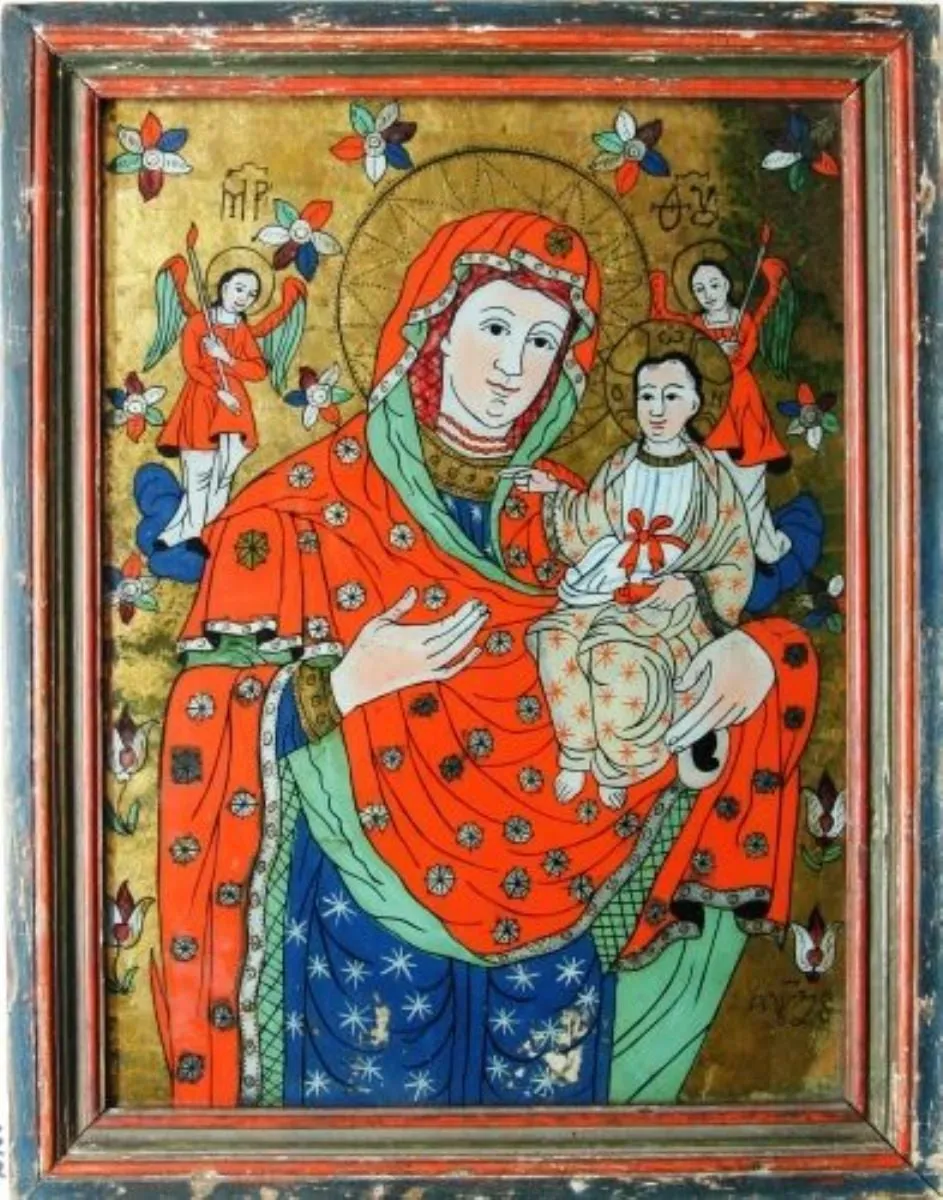
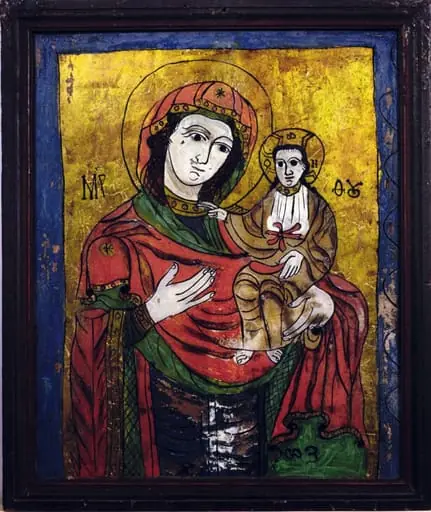
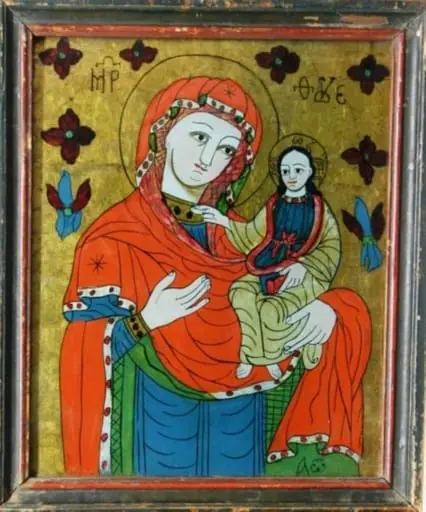
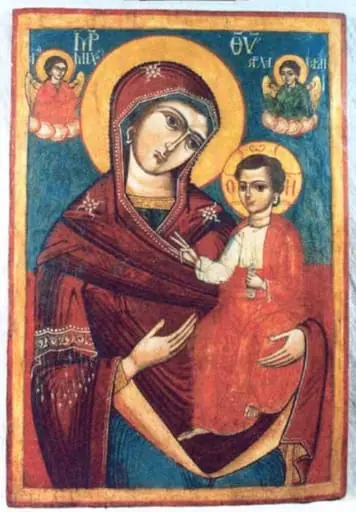
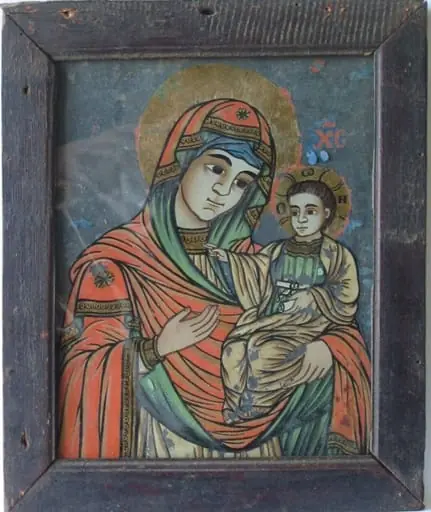
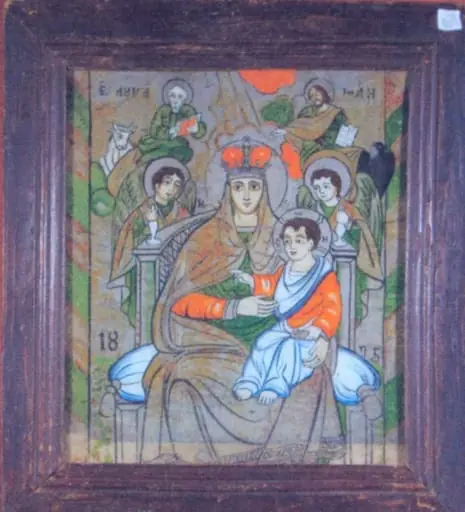
Maica Domnului cu Pruncul is a drawing by the Romanticist artist Unknown. It dates from 1766 and is held in the collection of the Romanian Peasant Museum. This devotional image depicts the Virgin Mary with the infant Jesus, surrounded by angels in a celestial setting.
About this work
Overview
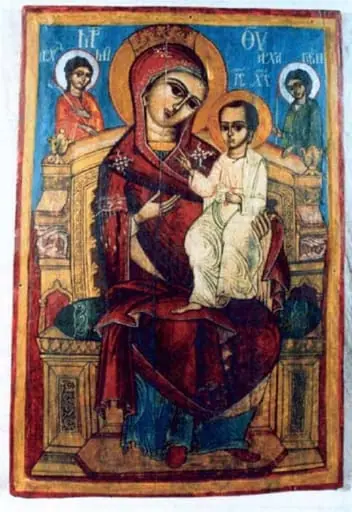
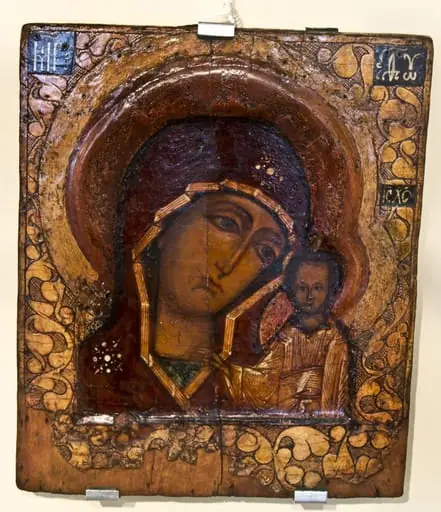
This devotional image depicts the Virgin Mary with the infant Jesus, surrounded by angels in a celestial setting. The composition is flat and decorative, emphasizing symbolic presence over naturalism. Bold, unmodulated colors and a golden background create a luminous, otherworldly atmosphere. Tiny floral and avian motifs fill the space, reinforcing a sense of sacred abundance.
Subject & Meaning
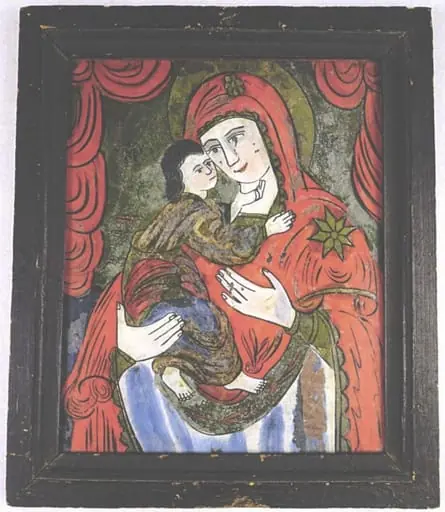
The Virgin, identified by her red and blue garments and star-patterned headscarf, holds the Christ Child, who clutches a red flower—possibly symbolizing divine love or sacrifice. Angels, haloed and winged, encircle them, suggesting heavenly witness. The imagery aligns with Byzantine traditions of Marian veneration, where form and color convey theological truths rather than physical reality.
Technique & Style
The painting employs flat, unshaded color fields and linear outlines, rejecting Renaissance perspective and modeling. Details like the star motif on the headscarf and the delicate birds are rendered with precision but without depth. Texture is suggested through fine, repetitive marks, possibly stippling, enhancing surface richness without illusionistic volume.
History & Provenance
Though specific origins are unrecorded, the style and iconography suggest a late medieval or early Renaissance Eastern European or Balkan origin, likely created for private or monastic devotion. Its preservation indicates continued reverence, though its journey from creation to current location remains undocumented.
Context
This work reflects the enduring influence of Byzantine iconography in Orthodox Christian communities, where sacred figures were depicted with standardized attributes to aid worship. The emphasis on pattern, color, and symbolism over realism aligns with spiritual priorities of the time, contrasting with contemporaneous Western developments in naturalism.
Legacy
The painting exemplifies a non-Western devotional tradition that prioritized spiritual resonance over optical accuracy. Its visual language influenced regional religious art for centuries, preserving a mode of representation that valued symbolic clarity and sacred presence above illusionistic detail.
Artist & collection

 Domestic Scene
 Giacomo and Cardinal Marco, investing Andrea, Abbot of San Zeno, with his Benefice
 The Nymph of Fontainebleau
 Portrait of a Woman
 Madonna and Child with Saints in the Enclosed Garden
 Venus and Minerva
 Family Group of Four on Sofa
 Wall painting from Room H of the Villa of P. Fannius Synistor at Boscoreale