Artwork
Maica Domnului cu Pruncul "Chezașa celor păcătoși"
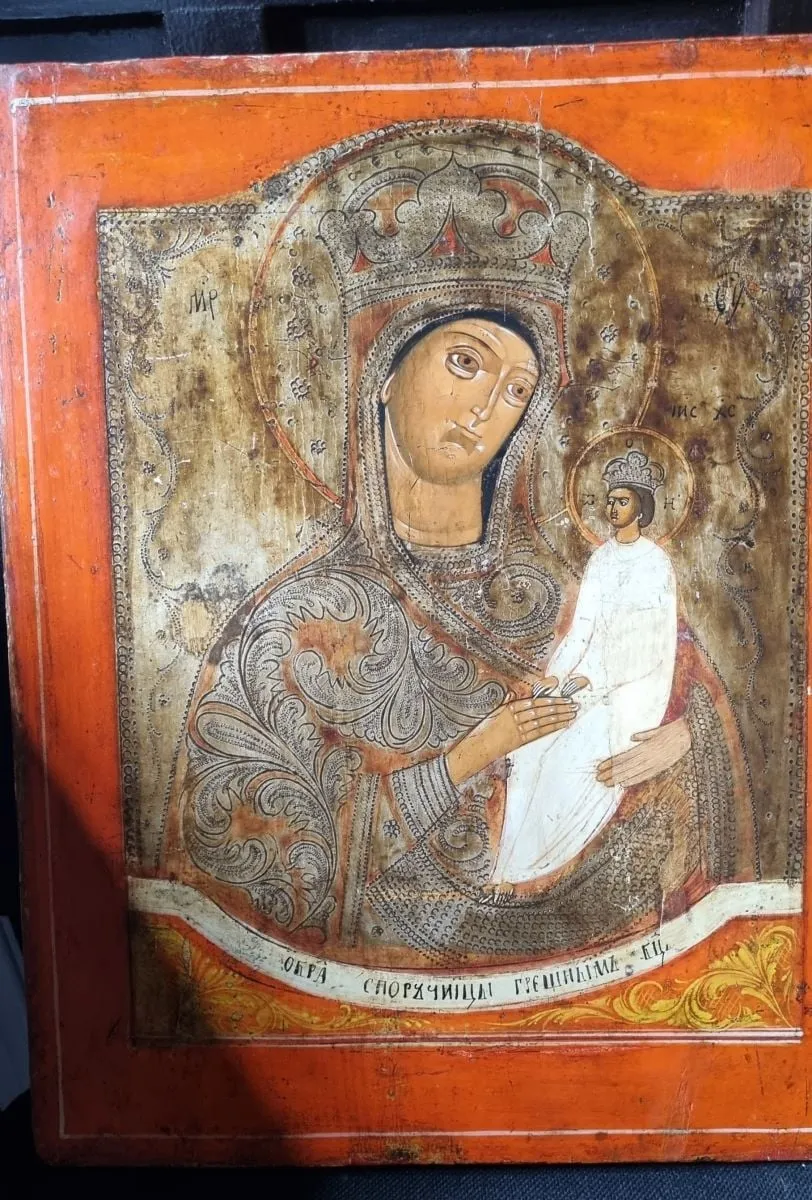
Maica Domnului cu Pruncul "Chezașa celor păcătoși" is a drawing by Unknown. It dates from 1850 and is held in the collection of the George Enescu National Museum. This devotional image depicts the Virgin Mary holding the infant Jesus, rendered in a traditional Byzantine style.
About this work
Overview
This devotional image depicts the Virgin Mary holding the infant Jesus, rendered in a traditional Byzantine style.
This devotional image depicts the Virgin Mary holding the infant Jesus, rendered in a traditional Byzantine style. Both figures are shown with solemn expressions, their forms outlined against a deep, shadowed background. Elaborate gold detailing on their garments suggests a focus on sacred symbolism rather than naturalism, emphasizing their divine status through luminous, non-representational elements.
Subject & Meaning
The Virgin Mary, titled 'Chezașa celor păcătoși'—Intercessor of Sinners—is portrayed as a mediator between humanity and the divine. Her gaze, steady and contemplative, and the child’s calm demeanor convey spiritual authority. The halos and gold adornments affirm their holiness, while the title underscores her role in offering grace to the faithful, a common theme in Eastern Orthodox iconography.
Technique & Style
Gold lines on the robes were created through incising—fine, precise scratches made into the paint or gesso layer before applying gold leaf. This method adds texture and luminosity without pigment, relying on light reflection. The dark background enhances the figures’ radiance, while the minimal color palette and stylized forms reflect liturgical conventions prioritizing spiritual presence over physical realism.
History & Provenance
The painting likely originated in a Romanian Orthodox context during the late medieval or early modern period, when such icons were commissioned for private devotion or church altars. Its preservation suggests continued veneration, possibly within a monastic or household setting. Exact origins remain undocumented, but its stylistic features align with regional traditions of Wallachia and Moldavia.
Context
In Eastern Christian communities, icons like this served as focal points for prayer and meditation, not merely decorative objects. The emphasis on gold, halos, and frontal composition followed established theological principles that prioritized the divine presence over individual expression. This work reflects a broader tradition where art functioned as a bridge between the earthly and the eternal.
Legacy
The icon’s use of incised gold detailing influenced later regional icon painters who sought to enhance spiritual intensity through tactile surface variation. While modern viewers may interpret its style as austere, contemporaries would have recognized its adherence to sacred norms. It remains a testament to the enduring role of visual symbols in Orthodox spiritual practice.
Artist & collection

 Domestic Scene
 Giacomo and Cardinal Marco, investing Andrea, Abbot of San Zeno, with his Benefice
 The Nymph of Fontainebleau
 Portrait of a Woman
 Madonna and Child with Saints in the Enclosed Garden
 Venus and Minerva
 Family Group of Four on Sofa
 Wall painting from Room H of the Villa of P. Fannius Synistor at Boscoreale
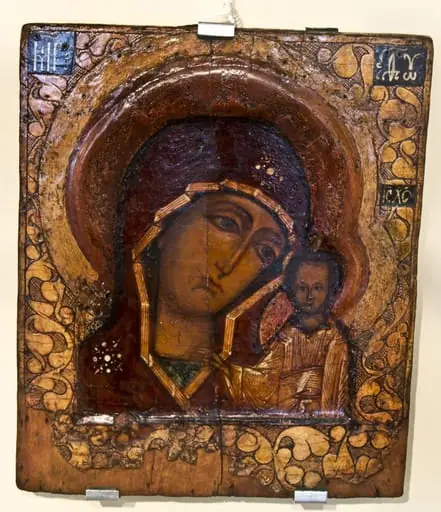 Maica Domnului cu pruncul Kazanskaia, Madona Neagră
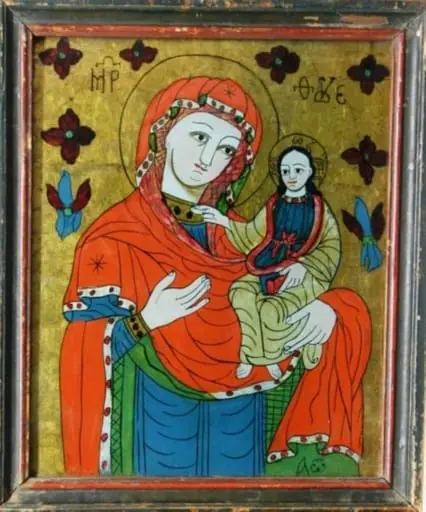 Maica Domnului cu Pruncul
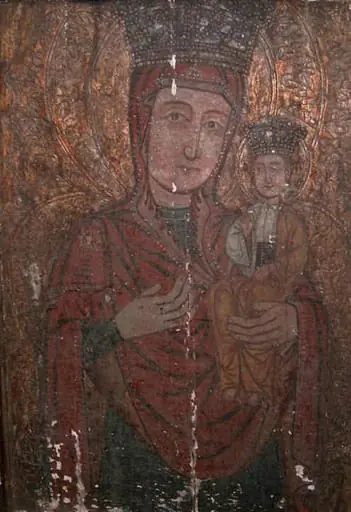 Madona cu Pruncul
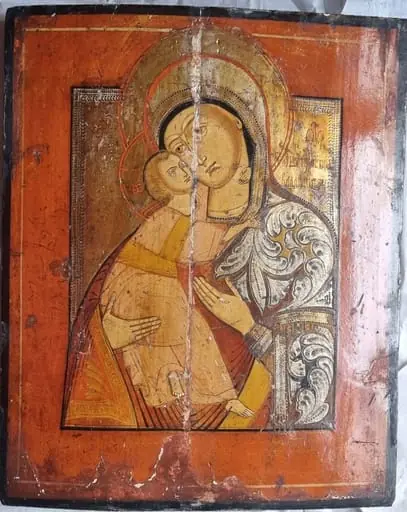 Maica Domnului cu Pruncul „Vladimirskaia” (Eleusa)
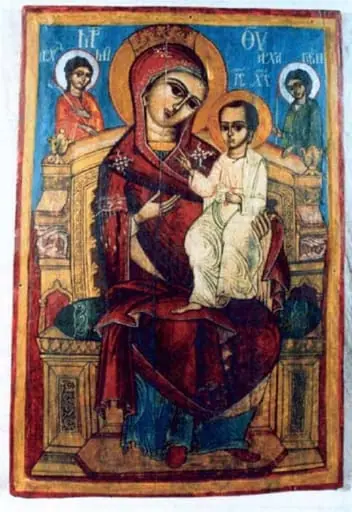 Maica cu Pruncul/Maica Împărăteasă-Doamnă
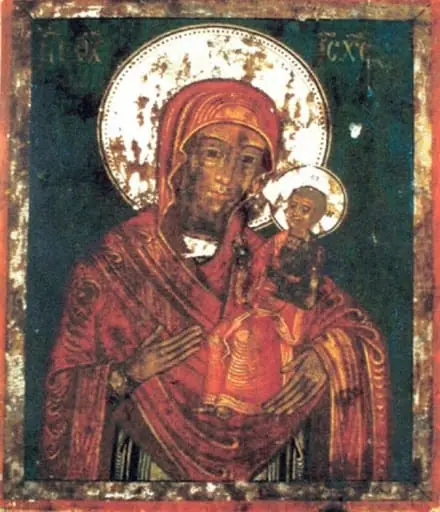 Maica cu Pruncul
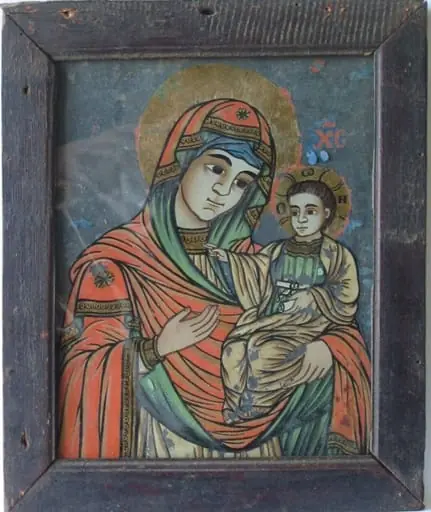 Maica Domnului cu Pruncul Iisus în brațe
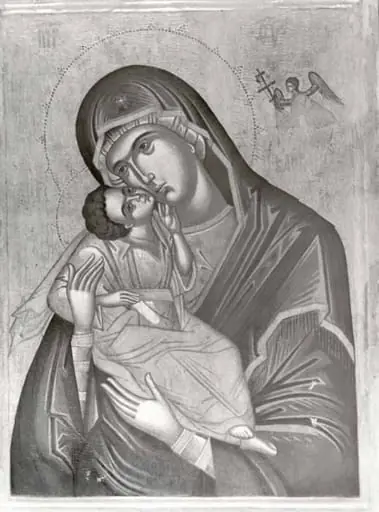 Maica Domnului cu Pruncul - Țealovanie
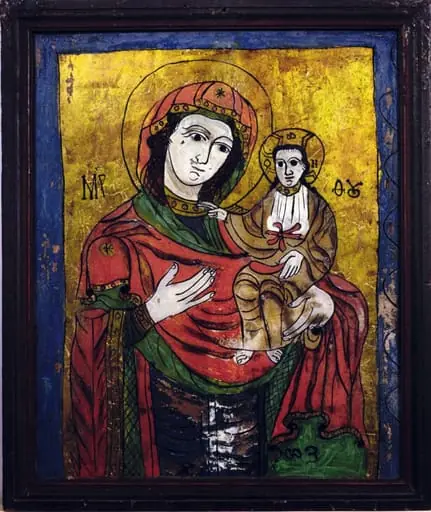 Maica Domnului cu Pruncul
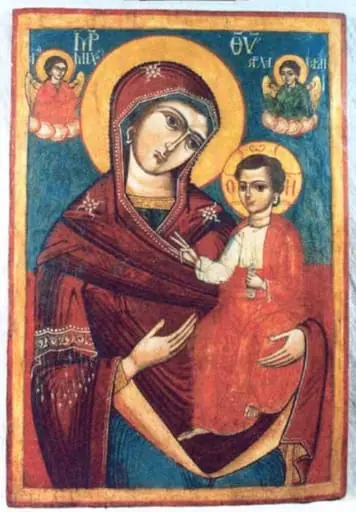 Maica cu Pruncul-Axionița