Artwork
Maica Domnului cu Pruncul Hodighitria
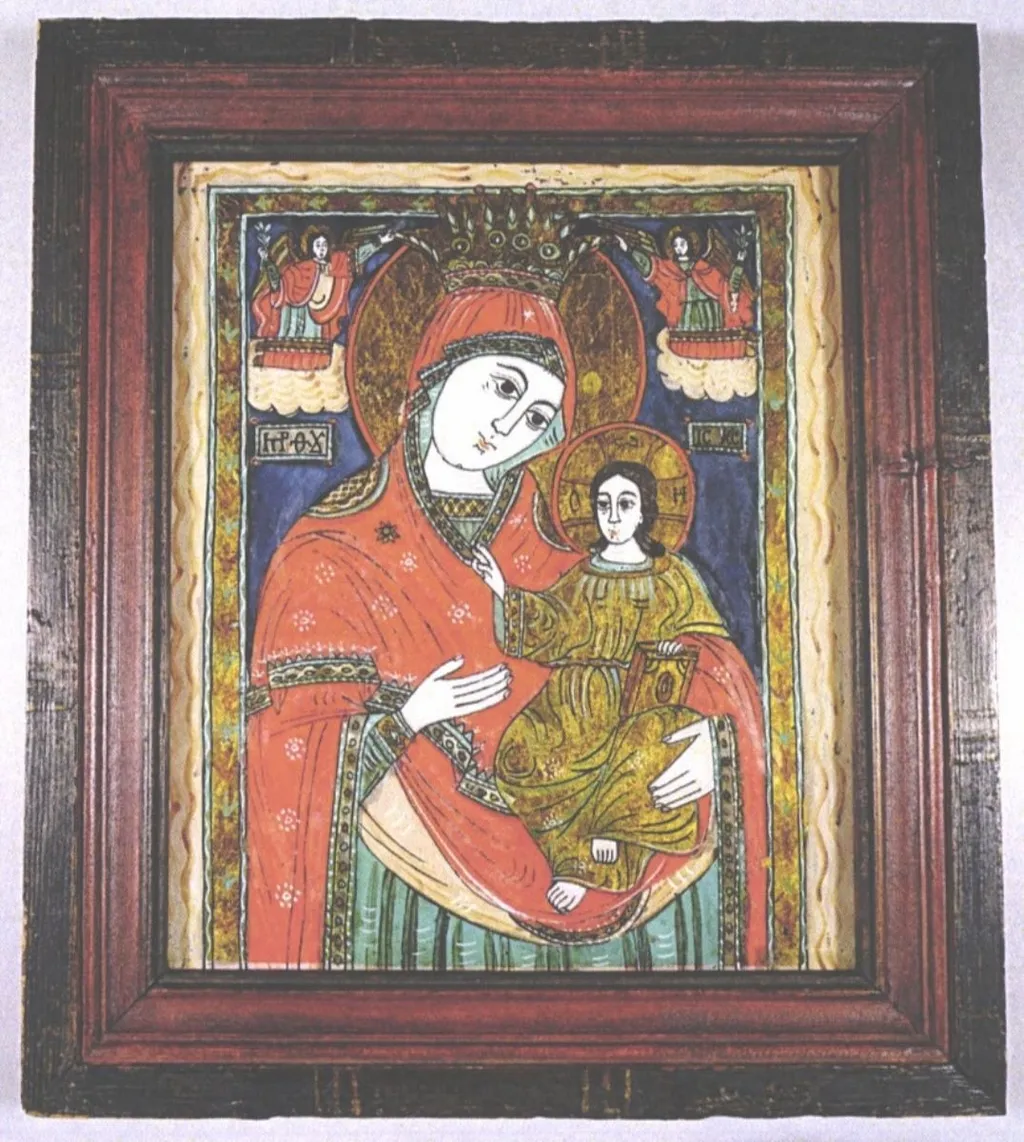
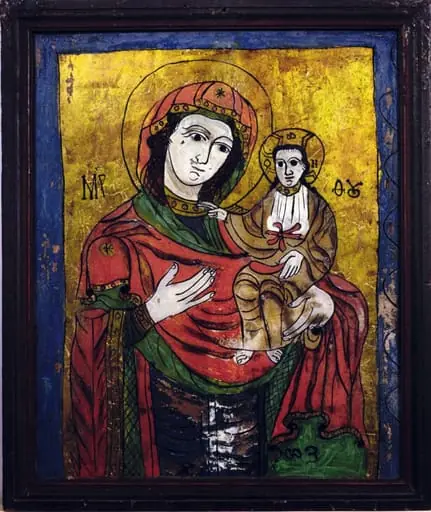
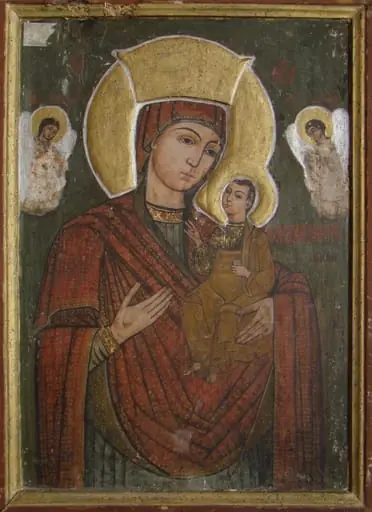
Maica Domnului cu Pruncul Hodighitria is a drawing by Unknown. It dates from 1850 and is held in the collection of the Ethnographical Museum of Transylvania. The work depicts a woman clothed in vivid red and blue, cradling a smaller child.
About this work
Overview
The work depicts a woman clothed in vivid red and blue, cradling a smaller child. Both figures are crowned with golden halos and display solemn expressions. A darkened backdrop frames the pair, while two winged beings hover above, rendered in a similar luminous style. The composition is dominated by flat, saturated hues and extensive use of gold and red detailing.
Subject & Meaning
The central figures represent the Virgin Mary and the infant Jesus, a conventional iconography in Christian art. The halos signify sanctity, and the serious demeanor underscores the theological gravity of the mother‑son relationship. The accompanying winged figures, likely angels, serve to emphasize the divine context and to guide the viewer’s contemplation of the holy scene.
Technique & Style
The painting employs a bold, flat application of color, characteristic of medieval iconographic traditions. Gold leaf and bright pigments create a luminous surface, while the woman's red robe is patterned with tiny white dots, adding texture without modeling. The use of line for shading is minimal, relying instead on stark color contrasts and the halo’s radiance to suggest volume.
History & Provenance
The piece is known under the title “Maica Domnului cu Pruncul Hodighitria.” Its original frame, composed of dark wood with faded gold trim, indicates an early provenance, though specific ownership records are not documented in the available data. The work’s survival in a worn frame suggests long-term display in a religious setting.
Context
This image belongs to the broader tradition of Eastern Orthodox iconography, where stylized forms and symbolic color schemes convey theological narratives. The emphasis on gold and the flat pictorial space aligns with Byzantine influences that persisted in regional artistic production during the medieval period.
Artist & collection
Museum
Ethnographical Museum of Transylvania
Continue through works from the same source collection.
 Domestic Scene
 Giacomo and Cardinal Marco, investing Andrea, Abbot of San Zeno, with his Benefice
 The Nymph of Fontainebleau
 Portrait of a Woman
 Madonna and Child with Saints in the Enclosed Garden
 Venus and Minerva
 Family Group of Four on Sofa
 Wall painting from Room H of the Villa of P. Fannius Synistor at Boscoreale
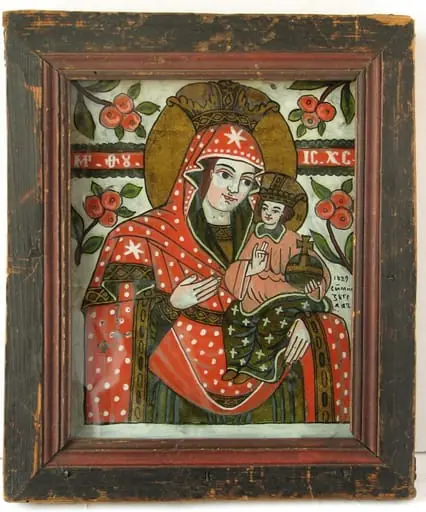 Maica Domnului cu Pruncul Iisus Hristos în brațe
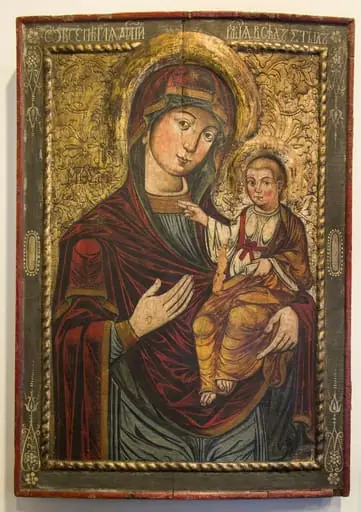 Maica Domnului cu pruncul; Icoană de catapeteasmă; Icoană împărătească
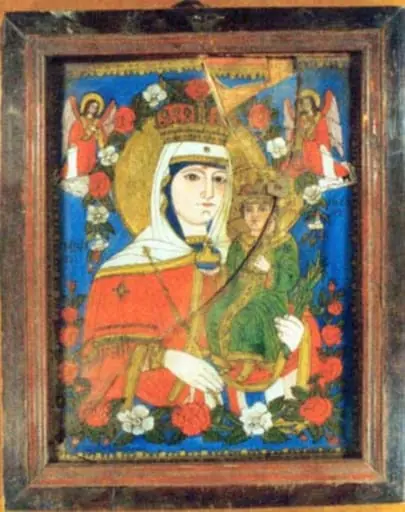 Maica Domnului cu Pruncul
 Maica Domnului cu Pruncul
 Maica cu Pruncul-Axionița
 Maica Domnului cu Pruncul
 Maica Domnului cu Pruncul
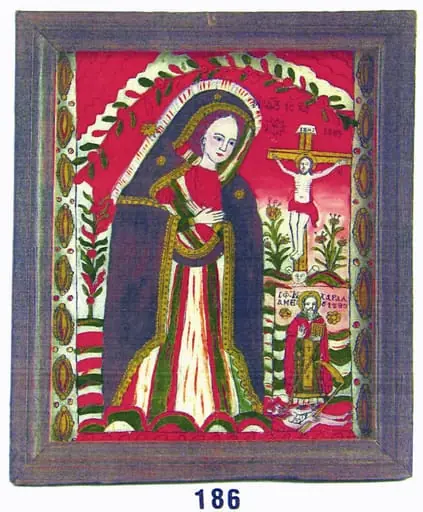 Maica Domnului îndurerată și sfântul mucenic Haralambie
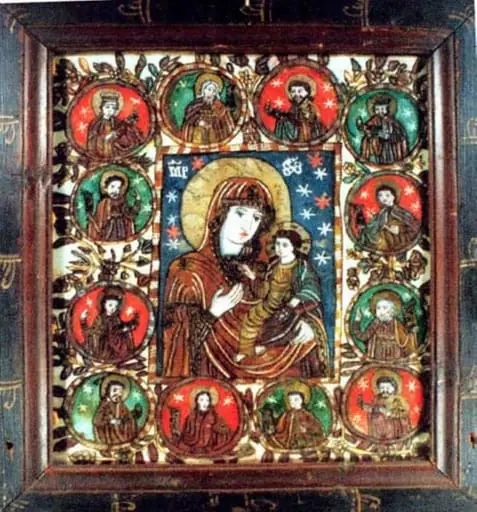 Maica cu Pruncul cu Apostolii
 Maica Domnului cu Pruncul
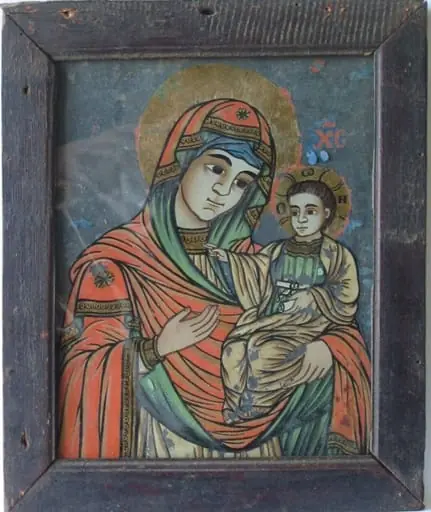 Maica Domnului cu Pruncul Iisus în brațe