Artwork
Malomvizi Gr. Kenedeffy Adam (1795-1834)
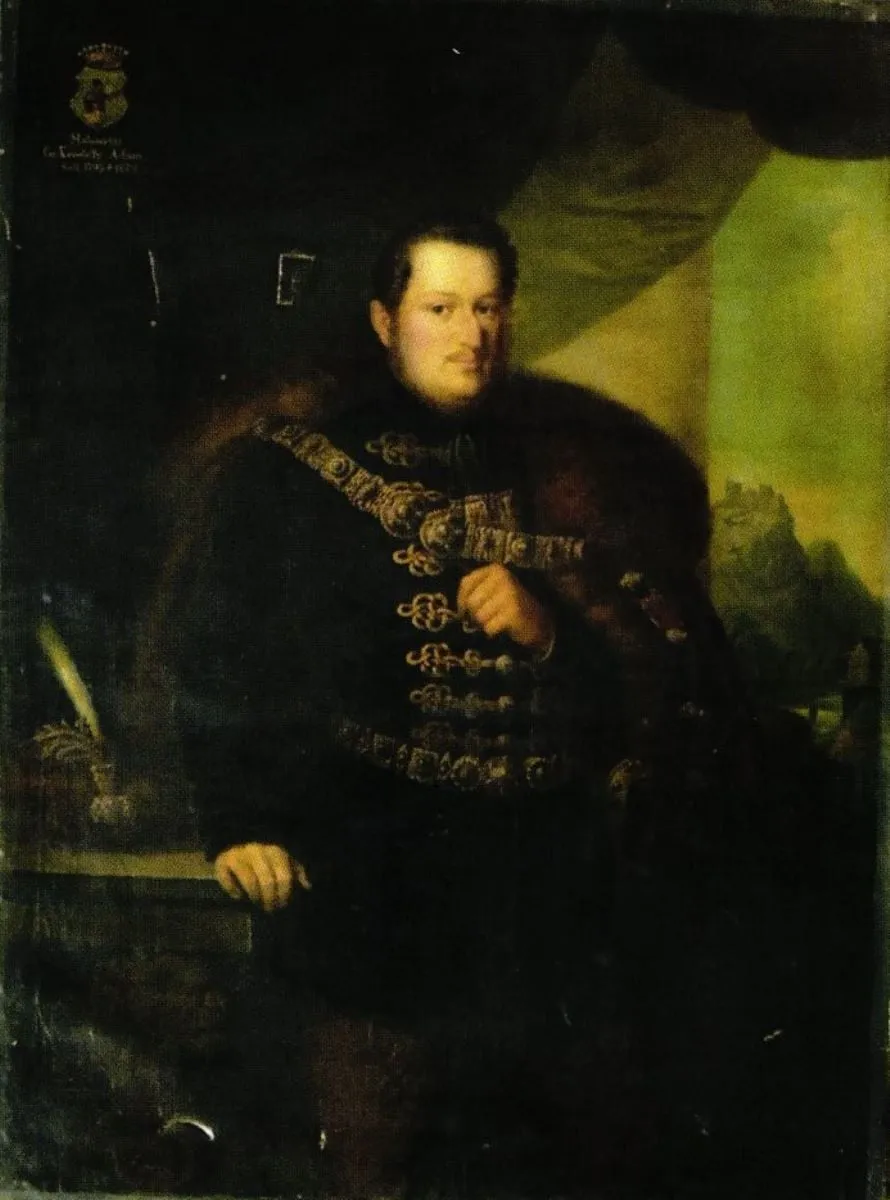
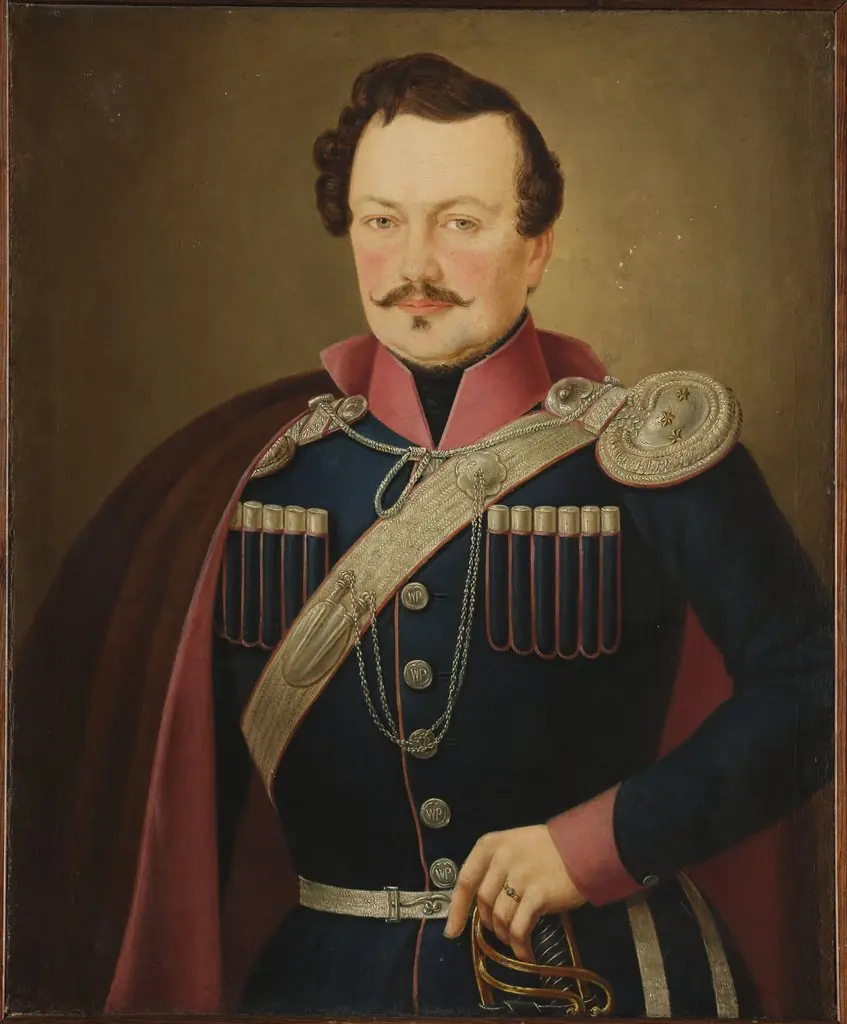
Malomvizi Gr. Kenedeffy Adam (1795-1834) is an unspecified painting by the Academic Art artist Unknown. It dates from 1850 and is held in the collection of the Museum of Art Cluj-Napoca. This portrait depicts Adam Kenedeffy, a Hungarian nobleman active in the early 19th century.
About this work
Overview
The composition is tightly focused on the figure, with minimal background detail, directing attention to his expression and garments.
This portrait depicts Adam Kenedeffy, a Hungarian nobleman active in the early 19th century. Rendered in oil on canvas, the work emphasizes his social standing through formal attire and controlled lighting. The composition is tightly focused on the figure, with minimal background detail, directing attention to his expression and garments. The use of chiaroscuro enhances the three-dimensionality of his form and conveys a sense of quiet authority.
Subject & Meaning
Adam Kenedeffy is portrayed with a solemn demeanor, suggesting a man of responsibility or public duty. The folded paper in his right hand may indicate official correspondence or a document of legal or administrative importance. His dark, ornate coat, richly embroidered in gold, signals aristocratic rank. The restrained expression and direct gaze convey gravitas rather than personal emotion, aligning with conventions of portraiture among European nobility of the period.
Technique & Style
The artist employs chiaroscuro to model the figure with strong contrasts between light and shadow, giving volume to the face, hands, and embroidered coat. The gold thread catches the light with precision, distinguishing it from the deep, muted tones of the fabric. The background is rendered in near-abstract darkness, with a subtle greenish hue suggesting ambient light from an unseen source, possibly a window. Brushwork is controlled, favoring clarity over texture.
History & Provenance
The portrait was created between 1795 and 1834, during Kenedeffy’s lifetime, likely commissioned by the subject or his family. It remained within Hungarian noble circles until the 20th century, when it entered a public collection. Documentation is sparse, but its stylistic features align with Central European portraiture of the early Romantic era, suggesting a local artist trained in academic traditions.
Context
In early 19th-century Hungary, portraiture served as a tool for affirming aristocratic identity amid political change. The emphasis on embroidered garments and solemn expression reflects a cultural preference for dignity over flamboyance. While Western European elites often adopted grander settings, Hungarian nobility favored intimate, psychologically restrained compositions that underscored lineage and duty over spectacle.
Legacy
The portrait endures as a representative example of Hungarian aristocratic portraiture from the Napoleonic era. It contributes to the visual record of a class navigating modernization while clinging to traditional symbols of status. Though not widely known outside regional collections, it remains a key reference for studies of Central European elite identity and the persistence of formal portraiture in a changing social landscape.
Artist & collection
 Domestic Scene
 Giacomo and Cardinal Marco, investing Andrea, Abbot of San Zeno, with his Benefice
 The Nymph of Fontainebleau
 Portrait of a Woman
 Madonna and Child with Saints in the Enclosed Garden
 Venus and Minerva
 Family Group of Four on Sofa
 Wall painting from Room H of the Villa of P. Fannius Synistor at Boscoreale
 Măcelarul sibian Georg Hinzmann
 Portrait of Kazimierz Tyszkiewicz, Leliwa coat of arms (?–1652), cup-bearer of the Grand Duchy of Lithuania
 Radu Fărcășanu
 Portrait of king Sigismund II Augustus (1520–1572)
 Portrait of Mikhail Lermontov
 Hidvegi Gr. Miko Imre
 Avram Iancu
 Portrait of Johann Ludwig Hektor Duke of Isolani
 Portrait of a man in a tall cap
 Charles XII (1682-1718), King of Sweden
 Portrait of Augustus III (1696–1763), King of Poland
 Portrait of Szymanowski, lieutenant of the Płock cavalry regiment