Artwork
Mandodari
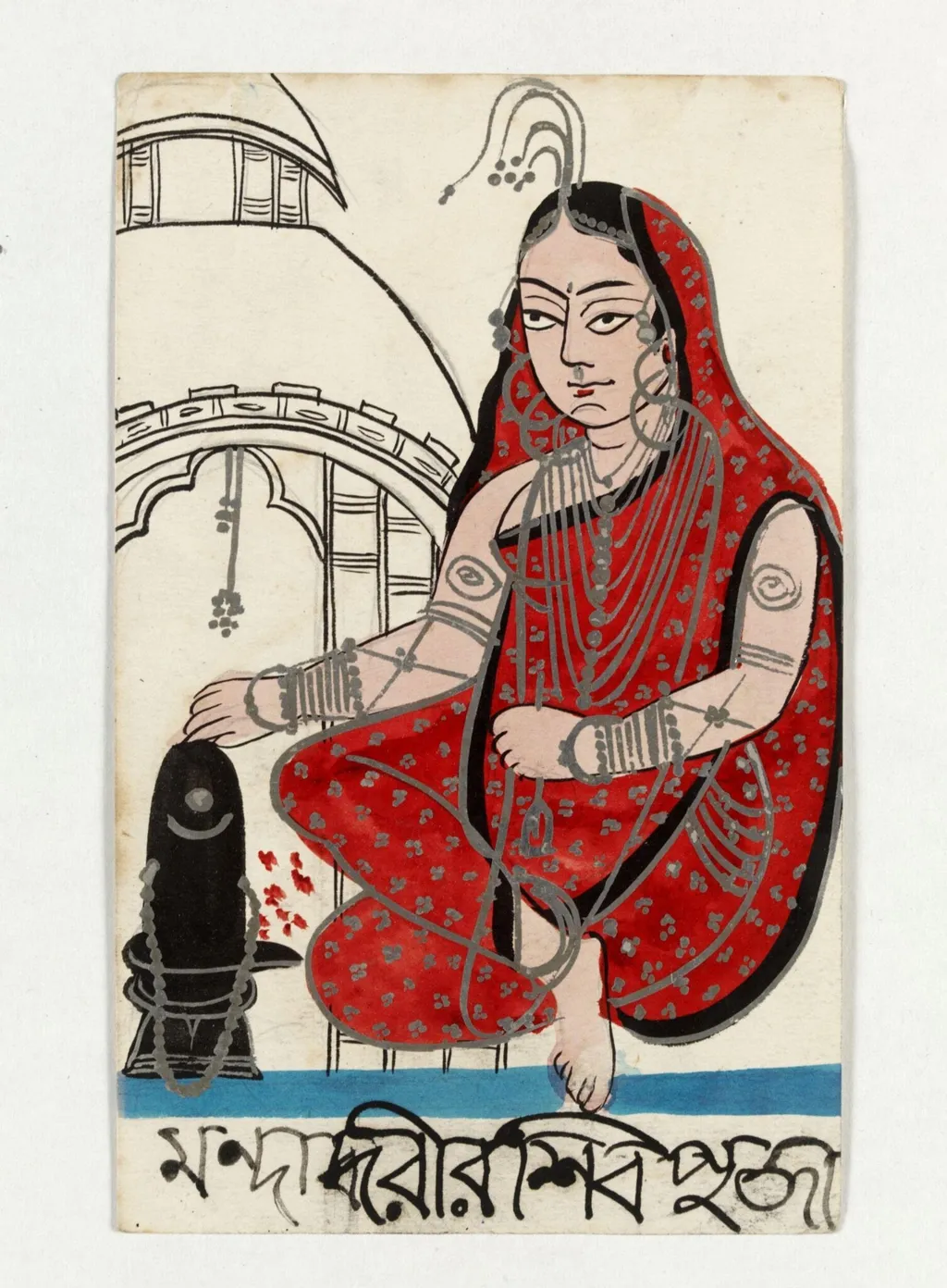
Mandodari is a paint painting by the Impressionist artist Unknown. It dates from 1890 and is held in the collection of the Victoria and Albert Museum.
About this work
Overview
The composition emphasizes stillness and dignity, aligning with the Kalighat painting tradition that flourished near Kolkata during the 19th century.
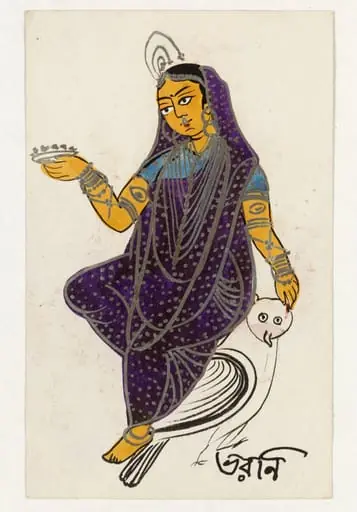
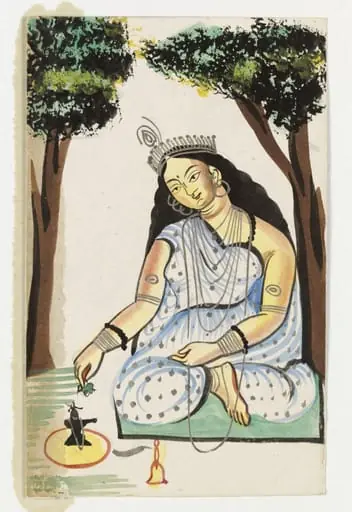
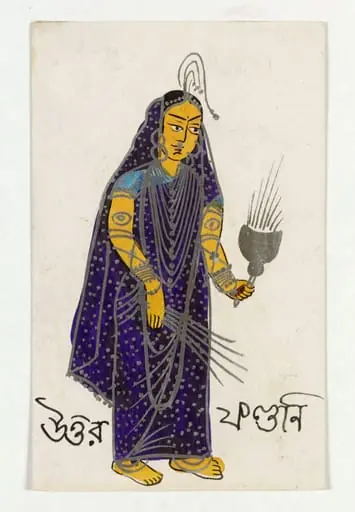
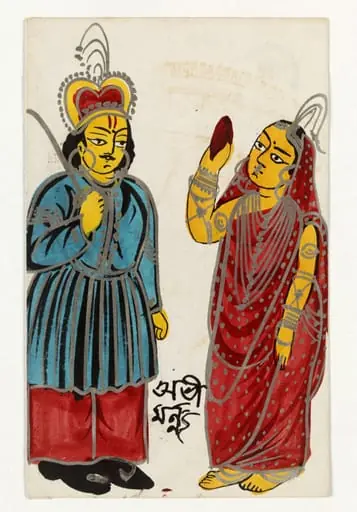
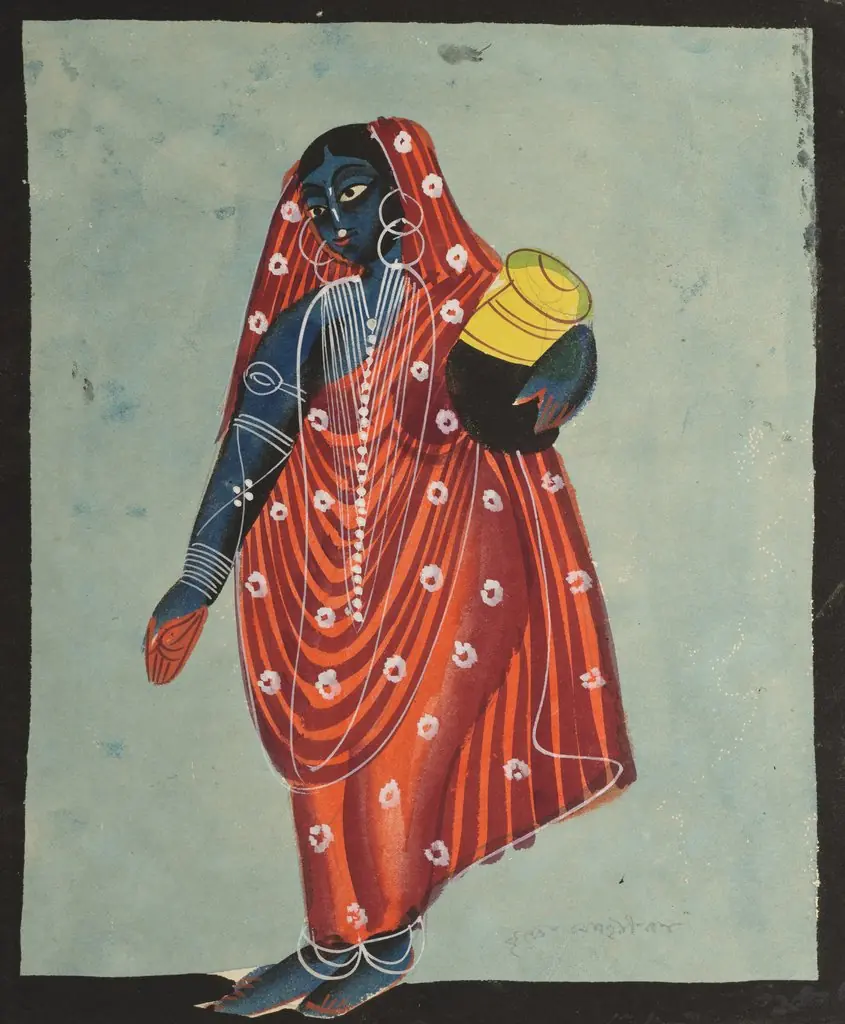
This 1890 watercolor and tin alloy painting on cardboard portrays Mandodari, a figure from the Ramayana, seated on a raised platform near a river. Executed by an anonymous artist, the work combines delicate pigments with metallic accents to enhance its visual presence. The composition emphasizes stillness and dignity, aligning with the Kalighat painting tradition that flourished near Kolkata during the 19th century.
Subject & Meaning
Mandodari, wife of the demon king Ravana, is depicted in quiet devotion before a Shiva shrine, though the shrine itself is implied rather than rendered. Her posture and attire suggest ritual reverence, reflecting her role as a pious and noble figure in Hindu epic tradition. The absence of overt narrative elements shifts focus to her inner composure, reinforcing her moral stature amid mythological conflict.
Technique & Style
The artist employs bold, flat areas of color—especially the vivid red sari edged with black and gold—to define form with clarity. Tin alloy adds subtle luminosity to jewelry and ornamentation, while the minimal background, defined by a single blue horizon and distant silhouettes, isolates the figure. Lines are deliberate and uncluttered, characteristic of Kalighat’s rapid, expressive brushwork adapted for commercial devotional imagery.
History & Provenance
Created around 1890, likely in the Kalighat region of Bengal, the painting was probably made for domestic or temple use, catering to a local audience familiar with Ramayana iconography. Its use of affordable materials—cardboard, watercolor, and tin—suggests it was part of a broader market for portable religious art, produced by itinerant artists responding to urban demand.
Context
This work belongs to the Kalighat school, which emerged as Hindu pilgrimage sites drew crowds to Kolkata. Artists adapted traditional themes into simplified, affordable compositions for pilgrims and middle-class patrons. While mythological subjects were common, individual figures like Mandodari were rendered with psychological nuance, reflecting a shift toward personal devotion over grand narrative.
Legacy
Though unsigned and unattributed, the painting exemplifies how regional Indian art traditions preserved religious narratives through accessible visual language. Its stylistic economy and emotional restraint influenced later modernist interpretations of Indian iconography, serving as a bridge between folk practice and evolving artistic identity in colonial Bengal.
Artist & collection

 Domestic Scene
 Giacomo and Cardinal Marco, investing Andrea, Abbot of San Zeno, with his Benefice
 The Nymph of Fontainebleau
 Portrait of a Woman
 Madonna and Child with Saints in the Enclosed Garden
 Venus and Minerva
 Family Group of Four on Sofa
 Wall painting from Room H of the Villa of P. Fannius Synistor at Boscoreale