Artwork
Svati
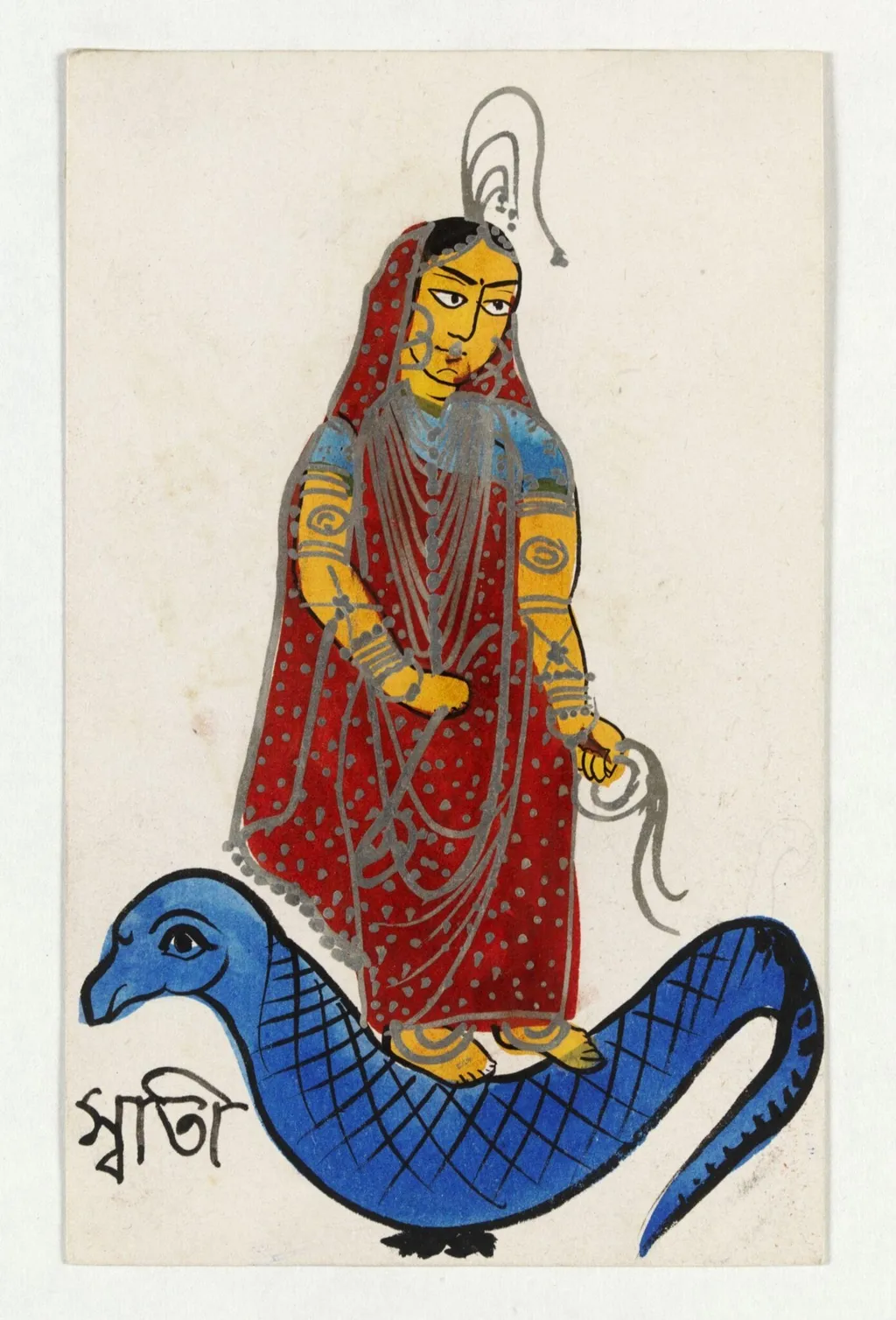
Svati is a paint painting by the Impressionist artist Unknown. It dates from 1890 and is held in the collection of the Victoria and Albert Museum.
About this work
Overview
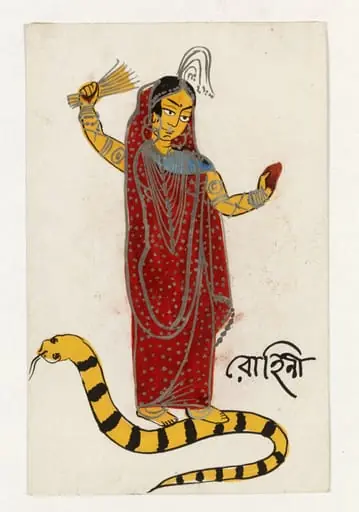
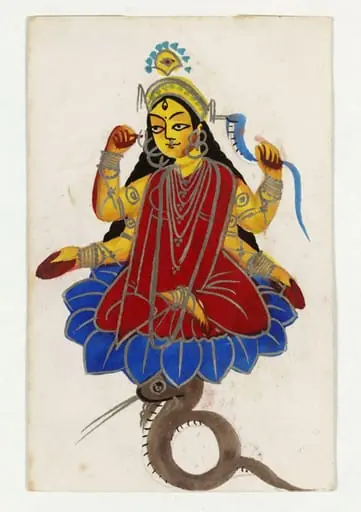
The composition centers on a woman positioned atop a serpentine form, rendered with precise detail and a restrained palette.
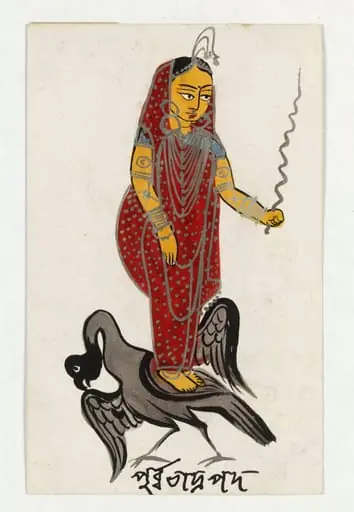
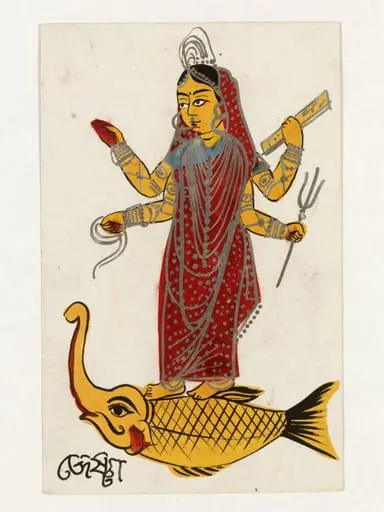
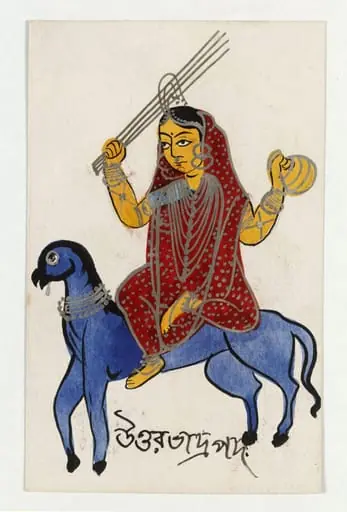
This watercolor and tin alloy painting on cardboard portrays a figure linked to the fifteenth lunar mansion, Svati, traditionally connected to the star Arcturus. The composition centers on a woman positioned atop a serpentine form, rendered with precise detail and a restrained palette. The use of metallic alloy adds subtle luminosity, enhancing the quiet intensity of the scene without overt embellishment.
Subject & Meaning
The central figure represents Svati, a lunar mansion in Indian astronomical tradition, symbolizing balance and subtle power. Her seated posture on the serpent suggests dominion over primal forces, while the symbols she holds remain deliberately ambiguous, inviting contemplation rather than literal interpretation. The calm demeanor and stillness of the figure reflect the constellation’s association with equilibrium and quiet authority.
Technique & Style
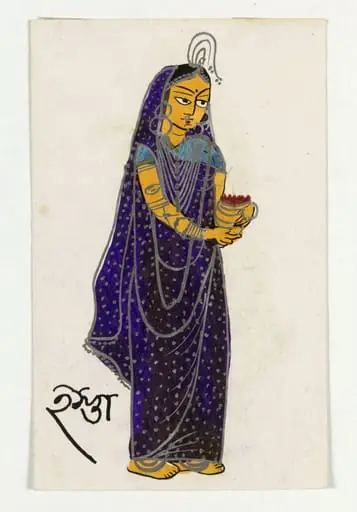
The artist employs watercolor for soft tonal transitions and tin alloy for localized highlights, particularly on the serpent’s scales and jewelry. Realistic rendering is evident in the texture of the sari’s polka-dotted fabric and the layered blue hues of the serpent’s body, defined by fine black linework. The composition avoids dramatic contrast, favoring a muted, meditative atmosphere through controlled brushwork and restrained color.
History & Provenance
The painting originates from a tradition of astronomical and astrological illustration in South Asia, likely produced in the late 19th or early 20th century. It was created for private or ritual use, possibly within a scholarly or devotional context. Its survival suggests it was preserved within a family or temple collection, though its exact origin and creator remain undocumented.
Context
Svati is one of the 27 nakshatras in Vedic astrology, each associated with a star and symbolic attributes. Arcturus, the star linked to Svati, was historically significant in seasonal calendars and agricultural cycles. This painting reflects a syncretic tradition where celestial knowledge was visualized through figurative art, blending cosmology with regional iconography and craftsmanship.
Legacy
Though not widely exhibited, the work contributes to a lesser-known corpus of Indian astronomical art that merged scientific observation with symbolic representation. Its quiet realism distinguishes it from more ornate tantric or devotional imagery, offering a grounded visual language for celestial concepts. It remains a quiet testament to the integration of astronomy into everyday spiritual practice.
Artist & collection

 Domestic Scene
 Giacomo and Cardinal Marco, investing Andrea, Abbot of San Zeno, with his Benefice
 The Nymph of Fontainebleau
 Portrait of a Woman
 Madonna and Child with Saints in the Enclosed Garden
 Venus and Minerva
 Family Group of Four on Sofa
 Wall painting from Room H of the Villa of P. Fannius Synistor at Boscoreale