Artwork
Martyrdom of St. Bartholomew
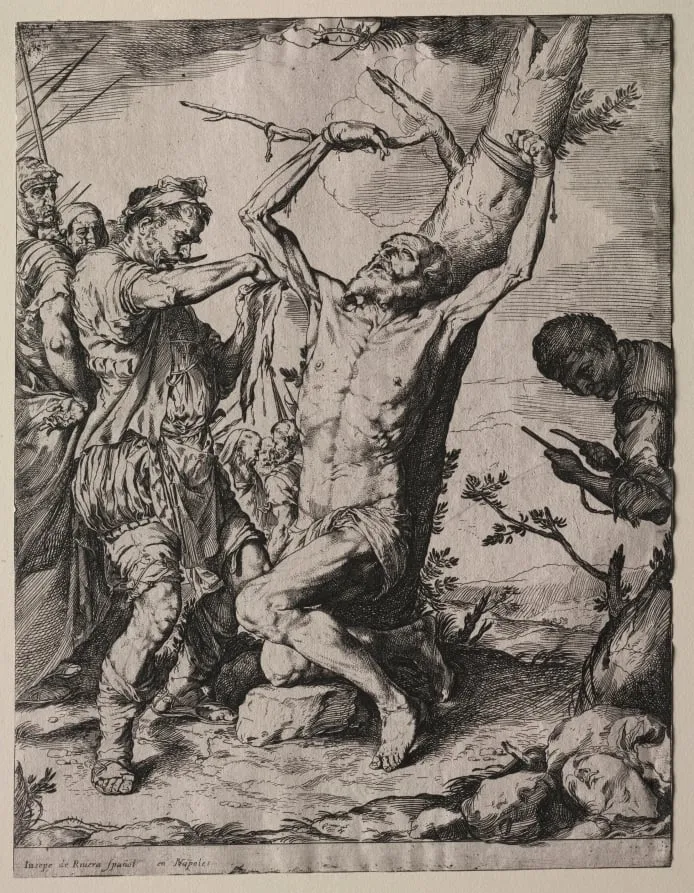
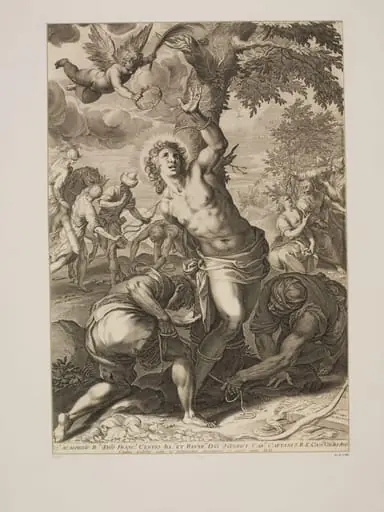
Martyrdom of St. Bartholomew is a print by the Baroque artist Unknown. It dates from 1604 and is held in the collection of the Cleveland Museum of Art. Martyrdom of St.
About this work
Overview
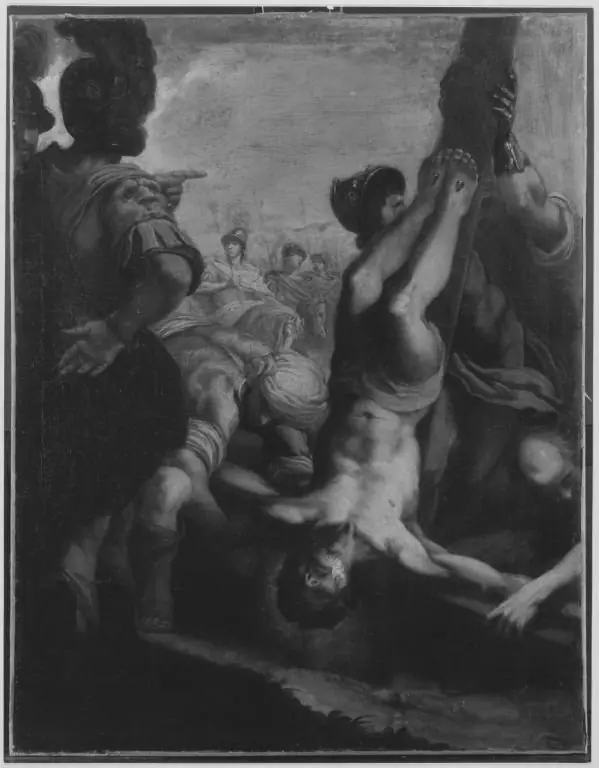
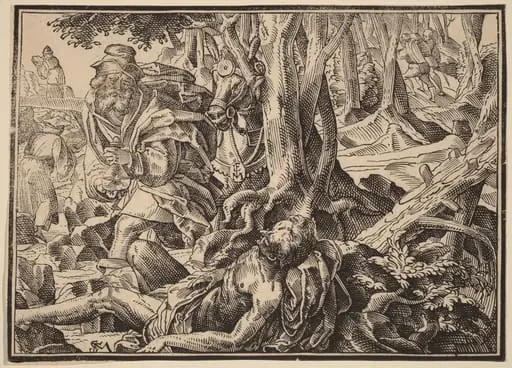
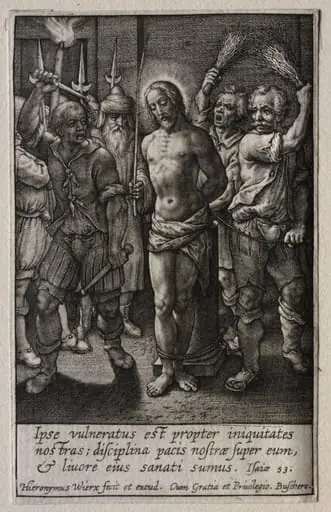
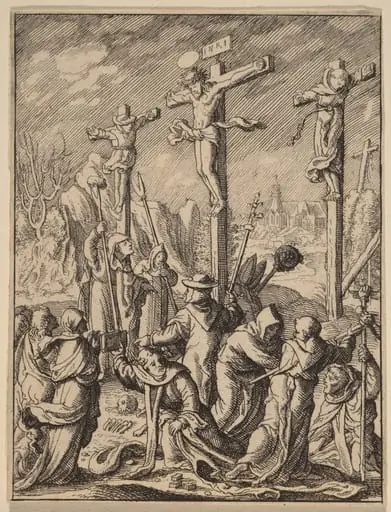
Martyrdom of St. Bartholomew is a Baroque-period print depicting a gruesome scene of torture. The composition focuses on a figure suspended by a rope around his wrist, while another figure wields a knife to cut his arm. The dramatic event unfolds against a rocky, vegetated backdrop, observed by onlookers.
Subject & Meaning
The subject is the martyrdom of St. Bartholomew, one of the twelve apostles of Jesus, traditionally said to have been skinned alive. The print conveys the intensity of his suffering and the brutality of his execution, evoking emotions of horror and sympathy in the viewer.
Technique & Style
The print employs chiaroscuro, a strong contrast between light and dark, to heighten the sense of tension and drama. Deep shadows and dramatic lighting are characteristic of the Baroque style, emphasizing the emotional and psychological depth of the scene.
Context
Created within the Baroque period, this work reflects the era's artistic preoccupations with intense emotions, dramatic narratives, and highly expressive use of light and shadow. It may have served as a devotional or didactic piece, illustrating the extreme sacrifices of early Christian martyrs.
Legacy
As a representation of St. Bartholomew's martyrdom in the Baroque style, the print contributes to a broader tradition of depicting Christian martyrs in art. Its use of dramatic lighting influences later artistic explorations of chiaroscuro in various mediums.
Artist & collection

 Domestic Scene
 Giacomo and Cardinal Marco, investing Andrea, Abbot of San Zeno, with his Benefice
 The Nymph of Fontainebleau
 Portrait of a Woman
 Madonna and Child with Saints in the Enclosed Garden
 Venus and Minerva
 Family Group of Four on Sofa
 Wall painting from Room H of the Villa of P. Fannius Synistor at Boscoreale