Artwork
Flagellation of Christ
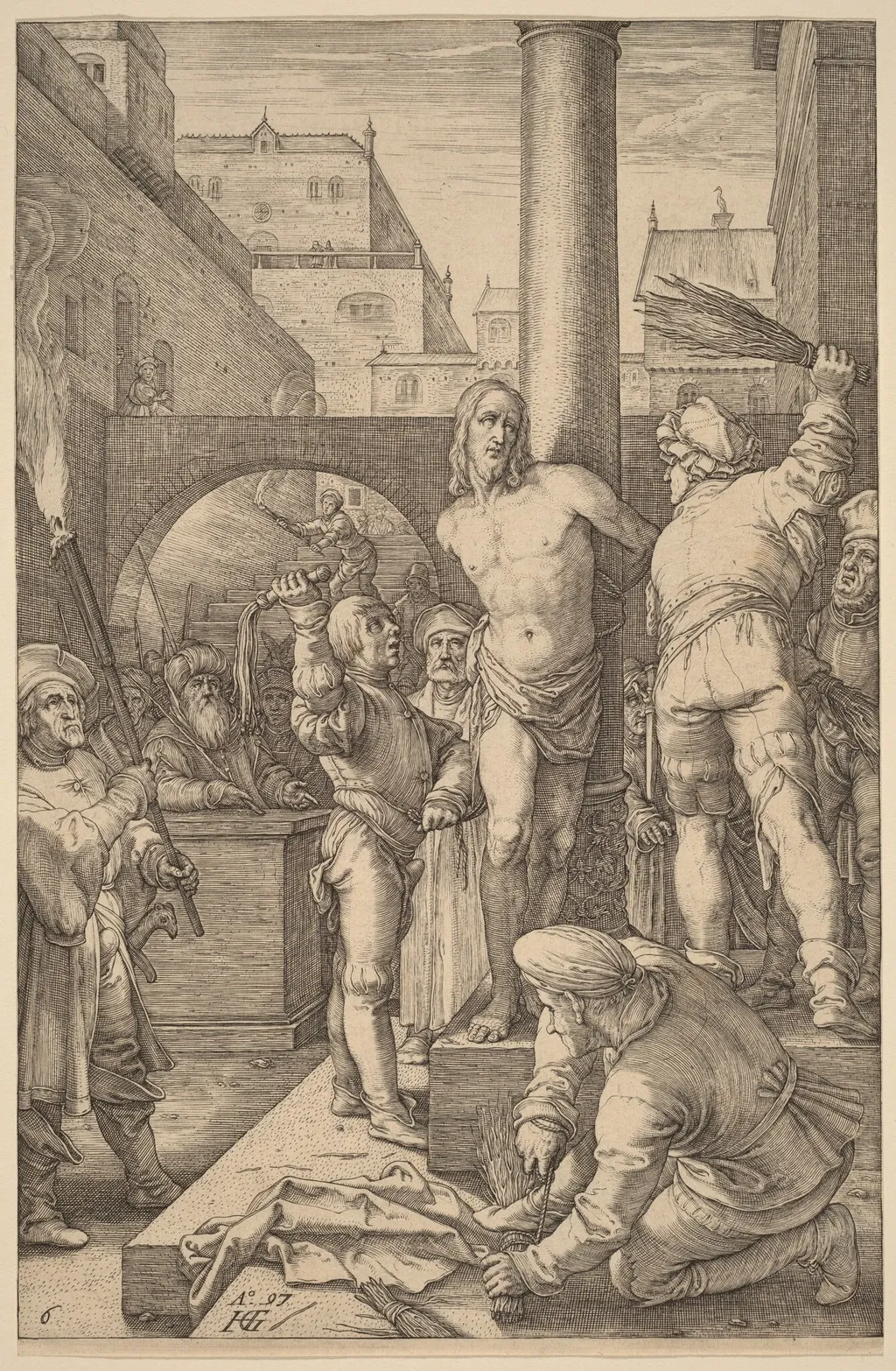
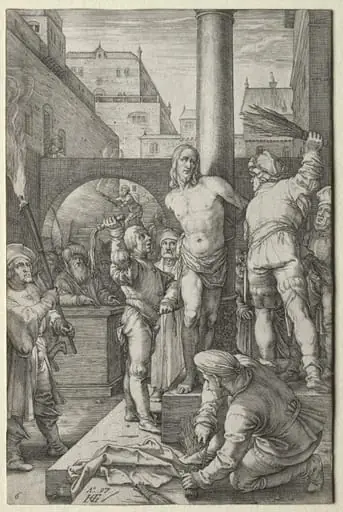
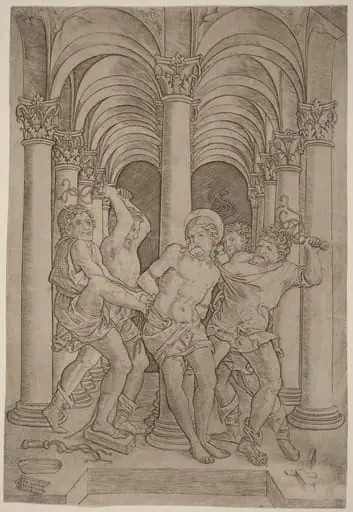
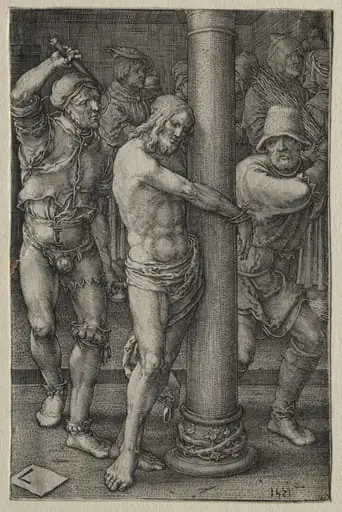
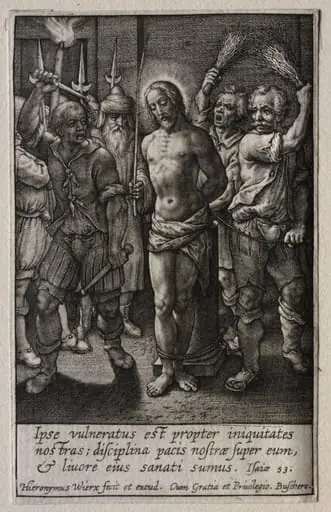
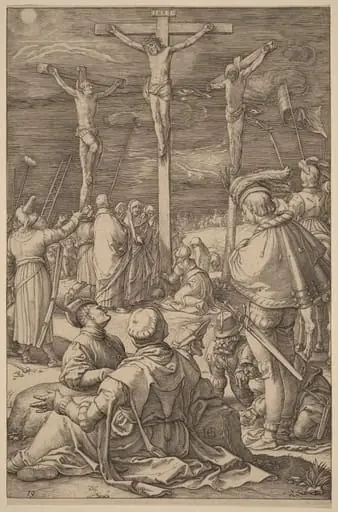
Flagellation of Christ is an ink print by the Renaissance artist Hendrik Goltzius. It dates from 1597 and is held in the collection of the National Gallery of Art.
About this work
Overview
Hendrick Goltzius produced the engraving *Flagellation of Christ* in 1597, during the height of his career as a printmaker in the Dutch Republic.
Hendrick Goltzius produced the engraving *Flagellation of Christ* in 1597, during the height of his career as a printmaker in the Dutch Republic. Though born in Germany, he became a central figure in Northern Mannerist printmaking, known for pushing the technical limits of the medium. This work exemplifies his precision and control, translating complex religious narratives into finely detailed black-and-white compositions through the engraver's burin.
Subject & Meaning
The scene captures the moment of Christ’s scourging, a pivotal episode in the Passion narrative. Christ stands centered, arms bound and head tilted upward, embodying silent endurance. Two executioners flank him, each wielding a whip, while a distant crowd observes from behind architectural forms. The composition emphasizes suffering and stoicism, inviting contemplation rather than overt emotion, consistent with devotional imagery of the period.
Technique & Style
Goltzius employed fine, densely packed cross-hatching to model form and suggest spatial depth. The texture of skin, fabric, and stone emerges through variations in line weight and density, demonstrating his mastery of the burin. His lines are deliberate and controlled, avoiding the looseness of later Baroque styles. The intricate detail and tonal gradation reflect his ability to simulate chiaroscuro without color, relying solely on engraved lines.
History & Provenance
Created in 1597, the engraving was part of Goltzius’s mature output, produced during a period when his reputation extended across Europe. It was widely circulated among collectors and artists, influencing printmakers in the Netherlands and beyond. Early impressions are rare, and surviving examples are held in major European and American collections, often cited in treatises on printmaking technique of the late 16th century.
Context
In the late 1500s, the Dutch Republic was a hub for print production, with religious imagery still in demand despite Protestant reforms. Goltzius’s work bridged Catholic iconography and Northern humanist ideals, appealing to both private devotion and artistic admiration. His technical virtuosity allowed him to sustain interest in complex biblical scenes even as religious themes became more restrained in public spaces.
Legacy
Goltzius’s *Flagellation of Christ* became a benchmark for engraving technique in the early 17th century. Artists studied his handling of line and texture as a model of precision. Though later styles favored broader strokes, his work remained a reference point for academic training in printmaking. The engraving endures as a testament to the expressive potential of the medium when pushed to its technical limits.
Artist & collection
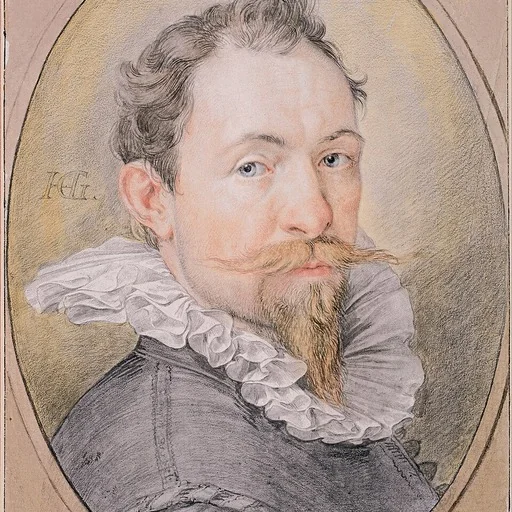
Artist
Hendrick Goltzius (German: , Dutch: ; né Goltz; January or February 1558 – 1 January 1617) was a German-born Dutch printmaker, draftsman, and painter.