Artwork
The Passion: The Flagellation
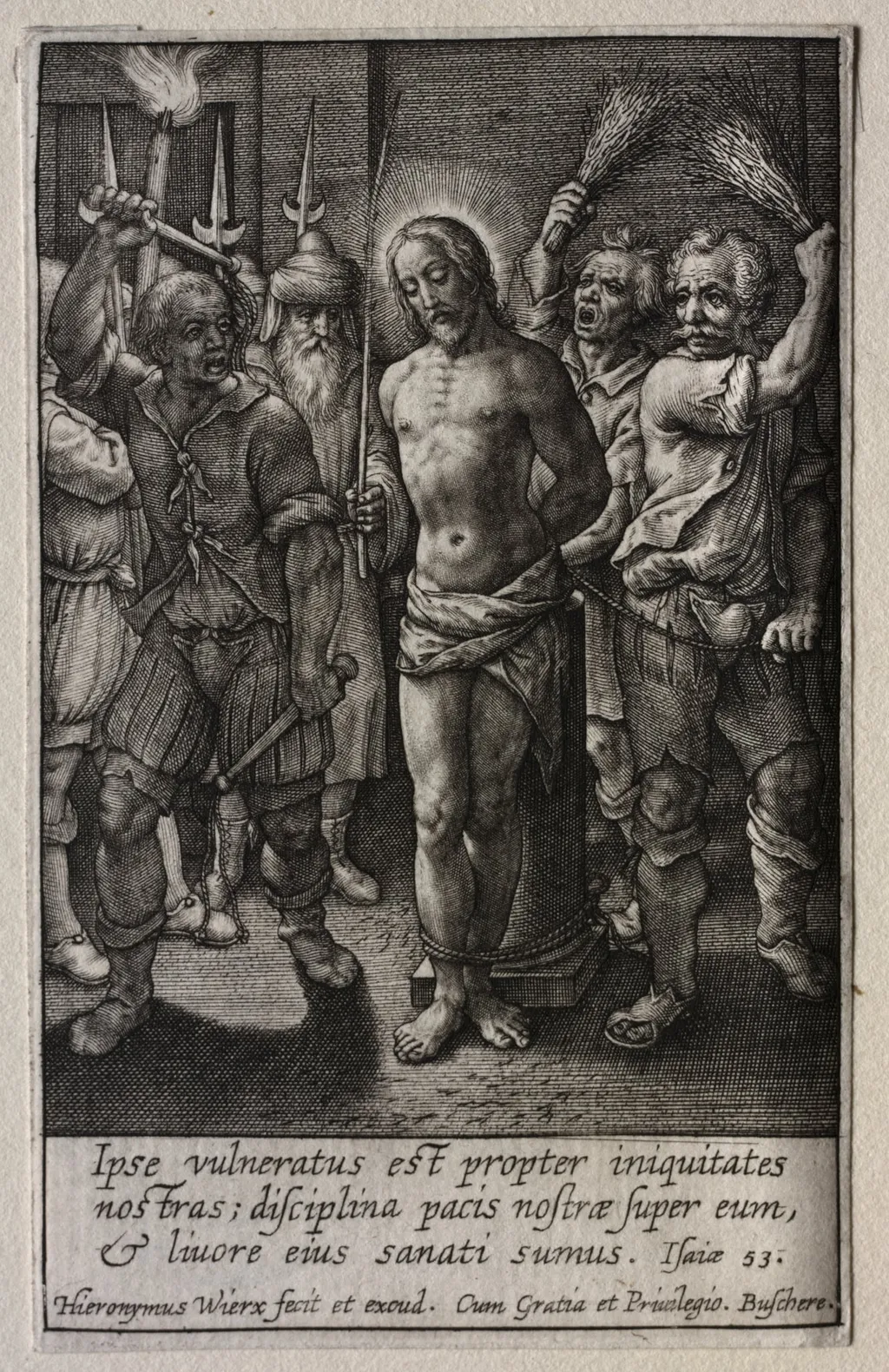
The Passion: The Flagellation is a print by the Baroque artist Hieronymus Wierix. It dates from 1619 and is held in the collection of the Cleveland Museum of Art.
About this work
Overview
The work resides in The Cleveland Museum of Art, where it is recognized for its technical rigor and emotional restraint.
Created in 1619 by Hieronymus Wierix, this engraving is one of a series depicting scenes from Christ’s Passion. Executed in fine-line etching, it captures the moment of flagellation with intense precision. The work resides in The Cleveland Museum of Art, where it is recognized for its technical rigor and emotional restraint. Wierix’s approach aligns with Northern Renaissance print traditions, emphasizing detail over dramatic flourish.
Subject & Meaning
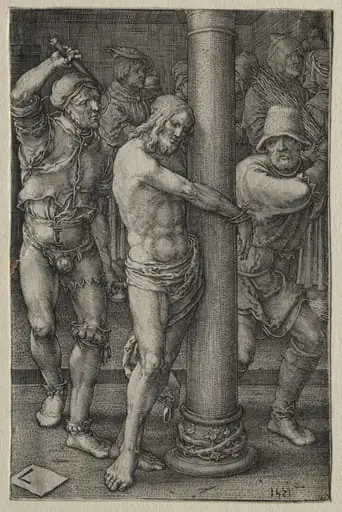
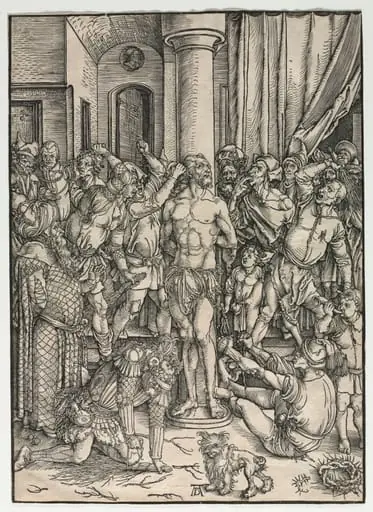
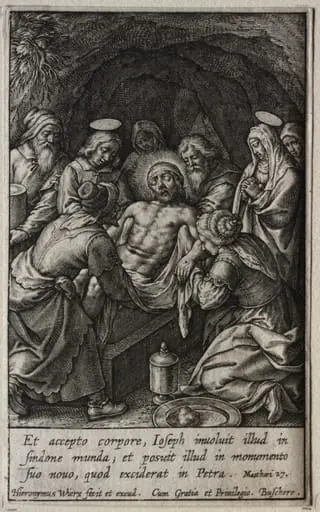
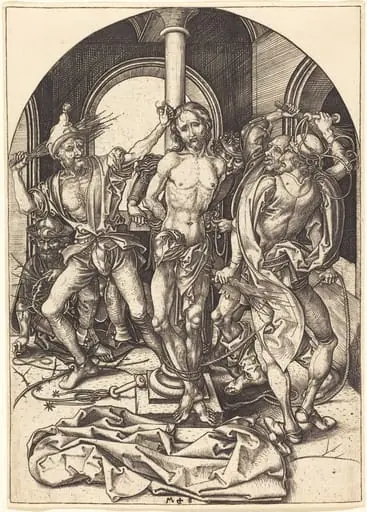
The scene portrays Christ bound to a column as Roman soldiers administer lashes. Rather than emphasizing rage or cruelty, the soldiers’ expressions are detached, almost routine, suggesting a quiet desolation. This understated treatment shifts focus from spectacle to suffering, reinforcing the theological theme of silent endurance. The absence of overt hostility invites contemplation rather than shock.
Technique & Style
Wierix employed meticulous engraving to render texture and form: muscles tense beneath skin, fabric folds rigidly, and light falls sharply across Christ’s torso. The lines are controlled and dense, recalling Albrecht Dürer’s precision. The use of chiaroscuro heightens physicality without sentimentality. The soldiers’ 16th-century Flemish attire, an anachronism, grounds the sacred event in the artist’s contemporary world.
History & Provenance
The print was produced as part of a larger devotional series commissioned for private or ecclesiastical use. Wierix, part of a prominent Antwerp family of engravers, worked within established religious print markets. The Cleveland Museum of Art acquired the piece in the 20th century, where it remains a key example of early 17th-century Flemish printmaking and its role in Counter-Reformation piety.
Context
In early 17th-century Flanders, images of Christ’s suffering were widely circulated to deepen spiritual reflection. Wierix’s work responds to this demand, blending traditional iconography with contemporary dress to make the sacred immediate. The subdued violence reflects a broader trend in Northern art toward psychological realism, moving away from theatricality toward inward meditation.
Legacy
Wierix’s engraving exemplifies the quiet power of line and composition in religious printmaking. While less celebrated than his contemporaries, his work influenced later Northern artists through its restraint and technical discipline. The Cleveland Museum’s holding preserves a vital link to the devotional culture of the Low Countries, where print served as both art and instrument of faith.
Artist & collection

Artist
Hieronymus Wierix (1553–1619) was a Flemish engraver, draughtsman and publisher. He is known for his reproductive engravings after the work of well-known local and foreign artists including Albrecht Dürer. Together with…