Artwork
Matsya
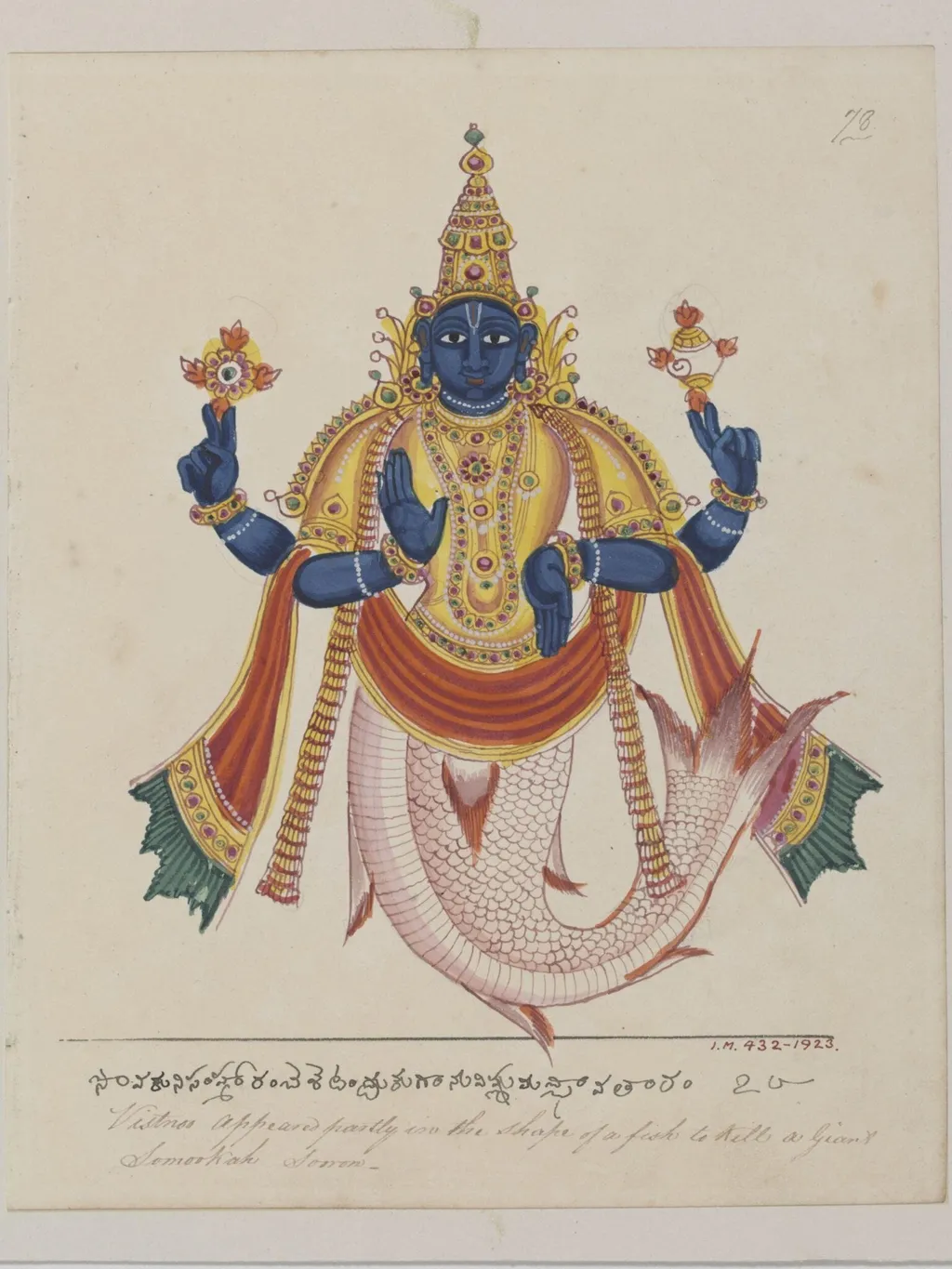
Matsya is a paint painting by the Romanticist artist Unknown. It dates from 1825 and is held in the collection of the Victoria and Albert Museum.
About this work
Overview
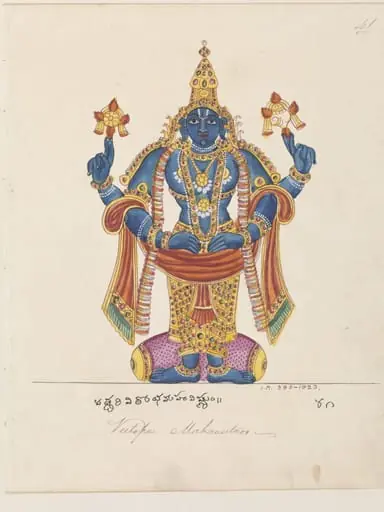
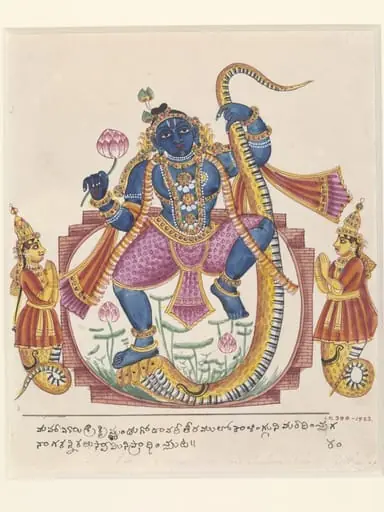
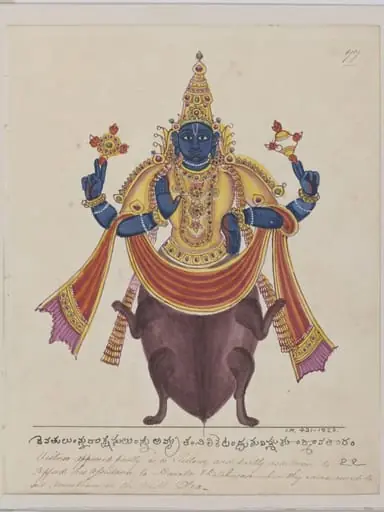
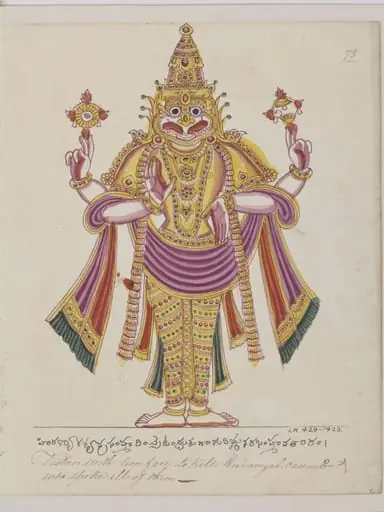
This 1825 watercolor from South India portrays Vishnu in his Matsya avatar, the first of ten incarnations in Hindu tradition. Part of a larger series illustrating deities, the work reflects devotional and narrative conventions of the period. Executed on paper, it combines precise line work with muted pigments to convey divine presence.
Subject & Meaning
The painting depicts Vishnu as Matsya, a half-human, half-fish form assumed to recover sacred texts stolen by the demon Shankhasura during a primordial deluge. The four-armed figure, rendered in blue with gold ornamentation, embodies protection and cosmic order. Its serene expression and ritual hand gestures underscore themes of salvation and divine intervention.
Technique & Style
The figure’s elongated proportions, detailed jewelry, and stylized drapery follow regional conventions, while the plain background directs focus to the deity.
Characteristic of early 19th-century South Indian devotional art, the work employs fine brushwork and restrained coloration. The figure’s elongated proportions, detailed jewelry, and stylized drapery follow regional conventions, while the plain background directs focus to the deity. Though not Romantic in origin, its emphasis on tranquility aligns with broader aesthetic ideals of spiritual transcendence.
History & Provenance
Created in 1825, this painting belongs to a series of 100 Hindu deity illustrations produced in South India. Its exact patronage and early circulation remain unrecorded, though such works were often commissioned for private devotion or temple collections. The series reflects the continued production of traditional religious imagery during a period of colonial influence.
Context
The work emerges from a long tradition of Hindu manuscript and mural painting, where deities were depicted in standardized iconographic forms. By the early 19th century, such illustrations served both religious and pedagogical purposes, preserving mythological narratives for devotees. The series exemplifies the persistence of classical styles amid shifting political and cultural landscapes.
Artist & collection

 Domestic Scene
 Giacomo and Cardinal Marco, investing Andrea, Abbot of San Zeno, with his Benefice
 The Nymph of Fontainebleau
 Portrait of a Woman
 Madonna and Child with Saints in the Enclosed Garden
 Venus and Minerva
 Family Group of Four on Sofa
 Wall painting from Room H of the Villa of P. Fannius Synistor at Boscoreale