Artwork
Mian Dalbir Chand
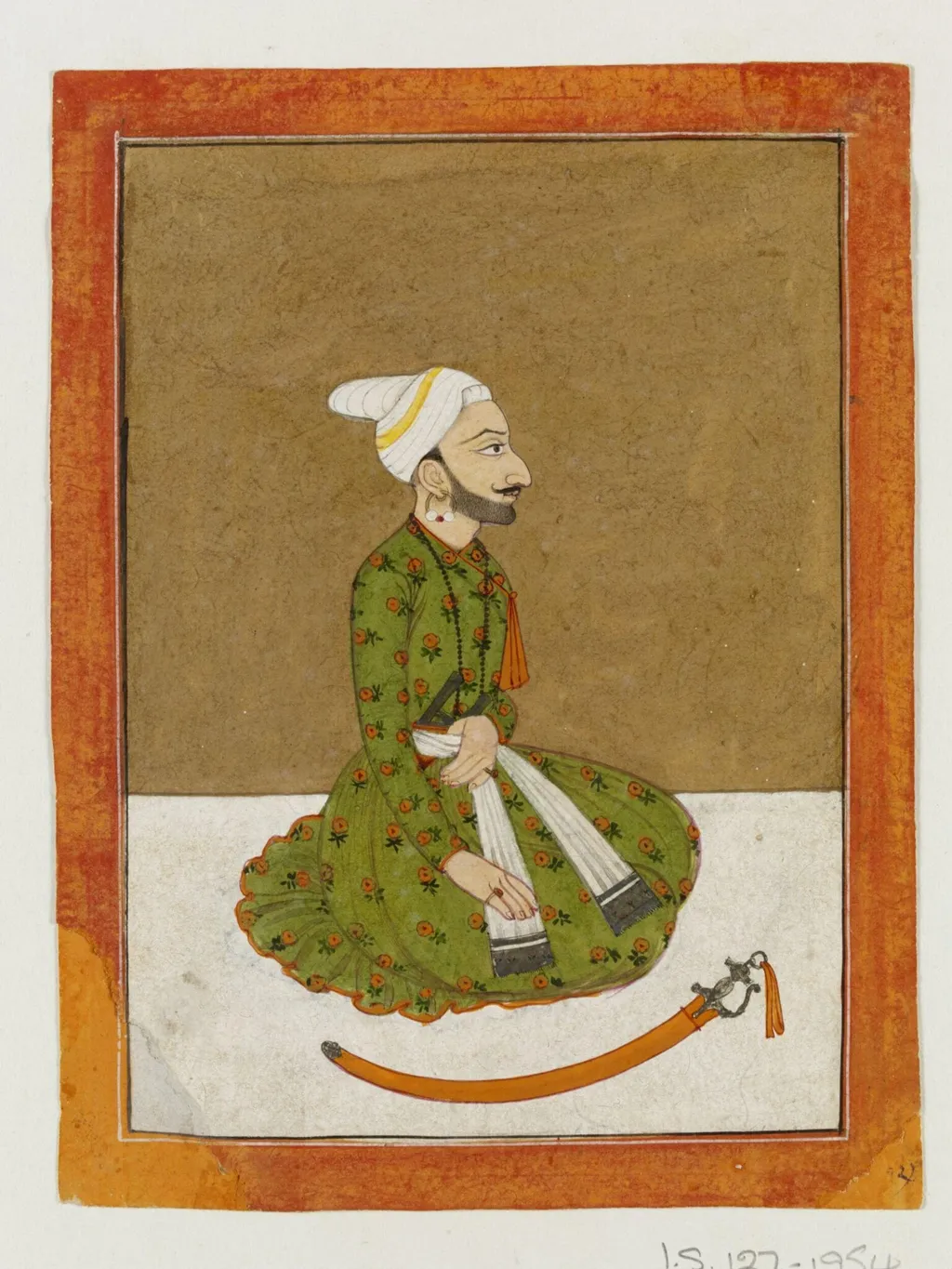
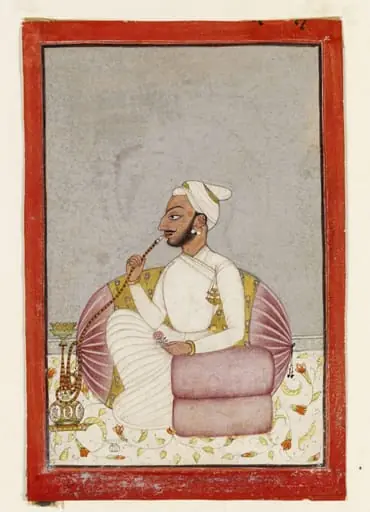
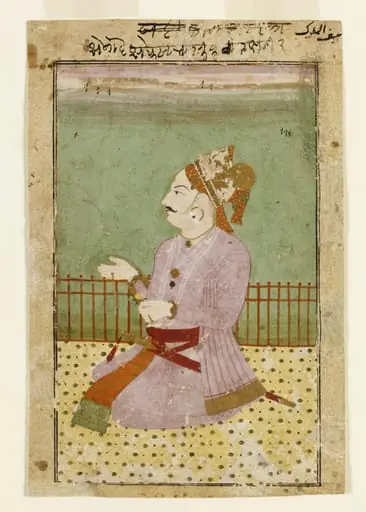
Mian Dalbir Chand is a paint painting by the Baroque artist Unknown. It dates from 1710 and is held in the collection of the Victoria and Albert Museum.
About this work
Overview
The piece reflects the regional painting traditions of northern India during the early 18th century, characterized by precise detail and restrained composition.
This opaque watercolour on paper, dated 1710, portrays Mian Dalbir Chand seated in a composed, frontal pose. Executed by an unidentified artist, the work belongs to a group of 39 paintings acquired by the museum in 1954 from Maggs Bros., originally sourced from Abdullah & Sons in Udaipur. The piece reflects the regional painting traditions of northern India during the early 18th century, characterized by precise detail and restrained composition.
Subject & Meaning
Mian Dalbir Chand is depicted seated cross-legged on a plain surface, dressed in a vivid green robe adorned with small red floral motifs, a white turban, and a draped headcloth. A curved sword rests beside him, signaling status or martial role. The absence of elaborate surroundings focuses attention on his bearing and attire, suggesting a portrait intended to convey authority, lineage, or personal dignity within a courtly context.
Technique & Style
The painting employs opaque watercolour with fine brushwork to render intricate textile patterns and subtle tonal shifts. The figure is rendered with careful attention to fabric texture and fold, while the background remains unadorned, emphasizing the subject. A reddish-brown border frames the composition, a common feature in Pahari and Rajasthani miniatures. The style is formal and intimate, prioritizing clarity and symbolic detail over spatial illusion.
History & Provenance
The painting was once part of the collection of Thakur Iswari Singh of Bilaspur, Sirmoor, inherited through his lineage from Raja Kharakh Chand, who ruled from 1824 to 1839. It passed to Iswari Singh’s branch following the division of the family’s holdings. Later, it entered the trade through Abdullah & Sons in Udaipur before being acquired by Maggs Bros. and ultimately the museum in 1954 as part of a larger group of works.
Context
Created in the early 18th century, this portrait aligns with the flourishing of regional courts in the Himalayan foothills, where rulers and nobles commissioned intimate portraits to affirm identity and status. Unlike Mughal courtly styles, Pahari painting favored flattened space, rich color, and symbolic elements like weapons or textiles to denote rank. The work reflects a local aesthetic distinct from contemporaneous European Baroque traditions.
Legacy
As one of 39 works acquired in 1954, this portrait contributes to the museum’s collection of South Asian miniatures, offering insight into the visual culture of small Himalayan principalities. Its survival through family inheritance and commercial trade highlights the mobility of artistic objects across centuries. Though unsigned, its craftsmanship and provenance anchor it within the broader narrative of regional portraiture in pre-colonial India.
Artist & collection

 Domestic Scene
 Giacomo and Cardinal Marco, investing Andrea, Abbot of San Zeno, with his Benefice
 The Nymph of Fontainebleau
 Portrait of a Woman
 Madonna and Child with Saints in the Enclosed Garden
 Venus and Minerva
 Family Group of Four on Sofa
 Wall painting from Room H of the Villa of P. Fannius Synistor at Boscoreale