Artwork
Emperor Alamgir II
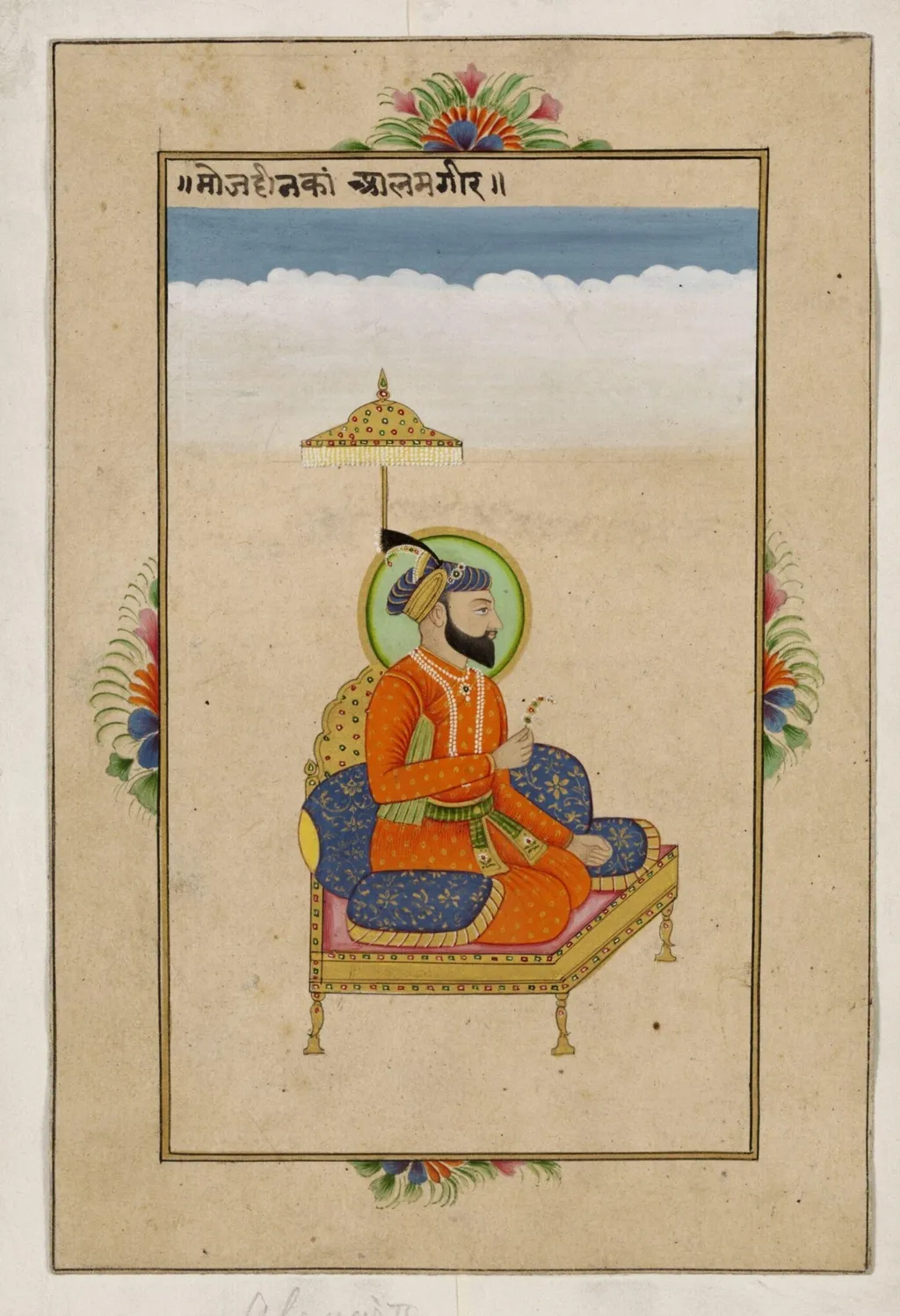
Emperor Alamgir II is a paint painting by the Impressionist artist Unknown. It dates from 1890 and is held in the collection of the Victoria and Albert Museum.
About this work
Overview
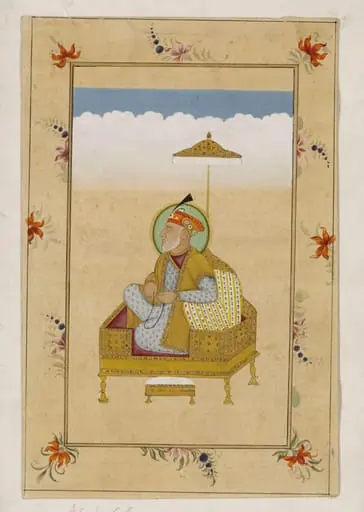
The work portrays Emperor Alamgir II seated on an elaborately decorated golden throne, set against a sparse desert‑like backdrop. Rendered in opaque watercolour and gold on paper, the figure faces right, holding a small ornamental object in his right hand while his left hand rests on his lap.
Subject & Meaning
The emperor is dressed in an orange robe and a blue turban, symbols of royal authority, and is shaded by a parasol with a gold‑red patterned canopy, emphasizing ceremonial status. The barren landscape and minimal surroundings focus attention on the sovereign’s dignified pose.
Technique & Style
The artist employed opaque watercolour combined with gold leaf, creating a luminous surface that highlights the throne’s gilded details. The composition balances flat decorative elements, such as the floral motifs flanking the top stripe, with a restrained, formal portraiture typical of court paintings.
History & Provenance
The painting’s style and materials are comparable to works held by the Victoria and Albert Museum, suggesting it originates from a similar tradition of 18th‑century Indian court portraiture. Its exact provenance remains undocumented, but it reflects the visual conventions used to legitimize imperial power.
Context
Created during the reign of Alamgir II (1754‑1759), the portrait aligns with Mughal practices of depicting rulers in opulent settings to convey authority. The desert setting may allude to the empire’s territorial expanse, while the ornate throne and parasol reinforce the emperor’s elevated status within the court hierarchy.
Artist & collection

 Domestic Scene
 Giacomo and Cardinal Marco, investing Andrea, Abbot of San Zeno, with his Benefice
 The Nymph of Fontainebleau
 Portrait of a Woman
 Madonna and Child with Saints in the Enclosed Garden
 Venus and Minerva
 Family Group of Four on Sofa
 Wall painting from Room H of the Villa of P. Fannius Synistor at Boscoreale