Artwork
Ajit Singh
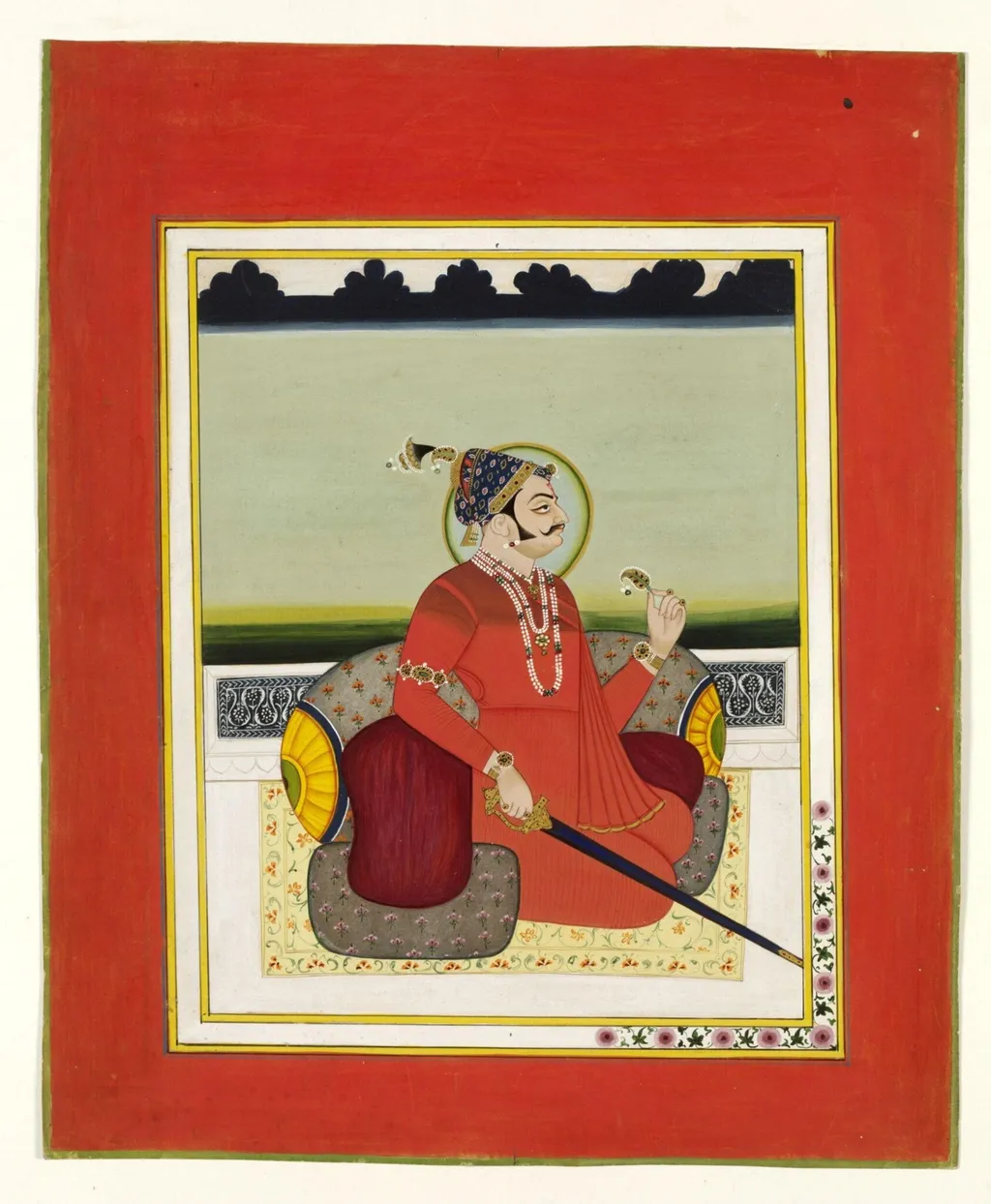
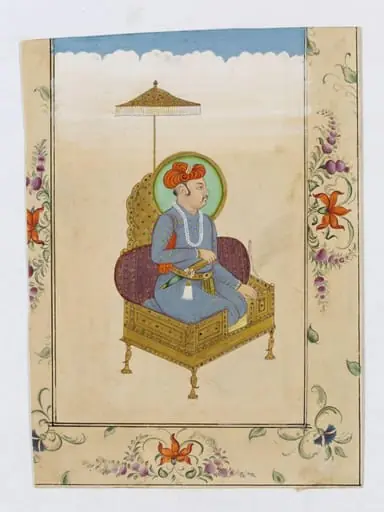
Ajit Singh is a paint painting by the Impressionist artist Chhajju Lal. It dates from 1890 and is held in the collection of the Victoria and Albert Museum.
About this work
Overview
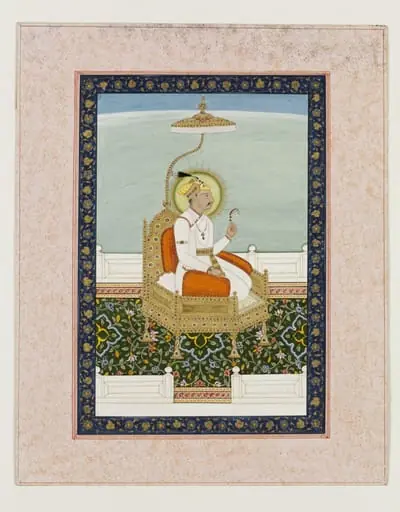
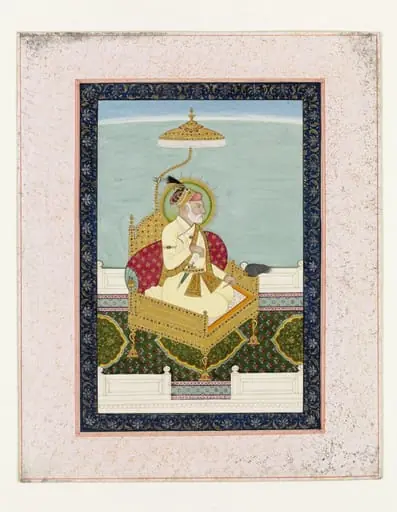
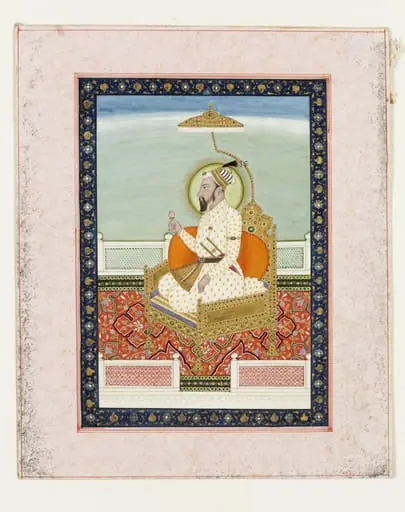
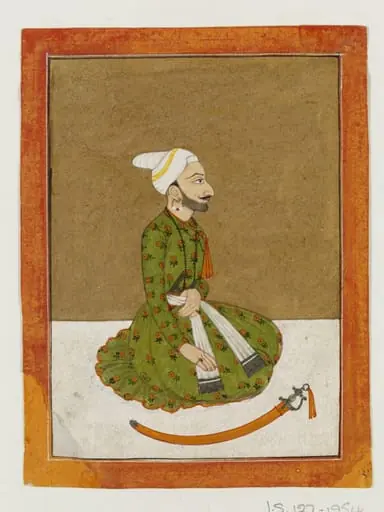
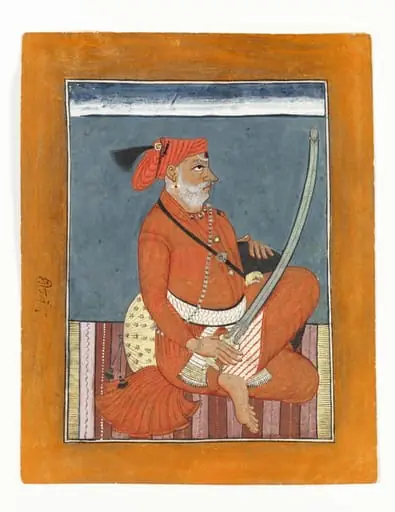
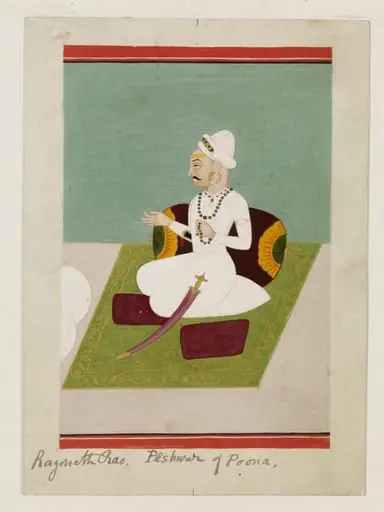
This portrait depicts Ajit Singh, a ruler of the Marwar region, painted in opaque watercolour and gold on paper. He is shown seated on an ornate couch, dressed in a red garment and a blue turban, with a sword resting in his right hand. The composition is formal, emphasizing his status through posture and attire, set against a softly colored background with floral motifs at the lower edge.
Subject & Meaning
Ajit Singh is portrayed as a sovereign, his seated posture and direct gaze conveying authority. The sword symbolizes his role as a military leader, while the rich textiles and gold detailing reflect his wealth and rank. The inclusion of floral elements at the base may allude to prosperity or the natural order under his rule, reinforcing the political and cultural ideals of his court.
Technique & Style
The style is naturalistic for its time, prioritizing accurate representation over idealization, though still rooted in regional conventions.
The work employs fine brushwork in opaque watercolour, with meticulous attention to texture in fabric and embroidery. Gold leaf accents highlight decorative elements, typical of Rajasthani court painting. The background, in muted yellow and green, provides contrast without distraction. The style is naturalistic for its time, prioritizing accurate representation over idealization, though still rooted in regional conventions.
History & Provenance
Created in the early 18th century, the painting likely originated in the court of Marwar, possibly Jodhpur, where Ajit Singh ruled from 1679 to 1724. It was commissioned to affirm his legitimacy and prestige, common among Rajput rulers. The painting remained within royal collections until entering a museum or private collection in the 20th century, though its exact path is not fully documented.
Context
This portrait belongs to the Rajput school of painting, which flourished in western India under princely patronage. Unlike Mughal portraiture, Rajput works often emphasized symbolic attributes over psychological depth. The use of gold, rich colors, and stylized backgrounds reflects local aesthetics and religious influences, distinguishing it from contemporary European or later Impressionist traditions.
Legacy
The painting stands as a representative example of early 18th-century Rajput court art, preserving the visual language of regional sovereignty. It contributes to scholarly understanding of how rulers used portraiture to project power and identity. While not widely known outside specialized circles, it remains a key reference for studies of Indian miniature painting traditions.
Artist & collection
Artist
Chhajju Lal was the go-to painter for royal portraits in late-1800s India, always dressed in a spotless white kurta even when mixing paints.