Artwork
Mirza Mirak Mashhadi
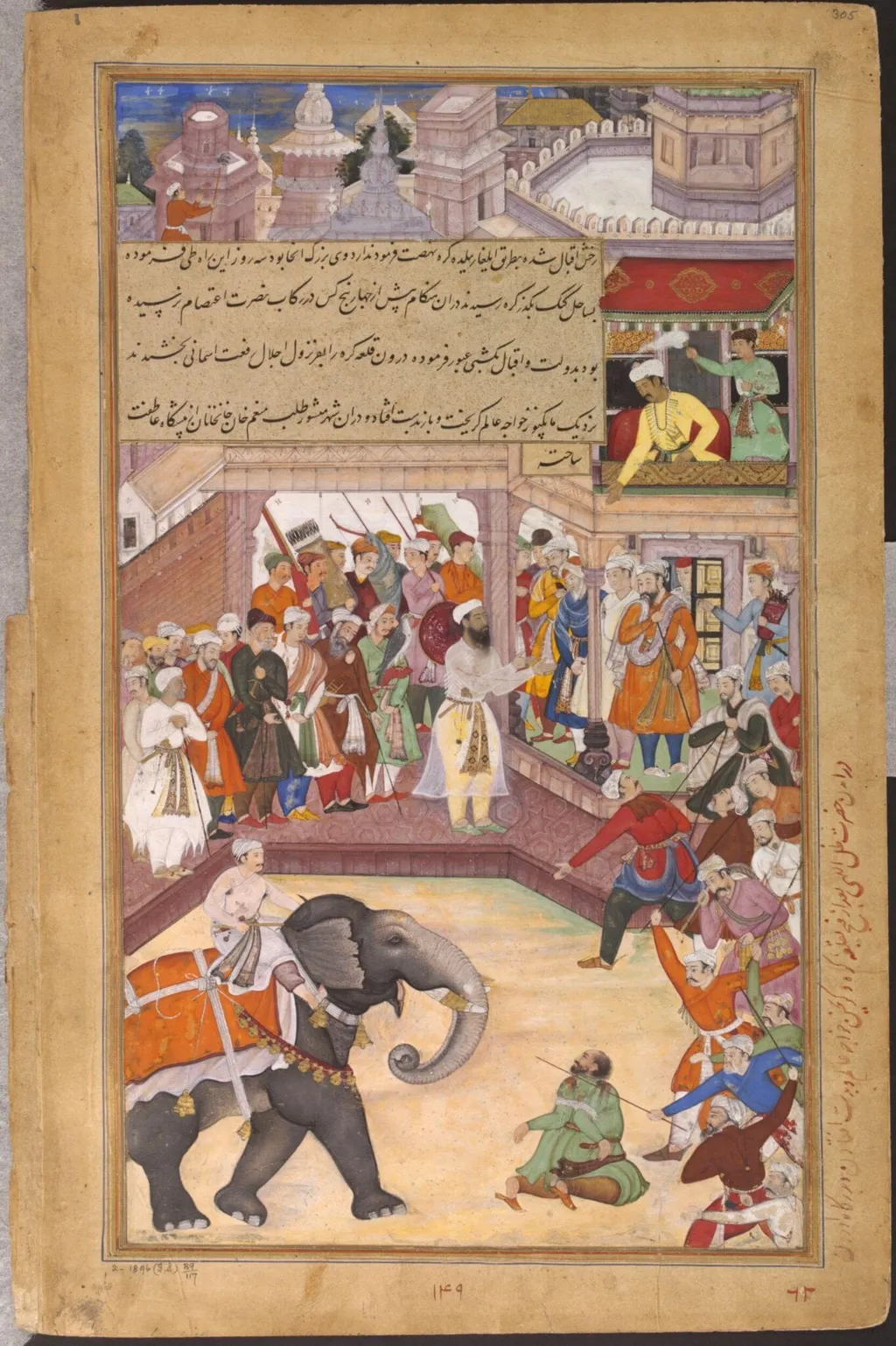
Mirza Mirak Mashhadi is a paint painting by the Mughal Painting artist Unknown. It dates from 1592 and is held in the collection of the Victoria and Albert Museum. This painting is part of the Akbarnama, a commissioned chronicle of Emperor Akbar’s reign, created between 1592 and 1595.
About this work
Mirza Mirak came to defend Ali Quli Khan Zaman, a rebel who kept switching sides.
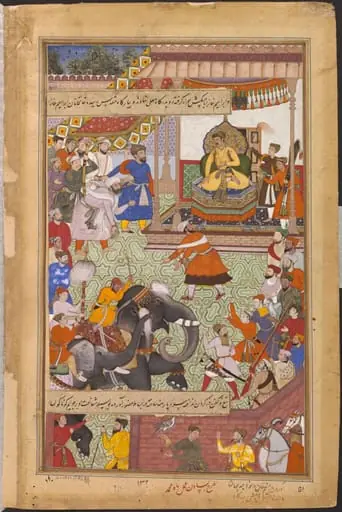
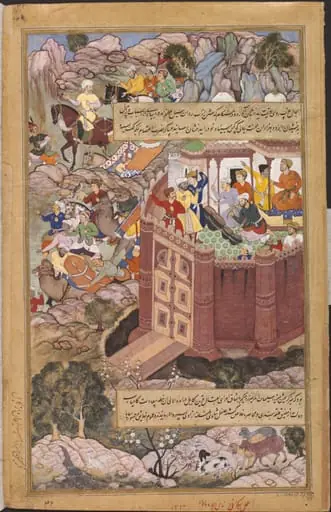
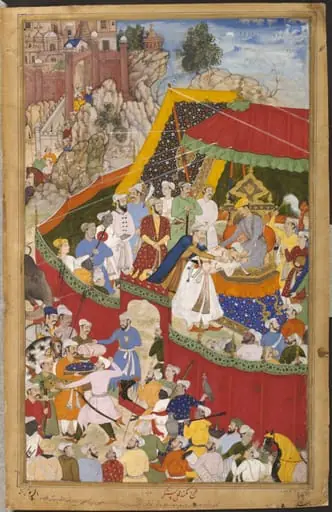
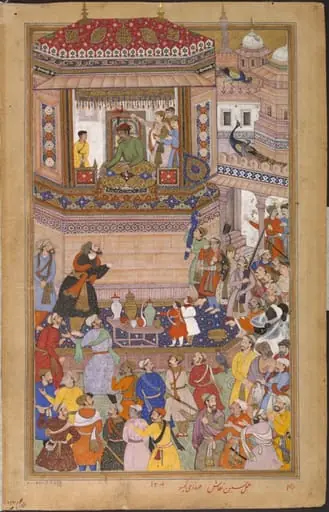
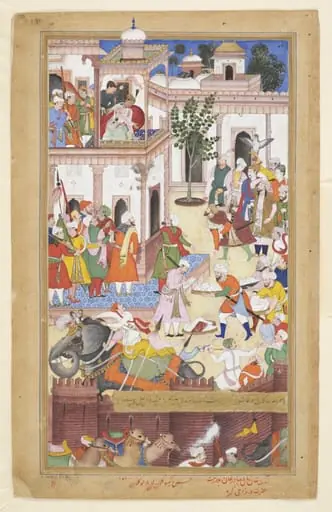
This painting shows Mirza Mirak Mashhadi kneeling before Emperor Akbar in 1567. Akbar looks calm while Mirza Mirak gets scolded. A guard stands ready with a sword.
Mirza Mirak came to defend Ali Quli Khan Zaman, a rebel who kept switching sides. The emperor didn’t buy it this time. Mirza Mirak was later executed.
This scene comes from the Akbarnama, a book of Akbar’s reign. It mixes history with imperial power play. For more like this, see the Victoria and Albert Museum.
Overview
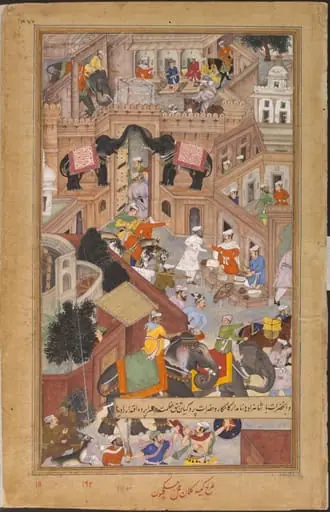
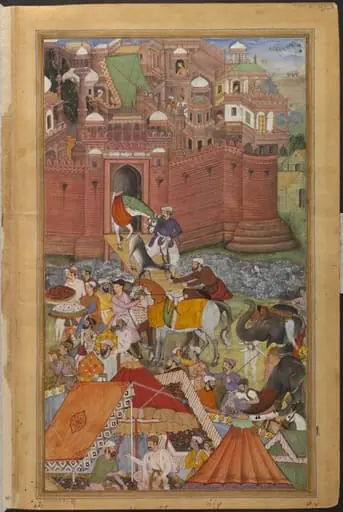
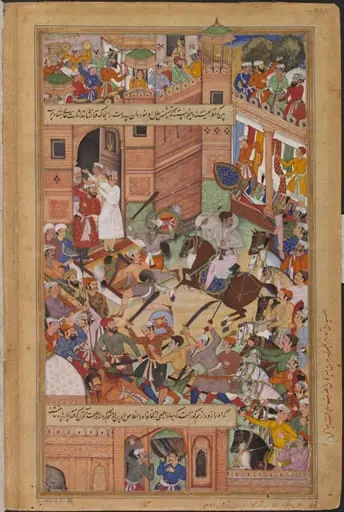
This painting is part of the Akbarnama, a commissioned chronicle of Emperor Akbar’s reign, created between 1592 and 1595. It illustrates an episode from 1567 involving Mirza Mirak Mashhadi, a courtier who interceded on behalf of the rebellious noble Ali Quli Shaibani, known as Khan Zaman. The scene captures a moment of imperial judgment at Karra, reflecting the political tensions and personal risks inherent in Mughal court life.
Subject & Meaning
Mirza Mirak kneels before Akbar, pleading for mercy for Khan Zaman, a vassal who repeatedly defied imperial authority yet sought reconciliation. The emperor’s composed demeanor contrasts with the guard’s readiness, signaling the gravity of the moment. Though Mirza Mirak’s plea fails here, his later survival after a death sentence—spared by an elephant’s restraint—adds a layer of irony, underscoring the capriciousness of royal favor.
Technique & Style
Executed in the Mughal miniature tradition, the painting employs fine brushwork, delicate color gradients, and precise architectural detail to frame the figures. The composition centers on the emotional exchange between Akbar and Mirza Mirak, with spatial depth achieved through layered architecture and subdued backgrounds. The style reflects the synthesis of Persian, Indian, and early European influences characteristic of Akbar’s atelier.
History & Provenance
The Akbarnama manuscript was produced under Akbar’s patronage, with text by Abu’l Fazl and illustrations by leading court artists. After Akbar’s death, it passed to his son Jahangir and later to Shah Jahan. In the 19th century, it entered private hands through Major General John Clarke, who acquired it during his service in Oudh. The Victoria and Albert Museum purchased the folio in 1896 from his widow, Frances Clarke.
Context
The Akbarnama was not merely a historical record but a tool of imperial legitimacy, blending fact with moral and political narrative. Scenes like this reinforced Akbar’s authority by dramatizing loyalty and consequence. The inclusion of such episodes—where courtiers risked their lives for others—highlighted the precariousness of power and the emperor’s role as arbiter of justice and mercy.
Legacy
As one of the earliest illustrated versions of the Akbarnama, this painting exemplifies the sophistication of Mughal manuscript production under Akbar. Its survival and preservation offer insight into how visual art served state ideology. The work remains a key reference for understanding the intersection of history, power, and artistic expression in 16th-century South Asia.
Artist & collection

 Domestic Scene
 Giacomo and Cardinal Marco, investing Andrea, Abbot of San Zeno, with his Benefice
 The Nymph of Fontainebleau
 Portrait of a Woman
 Madonna and Child with Saints in the Enclosed Garden
 Venus and Minerva
 Family Group of Four on Sofa
 Wall painting from Room H of the Villa of P. Fannius Synistor at Boscoreale