Artwork
Mu'nim Khan and Khwaja Jahan
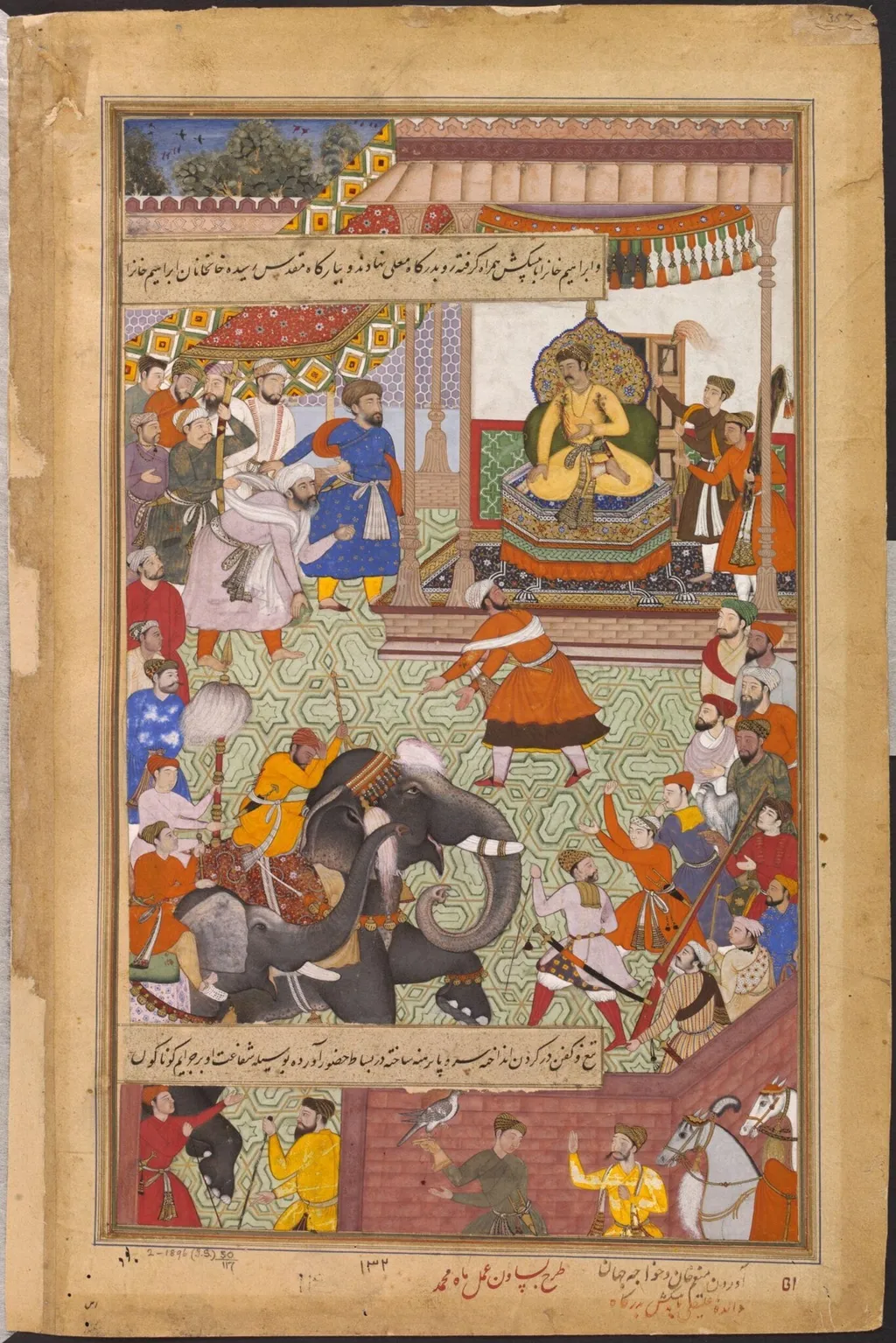
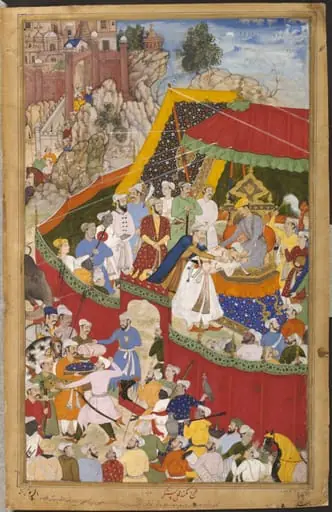
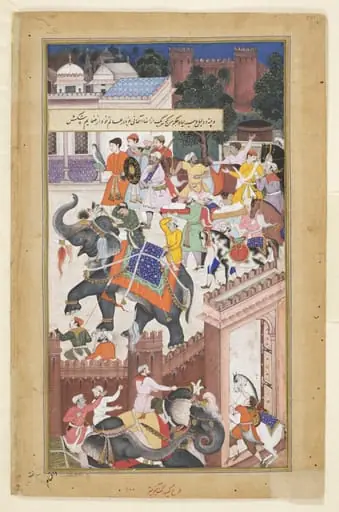
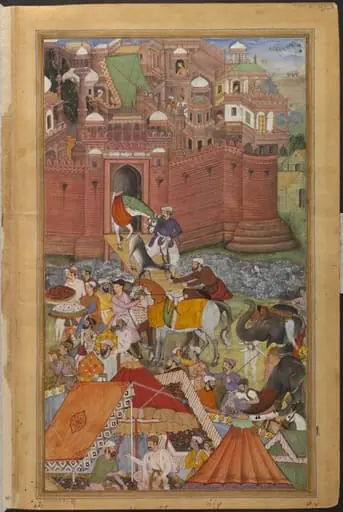
Mu'nim Khan and Khwaja Jahan is a paint painting by the Mughal Painting artist Basawan. It dates from 1592 and is held in the collection of the Victoria and Albert Museum. This painting is one of many illustrations created for the Akbarnama, the official chronicle of Emperor Akbar’s reign.
About this work
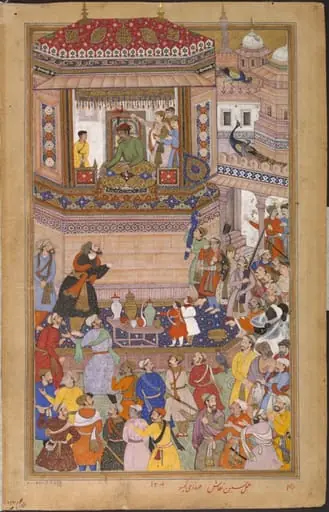
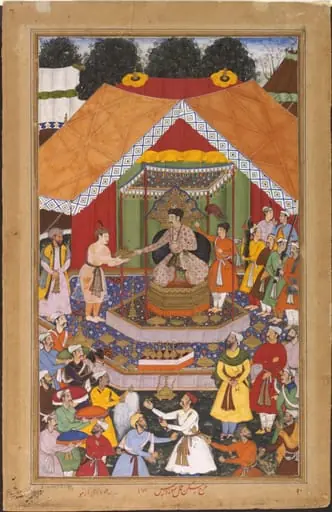
You see two men in rich robes kneeling on a patterned carpet, one gesturing toward the other.
You see two men in rich robes kneeling on a patterned carpet, one gesturing toward the other.
This is a page from a book about Emperor Akbar’s life, painted around 1590. The taller man is begging the emperor to spare rebels. The artist planned the scene but another painter filled in the colors. Tiny details—like the gold trim on the robes—show how carefully the court artists worked.
To see more paintings like this, look up the Victoria and Albert Museum.
Overview
This painting is one of many illustrations created for the Akbarnama, the official chronicle of Emperor Akbar’s reign. Commissioned by Akbar and written by Abu’l Fazl, the manuscript was produced between 1590 and 1596. The V&A’s fragment, dated circa 1592–1595, represents an early illustrated version, assembled by leading court artists under imperial supervision. Each page was collaboratively executed, with design and execution handled by different specialists.
Subject & Meaning
The scene portrays Mu’nim Khan, the emperor’s chief minister, interceding on behalf of rebels captured in 1565. Kneeling before Akbar, he gestures in supplication, while the emperor remains seated, his posture conveying authority. The moment captures a political negotiation, reflecting the Mughal ideal of justice tempered by mercy. The interaction underscores the role of courtiers as mediators between imperial power and dissent.
Technique & Style
The composition was devised by Basawan, known for dynamic figure arrangements, while Mah Muhammad applied the pigments. Fine details—gold thread on robes, delicate patterns on the carpet, and subtle shading—reveal meticulous craftsmanship. The use of translucent washes and precise line work reflects Persian and Indian traditions fused under Mughal patronage. Inscriptions in red ink beneath the image identify the artists, a rare practice affirming the imperial workshop’s structured hierarchy.
History & Provenance
The manuscript remained in the imperial library after Akbar’s death, passing to his son Jahangir and later Shah Jahan. It entered private hands after the decline of the Mughal court. In the mid-19th century, Major General John Clarke acquired it in India during his tenure as Commissioner of Oudh. His widow, Frances Clarke, sold the fragment to the Victoria and Albert Museum in 1896, where it remains part of the museum’s South Asian collection.
Context
The Akbarnama was both historical record and political statement, designed to legitimize Akbar’s rule through curated imagery and text. Its illustrations blended Persian aesthetics with Indian naturalism, reflecting Akbar’s broader cultural synthesis. Artists were documented in the A’in-i Akbari, affirming their status as court officials. This painting exemplifies how visual narrative was used to reinforce imperial ideology and administrative order.
Legacy
The Akbarnama’s illustrations set a standard for Mughal manuscript painting, influencing later imperial projects. The collaboration between designers and painters became a model for court workshops. Surviving fragments, like this one, offer insight into the administrative and artistic infrastructure of the Mughal court. Today, they remain key sources for understanding how power, history, and art intersected in early modern India.
Artist & collection
Artist
Basāwan, or Basāvan, was an Indian miniature painter in the Mughal style. He was known by his contemporaries as a skilled colorist and keen observer of human nature, and for his use of portraiture in the illustrations…

 Page from Tales of a Parrot (Tuti-nama): text page
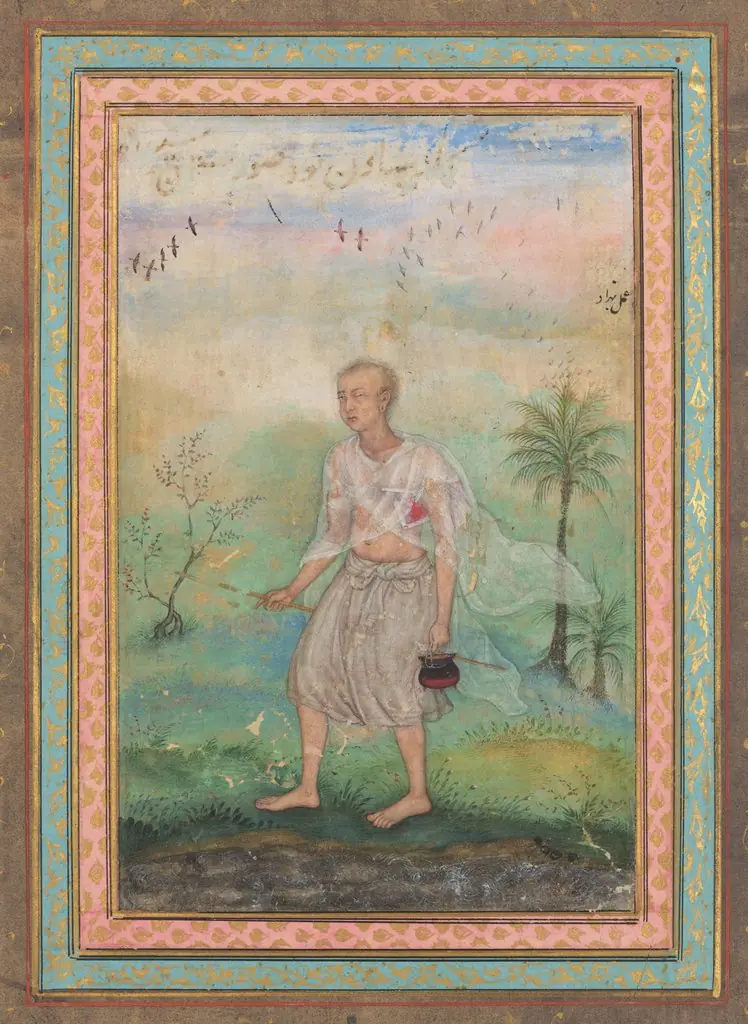 Jain Ascetic Walking Along a Riverbank
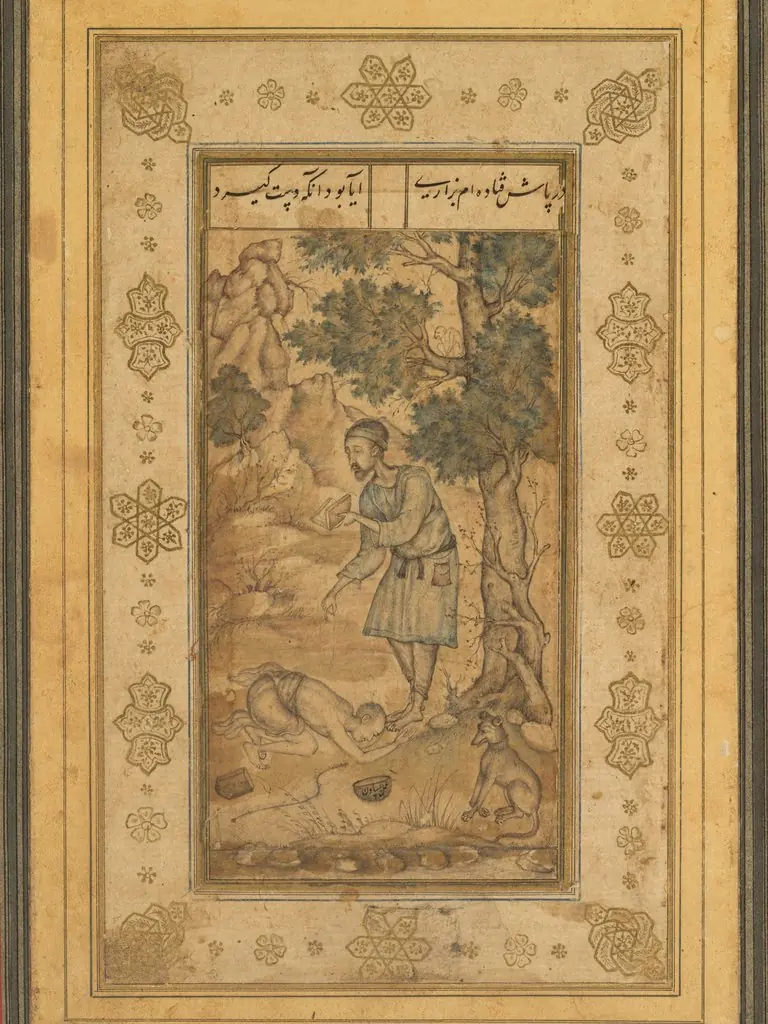 A mendicant bowing before a holy man, from the Prince Salim Album
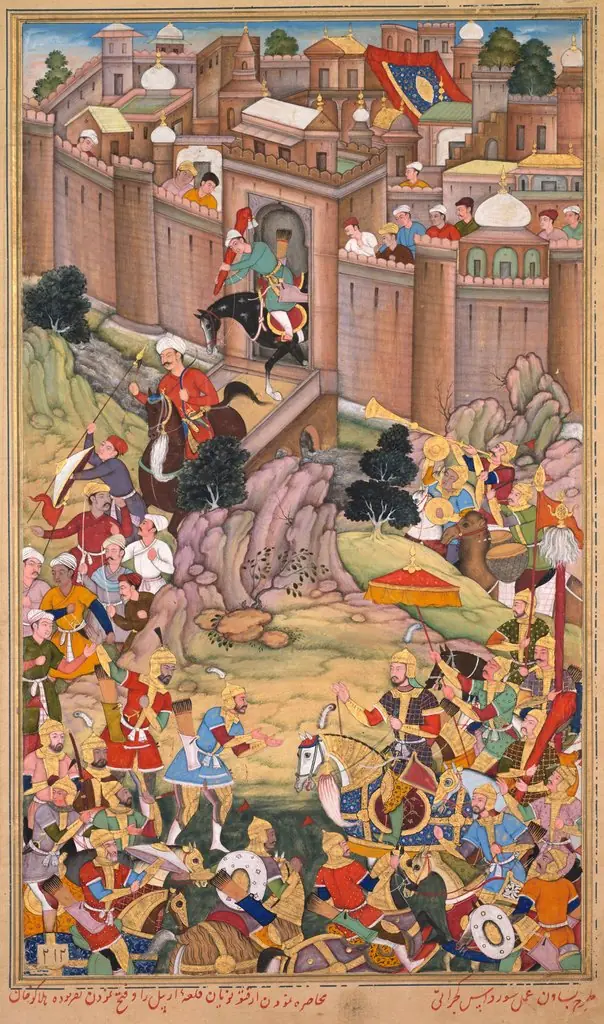 The siege of Arbela in the era of Hulagu Khan, from a Chingiz-nama (Book of Chingiz Khan) of the Jami al-tavarikh (Compendium of Chronicles) of Rashid al-Din (Persian, 1247–1318)
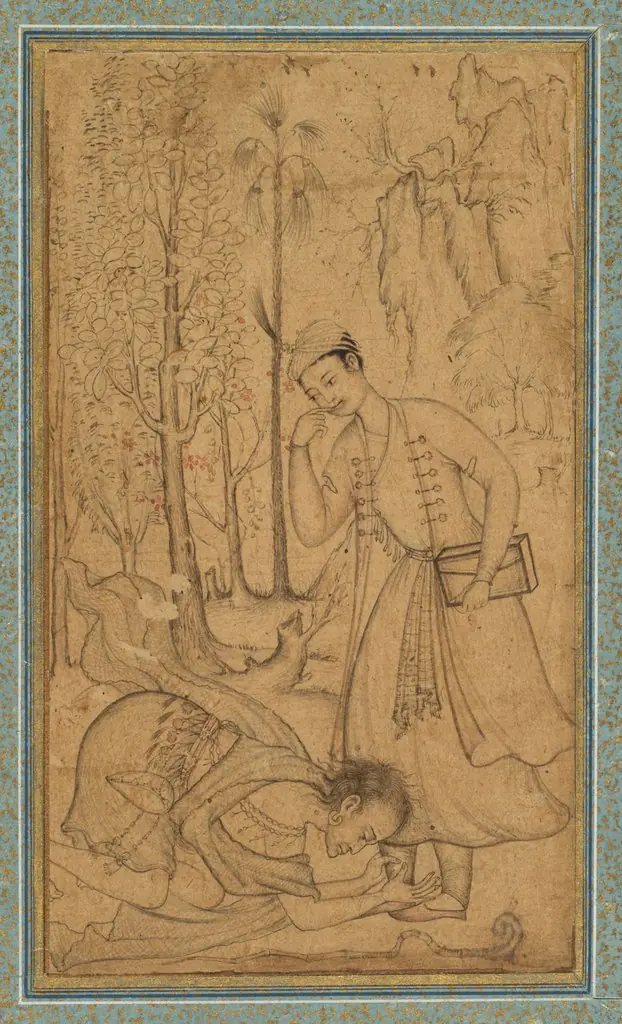 A holy man prostrating himself before a learned prince
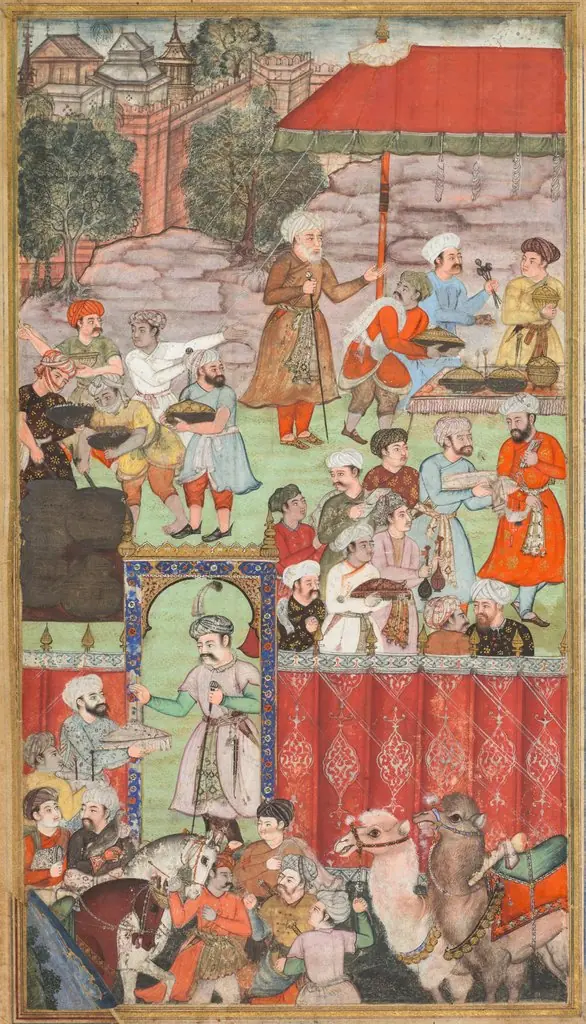 A feast for Babur hosted by his half-brother Jahangir Mirza in Ghazni in May 1505, from a Babur-nama (Memoirs of Babur)
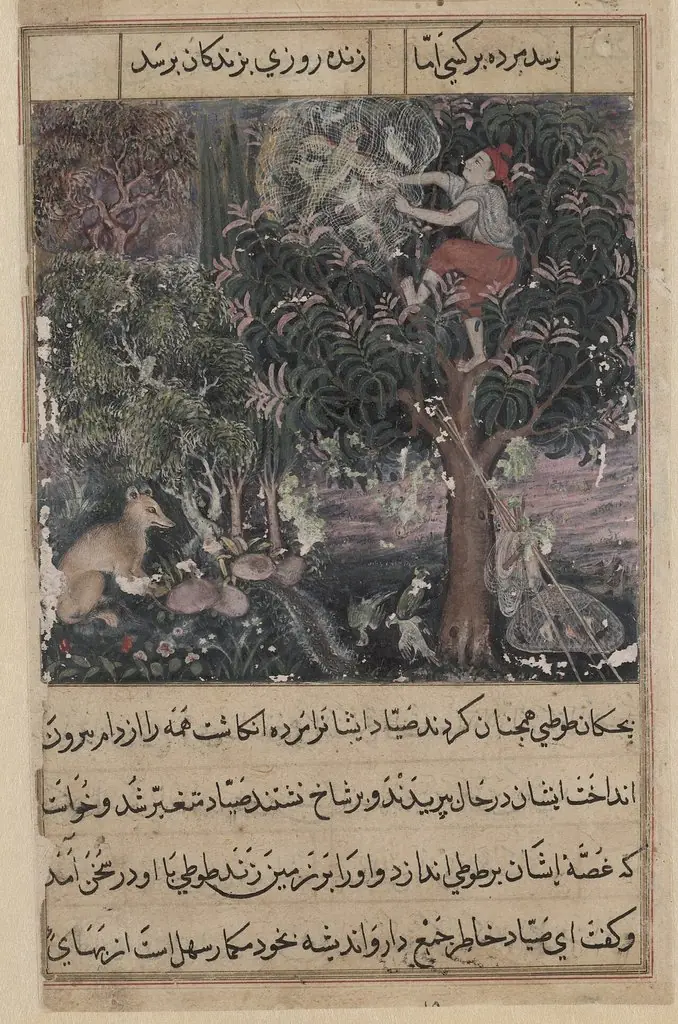 The hunter throws away the baby parrots, who pretend to be dead, and captures the mother, from a Tuti-nama (Tales of a Parrot): Fifth Night
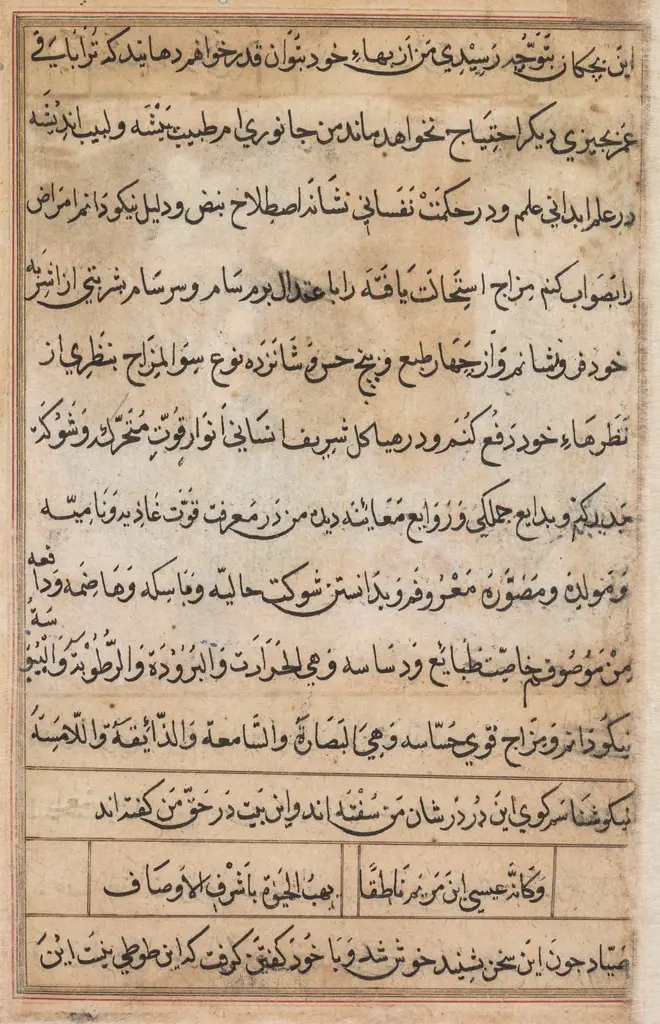 Page from Tales of a Parrot (Tuti-nama): text page