Artwork
Untitled
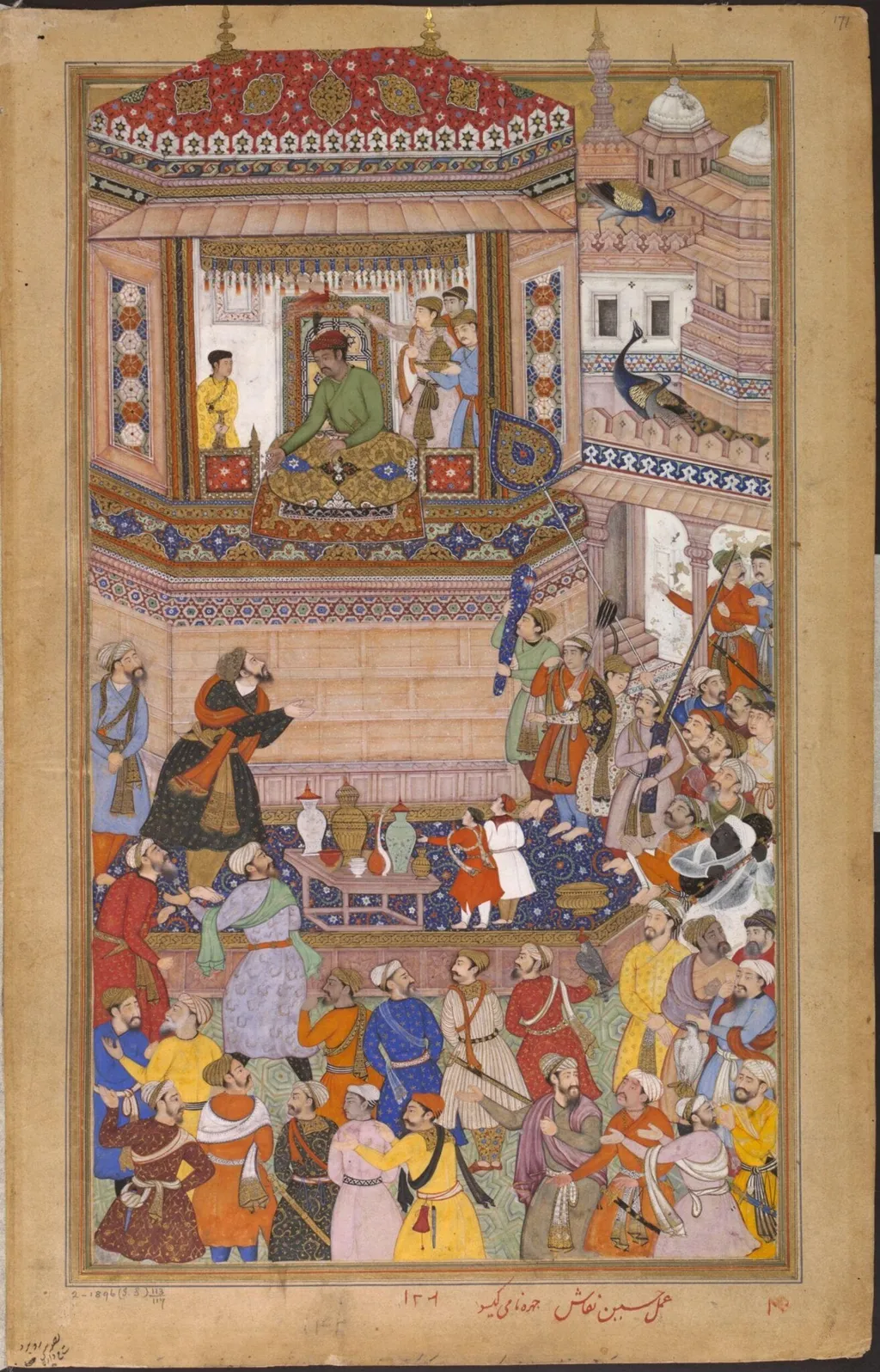
Untitled is a paint painting by the Mughal Painting artist Husain Naqqash. It dates from 1592 and is held in the collection of the Victoria and Albert Museum. This painting is one half of a double-page illustration from the Akbarnama, the official chronicle of Emperor Akbar’s reign.
About this work
You see Akbar on a red carpet. A man kneels before him, hands bound. Soldiers stand stiff behind them.
This scene tells of Akbar’s 1572 win over Gujarat. The book it came from, the Akbarnama, was written to praise his rule.
It’s part of a double-page spread. Look up the left side of this painting at the Victoria and Albert Museum.
Overview
Created between 1592 and 1595, it forms part of a lavishly illustrated manuscript commissioned by Akbar and produced under royal patronage.
This painting is one half of a double-page illustration from the Akbarnama, the official chronicle of Emperor Akbar’s reign. Created between 1592 and 1595, it forms part of a lavishly illustrated manuscript commissioned by Akbar and produced under royal patronage. The work is attributed to artists active in the Mughal atelier, with some signatures preserved in red ink beneath the imagery, confirming its status as a court-commissioned object.
Subject & Meaning
The scene depicts General Husain Quli Khan Jahan presenting captured prisoners to Emperor Akbar following the 1572 conquest of Gujarat. The act of submission underscores Akbar’s authority and the legitimacy of his expansionist policies. The composition emphasizes imperial order: Akbar sits calmly on a red carpet, while the bound prisoners and rigidly posed soldiers reinforce the hierarchy and control central to Mughal governance.
Technique & Style
Rendered in opaque watercolor and gold on paper, the painting reflects the refined aesthetic of the Mughal atelier. Figures are rendered with precise detail, and spatial depth is suggested through layered architecture and atmospheric perspective. The use of rich pigments and delicate linework aligns with the court’s emphasis on visual sophistication, blending Persian traditions with emerging Indian naturalism.
History & Provenance
The manuscript was compiled in the 1590s under Akbar’s direction and remained in imperial hands after his death, passing to his son Jahangir and later to Shah Jahan. The Victoria and Albert Museum holds one of the few surviving portions of this early illustrated version. The presence of artists’ names in red ink confirms its royal origin and distinguishes it as a primary document of Mughal court culture.
Context
The conquest of Gujarat was pivotal for Akbar’s consolidation of power, securing vital trade routes to western Asia. The Akbarnama, written by Abu’l Fazl, served not merely as history but as political propaganda, legitimizing Akbar’s rule through narrative and imagery. This illustration was part of a broader visual program designed to project imperial grandeur and administrative control across the empire.
Legacy
As one of the earliest illustrated versions of the Akbarnama, this work set a precedent for Mughal manuscript painting. Its detailed realism and symbolic composition influenced later imperial histories and established standards for courtly illustration. Surviving fragments like this one remain key sources for understanding the intersection of art, power, and historiography in early modern India.
Artist & collection
Artist
This Mughal artist wasn’t just a painter—he was a storyteller who signed his work by painting a tiny horse in the corner of every piece.

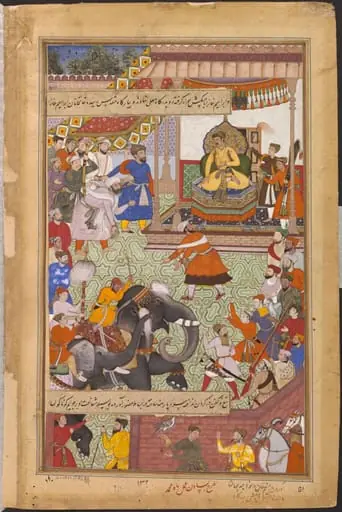
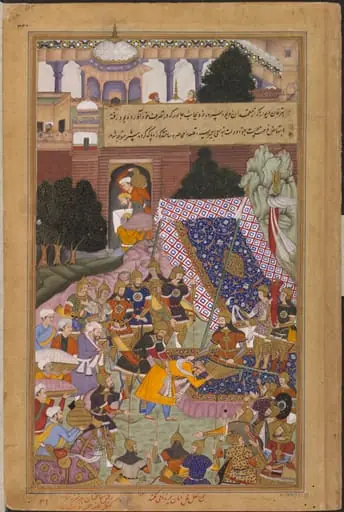
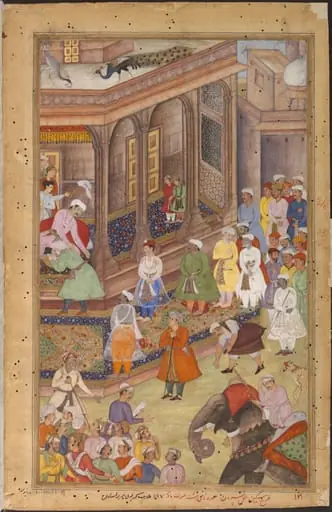
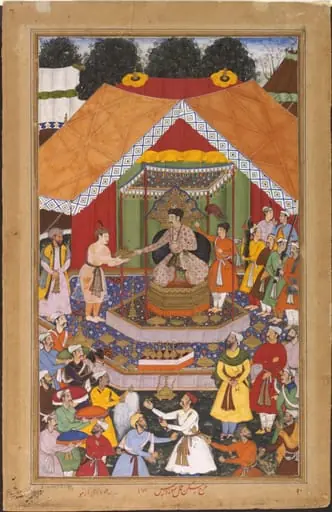
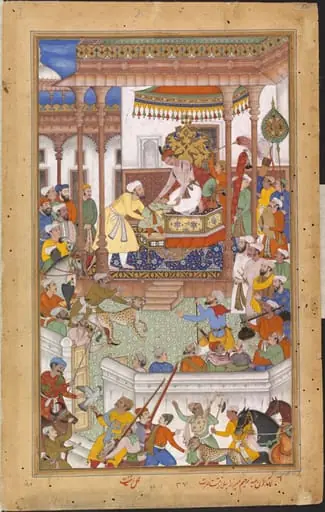 Akbar and Abdu'r Rahim
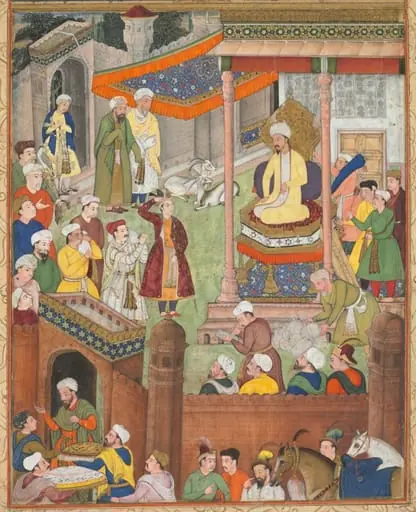 Babur receives booty and Humayun’s salute after the victory over Sultan Ibrahim in 1526, from an Akbar-nama (Book of Akbar) of Abu’l Fazl (Indian, 1551–1602)
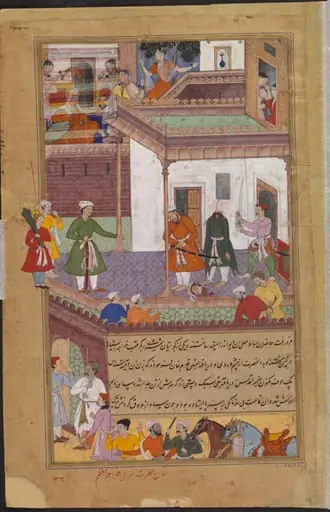 Qadam Khan
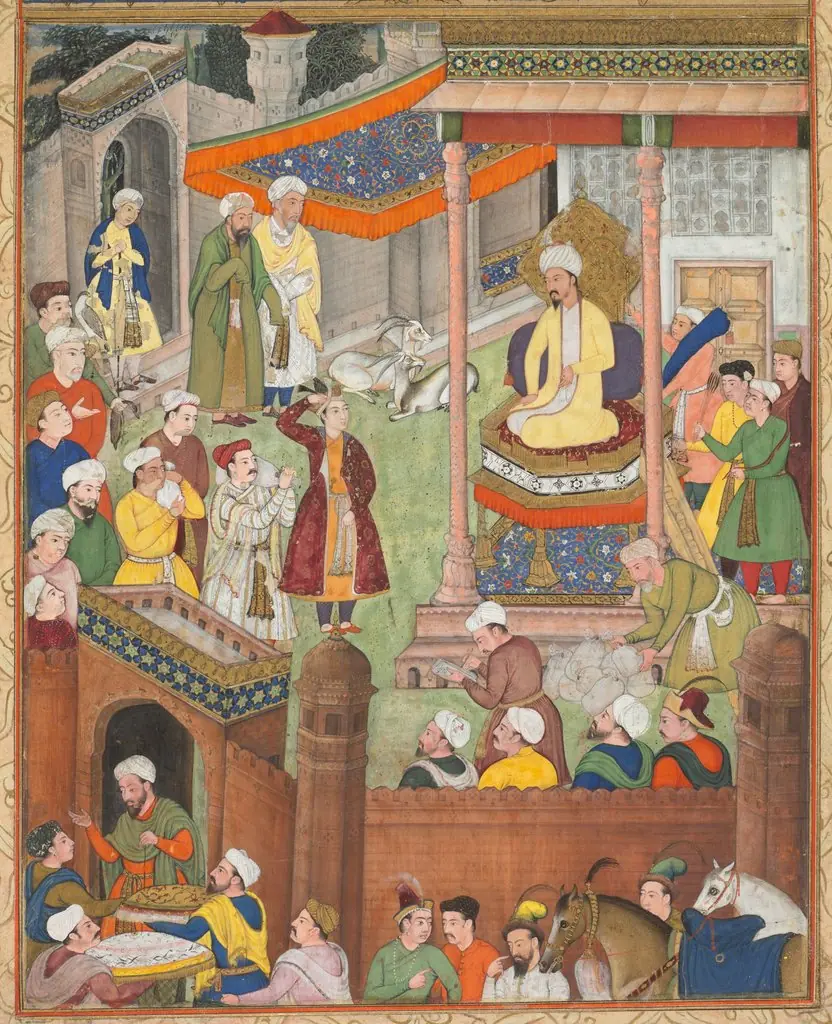 Babur receives booty and Humayun’s salute after the victory over Sultan Ibrahim in 1526, from an Akbar-nama (Book of Akbar) of Abu’l Fazl (Indian, 1551–1602)
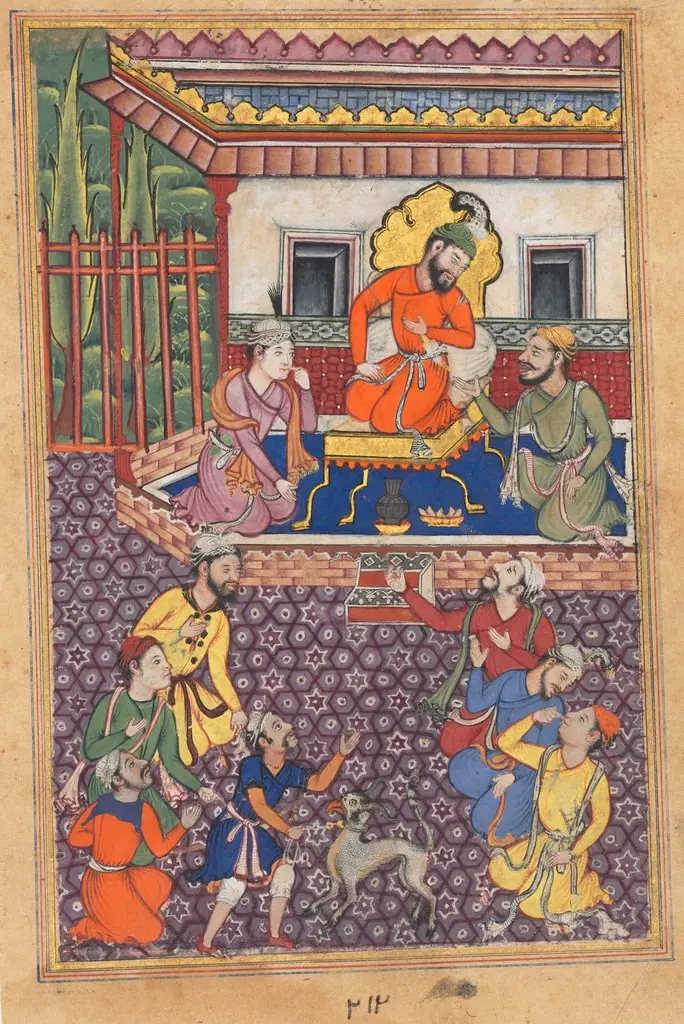 The court of the Raja of Ujjain, from a Tuti-nama (Tales of a Parrot): Forty-sixth Night
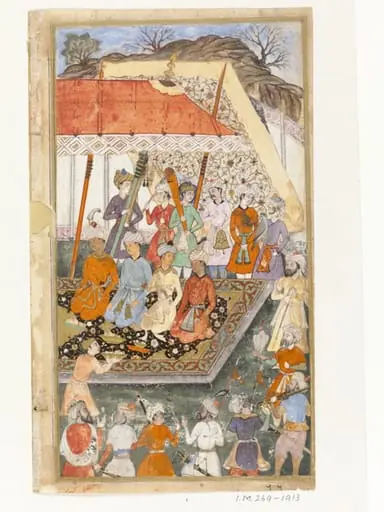 Untitled