Artwork
Akbar and Asaf Khan
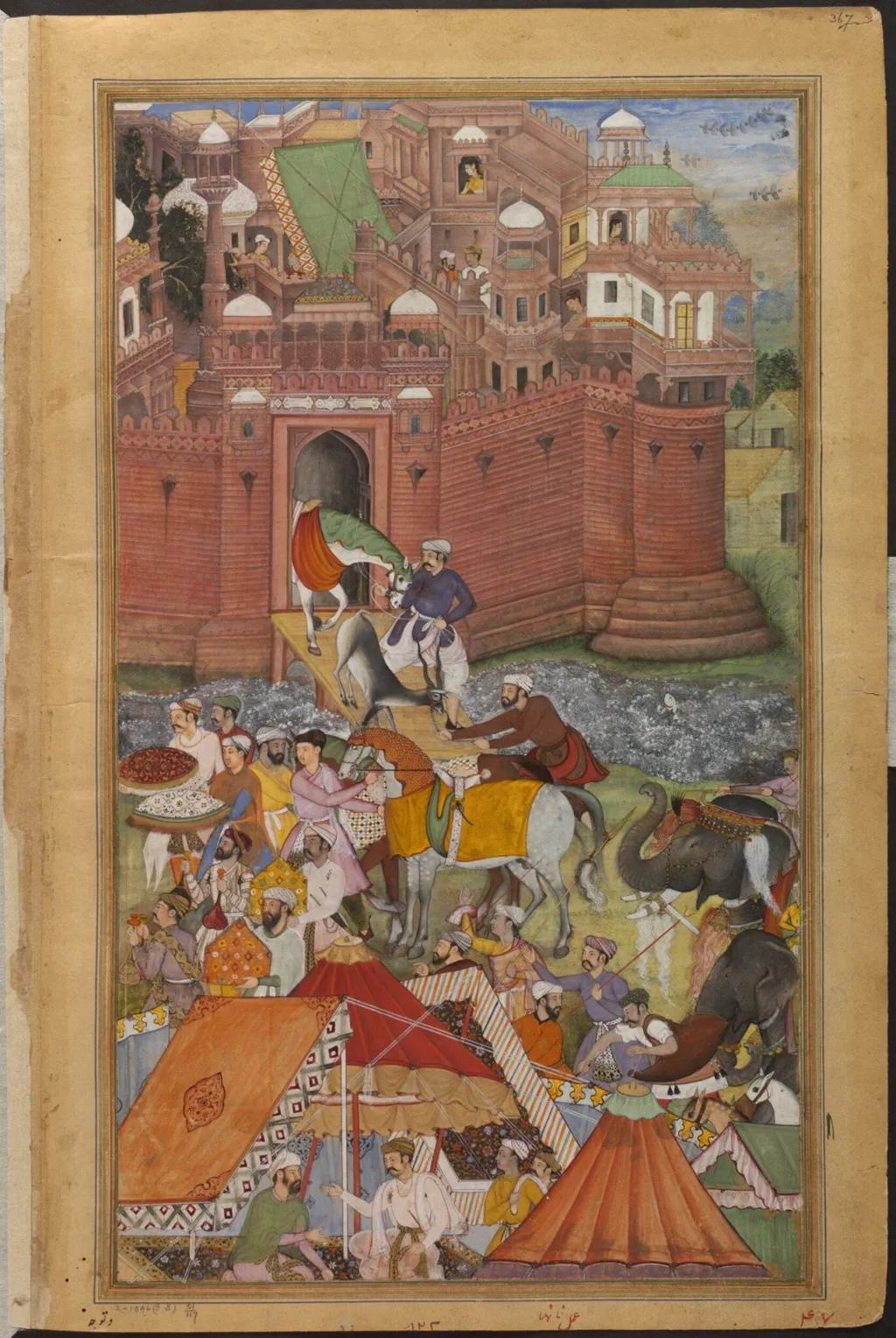
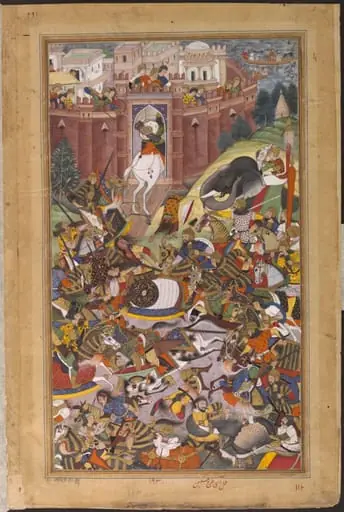
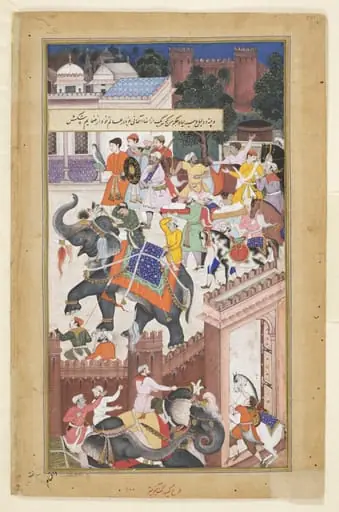
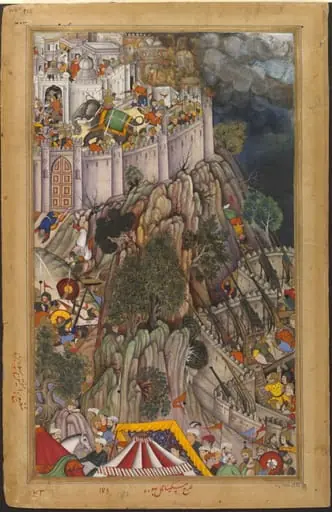
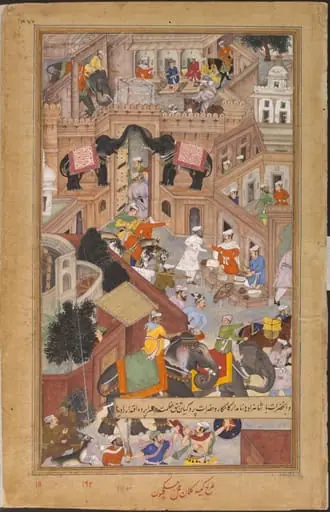
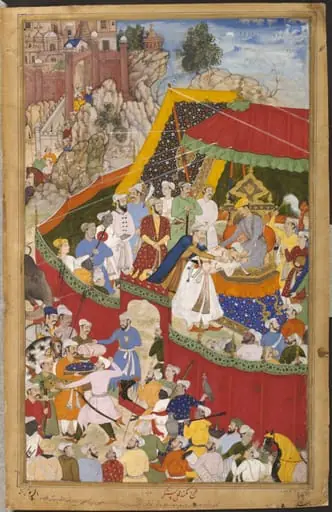
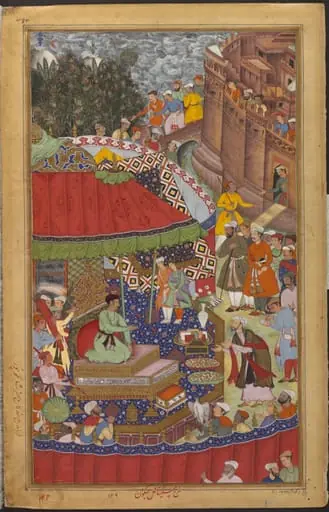
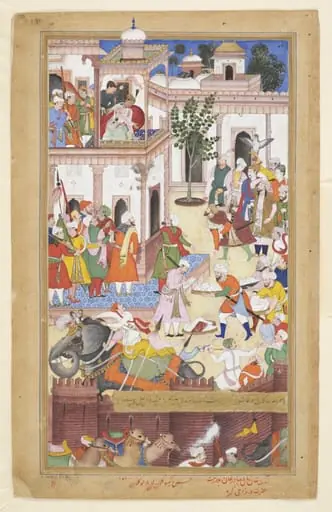
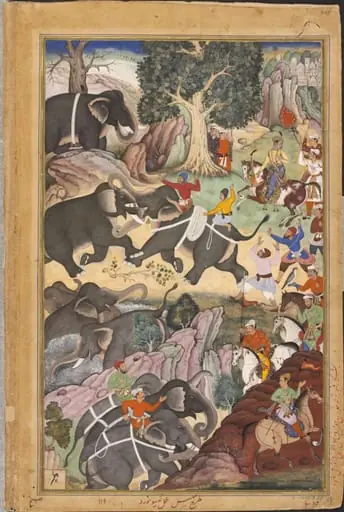
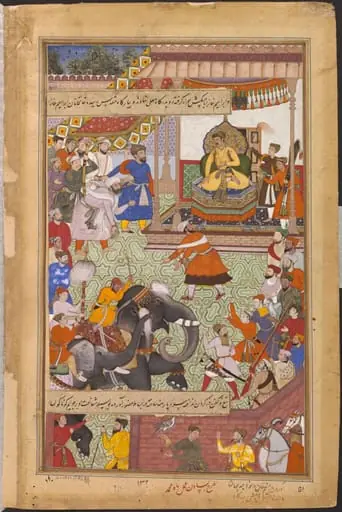
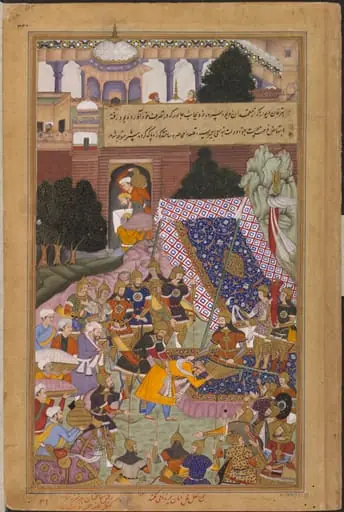
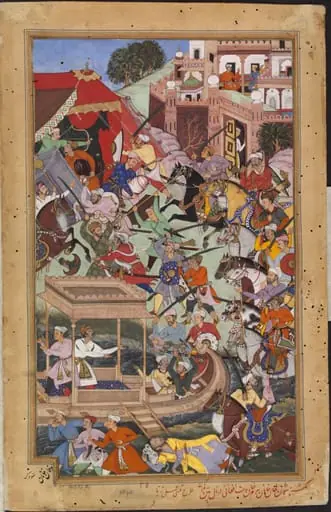
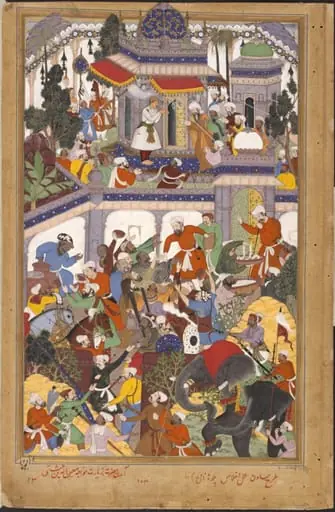
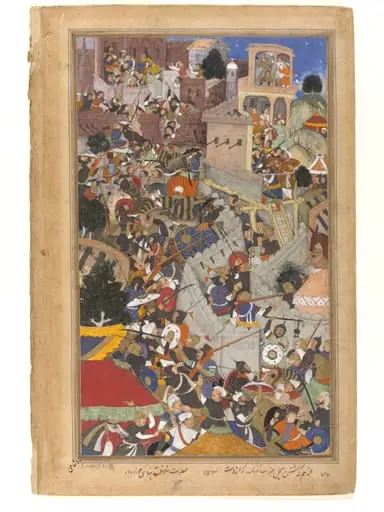
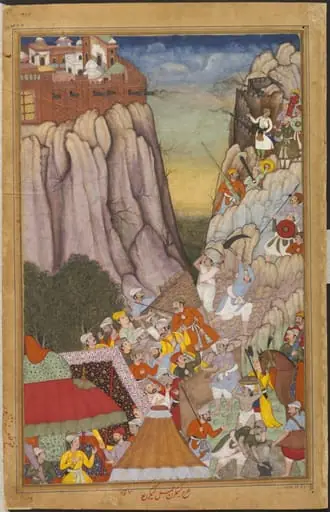
Akbar and Asaf Khan is a paint painting by the Mughal Painting artist Nanha. It dates from 1592 and is held in the collection of the Victoria and Albert Museum. This painting is one half of a double-page illustration from the Akbarnama, the official chronicle of Mughal Emperor Akbar's reign.
About this work
Overview
This painting is one half of a double-page illustration from the Akbarnama, the official chronicle of Mughal Emperor Akbar's reign. It depicts a serene yet powerful scene of Akbar in a riverside camp, with his grand vizier Asaf Khan in attendance.
Subject & Meaning
The scene captures a moment of loyalty and control during Akbar's 1565-1567 campaign against Uzbek rebels in eastern India. Asaf Khan, kneeling before Akbar, presents a sword, symbolizing submission and the emperor's authority.
Technique & Style
Designed by Miskina and detailed by Nanha, this work showcases the collaborative expertise of Mughal court artists. The calm composition and meticulous execution reflect the refined style of the period, characteristic of illustrations from the Akbarnama.
History & Provenance
Part of a partial Akbarnama manuscript at the V&A, this painting is believed to have been illustrated between 1592 and 1595, making it one of the earliest illustrated versions of the text. The manuscript's artists, including Nanha, are noted in Abu’l Fazl's A’in-i Akbari.
Context
Commissioned by Akbar, the Akbarnama was written by Abu’l Fazl between 1590 and 1596. This illustration contextualizes Akbar's military campaigns and the loyalty of his generals, highlighting the empire's reach and the emperor's leadership.
Legacy
As an early and finely crafted illustration from the Akbarnama, this painting contributes to the understanding of Mughal artistic achievement and the historical narrative of Akbar's reign, influencing subsequent depictions of imperial power and loyalty.
Artist & collection
Artist
Rafi Khawar, popularly known as Nanha, was a Pakistani actor and comedian. He started his film career in 1966 and earned several awards, including three Nigar Awards.