Artwork
Mosaic of Tigress and Cubs
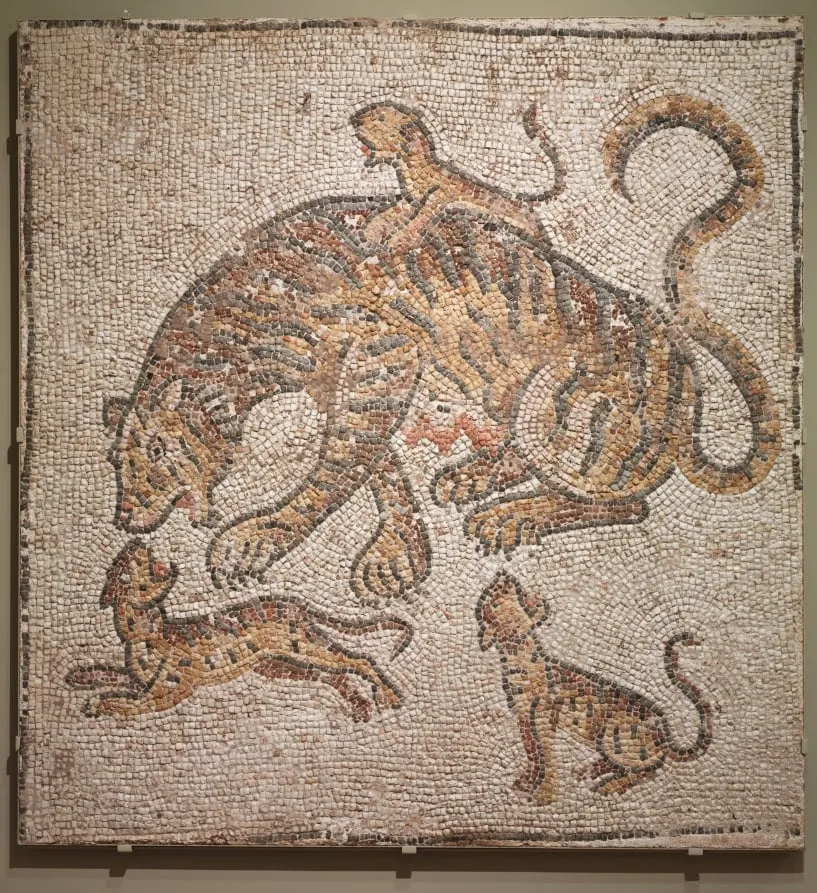
Mosaic of Tigress and Cubs is a mosaic by Unknown. It dates from 350 and is held in the collection of the Cleveland Museum of Art. This mosaic, dating to the 4th century CE, depicts a tigress with three cubs in a naturalistic, dynamic grouping.
About this work
Overview
This mosaic, dating to the 4th century CE, depicts a tigress with three cubs in a naturalistic, dynamic grouping. Crafted from square tesserae, it defies the rigid geometry typical of Roman mosaics through fluid contours, especially in the winding tails and muscular curves of the animals. It was discovered in the Roman world and is now held by the Cleveland Museum of Art.
Subject & Meaning
Tigers, though uncommon in Roman imagery, were associated with exoticism and wild power, often symbolizing nature’s controlled majesty.
The tigress is shown with one cub on her back and two in front, her paw extended and mouth slightly open, suggesting a moment of maternal interaction—whether warning, guiding, or play. The scene emphasizes tenderness and vigilance, common themes in Roman domestic decoration. Tigers, though uncommon in Roman imagery, were associated with exoticism and wild power, often symbolizing nature’s controlled majesty.
Technique & Style
Though composed of standard square tesserae, the artist employed subtle shifts in color and placement to model soft fur and flowing lines, particularly in the tails and limbs. The use of curved forms within a grid structure demonstrates technical adaptability. The tigress’s expression and posture are rendered with psychological nuance, unusual for Roman animal depictions, which often favored stylization over individuality.
History & Provenance
The mosaic originates from a Roman villa or bath complex, likely in the eastern provinces, where exotic animals were more familiar. It was acquired by the Cleveland Museum of Art in the 20th century, its exact find location unrecorded. Its survival is notable, as few large-scale animal mosaics of this type remain intact, especially those featuring tigers.
Context
Tigers were rare in Roman art compared to lions or bears, partly due to their limited presence in the empire’s zoological collections. When depicted, the tigress was favored over the male, possibly because her maternal role aligned with Roman ideals of nurturing and protection. This mosaic reflects a broader fascination with exotic wildlife in elite Roman interiors.
Legacy
The mosaic stands as a rare example of Roman naturalism applied to a non-native species. Its emphasis on emotional expression and anatomical accuracy influenced later depictions of animals in late antique art. Today, it remains one of the few surviving Roman mosaics to portray a tigress with such intimacy, offering insight into how Romans perceived wild nature beyond the arena.
Artist & collection

 Domestic Scene
 Giacomo and Cardinal Marco, investing Andrea, Abbot of San Zeno, with his Benefice
 The Nymph of Fontainebleau
 Portrait of a Woman
 Madonna and Child with Saints in the Enclosed Garden
 Venus and Minerva
 Family Group of Four on Sofa
 Wall painting from Room H of the Villa of P. Fannius Synistor at Boscoreale
 Ram near a Tree
 Fragment of a Floor Mosaic: Ibex near a Tree
 Bas-relief 'Libations of griffons' in terra cotta
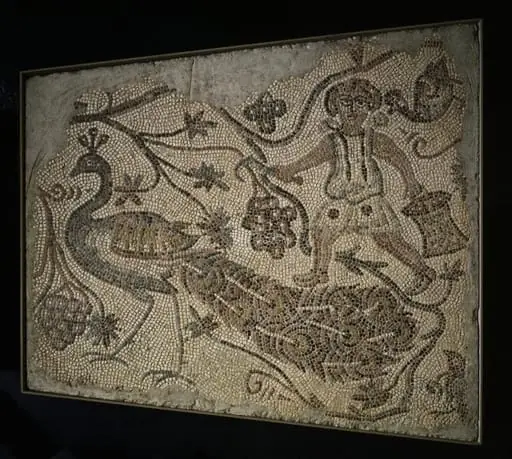 Floor Mosaic Panel: Grape Harvester with Peacock
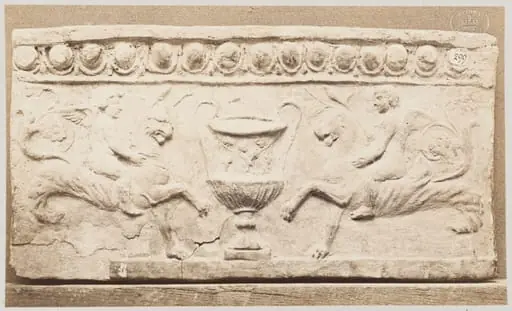 Bas-relief of a large vessel with handles and two bacanallian genies in terra cotta
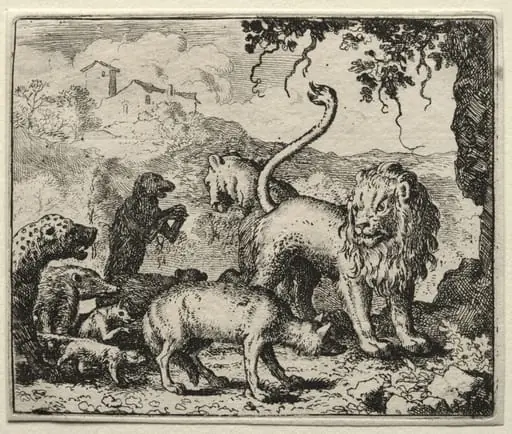 Reynard the Fox: First Complaint of the Wolf
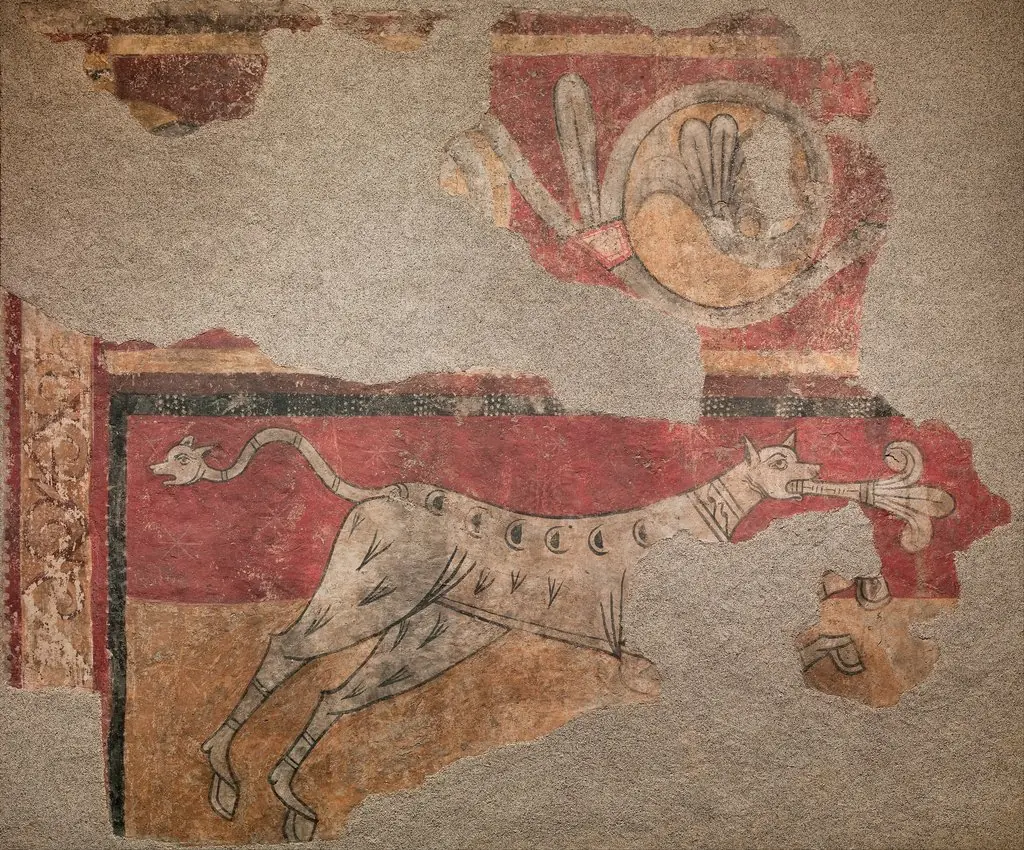 Quadruped with Fleur-de-lis from Boí
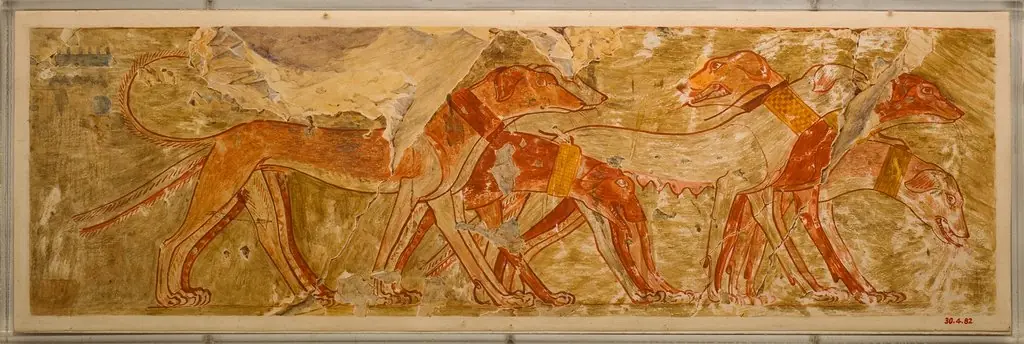 Hounds from Nubia, Tomb of Rekhmire
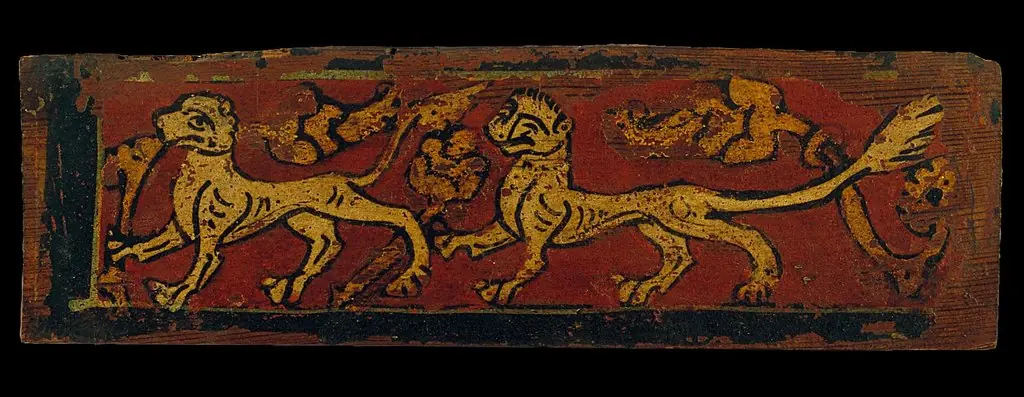 Small coffered ceiling panel with fantastic animals
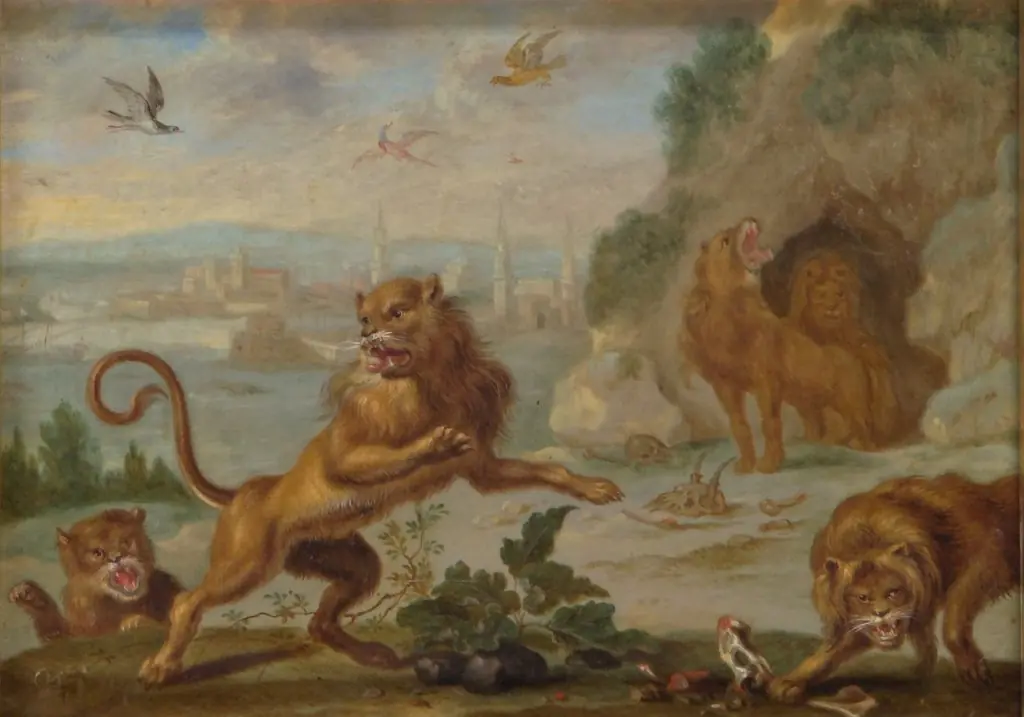 Ansichten aus den vier Weltteilen mit Szenen von Tieren: Tripolis
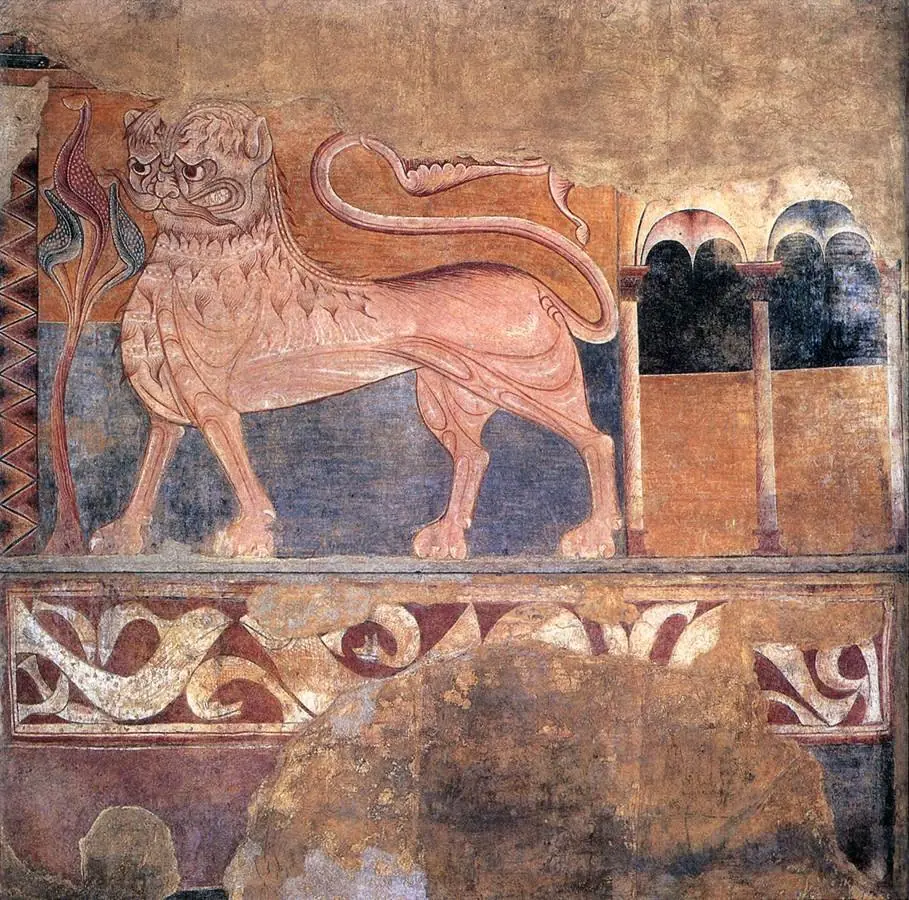 Lion wall painting
 Griffin Atop Entablature