Artwork
Bas-relief 'Libations of griffons' in terra cotta
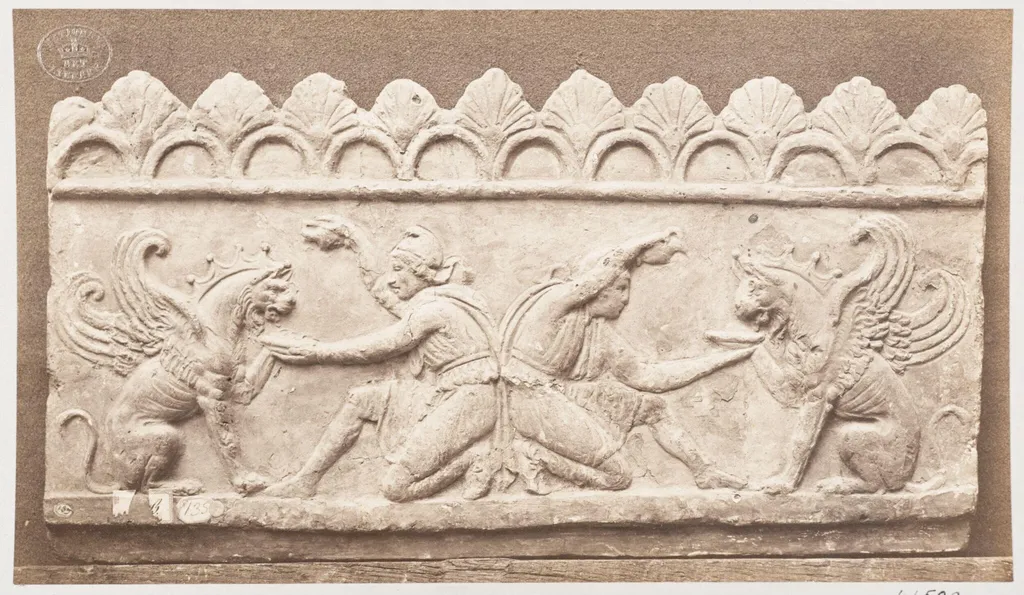
Bas-relief 'Libations of griffons' in terra cotta is a photographic photography by the Impressionist artist Louise Laffon. It dates from 1864 and is held in the collection of the Victoria and Albert Museum.
About this work
In 1852 they became the first museum to collect photos, thanks to Director Henry Cole who wanted photos for artists and students.
Louise Laffon’s terra-cotta bas-relief shows griffons pouring drinks—taken as a photograph in 1863-64. It sits between Impressionism and Realism, two styles shaking up art at the time.
The Victoria and Albert Museum bought it early. In 1852 they became the first museum to collect photos, thanks to Director Henry Cole who wanted photos for artists and students.
Look up the Victoria and Albert Museum next.
Overview
In 1864, the Victoria and Albert Museum acquired a series of photographs documenting antiquities from the Campana Collection, including an image of a terra-cotta bas-relief depicting griffons in libation. The photograph, taken by Louise Laffon between 1863 and 1864, was part of a larger acquisition of 500 images purchased through Parisian agent E. Cappe. These photographs were intended as educational tools, supporting the museum’s mission to provide visual resources for artists and designers.
Subject & Meaning
The bas-relief portrays two griffons, mythological creatures with the bodies of lions and the heads and wings of eagles, engaged in a ritual act of pouring libations. This imagery draws from ancient Mediterranean traditions, where such scenes symbolized offerings to deities or the dead. The composition reflects classical motifs adapted in 19th-century archaeological reproductions, emphasizing ceremonial order and symbolic continuity rather than narrative drama.
Technique & Style
Laffon’s photograph captures the relief with careful attention to texture and tonal gradation, using the wet collodion process to render fine details of the terra-cotta surface. The lighting is even and controlled, minimizing shadows to prioritize clarity over artistic interpretation. This approach aligns with the museum’s goal of creating accurate visual records, distinguishing it from the expressive tendencies of contemporary photographic movements like Impressionism.
History & Provenance
Louise Laffon, one of the earliest female members of Le Société Française de la Photographie, documented objects from the Musée Napoléon III’s Campana Collection in the early 1860s. Her work was recognized for its precision and was acquired by the V&A through commercial channels in 1864. The photograph entered the museum’s collection alongside other documentary images, forming part of its pioneering archive of photographic reproductions of artworks.
Context
During the 1860s, the V&A, then known as the South Kensington Museum, was establishing itself as a center for applied arts education. Under Henry Cole’s leadership, photography was embraced not as fine art but as a practical medium for study and reproduction. Laffon’s images were integrated into the National Art Library’s holdings, serving as reference material for students and curators navigating the expanding global corpus of antiquities.
Legacy
Laffon’s photograph of the griffon relief exemplifies the early institutional use of photography as an archival and pedagogical tool. Her contribution, though long overlooked, underscores the role of women in shaping museum practices during photography’s formative years. The image remains part of the V&A’s historical collection, preserving both the artifact it documents and the method by which it was made accessible to a wider scholarly audience.
Artist & collection
Artist
Louise Laffon (1828–1885), was a French photographer and painter. She was one of the first female professional photographers in France. She had a studio in Paris between 1859 and 1876.

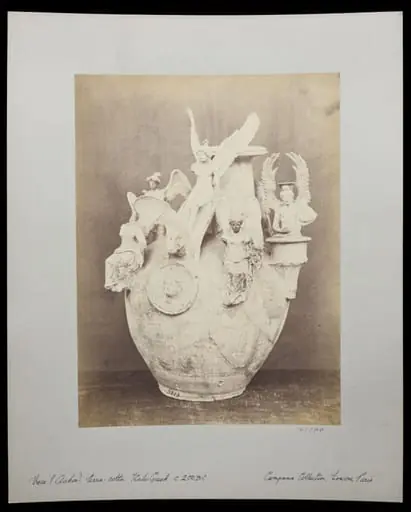 Perfume Burner in terra cotta
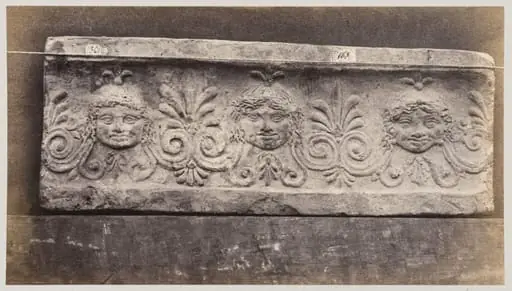 Three masques of gorgons in terra cotta
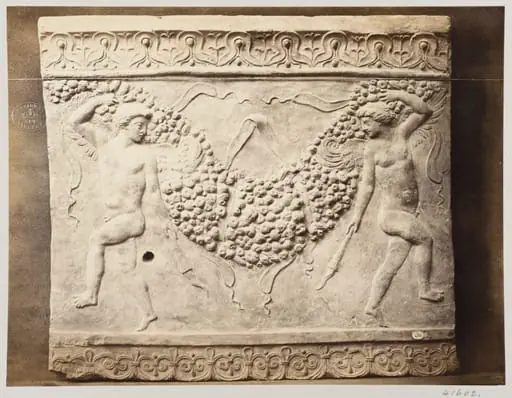 Bas-relief of portion of frieze of dancing figures with torches bearing festoon of fruit in terra cotta
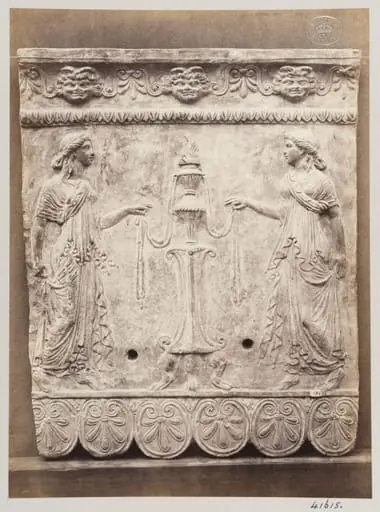 Bas-relief portion of a frieze of two draped females and an altar in terra cotta
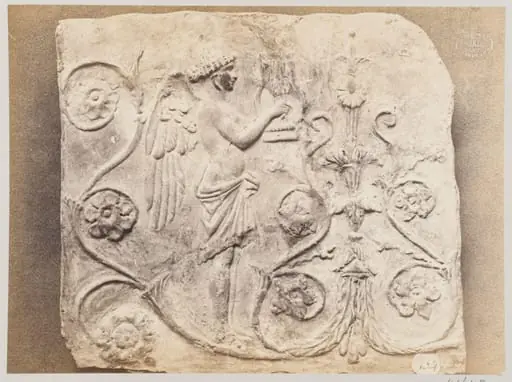 Bas-relief of a geni and a lyre in terra cotta
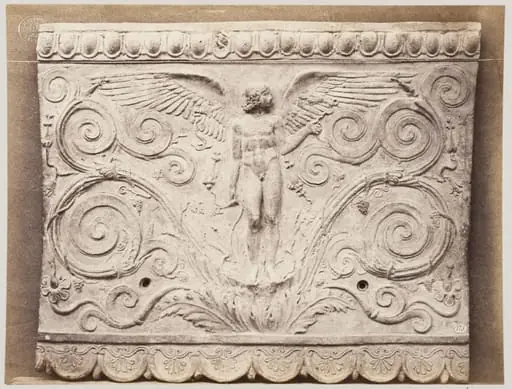 Bas-relief of a portion of frieze of Eros with scrollwork in terra cotta
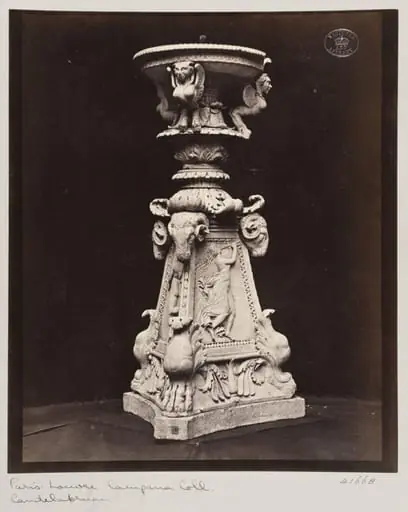 Marble sculptured fountain
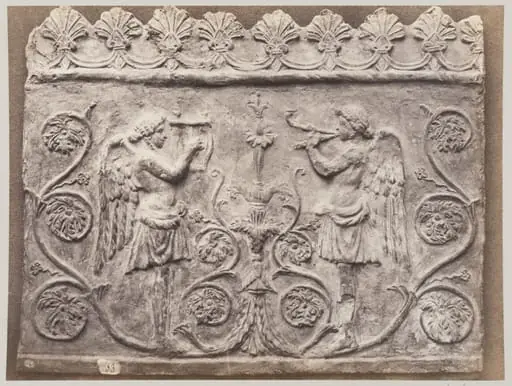 Bas-relief portion of frieze of Genii with double flutes and lyre
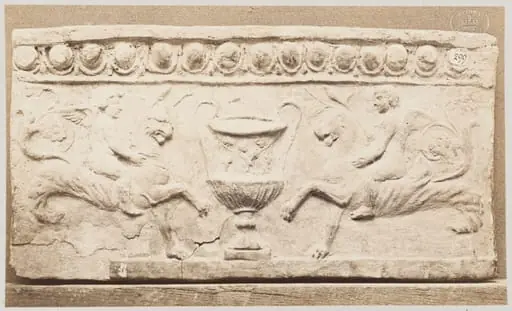 Bas-relief of a large vessel with handles and two bacanallian genies in terra cotta
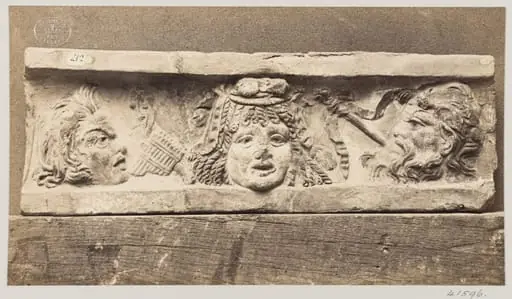 Bas-relief of three masques in terra cotta
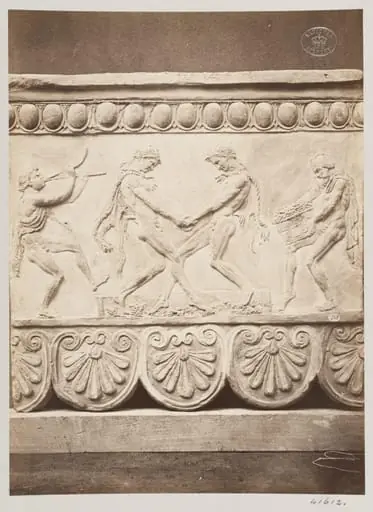 Bas-relief portion of a frieze of Satyrs treading the wine press in terra cotta
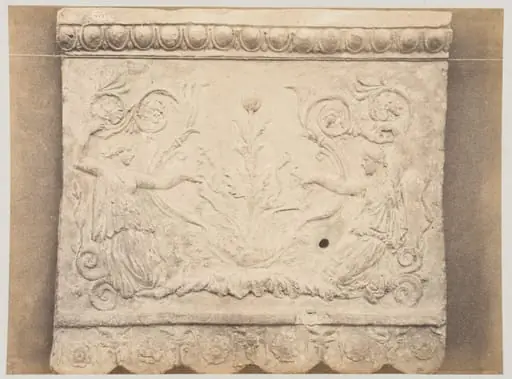 Bas-relief portion of frieze of nymphs with scrollwork in terra cotta
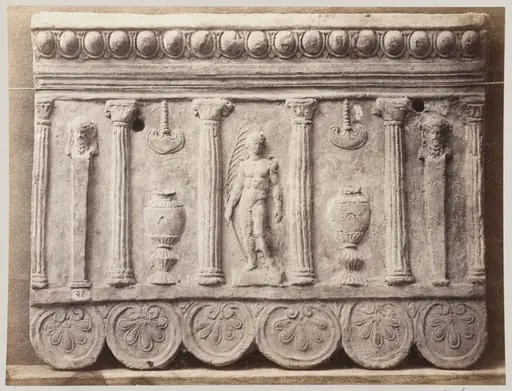 Bas-relief portion of a frieze of Hercules the conqueror in terra cotta
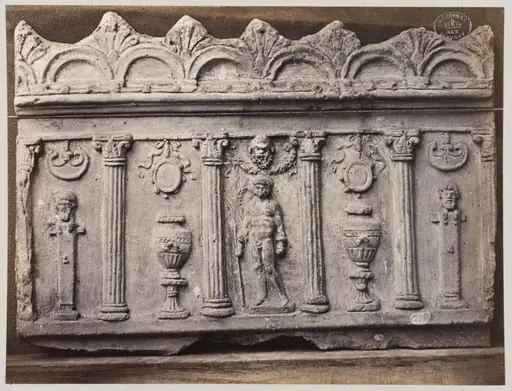 Bas-relief of a figure with bust, vessels and columns in terra cotta
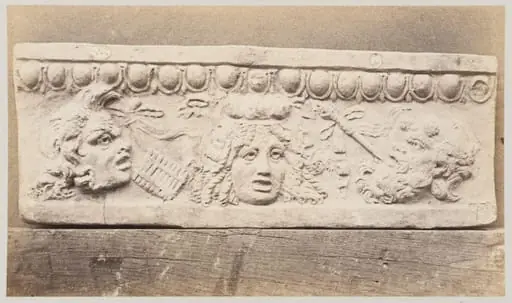 Bas-relief portion of frieze with theatrical masks in terra cotta
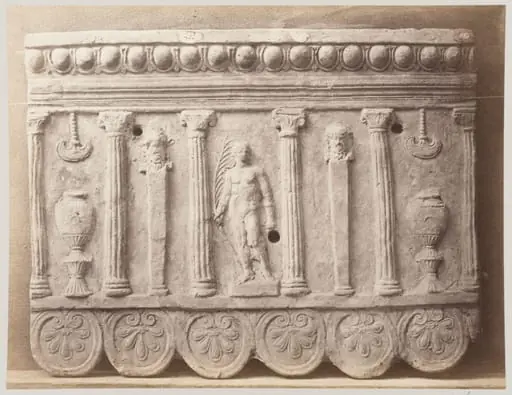 Bas-relief portion of a frieze of Cestiphore conqueror in terra cotta
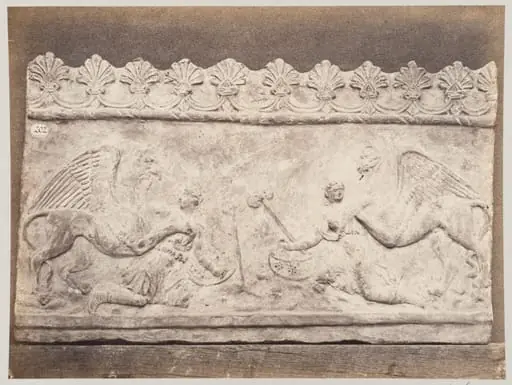 Bas-relief portion of a frieze of a battle with griffons and amazons in terra cotta
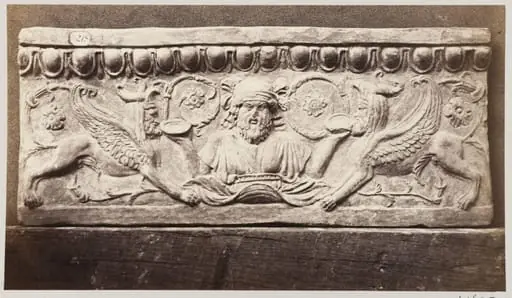 Bas-relief portion of frieze with the 'Libation of Asiatic Sphinx' in terra cotta