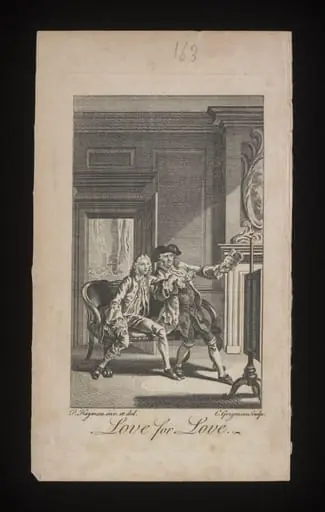
Artwork
Mrs Pope & Mr Lewis in the character of Charlotte & Crevel in (He wou'd be a Soldier)
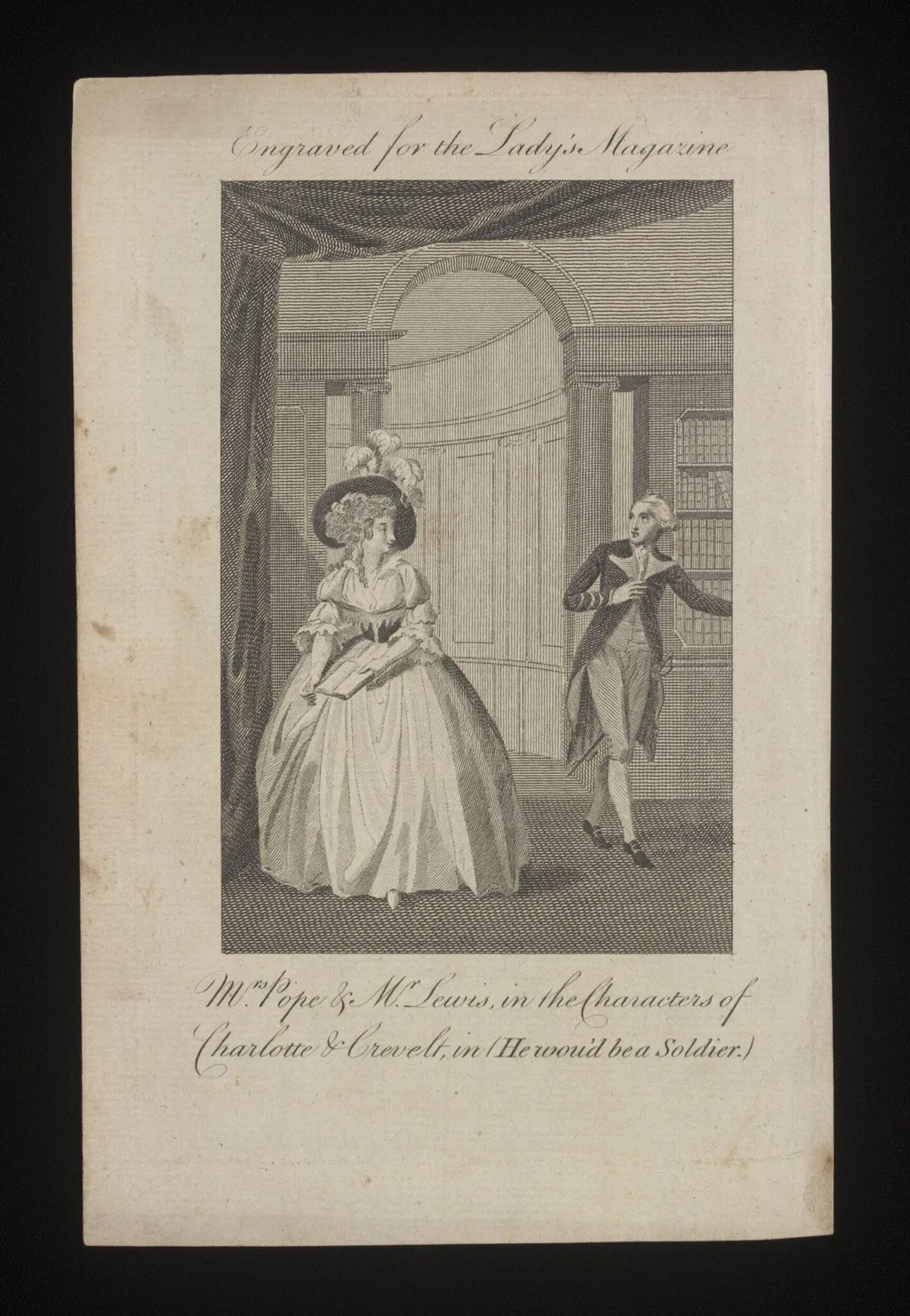
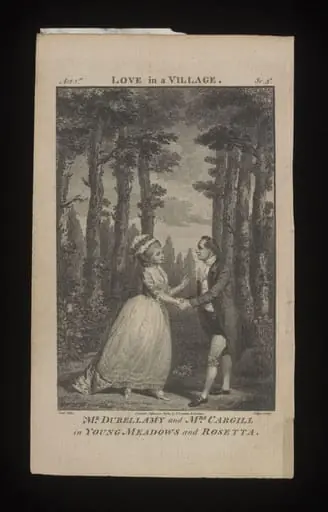
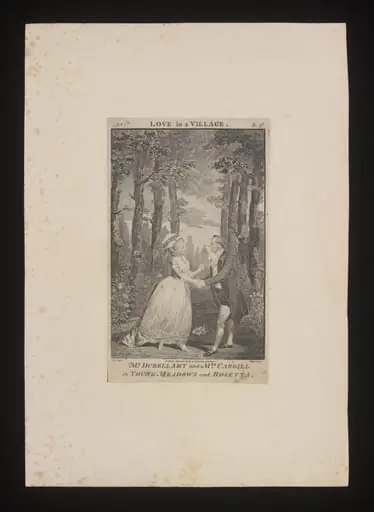
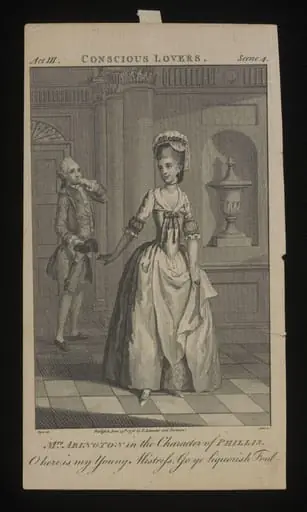
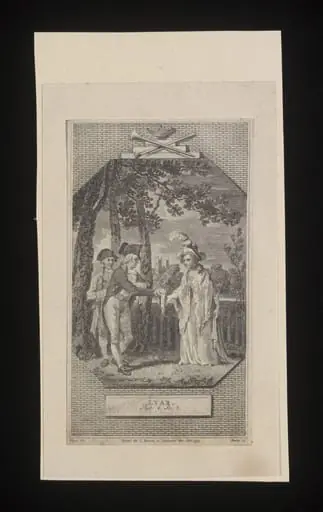
Mrs Pope & Mr Lewis in the character of Charlotte & Crevel in (He wou'd be a Soldier) is a print by the Romanticist artist Unknown. It dates from 1786 and is held in the collection of the Victoria and Albert Museum.
About this work
Overview
The image belongs to the Harry Beard Collection and serves as a record of popular performance and domestic entertainment in late 18th-century Britain.
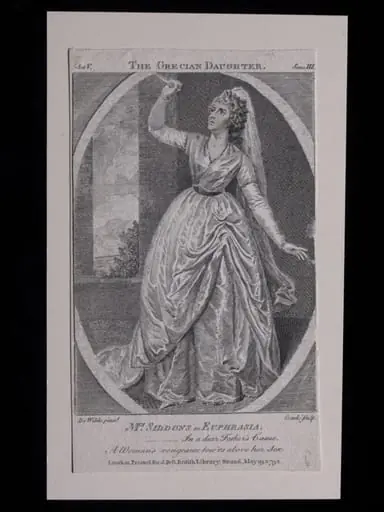
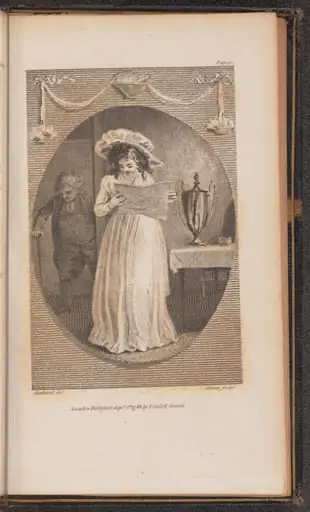
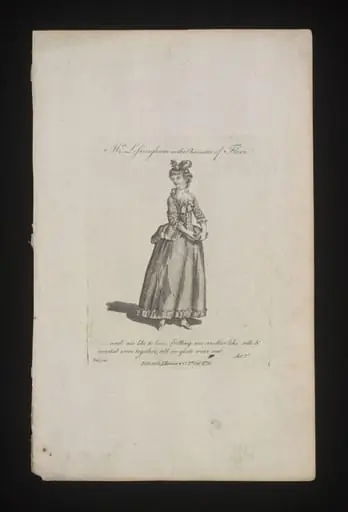
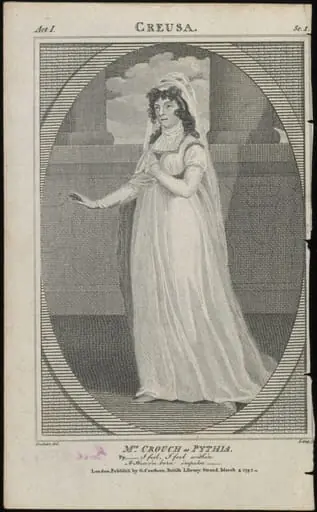
This print, produced around 1786 for the Lady's Magazine, captures actors Elizabeth Pope and William Thomas Lewis in costume as characters from the comedy He would be a Soldier. Executed as an engraving, it was intended for mass distribution, reflecting the era’s fascination with theatrical culture. The image belongs to the Harry Beard Collection and serves as a record of popular performance and domestic entertainment in late 18th-century Britain.
Subject & Meaning
The subjects portray Charlotte and Crevel, comedic roles from a popular stage piece that satirized social ambition and military pretension. By posing as these characters, Pope and Lewis blur the line between professional performance and private amusement. The image suggests a broader cultural trend: middle- and upper-class audiences engaging with theater not just as spectators but as participants in playful reenactments at home.
Technique & Style
The image is an engraved print, a common method for reproducing theatrical scenes in periodicals. Fine lines define the costumes and facial expressions, emphasizing texture and posture over atmospheric depth. Unlike painting techniques such as sfumato, this method relies on precision and clarity to convey character and costume detail, suited to the printed page’s constraints and the magazine’s commercial aims.
History & Provenance
Elizabeth Pope and William Thomas Lewis were established actors in London’s theater scene, frequently performing in comedies. The print was published in the Lady's Magazine, a widely read periodical that featured theatrical illustrations. It entered the Harry Beard Collection, a significant archive of British theatrical memorabilia, preserving it as a document of performance culture rather than fine art.
Context
In the 1780s, theater permeated British social life, with plays often adapted into printed illustrations for home consumption. The Lady's Magazine catered to a literate, middle-class audience eager for cultural engagement. This print reflects how theater extended beyond the stage, becoming part of domestic leisure and identity, particularly for women who were both readers and participants in performative culture.
Legacy
Though not a work of fine art, the print endures as evidence of how theater shaped everyday life in the late 18th century. It illustrates the intersection of print media, performance, and personal expression. Today, it remains a valuable resource for scholars studying the material culture of theater and the ways in which public roles were adopted in private spheres.
Artist & collection

 Domestic Scene
 Giacomo and Cardinal Marco, investing Andrea, Abbot of San Zeno, with his Benefice
 The Nymph of Fontainebleau
 Portrait of a Woman
 Madonna and Child with Saints in the Enclosed Garden
 Venus and Minerva
 Family Group of Four on Sofa
 Wall painting from Room H of the Villa of P. Fannius Synistor at Boscoreale