Artwork
Mythological Scene (Abduction of Europe?) – Fragment of a Cassone
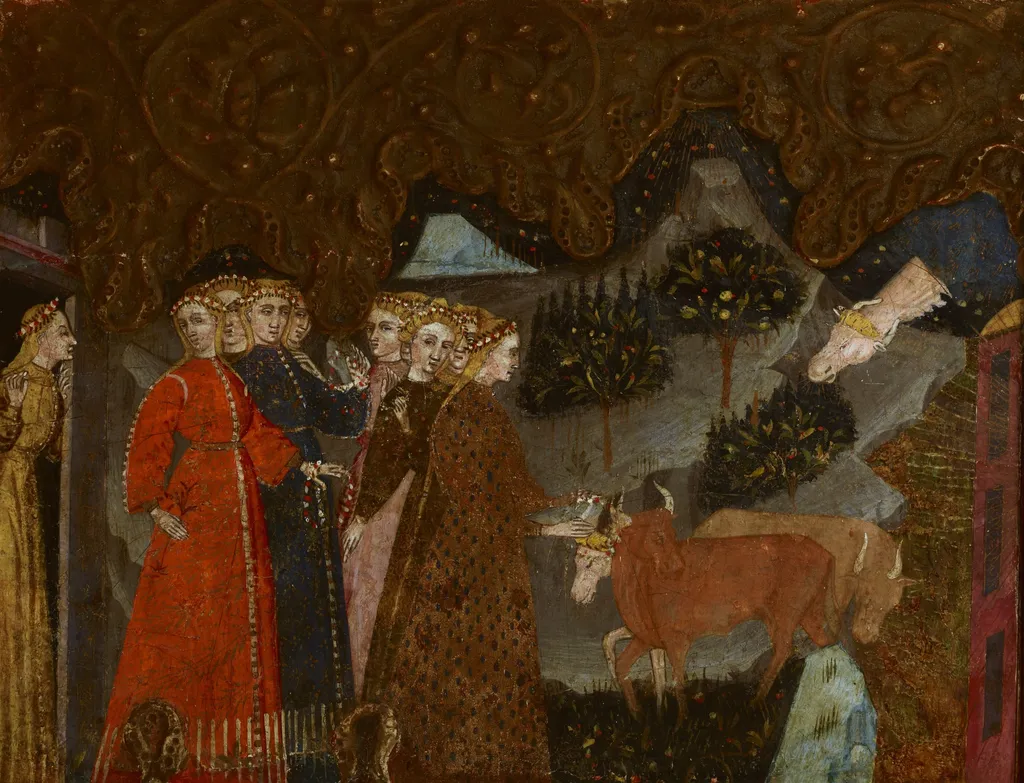
Mythological Scene (Abduction of Europe?) – Fragment of a Cassone is an unspecified painting by Unknown. It dates from 1850 and is held in the collection of the National Museum in Kraków. The work, titled *Mythological Scene (Abduction of Europe?
About this work
Overview
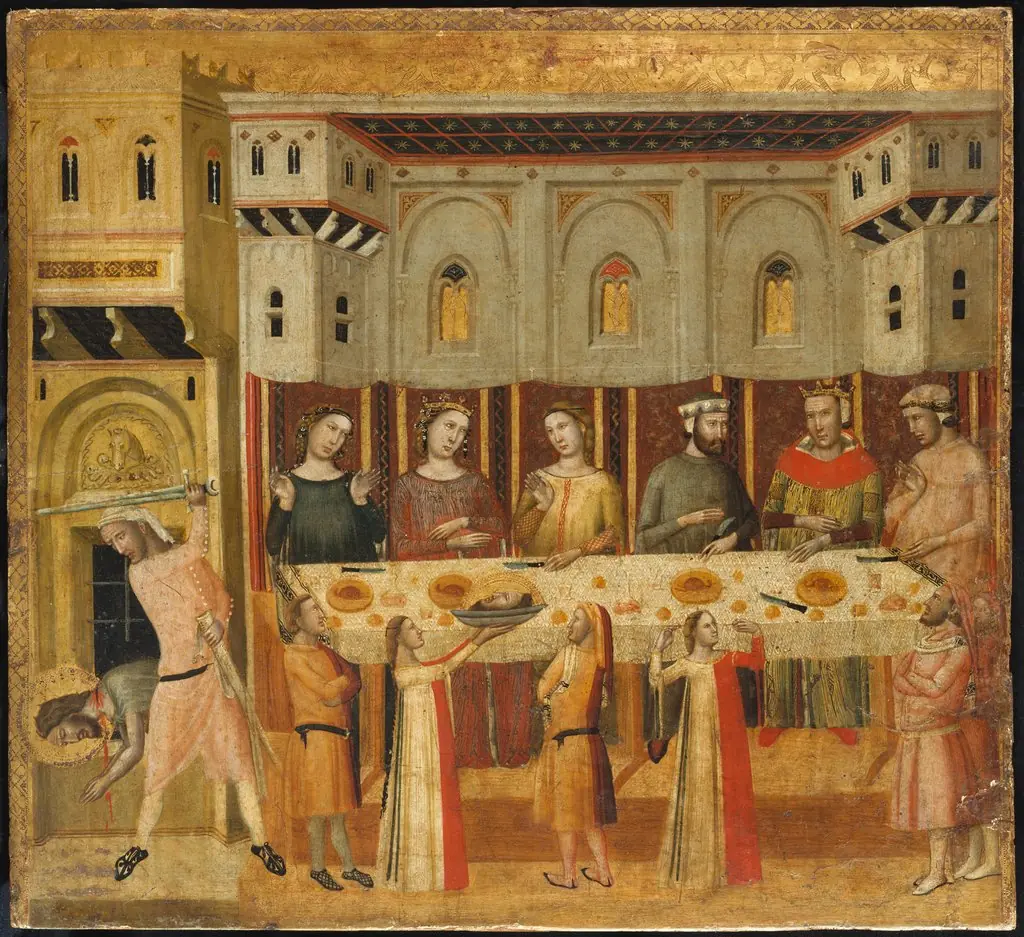
It depicts a gathering of figures in period costume, some crowned, arranged within an interior space capped by an elaborately ornamented ceiling.
The work, titled *Mythological Scene (Abduction of Europe?)*, is a painted fragment from a cassone, a decorative Italian marriage chest. It depicts a gathering of figures in period costume, some crowned, arranged within an interior space capped by an elaborately ornamented ceiling. Animals, including cattle and a horse, share the composition, while the walls are enlivened with vegetal motifs and patterned panels.
Subject & Meaning
The scene is traditionally linked to the myth of Europa’s abduction, though the narrative is not explicitly rendered. The presence of regal attire and a mixed group of onlookers suggests a courtly tableau, possibly intended to evoke themes of noble lineage, marital alliance, or the exotic allure of classical stories within a domestic setting.
Technique & Style
Executed in tempera or oil on wood, the fragment retains the vivid coloration and fine detailing characteristic of late‑Renaissance cassone panels. The artist employs linear perspective to suggest depth in the vaulted room, while the intricate foliage and patterned surfaces reflect the decorative tastes of the period’s interior painting.
History & Provenance
The panel is a surviving portion of a larger cassone, likely produced in northern Italy during the 16th century. It entered the collection of the National Museum in Kraków, where it is displayed as part of the museum’s holdings of European decorative arts.
Context
Cassoni were commissioned as part of marriage celebrations, serving both as functional furniture and as narrative canvases that conveyed moral or mythological lessons. This fragment illustrates how such objects combined domestic utility with the visual language of classical antiquity, a common practice among affluent Italian families of the era.
Artist & collection

 Domestic Scene
 Giacomo and Cardinal Marco, investing Andrea, Abbot of San Zeno, with his Benefice
 The Nymph of Fontainebleau
 Portrait of a Woman
 Madonna and Child with Saints in the Enclosed Garden
 Venus and Minerva
 Family Group of Four on Sofa
 Wall painting from Room H of the Villa of P. Fannius Synistor at Boscoreale
 Garden of Love
 Darius Marching to the Battle of Issus
 Szene aus dem Leben des Hl. Vinzenz Ferrer: Der Predigerzug des Heiligen, der auf einem Esel reitet
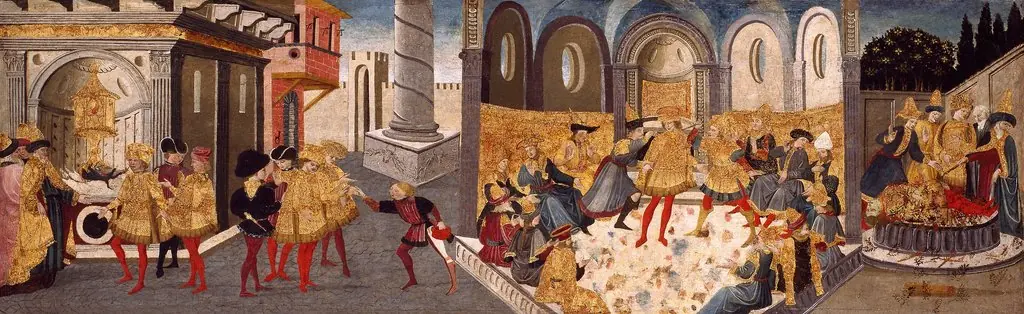 The Assassination and Funeral of Julius Caesar
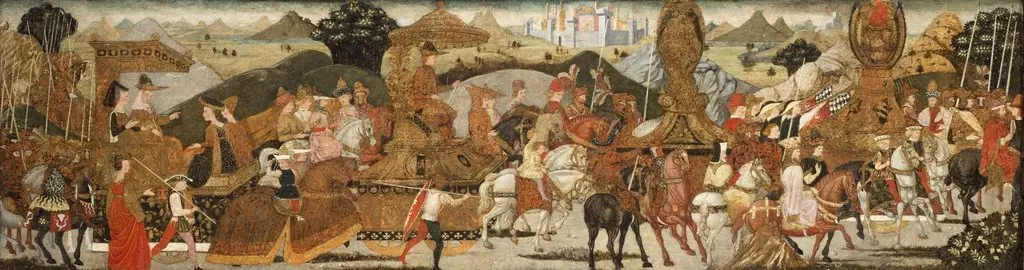 The Triumph of Alexander
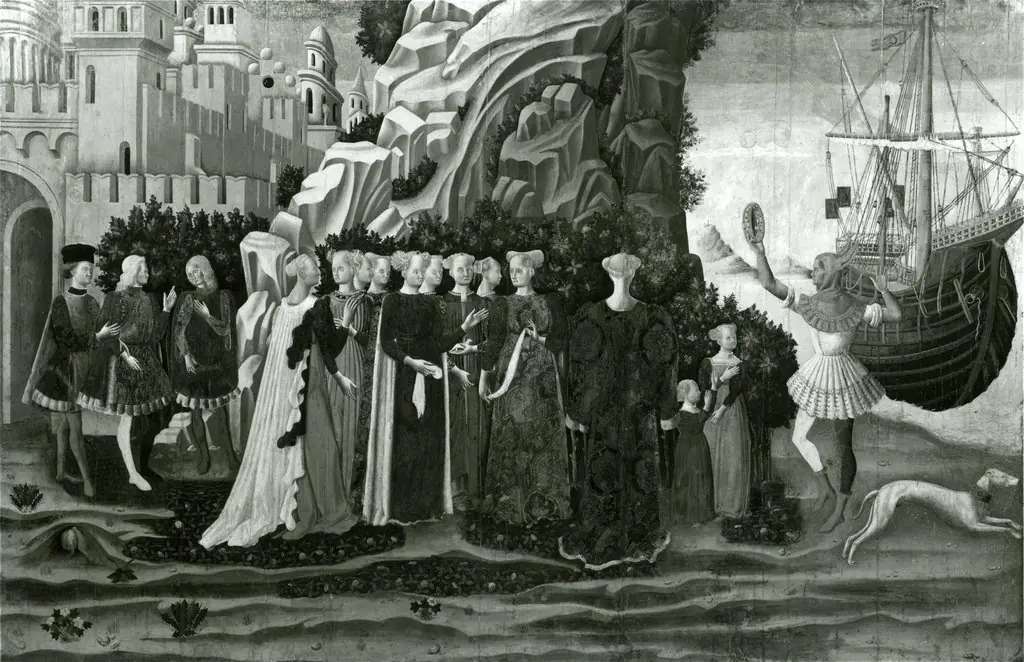 The Embarkation of Helen for Cythera
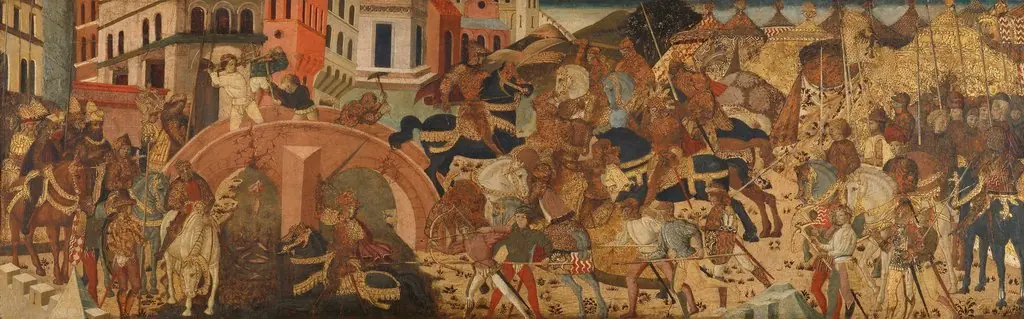 Horatius Cocles Defending the Sublician Bridge
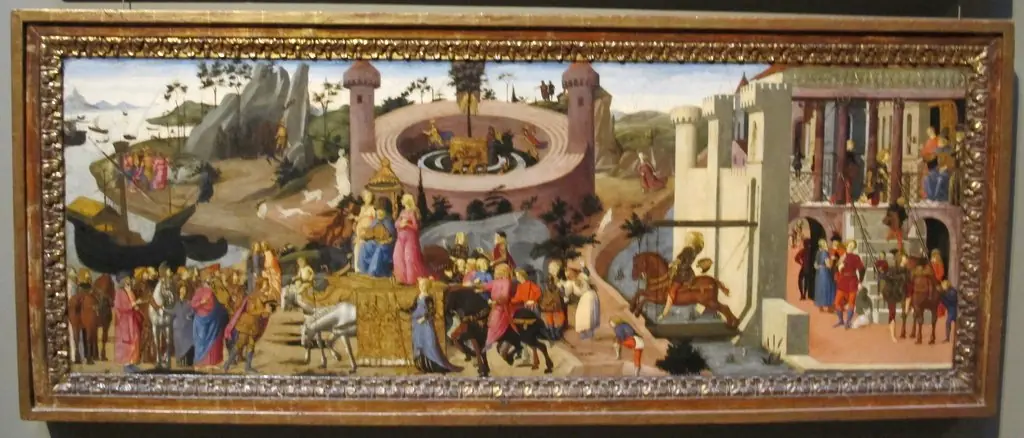 scene con storie degli argonauti
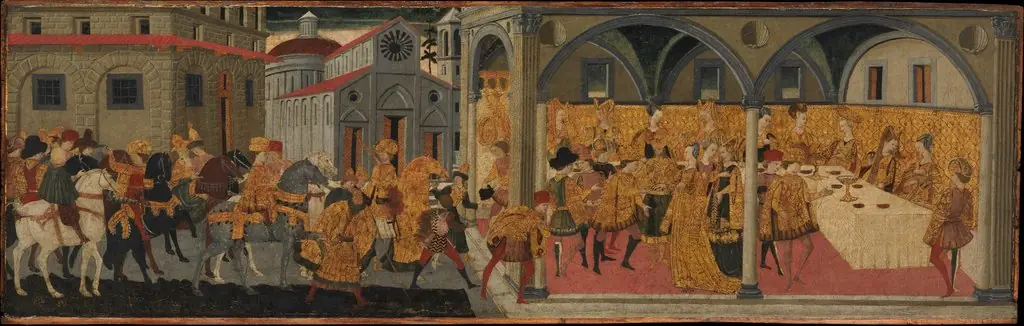 The Story of Esther
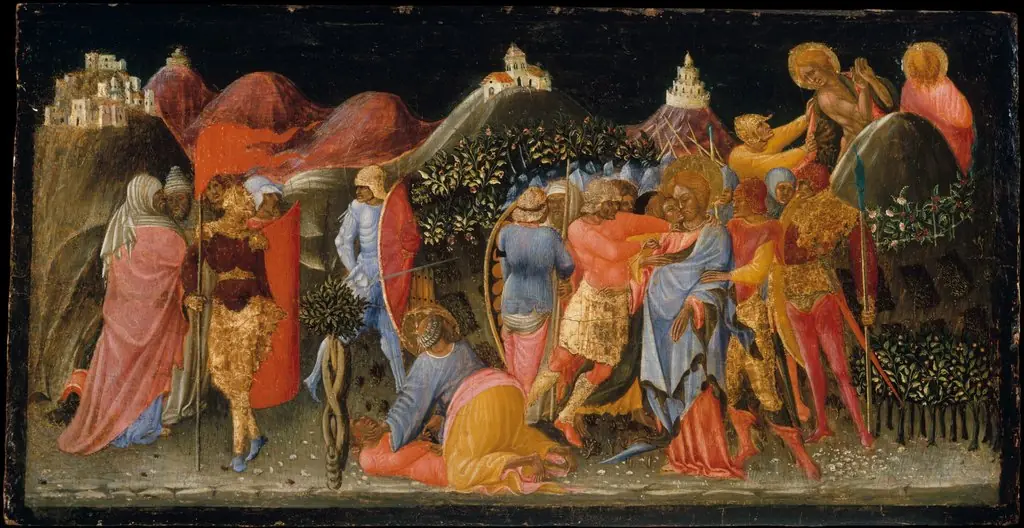 The Betrayal of Christ
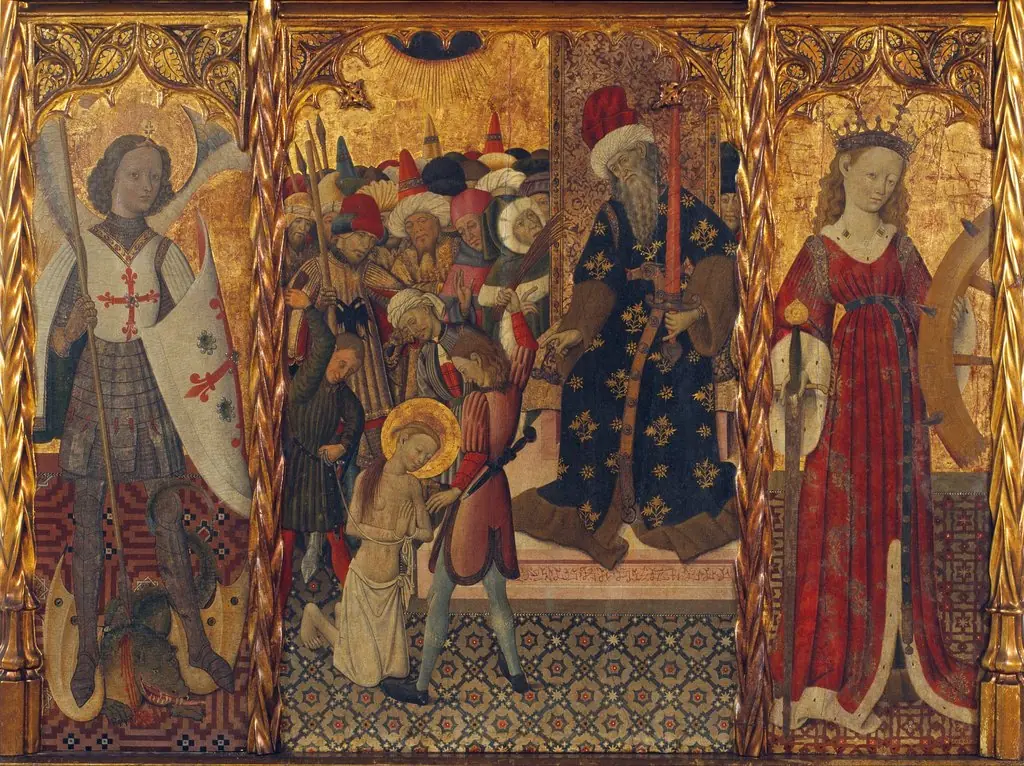 Saint Michael, Martyrdom of Saint Eulalia and Saint Catherine
 The Feast of Herod and the Beheading of the Baptist